The artist and blogger Jane Chardiet (who publishes as Jane Pain) has an interesting interview with Damon McMahon of Amen Dunes. Read it in full if Love, the amazing album McMahon released last year, affected you half as much as it hit me. There’s a lot in there, not to mention his talking about wanting to record an album this year that sounds like Warsaw (early Joy Division) meets a countrified Nirvana.
Archive for the Music Category
Interesting Interview With Damon McMahon of Amen Dunes
Posted in Music with tags Amne Dunes on March 31, 2015 by johnbuckley100Houndstooth’s “No News From Home” Is A Lovely Follow Up To Their Beguiling Debut
Posted in Music with tags "No News From Home", Houndstooth on March 31, 2015 by johnbuckley100So occasionally we get carried away, but when we called Houndstooth’s Ride Out The Dark the best first album ever, it should be noted that we qualified it with the proviso that this superlative was good for August 2013, maybe not all time. Yet now comes the gorgeous No News From Home, and clearly our enthusiasm wasn’t misplaced. Houndstooth is a pitch perfect, upbeat American band ready for export to all markets attuned to our nation’s organic sonic glories.
The Portland band is built around two lead instruments, John Gnorski’s fluid guitar and Katie Bernstein’s slightly off-kilter voice. While Gnorski plays with the tasteful precision and lean muscle mass of Mike Campbell, this doesn’t place these provisioners of Americana firmly in the Petty camp — they’re hippies weaving on the stage, suffusing Humboldt County’s best through a bong filled from Barton Springs, not Florida transplants living the life in some canyon above LA. Bernstein has this disarming trick of singing an eighth of a register above the melody, though when it counts, her aim is true.
Houndstooth is that band you want to see play live outdoors as the sun goes down, or to have on your home stereo as you cook a meal for favorite friends you haven’t seen since college. There is nothing that truly commands the foreground in perfect focus while the rear splays out in lovely bokeh; they make no heavy claims. This is pretty summer music, arriving just as spring begins, and we fully expect rockers like “Bliss Boat,” the title track, and “Witching Hour” to be the soundtrack for all our cookouts for months to come.
The Black Ryder’s “The Door Behind The Door” Is Achingly Beautiful
Posted in Music with tags the black ryder on February 25, 2015 by johnbuckley100For their fans, the wait for The Black Ryder’s follow up to 2010’s Buy The Ticket, Take The Ride has been nigh on interminable. We can only imagine the travails, the journey, that got the band finally to be able to release, on their own label, their beautiful follow-up album, The Door Behind The Door, which came out yesterday.
Aimee Nash and Scott Van Ryper moved from Australia to Los Angeles around the time of their first album’s release, and between then and now, they split as a couple, but held together as a musical entity. We’re glad they did. Former members of Australia’s Morning After Girls, they retained on their first album the most interesting elements of that band’s early U.S. release, which was called Prelude EPs 1&2. But where the Morning After Girls was a shuffling of the deck with Brian Jonestown Massacre and Dandy Warhol cards emerging side by side, the first album by The Black Ryder was a shoegaze epic, with the guitar squall of My Bloody Valentine served up alongside gorgeous evocations of the Velvet Underground.
The core of The Door Behind The Door was released as individual songs over the past few months — “Seventh Moon,” “Let Me Be Your Light,” and “Santaria” — and there is nothing, honestly, on the rest of the album that can compete with those three. This is slow, artisanal rock music crafted by hand in dreamy, melodic, high caloric confections. The rest of the album punctuates the mood with acoustic guitars picking up speed before giving way to Spiritualized anthems (“Throwing Stones”) or classic rock mid-tempo ballads.
The exception is the closer, “Le Dernier Sommeil (The Final Sleep),” which is 12 minutes of symphonic film music, something that if you heard on a Jonny Greenwood score you’d grok and enjoy, but wouldn’t bat a lash at. In this context, it is interesting as a choice of what to put out as the closer on a long-awaited follow-up to one of the best records of the decade. Almost one-fifth of the album is given over to the composition, which is beautiful, but at the end of which we are left hoping that, unlike MBV, The Black Ryder get back in that studio and turn out the next one. Please, sir, may I have another?
We eagerly await seeing them in May at the Austin Psych Fest.
What Recent Live Albums By Phosphorescent, Ty Segall Band And Capsula Say About Those Bands, And Live Recordings
Posted in Music with tags "Dead Or Alive, "Live At The Music Hall, "Live In San Francisco", Capsula, Phosphorescent, Ty Segall on February 18, 2015 by johnbuckley100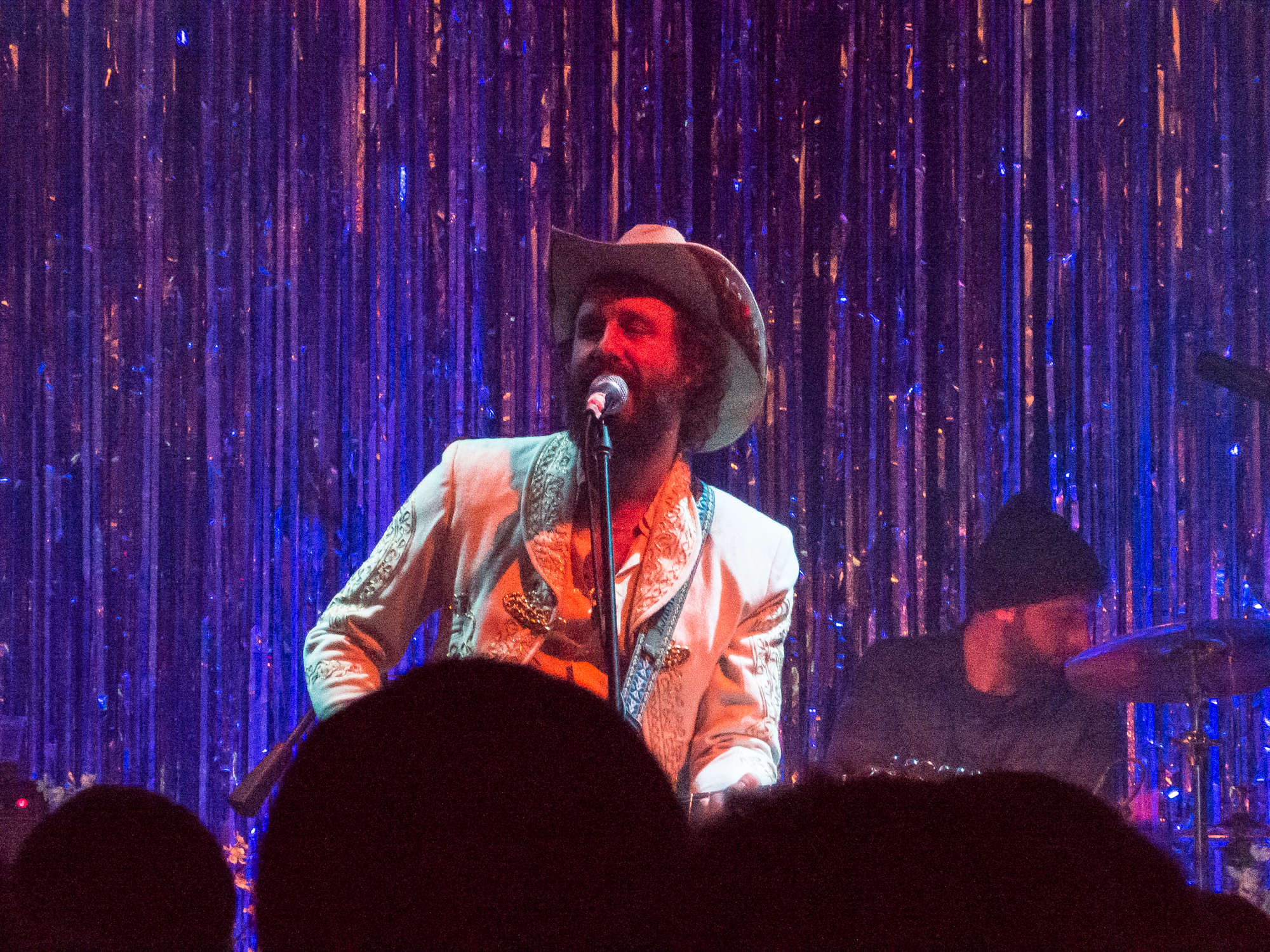
Phospherscent at the 930 Club, January 2014
Time was, live albums meant something, whether it was the commemoration of a killer tour (Get Yer Ya-Yas Out), or just that a record company either was owed an album (Band Of Gypsys) or needed to fill time ’til that epic studio album was done (Live At Leeds.) Weirdly, live albums have accounted for some acts’ big breakthrough (Peter Frampton, Cheap Trick.) Yet as recording technology and digital distribution made it easy to do, some important bands who play great live — Pearl Jam, Wilco — began putting out damn near every live show. Which devalued the category, and in a weird way, their live shows. (Right, if all is available, it loses meaning, and if it doesn’t matter whether it’s live or Memorex, going to the concert is more about getting out of the house than hearing the music.)
We had to wait 16 years after the Clash broke up to get the first collection o’ songs recorded in concert, and both From Here To Eternity and Live At Shea Stadium pretty much suck. The comparative handful of live tracks that have gotten out from Dylan’s Never Ending Tour tease us, as we know there must be a future Bootleg Series release in which the motherload will become available. The point here is that official live albums now are a bit like filler, they no longer really excite, they usually just feature different versions of songs that likely sounded better in a studio minus the adrenaline and improvisation that comes from that band you love capturing on tape the magic of that show you missed, or better yet, saw.
So why are we so thrilled to hear the new Phosphorescent album, Live At The Music Hall? The simple answer is because Matt Houck has produced some very good albums in the past five years, but none of them has entirely hung together… there has always been a bit too much self-indulgent filler. We were lucky enough to see Phosphorescent live last January, and not only does this record capture the brilliance of songs like “The Quotidian Beasts” and “Song For Zula,” it is perhaps Houck’s first record that hangs together the whole way through. So in this case, the live album adds a coherence to his work that his studio stuff doesn’t. Hail Phosphorescent Live At The Music Hall, in which an important, underrated artist and his amazing live band play his songs the way they were meant to be heard. It’s a little bit like White Fence’s Live In San Francisco: the live album that justifies your patience through the studio albums that never quite got you there…
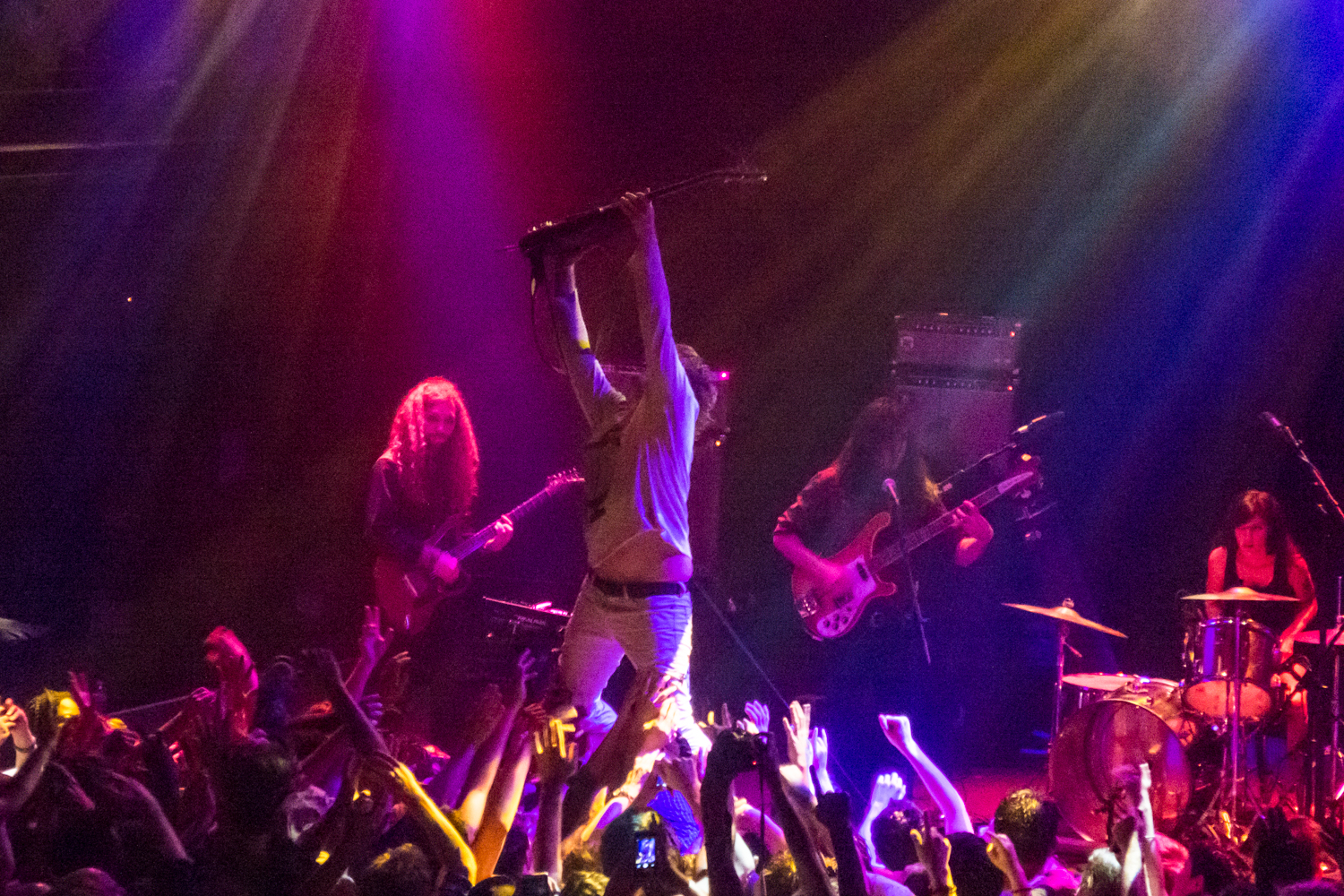
Ty Segall at the 930 Club, 2014
Ty Segall doesn’t need a live album to tell you anything about him you don’t know from his records, but *his* Live In San Francisco, released a few weeks ago, does offer those poor souls not in a touring city a sense of what utter freaking mayhem ensues when the Ty Segall Band hits town. We don’t know the meaning of this album coming out under that name, as the show we saw them play in October was under the aegis of Ty Segall, not the Ty Segall Band. And come to think of it, this live set contains more of Slaughterhouse than any of Ty’s solo (truly solo) recs. But as a snapshot in time, something we will harken to no mater where Ty’s career takes him (the Pantheon, no doubt), we will come back to this, fer the sheer fun of it all.
In the case of Phosphorescent, if we were Christgau and this was a consumer’s guide, we’d say this is the place to invest your hard-earned shekels. With Ty, you just need to go get an extra job and buy everything he has put out since about 2011 — live album included. But this should not, by any means, be the first, essential purchase. (That would be Twins.)
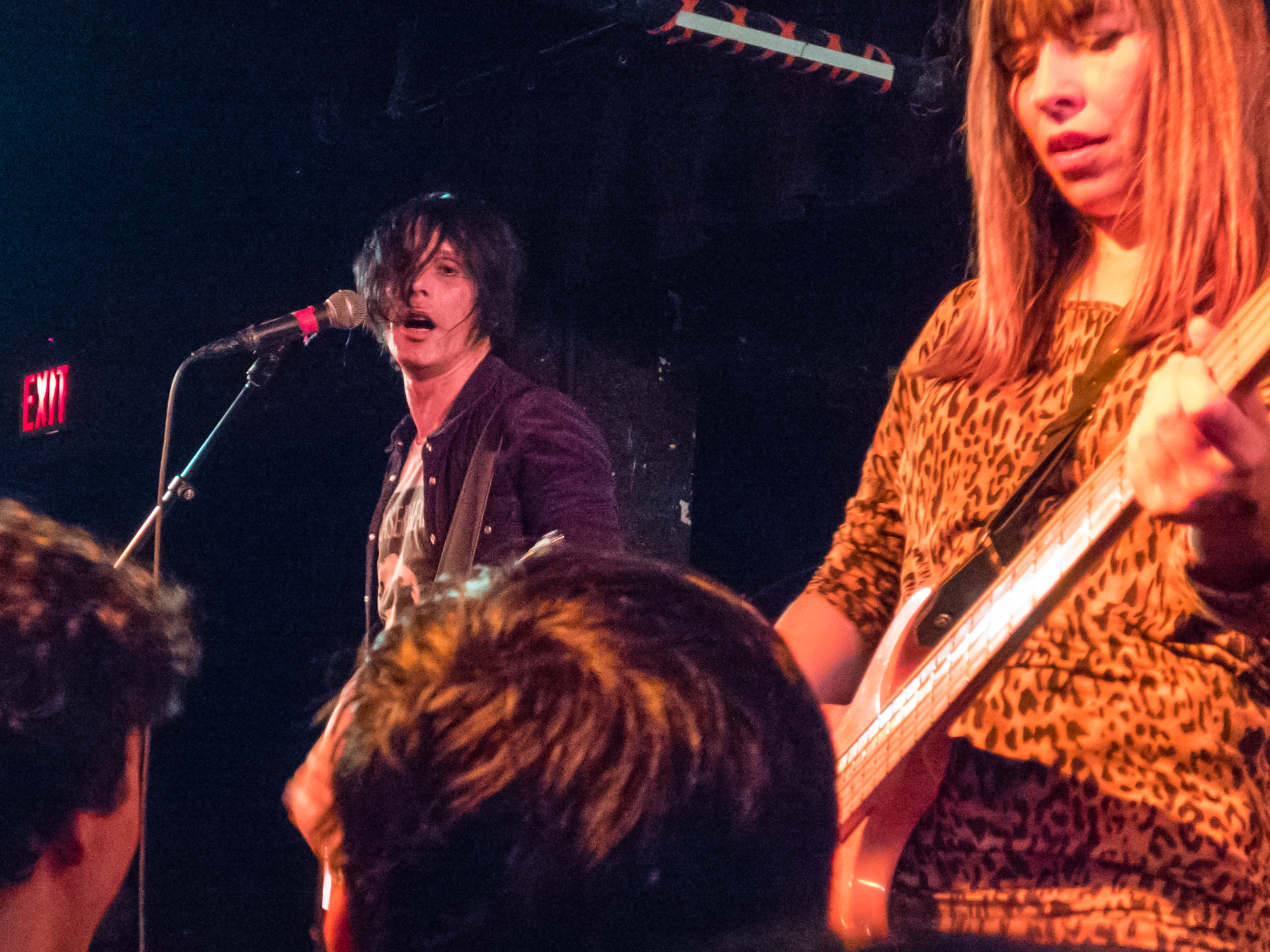
Capsula at The Black Cat, 2013
With Capsula, though, a band that we have previously called The Greatest Rock’n’Roll Band in the World, Dead Or Alive is definitely a great place to begin, as it quickly proves we’re right, is an infectious party platter, and truly should be valued for the way it points you to their best studio albums (2006’s Songs & Circuits, with 2011’s In The Land Of Silver Souls being a close runner up.) It gives longtime fans the joy of listening to these amazing musicians without having to travel to Bilbao, where the Argentines now live.
Capsula’s live album fills the role of a great many previous live albums: having put out seven excellent records, in English and Spanish, including a note-perfect (that was the problem) version of Bowie’s Ziggy Stardust, a live album was an inevitability, a notch in the belt, an artifact needed for the formal record. Capsula is a great live band, and this proves it. And if you’ve never heard them before, start here. Unlike Get Yer Ya-Yas Out, this is not the Capsula album we’ll be playing in 45 years. But as a glimpse of what a powerful sonic machine they are when they get going, yeah, it’s a good ‘un.
Radio Birdman Box Set Revives The Greatest Punk-Era Band You Never Heard Of
Posted in Music with tags "Radios Appear", Deniz Tek, Radio Birdman, Radio Birdman box set on February 7, 2015 by johnbuckley100Imagine that while the CBGB bands were mastering “Gloria” and the Sex Pistols were practicing how to spit, a teenager from Detroit moves to Sydney and soon forms a band in homage to his hometown heroes, the Stooges. Let’s have them become really good musicians, no, I mean, ace musicians, and play songs like “Surfing Bird” well before Johnny and Joey could Blitzkreig Bop. Let’s imagine that in the antipodal shadow of London and New York, this band figured out a way of crafting Ray Manzarek-sounding keyboards into a killer two-guitar lineup with a singer who crossed the manic charm of David Johansen with the chops of Jim Morrison. Got it? You are beginning to grok what a marvel Radio Birdman were.
Citadel Records Australia has just released a Birdman box, which contains both the Australian and Sire (U.S.) versions of their glorious Radios Appear, their posthumously released second album, Living Eyes, assorted outtakes and — this is primo — a live album recorded in Sydney in 1977 (just before they went to London and discovered that suffused with contempt for colonials and punk-rock chauvinism, the Brits couldn’t figure out how to properly place them.)
The Radio Birdman box, expensive as it is, is more than worth it for those of us who have carried their torch since first hearing them in 1978 — worth it for anyone who wants to explore an alternative narrative to what is ordinarily told about that enchanting era that spans from, roughly, when Television were formed to the release in 1979 of Wire’s 154. One of the great joys of the late ’70s was the rediscovery of those Detroit bands, of surf music, and Radio Birdman, with their Easter Island/cargo cult distance from the main alternative culture of the era somehow served it all up together in a pastiche no one else could come close to. And you’ll be shocked, shocked to hear this, since rock’n’roll always rewards those who deserve it, they never got their due.
If Radio Birdman hadn’t happened, we’d have to make their story up. As the American Deniz Tek schooled his new pals in Sydney in the Motor City sounds of his youth, he wrote killer songs that all harkened to an America he missed, and his bandmates had to just take his word for it when singing about “Murder City Nights” or eating Eskimo Pies. If you want the quickest summary of what Radio Birdman were all about, consider: they did a punk version of the Hawaii Five-O theme song; their version of the 13th Floor Elevators’ “You’re Gonna Miss Me” not only is the best ever, it actually led to the rediscovery of Roky Ericsson. Songs from Radios Appear like “What Gives,” “Do The Pop,” “New Race,” and “Anglo Girl Desire” were as tuneful as anything on The Clash or Rocket To Russia, and played twice as fast by musicians who could swing.
In 2006, the band reformed and finally hit the Black Cat in D.C. They hadn’t slowed a single step! Yeah, Chris Masuak, who was a kid the first time round, had his head shaved in accommodation to the years, and singer Rob Younger maybe looked a little less likely to be hitting the surf at Bondi. But man, could they still play! You don’t have to get the entire box to recapture the spirit, but do get Radios Appear. No record collection that has Never Mind The Bollocks, Pink Flag, and the Ramones’ Leave Home is really complete without it.
The Vaselines’ At The Rock & Roll Hotel In DC
Posted in Music with tags "V Is For Vaselines", D.C., The Rock & Roll Hotel, The Vaselines, Tulip Frenzy Top Ten List 2014, Vaselines American Tour 2015 on January 15, 2015 by johnbuckley100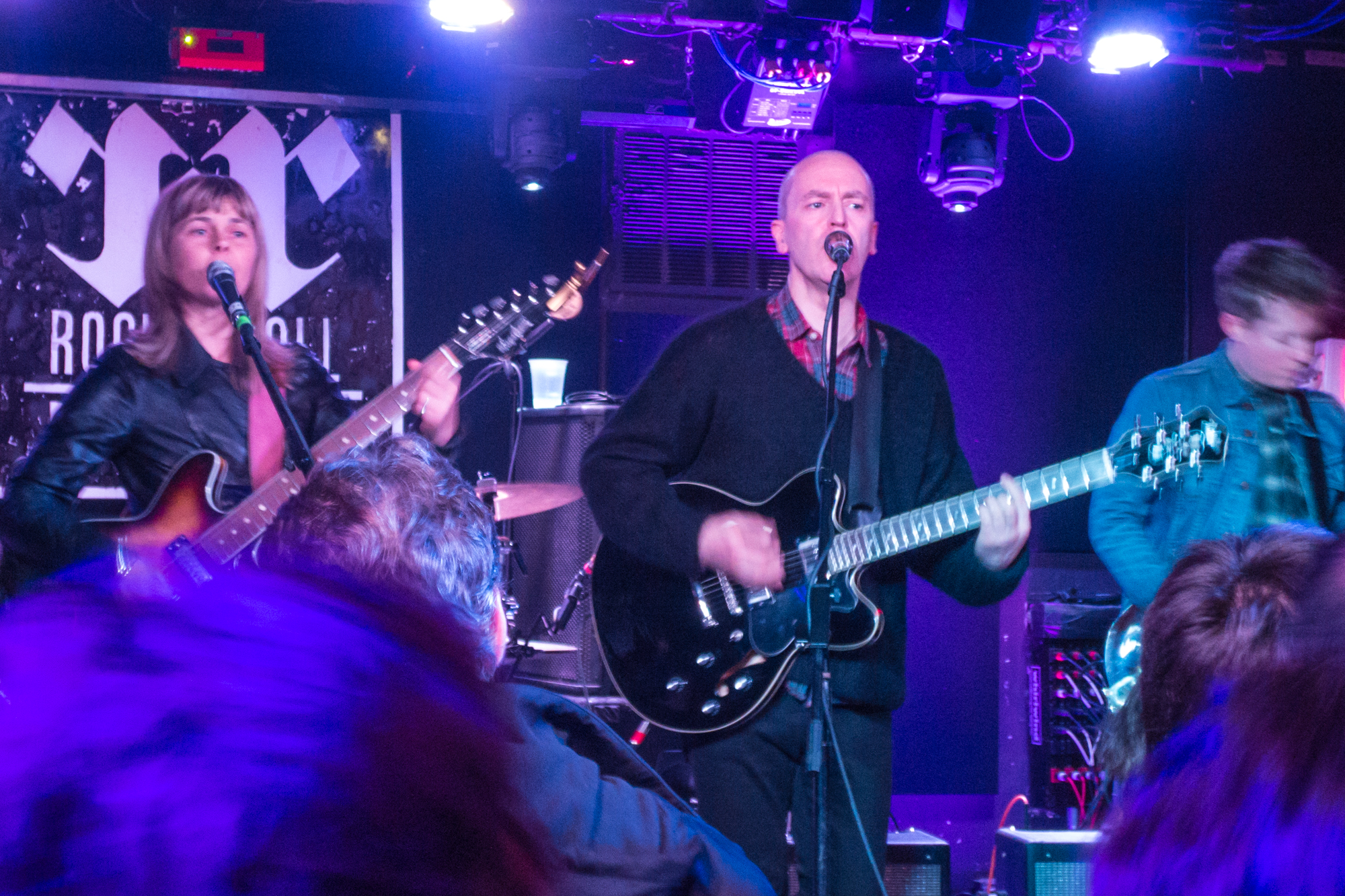
If all you had to go on was the stage patter from last night’s glorious show by The Vaselines at D.C.’s Rock & Roll Hotel, it would be easy to understand why the Scottish band is known as much for their absence as their presence, for their breaking up 25 years ago the week their debut album was released, for their not recording another album for 20 years, even as their having been championed by Kurt Cobain as his favorite pair of songwriters made them the stuff of legend. Long since broken up as lovers, too, though lately reformed as the Western world’s greatest purveyors of melodic punk rock, endearingly sweet Frances McKee and the faux supercilious Eugene Kelly still quibble and quarrel and goad each other on the stage, ah, but the music, the music was sublime.
Drawing from all three of their albums, The Vaselines live consist of the core members surrounded by apple-cheeked young folk, including Michael McGauphrin, a kick-ass punk rock drummer, Scott Paterson, the most tasteful lead guitarist since John McGeoch, and in Graeme Smillie, a thumpingly powerful bassist. From the early work, it was fun hearing two of the songs Nirvana recorded, “Molly’s Lips” and “Jesus Doesn’t Want Me For A Sunbeam,” as well as the song that announced them to us as a force to be reckoned with: “Sex Sux (Amen.)” Their triumphant return album, 2010’s Sex With An X was well represented, with “Ruined” and “The Devil Inside Me” a reminder of how thrilling it was, just a few years ago, to find out that The Vaselines were real, not a rock’n’roll snipe hunt one pursued without being certain the band actually existed.
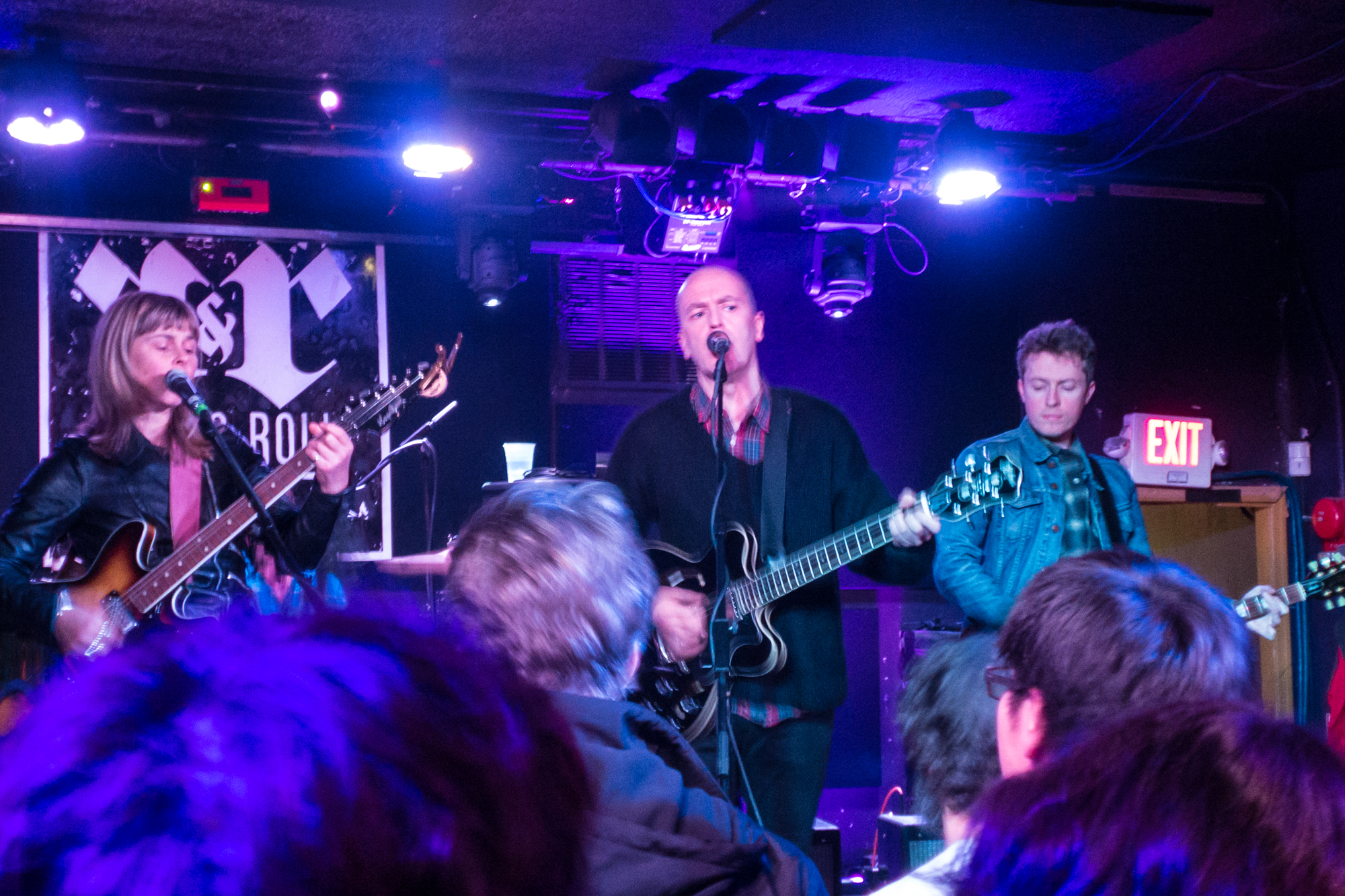
It is V For Vaselines, which took the # 3 slot on The 2014 Tulip Frenzy Top Ten List (c), that provided the most fun — and the most hope that this present incarnation of The Vaselines lives on for as many years as they were absent. Live, “Earth Is Speeding” was a reminder that as simple as their songwriting is, The Vaselines have the texture of a band like Roxy Music in its antic prime. “Crazy Lady,” which thankfully was restarted after it got off on a false note, is the Platonic ideal of a Mekons classic. The three-guitar structure, punctuated by a propulsive rhythm section, shows that while Eugene may hate the ’80s, it was the front end of that decade, and the preceding fours years of British punk, that gave The Vaselines their wall-of-sound power.
“Bubble gum meets Velvet Underground” is the way they once described the band. They’re a wee bit more complex today than that. Let’s hope The Vaselines slide through a great American tour, that their stage antics are shtick, and Eugene and Frances can keep it going for years to come.
Anticipating Dylan’s “The Basement Tapes Complete”: An Essay
Posted in Music with tags "Great Jones Street", "Invisible Republic", "The Basement Tapes Complete: The Bootleg Series Volume 11", Bob Dylan, Don Delillo, Greil Marcus, The Basement Tapes on October 31, 2014 by johnbuckley100The New York Times put on its front page this week the news that Orson Welles’ final film will at long last make it to the silver screen. We marveled at the news, but also at the news judgment, the front-page treatment, and wondered what they’ll do about The Basement Tapes finally being released in their entirety November 4th, 47 years after they were recorded.
You may think we are overdoing things here, preparing for the six-CD release of the 138 songs as if it were a newly found segment of the Dead Sea Scrolls. But the story of Dylan’s crashing his motorcycle in June ’66 and then dropping from sight for the next eighteen months, all the while recording, with a cohort of confederates in the basement of a Woodstock ranch house, a collection of original songs and American obscurities, is perhaps the enduring myth of rock’n’roll.
Already by 1973, Don DeLillo began what may be the most compelling novel about a rock’n’roll star, Great Jones Street, with this opener:
“Fame requires every kind of excess. I mean true fame, a devouring neon, not the somber renown of waning statesmen or chinless kings. I mean long journeys across gray space. I mean danger, the edge of every void, the circumstance of one man imparting an erotic terror to the dreams of the republic.”
The character narrating the story was named Bucky Wunderlick, a rock star hiding out on Great Jones Street (not nearly such a desired or high-priced address in the early ‘70s.) Wunderlick had recently dropped from sight and secretly recorded a new album he was hiding from his record company, and it was called, simply, Mountain Tapes. Sound familiar?
“Fame, this special kind, feeds itself on outrage, on what the counselors of lesser men would consider bad publicity – hysteria in limousines, knife fights in the audience, bizarre litigation, treachery, pandemonium and drugs. Perhaps the only natural law attaching to true fame is that the famous man is compelled, eventually, to commit suicide.”
When Dylan came up over the rise — the story is told wonderfully by Clinton Heylin in the new Uncut — and was blinded by the morning sunlight that caused him to crash the bike, he was actually blessed by good fortune. If his fame was compelling him, as Wunderlick said, toward suicide, then Dylan’s compressed vertebrae was a lucky break.
He crashed on July 29th, 1966. Less than a month later, the centrifugal forces of ‘60s fame would compel the Beatles to stop touring. They would depart one ring of the circus that surrounded them, never to play a real concert again. The Stones, too, were on the road that summer, touring an America that was changing by the hour, but they were rapidly coming to the end of Chapter One, the madness of their rise soon to sputter from the heavy punctuation of drug busts and romantic dissolution, before they returned, in ’68, with “Jumpin’ Jack Flash” kicking off their four-year Golden Age.
Dylan’s accident was the most dramatic, and as it turns out, most graceful way to get off the stage, to leave in the nick of time. By nearly killing himself on that motorcycle (it wasn’t that bad a crash, but it was a close call), he had an excuse to disappear, and in so doing, likely saved himself from becoming an Art Martyr, the first of this generation of rockers to die.
The Basement Tapes is the output of that moment hidden away from fame. And even when so many of the songs have appeared on bootlegs over the years, even with lickings of the cream of the collection, released by Columbia Records as a botched double-record, it is one of rock’s last mysteries. There is no hidden trove of Beatles gems. Truly. And yes, we hold out hope we will someday get the live album from the Stones’ ’72 tour: the Holy Grail for those who were there. But it’s The Basement Tapes, in their entirety, that promises to further complete our knowledge of rock’n’roll, and also, importantly, American Arts and Letters.
Dylan’s role as a quintessential American artist is one of the key elements in why, even had the Beatles and Stones secretly gone to work in some cottage in the Cotswolds, they couldn’t have produced something with the particular meaning of The Basement Tapes. What they were capable of would not have matched what Dylan was able to do in that basement with the Band.
The Beatles were fundamentally dependent on the Studio As Instrument, on a fifth member of the band, George Martin, who could leverage their capabilities and serve as midwife to their muse. At the moment Dylan was recording The Basement Tapes, the Beatles were releasing their most influential studio album, Sgt. Peppers. It was wholly new and original, a great work of art, and almost the polar opposite of what Dylan was doing up in Woodstock.
The Stones could play, Lord knows they proved that, but they were never in a position to tap into a native art form the way that Dylan was. We know what the Stones would do when left to their own devices, and it was Exile On Main Street – supremely brilliant, to be sure, and yes, recorded in the factory above which at least Keith slept, so that it had the semblance of an ongoing, lazy session on the artists’ own terms.
But that studio was a basement in a rented estate in Villefrance-sur-Mer, in the elegant south of France, and in addition to Keith’s kilos of smack, they brought along a state-of-the-art recording truck and their producer, Jimmy Miller. They just moved the studio to more comfortable surroundings. And while Exile is an homage to the American blues and rock’n’roll they absorbed every bit as thoroughly as a cotton ball sucking up liquefied heroin, the Stones were always separate from the musical idioms they mastered by the cultural distance of being born on the far side of the Atlantic. They could play the blues beautifully, but they couldn’t embody them, if only because they were white guys from London.
When by the early summer of 1967, Dylan remained upstate in Woodstock to record a masterpiece of Americana in the basement rented by his Canadian sidemen, the artificial, invented character of “Bob Dylan” was returning to authentic roots. The Bob Dylan whose persona conquered Greenwich Village and the folk movement and eventually pop culture — as completely as Bucky Wunderlick is said to have done – he was musically returning to the heart of the heart of the country and a song book he knew from memory.
When messing around on “Big River,” the Johnny Cash song, Dylan hollers out this verse so delightfully:
I met her accidentally in St. Paul (Minnesota).
And it tore me up every time I heard her drawel, Southern drawl.
Then I heard my dream was back Downstream cavortin’ in Davenport
And I followed you, Big River, when you called.
Robert Zimmerman knew from geographic proximity what it was like to cavort in Davenport. If the Stones had sung that – if Mick had sung that – it would have been fun, but it would have been an act. When Dylan sang that, the artist who invented everything about himself including his name was as authentic as he had ever been. Our theory is The Basement Tapes was Dylan returning to himself, after his art had created fame that might have killed him. It is the most authentic, true music he made in the 1960s. And much of it has never been heard, until now.
Robbie Robertson, learning from Dylan, would come to channel in his songwriting that same timeless evocation of American folk, country, and blues storytelling. The marriage of Dylan and the Band was a perfect match of musicians, singer, songwriter, and recording conditions: unhurried, unpressured, unwitnessed joy in musical storytelling taking place in a basement, hidden from the world.
Dylan stepped off the Dexedrine-fueled hamster wheel in a manner the Beatles couldn’t. For an ambitious young man who had had producers assigned to him and musicians he barely knew show up for sessions his record company arranged in the high-pressured theater of a New York studio where the explicit desire was for hits… well, sitting around a basement on a summer’s afternoon, with no supervision, no deadline, playing music written with seemingly a remote expectation it would be released into that howling wind of fame from which he’d just escaped, with the musicians themselves in charge of “the studio”… it was an assertion of artistic control to play timeless music outside of time itself.
Dylan snuck away to do what he wanted to do, and with no pressure on him to do something great, he actually created some of the greatest work… the greatest writing, the greatest music… in American art.
The jacket copy to Invisible Republic, Greil Marcus’ fascinating, if over the top, book on The Basement Tapes, calls it “secret music, never intended for release.” But we don’t quite believe that.
We have come to accept, and this is confirmed in Uncut’s magisterial recounting of the many things in play when Dylan made The Basement Tapes, that at least some of the songs were written and recorded with an eye toward publishing them – either with him recording them again more formally at a later date, or as song demos created to fulfill the implicit demands of Albert Grossman, his estranged manager, and the business interests dependent on new Dylan product. The guy was as big as the Beatles, and when he went flying off that motorcycle, so went the economic fortune of record label, publishing house, and the apparatus propping up, and living off, Dylan’s fame. So there must have been at least an unconscious desire to create music that was, in some way, usable.
You don’t write songs as gnarled and ambitious as “Too Much Of Nothing” intending to let them never be heard outside of the basement of a pink-colored house in the hills. But then you don’t write a song as funny as “Clothes Line Saga” thinking it would get the radio play of “Like A Rolling Stone.”
The next day everybody got up
Seein’ if the clothes were dry
The dogs were barking, a neighbor passed
Mama, of course, she said, “Hi!”
“Have you heard the news?” he said, with a grin
“The Vice-President’s gone mad!”
“Where?” “Downtown.” “When?” “Last night”
“Hmm, say, that’s too bad!”
“Well, there’s nothin’ we can do about it,” said the neighbor
“It’s just somethin’ we’re gonna have to forget”
“Yes, I guess so,” said Ma
Then she asked me if the clothes was still wet
The summer of 1967 was, let us not forget, The Summer of Love. But even though he was a folk hero to the bands in San Francisco, woodshedding up in Woodstock he was a world away. Sgt. Peppers Lonely Hearts Club Band would be released that summer, and so would The Velvet Underground with Nico. And there was Dylan with the Band, channeling the voices, as Marcus points out, of obscure folk musicians from the turn of the century.
A missing piece of the American story will be released on Tuesday, 138 songs – originals and covers, completed masterpieces as well as fragments. Thinking of history’s widest angled lens, of course these songs would not be released in their entirety until now; the story of The Basement Tapes, their long path to our being able to examine them in quasi high fidelity, depends upon the circuitous route they took to getting here.
This will be viewed as heresy by many, but we actually think The Basement Tapes, as we have grown to know them over the past 40+ years via bootlegs and the roughly ten percent that has been released officially, comprises one of three distinctly great segments of Dylan’s entire career. The first segment of greatness was the trio of records released in 1965 and 1966 – Bringing It All Back Home, Highway 61 Revisited, and Blonde On Blonde. The next segment is The Basement Tapes. It would be 30 years before Dylan would again ascend these heights, when with Time Out Of Mind, Love And Theft, and Modern Times, he redeemed all that had been missing in the uneven albums since.
If I had to choose only one of the three to take to a desert island, it would be The Basement Tapes. And there are at least 30 songs among them that, starting Tuesday, I will hear for the first time.
And you wonder why I am so excited.
Dylan, Velvets, Beefheart: November Will Be Historic
Posted in Music with tags Bob Dylan, Captain Beefheart, The Basement Tapes, The Velvet Underground on October 28, 2014 by johnbuckley100The Basement Tapes in their entirety will be released one week from today in a 6-CD set. Yes, 138 out of 140 or so songs recorded by Dylan and The Band in ’66 and ’67 will finally be available legitimately (not as low-fidelity bootlegs).
You don’t have to be a Dylanologist, you don’t have to even really love rock’n’roll, to understand what an important event in American culture next week will be. A victory by Republicans may set the clock back on election night, but our palliative will be to return to the bygone era in which The Basement Tapes were recorded — The Band plus Dylan crowded in The Red Room (Dylan’s place in Woodstock) or Big Pink (The Band’s group house) playing old folk songs, some of Dylan’s most enigmatic originals, Johnny Cash covers and the like. And it will all be available next week. (Picture us rubbing our hands together.)
On November 17th, we get to listen to Sun, Zoom, Spark: 1970-1972, a four-disk box set that spans Captain Beefheart’s least celebrated, yet hugely satisfying post-Trout Mask Replica period. For the first time ever, Lick My Decals Off, Baby will be released on CD in its entirety. And in addition to a new mastering of the sublime Clear Spot, we get rarities from the period. (Drool forms in the back of the mouth… It’s so close now, how can we wait three weeks?)
The Velvet Underground — the band’s third, and best, record will be released, along with contemporaneous live tracks never before legitimately set into the wild, on the Tuesday before Thanksgiving. Maybe the surviving Velvets (John Cale and Mo Tucker) are so concerned with family values, they wish us all to be able to discuss the rarities over dinner with the relatives?)
Who knows. What we do know is that we have likely never gone into a November believing that we will need to lock ourselves away with headphones to listen to the 16 disks — 16 disks — of music we have longed for years to be able to hear, all to be released in this single month…
The Asteroid No. 4 Still Shoots Through The Night Sky
Posted in Music with tags "The Asteroid #4", Anton Newcombe, Brian Jonestown Massacre, The Asteroid No.4 on October 26, 2014 by johnbuckley100It’s been 15 years since Sounds of Psychedelphia caught The Asteroid No. 4 plummeting toward us, but on the space/time continuum, that moment is separated from this by but a blink of an eye. They’ve moved, to San Francisco, which of course makes sense, since they comprise the entire narrative of psychedelic bands, from the Acid Tests to Marin and back, grokking country music along the way, only to return to tuneful folkrock roots. Ah, but they never fully leave the land of psychedelia.
The new album is simply called Asteroid #4, though it’s A4’s eighth, and it’s a beaut. It has enough sitars to get Anton Newcombe smiling, even though his record label no longer puts their music out. On this one A4 can invoke a lysergic afternoon (“Mount Meru”), and come back with a radio-perfect pop song like “Ropeless Free Climber,” which is so pure you can imagine Alex Honnold psyching himself up with it before clabbering up the Half Dome.
Look, for a decade and a half The Asteroid No.4 have undemonstrably plied the land as one of our great bands. They have not lacked musical ambition, they just haven’t been careerists. Which is only one of the reasons you may not previously have genuflected before them, which you should do right now. They may even have a bit of a perverse streak, letting loose their country inclinations just when touring with the Brian Jonestown Massacre should have locked in their relationship with the kids who came for “Anemone.” On The Asteroid #4, the band serves up something for everyone: those who want the trance rock to throb, and those who love ’em because they hear echoes of the Byrds.
We love ’em because they never disappoint, and eight albums in, The Asteroid #4 is a delight.
Ty Segall’s Epic 930 Club Show Was A Crowd-Surfing Frenzy
Posted in Music with tags 930 Club, Ty Segall on September 16, 2014 by johnbuckley100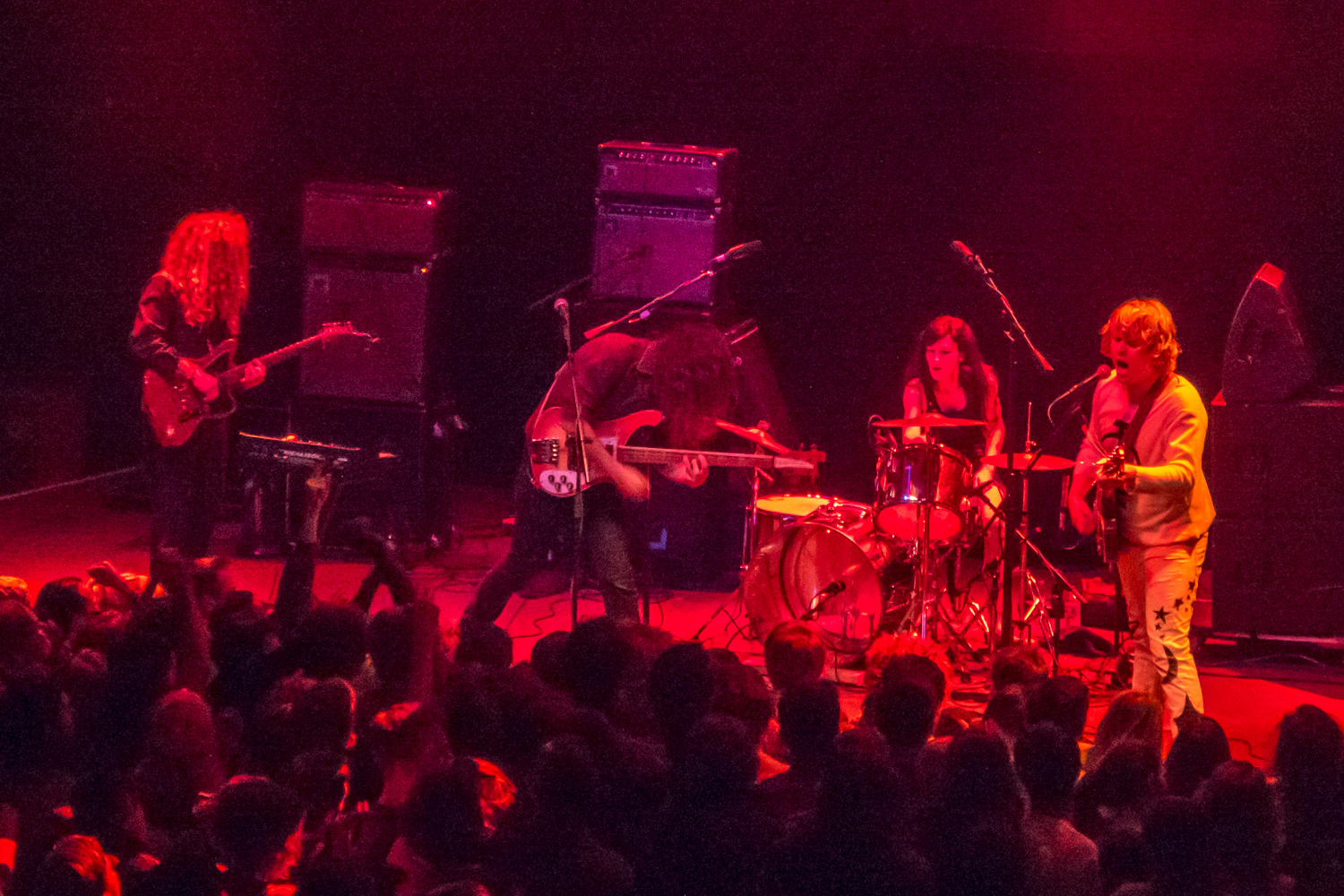
Last night at D.C.’s 930 Club, Ty Segall showed that the best songs on his new double album, Manipulator, are so many and strong that he can go for a 45-minute stretch before dipping into his glorious back catalogue. Beginning with the title track and ripping through “It’s Over,” “Feel,” and an electrified — and electrifying — version of “Green Belly,” it’s no wonder the audience took to lemming-like launches into the waiting arms of their sturdy compatriots, who passed them around the venerable club like so many sacks of ecstatic jute.
For the better part of the decade, Ty Segall has been a one-man tent revival preaching real rock’n’roll, jacked into the absurdly varied electrical circuit that brought us garage rock, psyche, metal and the Beatles, a melodic and propulsive reminder of what the genre, as it dies, once was capable of. And now he is hitting a city near you, toting his most commercially viable album ever, and putting on shows which, if last night is the par example, remind us all of what once was, and what still can be. When we say he’s been a one-man band, in the studio it’s true; as alway when playing live, longtime sidekicks Mikal Cronin, Charlie Moothart, and Emily Epstein prove they can kick forward and back too, an undulating mass of throbbing gristle and Twisted Sister hair playing the best punk rock on the planet.
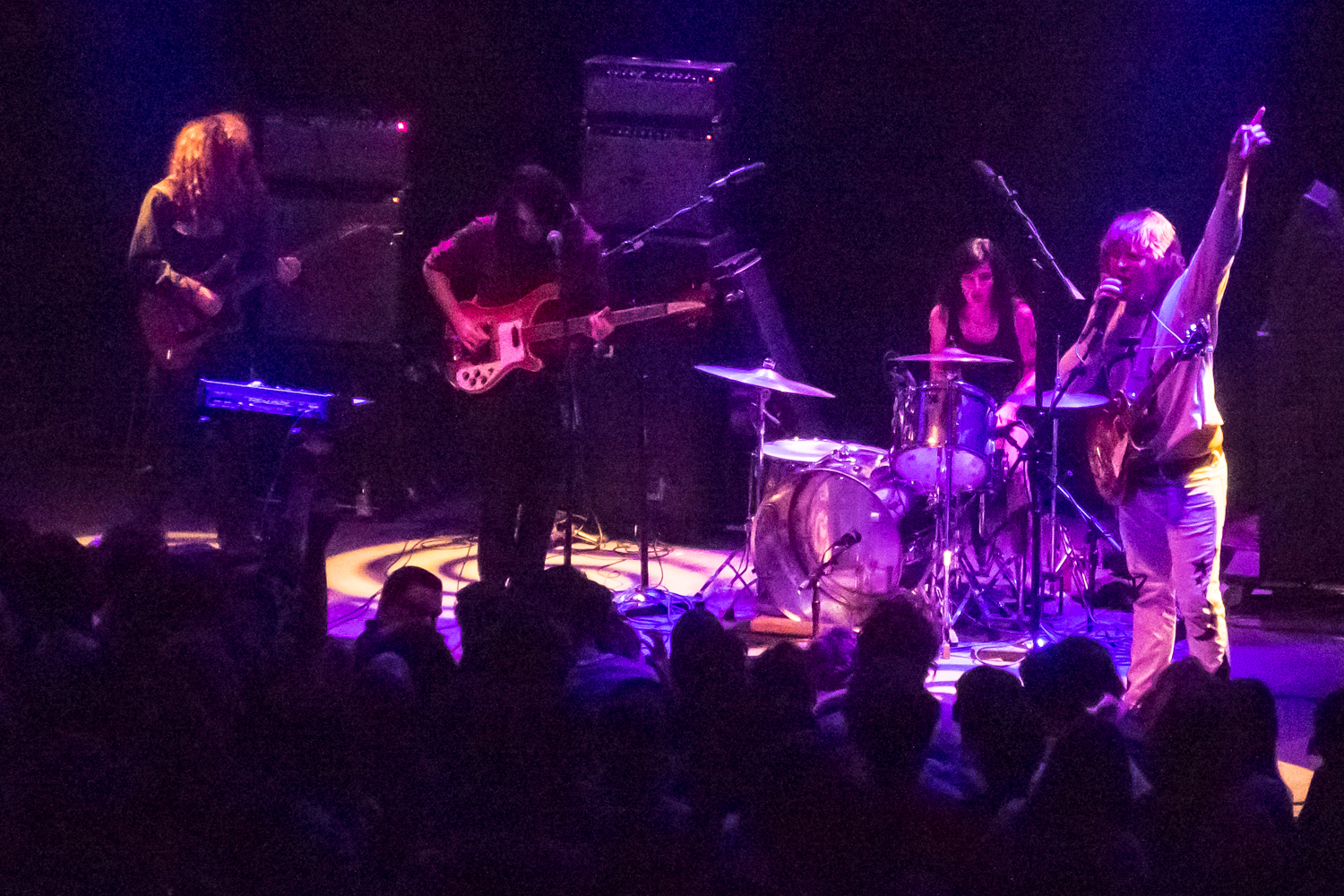
From our vantage point — and we were smart enough to get upstairs — this was among the most tumultuous shows ever played at the 930 Club’s second incarnation. (We offer a pro tip to young ‘uns swept up in the crowd-surfing impulse: if you choose to dive from the stage after 30 of your cohort have gone before you, don’t hit precisely the same spot, as the audience will have tired arms and sweaty, slippery fingers.)
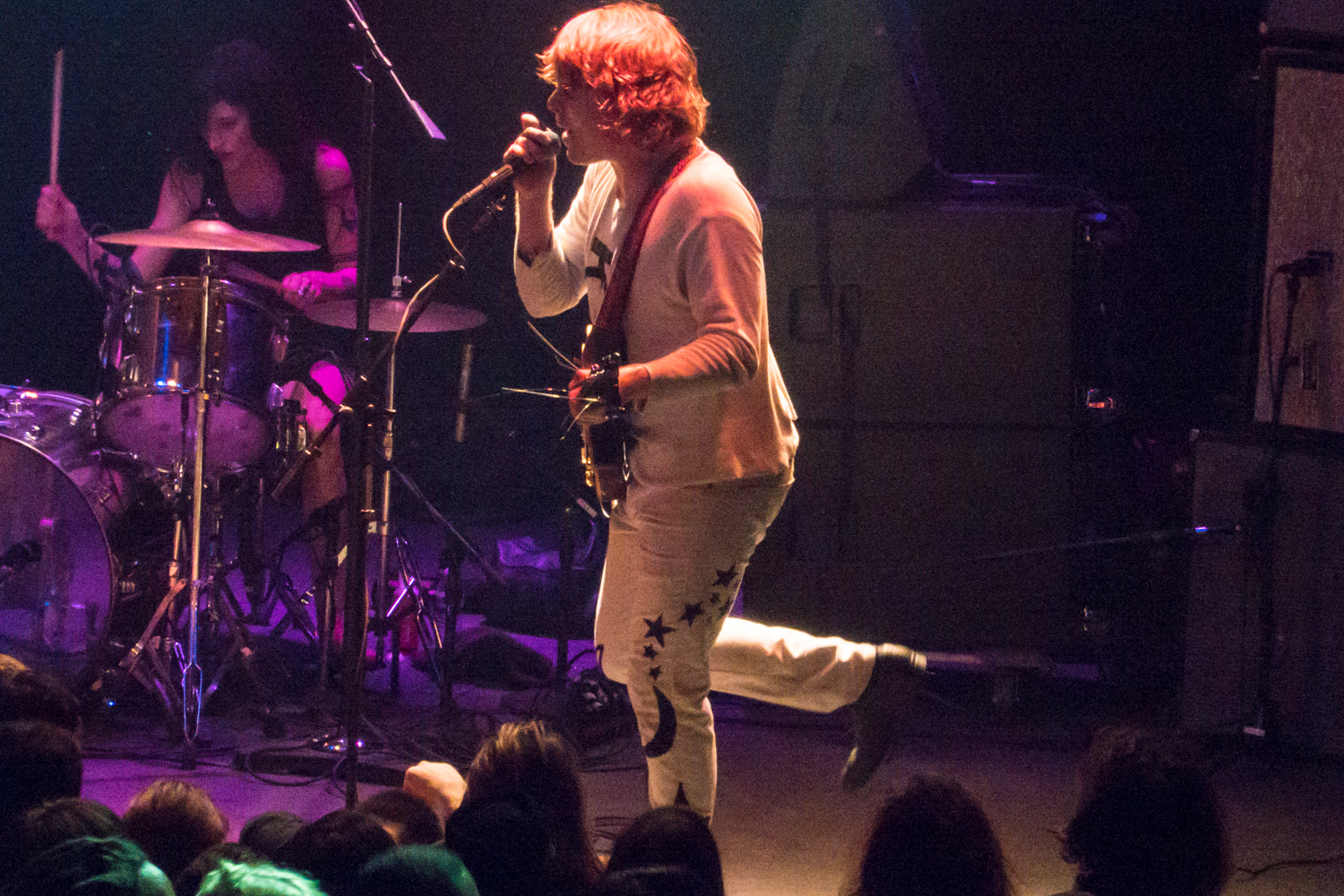
Readers who grant us the Talmudic inspection our writing deserves will know that while we believe Manipulator has a boodle of boss tracks on it, its overt play to get Black Keys-like radio love — by subverting, with the addition of newfound R&B riffs, Ty’s strong suit in melodic hard rock with punk’n’metal overtones — left us wondering if the delivery of what we once had wished for — the boy producing a solid slab o’ commercial potential — was a deviation from what we most enjoyed about this latest Savior of Rock’n’Roll. But last night was the clincher: the album is truly worthy. We’ve long predicted he had a future on the stage at the Verizon Center, and maybe this is the last time we will see him in a club the size of 930. But honestly, why — money aside — would you want to play Verizon, where they get huffy about crowd surfing, when you can fall back on the audience and they will carry you for a moment before gently returning you right back to the stage?
We were happy to hear the songs from his best album, Twins, and the songs from The Ty Segall Band’s Slaughterhouse were a reminder of a previous moment when it took the live set to reveal how great the album was. When we stepped out into the street, we felt like we’d survived the mayhem Ty unleashes. Mayhem and ear-to-ear grins. Hell, our ears were grinning too.
 Tulip Frenzy