Leica Monochrom, Noctilux.

Leica Monochrom, Noctilux.
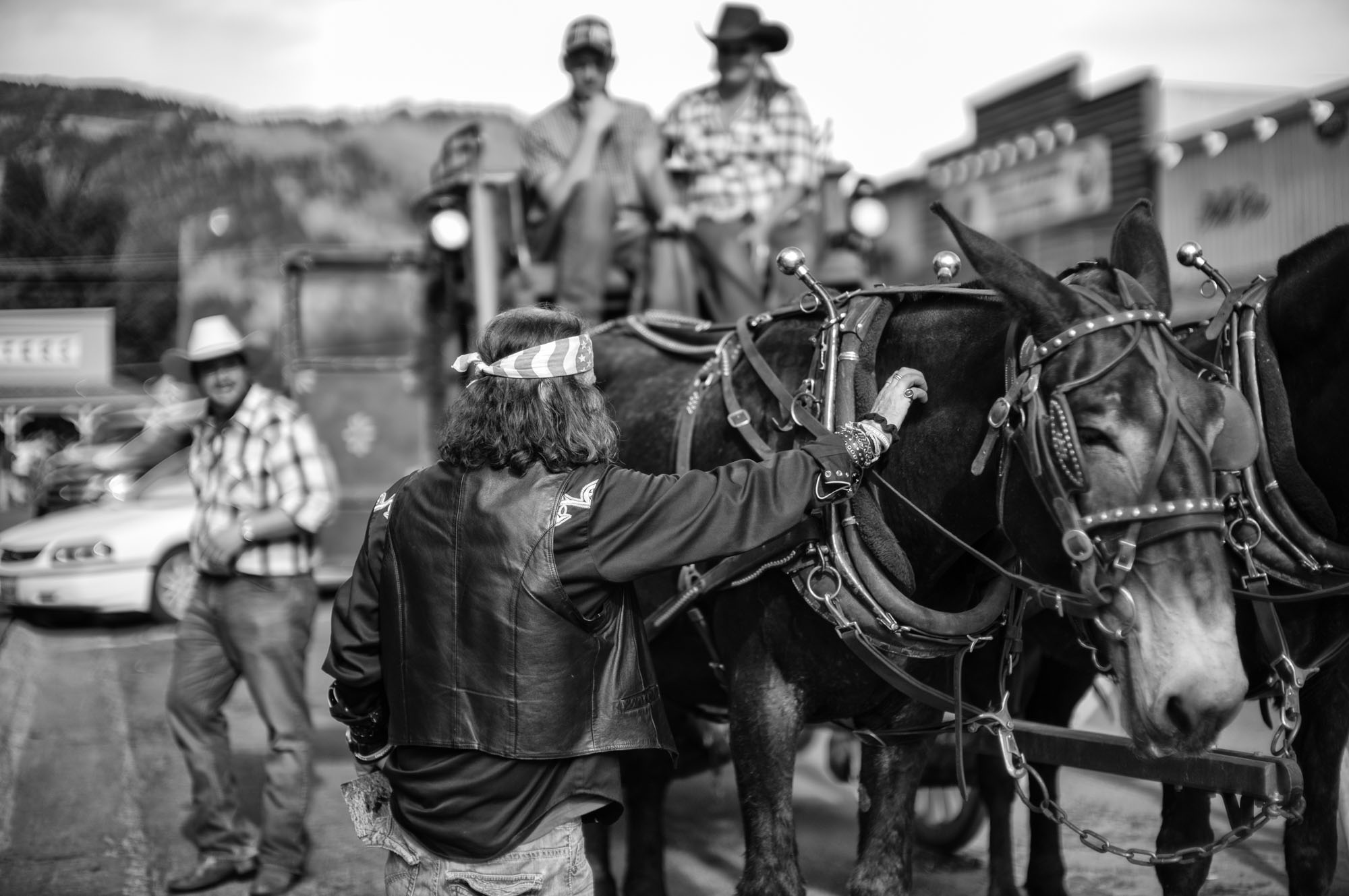
All he wanted to do was pet the horse. And they sort of hung back and laughed at him. Leica Monochrom, 50mm Noctilux.
We love the verse that goes:
“I’m the man who walks the hillside in the sweet summer sun.
I’m the man that brings you roses when you ain’t got none.
Well I can run and jump and fish, but I won’t fight
You if you want to push and pull with me all night.”
Leica M, 50mm APO-Summicron-Asph.

Get your X and Dave Alvin records set up on the jukebox. Grab your Galaxie 500 cds. Get ready, because it is almost the 4th of July.
Leica M8, 50mm Summilux.

Almost to our favorite holiday, at least for picture taking. Washington, D.C. 2012. The previous one was Jackson, WY, 2009. Leica M9, 35mm Summilux FLE.

Leica M8, 50mm Summilux. And more where this came from…

With apologies to the Beatles, and their original title for Help (“Eight Arms To Hold You”.) Leica M, 50mm APO-Summicron-Asph, ND filter.

With apologies to the late Donald Barthelme, who sure knew how to title stories, didn’t he? Leica M, Vario-Elmar-R @200mm. First picture we’ve ever tried actually to capture the face of the moon, which we now can do, given the Leica M takes R lenses. Sort of getting the hang of things…

The most beautiful day in… less than a week. Leica M, Noctilux f/0.95, ND filter.

The New York Times’ Lens Blog is one of the great daily reads, a public service to those who care about photojournalism and photography. Yesterday, the Lens Blog published the first installment of a previously unpublished interview with Henri Cartier-Bresson. This morning, they published the second installment. If you only ever read one thing about the great master’s views on photography — in fact, if you only ever read one essay on photography — this interview would be a good candidate for the essential distillation. It’s the Decisive Interview, as it were.
The back story is lovely. In 1971, Cartier-Bresson sat for the interview with Sheila Turner-Seed, who died in 1979, though not before giving birth, a year before her passing, to a daughter. Many years later, the daughter found the interviews her mother conducted, and heard, for the first time, her mother’s voice. The interviews will be included in a documentary film Rachel Seed is producing about her mother.
The interviews are marvelous — a distillation of what we know about Cartier-Bresson, from his lack of interest in gear to his aversion to color photography. (“Color is bullshit,” he famously told William Eggleston — but here, just a few years before he said this to Eggleston, we learn more about why he felt this way. It seems he found color distasteful, among other reasons, because the process of getting true color prints involves too many other factors, and too many other people.)
His reason for using a 50mm lens is fascinating, to us at least, and puts him implicitly at odds, we’d say, with Alex Webb, who is perhaps the only modern photographer who has an HCB-quality of Surrealist juxtaposition in his very complicated images: “It corresponds to a certain vision and at the same time has enough depth of focus, a thing you don’t have in longer lenses. I worked with a 90. It cuts much of the foreground if you take a landscape, but if people are running at you, there is no depth of focus. The 35 is splendid when needed, but extremely difficult to use if you want precision in composition. There are too many elements, and something is always in the wrong place. It is a beautiful lens at times when needed by what you see. But very often it is used by people who want to shout. Because you have a distortion, you have somebody in the foreground and it gives an effect. But I don’t like effects. There is something aggressive, and I don’t like that. Because when you shout, it is usually because you are short of arguments.”
Perhaps of greatest interest to photographers is a little more detail he offers indirectly on his concept of the “the decisive moment.” He spelled some of this out in the essay introducing the book published in the U.S. with that name. But at a moment when Gary Winogrand — who took tens of thousands of pictures, and famously died with thousands of images in unprocessed film cassettes — is being celebrated with a traveling exhibition at major museums, there is this admonition from Cartier-Bresson about waiting for that right moment to snap the single, essential picture:
“It’s a question of concentration. Concentrate, think, watch, look and, ah, like this, you are ready. But you never know the culminative point of something. So you’re shooting. You say, “Yes. Yes. Maybe. Yes.” But you shouldn’t overshoot. It’s like overeating, overdrinking. You have to eat, you have to drink. But over is too much. Because by the time you press, you arm the shutter once more, and maybe the picture was in between.
“Very often, you don’t have to see a photographer’s work. Just by watching him in the street, you can see what kind of photographer he is. Discreet, tiptoes, fast or machine gun. Well, you don’t shoot partridges with a machine gun. You choose one partridge, then the other partridge. Maybe the others are gone by then. But I see people wrrrr, like this with a motor. It’s incredible, because they always shoot in the wrong moment.”
Winogrand certainly didn’t always shoot in the wrong moment, but so many of us do, especially given how easy it is to load an SD card with photos. We know from other stories how HCB would sit at night, rolling his own film into cartridges for use the following day. Each single image had value.
There is so much more there, distilled in a single pair of posts — Cartier-Bresson’s affinity for the Surrealists, and the advice he got from Robert Capa not to talk of this, but to instead, for career reasons, describe himself as a photojournalist; his troubling conclusion that when it comes to being a good photographer, you either have the gift or you don’t; the radical simplicity of his approach wherein he never really even felt the need for a light meter.
This interview is of value to anyone who cares about photography, and the work of one of the 20th Century’s greatest artists.
 Tulip Frenzy