Archive for the Uncategorized Category

Radiohead’s Mid-Tour Stats Compilation Tells You A Lot About The Band

Posted in Uncategorized with tags , on May 29, 2012 by johnbuckley100

You can get a really good sense of how Radiohead views which songs and albums from its oeuvre really matter by looking at this quite helpful release of song stats they put out today, starting with the count, 17 shows in, of how many songs they’ve played from which albums:

Pablo Honey – 0/12
The Bends – 2/12
OK Computer – 6/12
Kid A – 5/10
Amnesiac – 5/11 (including Hunting Bears snippet)
Hail To The Thief – 3/14
In Rainbows – 8/10
The King Of Limbs – 8/8
The King Of Limbs+ – 3/4
B-sides/Other – 3
New Songs – 3

New Song Frequency
Identikit: 14 performances
Skirting On The Surface: 2 performances
Cut A Hole: 2 performances

Live Debuts (excluding new songs)
The Amazing Sounds Of Orgy: 4 performances
Meeting In The Aisle: 2 performances

Songs Played At Every Concert: 5
Bloom, Morning Mr Magpie, Lotus Flower, Reckoner, Idioteque

Songs Played Only Once: 3
Videotape, Packt Like Sardines In A Crushd Tin Box, Hunting Bears

Opening Songs: 1
Bloom (17/17)

Closing Songs: 5
Paranoid Android (9/17)
Idioteque (3/17)
Street Spirit (3/17)
Everything In Its Right Place (1/17)
Karma Police (1/17)

Everything In Its Right Place intros
True Love Waits (4)
The One I Love (REM cover) (1)
Electrolite (REM cover) (1)
After The Gold Rush (Neil Young cover) (1)

Notable Absences
Fake Plastic Trees, Just, My Iron Lung, No Surprises, Morning Bell, 2+2=5, Where I End And You Begin, Jigsaw Falling Into Place

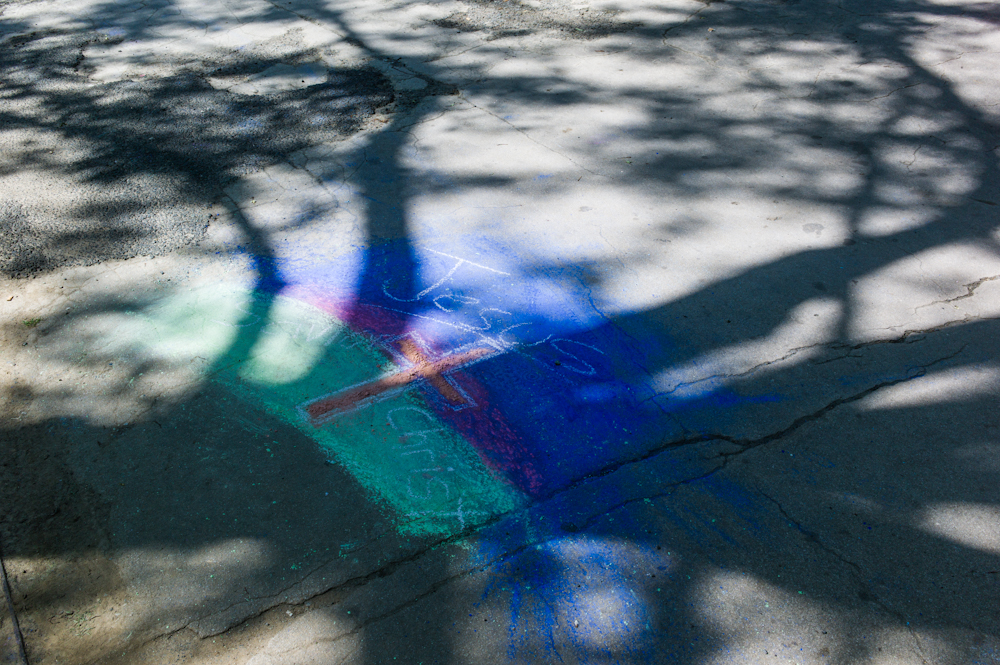
We Found Jesus

Posted in Uncategorized with tags , on May 25, 2012 by johnbuckley100

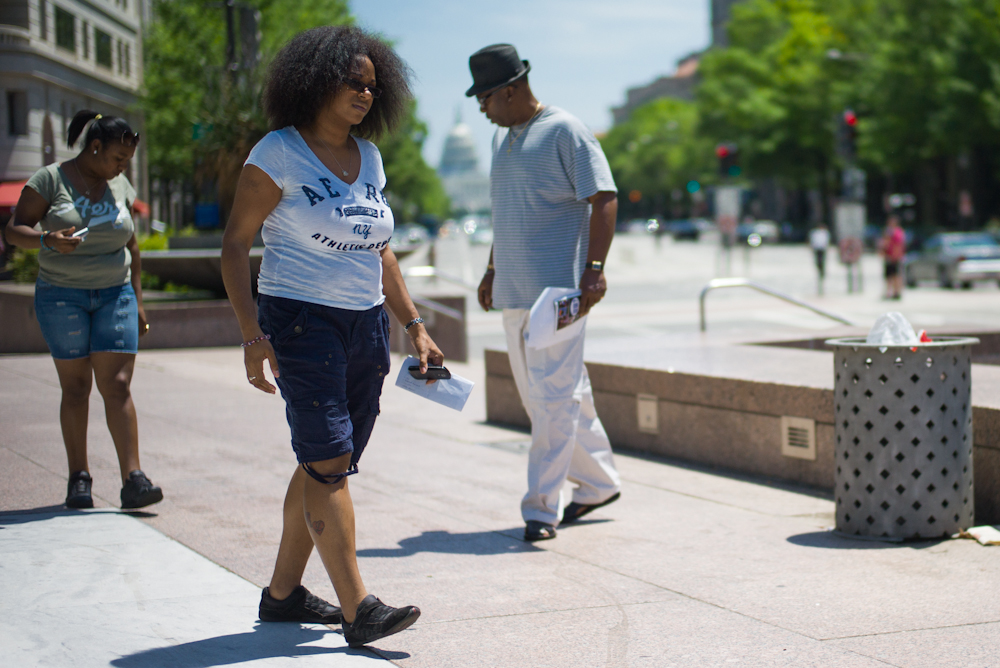
In McPherson Square.  Leica M9, 35mm Summilux FLE.

Only In America

Posted in Uncategorized with tags , on May 21, 2012 by johnbuckley100

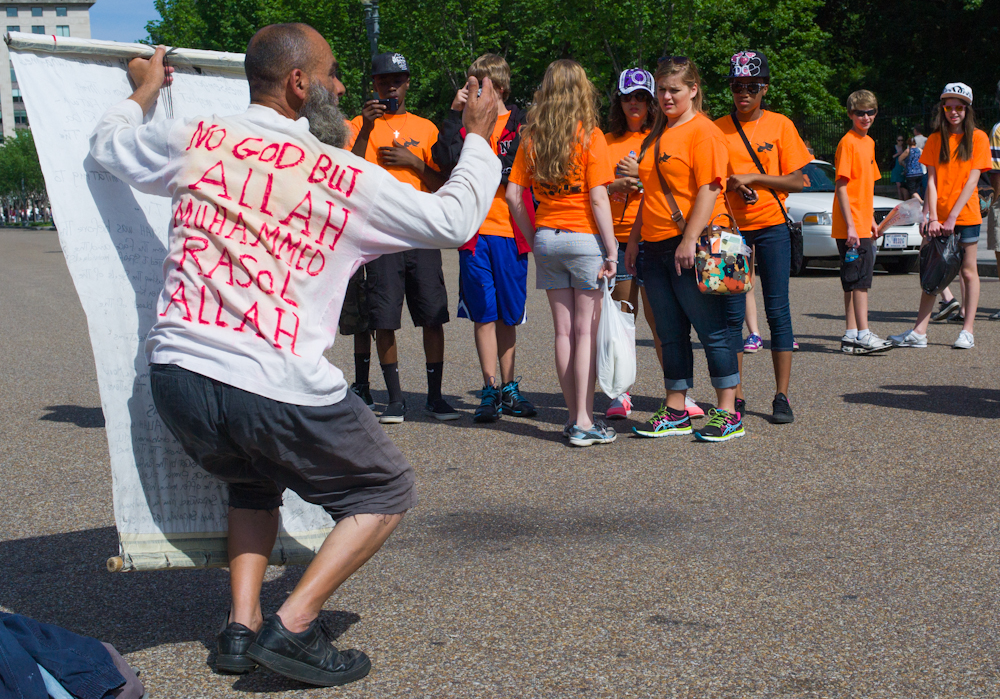
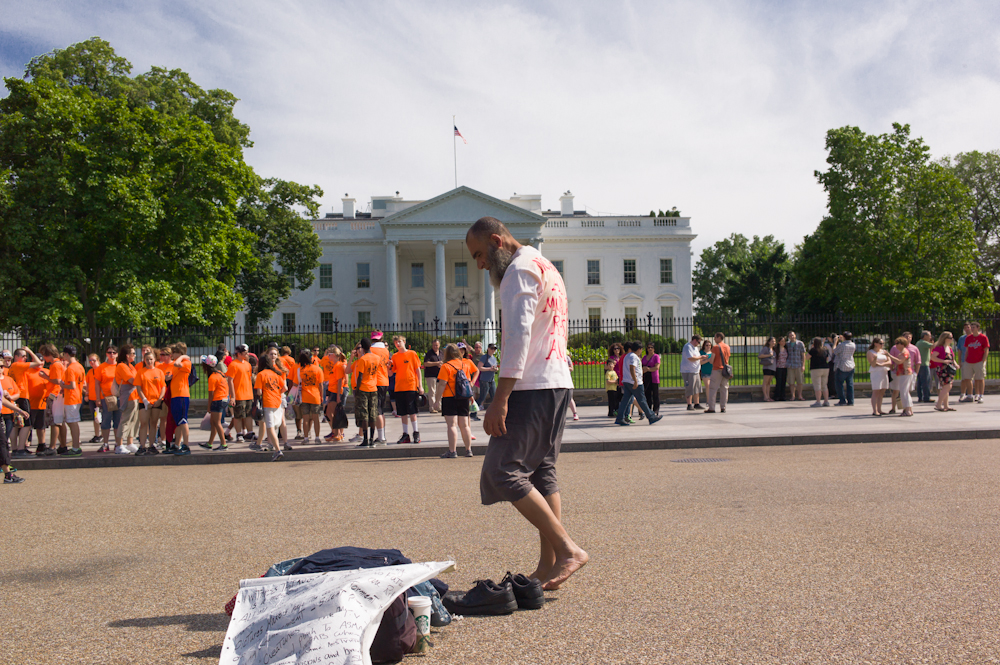
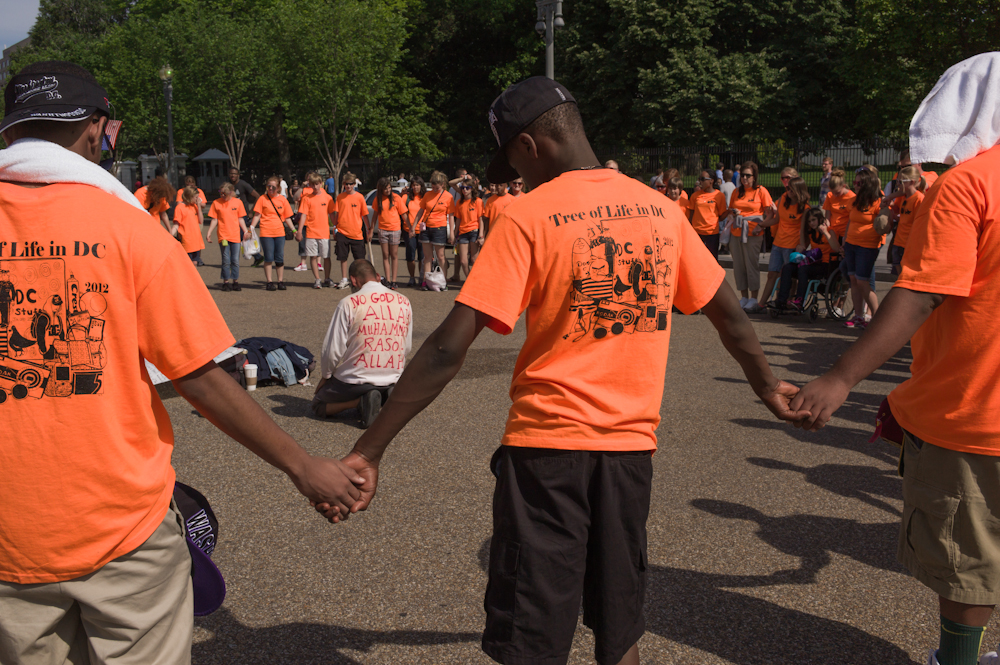
On Friday, a number of Leica shooters participating in a Leica Akademie Street Photography workshop in D.C. found ourselves in front of the White House as a Muslim man demonstrably worshipped his god.  A Christian church group, kids and adults alike all dressed in orange, showed up as the man was going through what can only be thought of as a performance.  The kids looked on with a mixture of surprise, skepticism, and hostility.

Leica M9, 35mm Summilux FLE

Shortly thereafter, the man washed his feet and began to walk around as the kids — maybe 50 of them — crowded into the space.

And then, when he got back down on his hands and knees to worship toward Mecca , the adults with the group gathered the kids around the man in a large prayer circle and loudly began to pray to Christ.  Either it was an example of religious tolerance — representatives of two religions using the public space in front of the White House to worship — or it was a strange encounter, in which a Muslim was surrounded by Christians intent on drowning out his message.  What do you think it was?


In Search

Posted in Uncategorized with tags , on May 20, 2012 by johnbuckley100

Leica M9, 50mm Summilux with ND filter.  Taken the morning of news reports the Supreme Court might take up a challenge by Alabama to the Voting Rights Act of 1965.

Color, Not Monochrom

Posted in Uncategorized with tags , on May 12, 2012 by johnbuckley100

Leica M8, Nocti f/1.

Leica M Monochrom Available In July

Posted in Uncategorized with tags , , , on May 11, 2012 by johnbuckley100

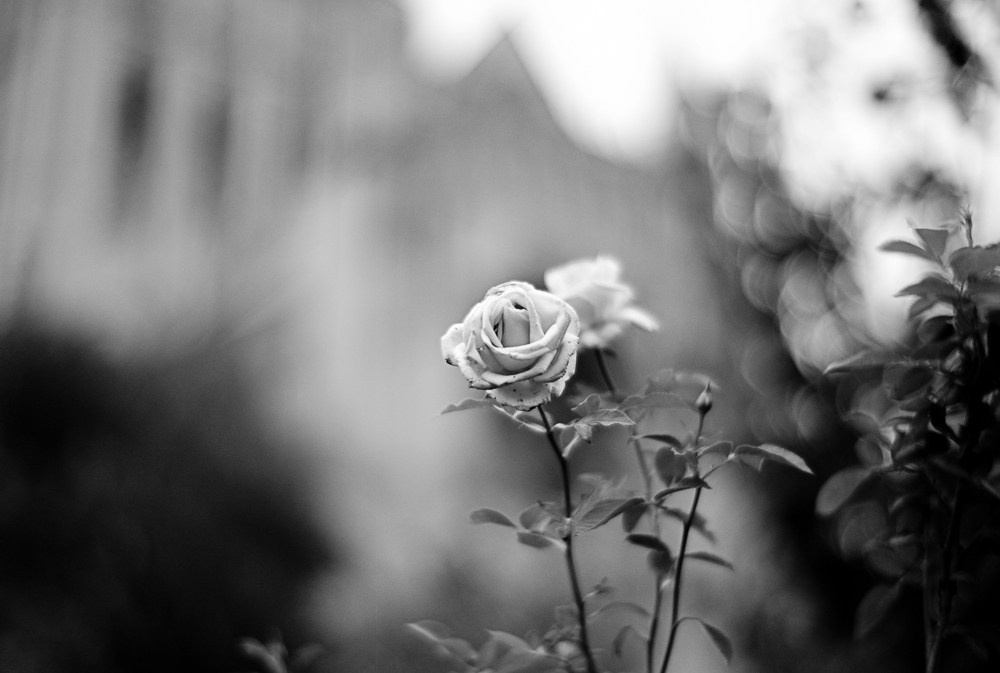
Leica M8, old Nocti (f/1).

We love the fact that the new member of Leica’s M family was codenamed “Henri” prior to the announcement yesterday in Berlin. For surely the spirit of Henri Cartier-Bresson is evoked in a digital M with a black & white sensor.  We anxiously await the Leica M10, and for now will avoid the temptation to buy the M Monochrom, as unlike Cartier-Bresson, we think in color, not black & white.  But hats off to Leica, which in the past few years has been completely revived, both as a brand and a business, by Dr. Andreas Kauffman and his colleagues and employees.

For a nice look at what this camera can do, check out Jono Slack’s report from China, where he was able to take it along for the ride.

The Leica Store In D.C. Officially Opens

Posted in Uncategorized with tags , , , on May 3, 2012 by johnbuckley100

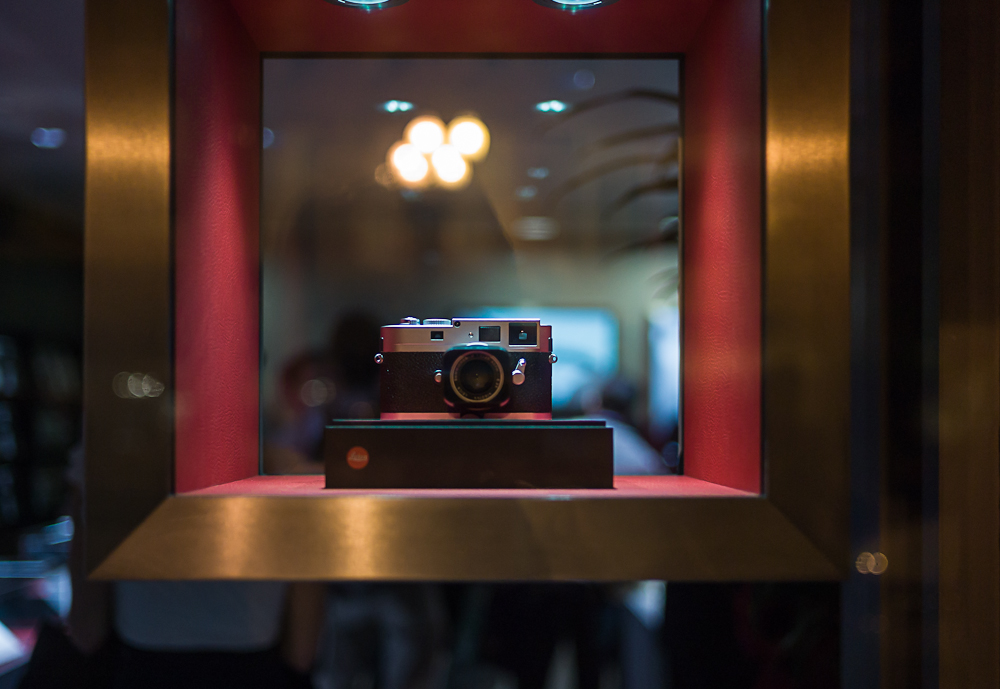
Leica M9, 35mm Summilux

The first store in the United States fully owned and operated by Leica Camera officially opened last night with a cocktail party followed by a quite wonderful talk by famed photojournalist Peter Turnley.  Turnley exhibited keen intelligence and great empathy, reminding a full complement of Leicaphiles that photography is about heart, and sharing what you see in the world, not merely gizmolust.  But of course,  it also is partly about gizmolust, which is why we post the above image.

Tulip Frenzy’s Bouquet To Tim Presley In Honor of “Family Perfume, Vol. 1”

Posted in Uncategorized with tags , on April 30, 2012 by johnbuckley100

Leica M9, Noctilux, Pikes Place Market.

Flying Fish

Posted in Uncategorized with tags , on April 29, 2012 by johnbuckley100

Leica M9, 50mm Noctilux at f/0.95

The Leica M9 and Noctilux is a pretty perfect combination to take to a colorful, dark setting such as Seattle’s Pike’s Place Market on a cloudy afternoon.

We weren’t quite prepared for the tulip frenzy.

Leica M9, Noctilux wide open.

This combo also does pretty well capturing images outdoors, too.  Thankfully it was a little overcast.

Leica M9, 50mm Noctilux

For more M9 and Nocti photos from Pikes Place Market, go here.)

The National Gallery’s “I Spy” Exhibit Takes Street Photography To Extremes

Posted in Uncategorized with tags , , , , , on April 25, 2012 by johnbuckley100

It is kismet, or something even more magical, that accounts for The National Gallery of Art opening an exhibit on street photography just as the new Leica Store in Washington opens a few short blocks away.   As an exhibition, “I Spy: Photography and the Theater of the Street, 1938 – 2010” is a visual tour de force, even as its curators have taken a curious approach to defining street photography.  Showcasing work by Walker Evans, Robert Frank, Bruce Davidson, Philip-Lorca DiCorcia, Harry Callahan, and Beat Strulli, the curatorial emphasis is not on capturing the momentary slice of life that photography of real people, in real situations on the street, on the subway, or other public theaters, provides.  It is on the artifice involved in the technique by which they’re captured — the hidden cameras, the telephoto lenses, the shots of people taken from a bus.  And unfortunately this gives an opening to a critic who doesn’t really understand what street photography is all about.
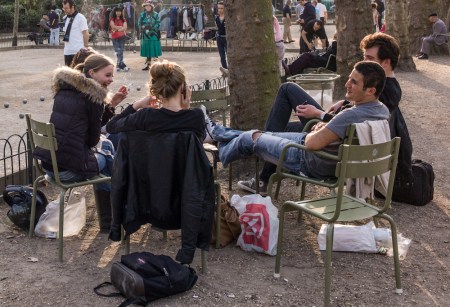
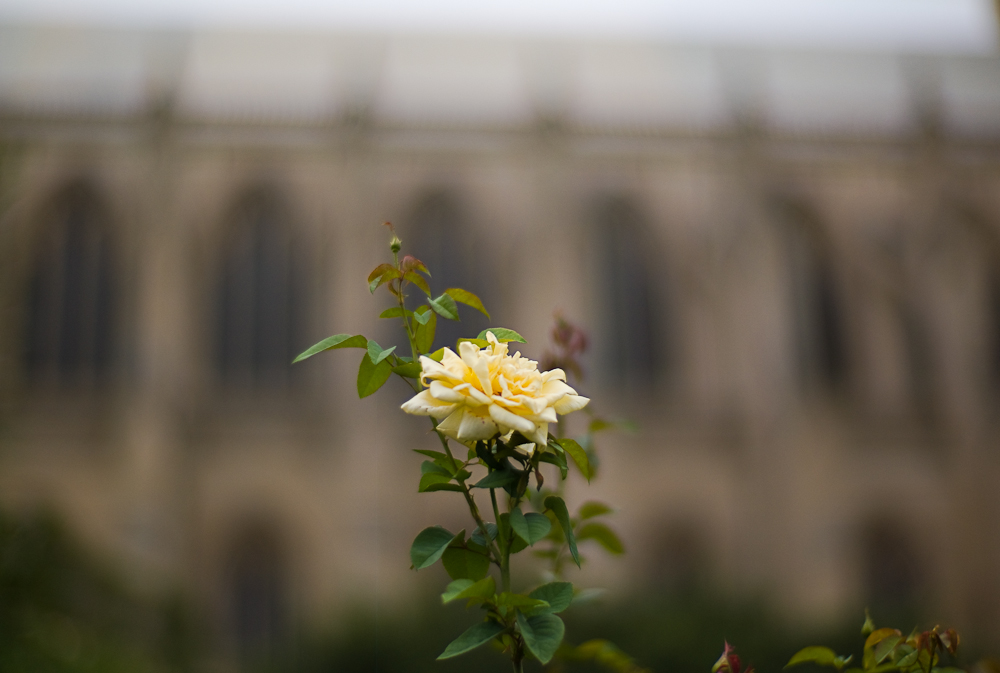
Leica M9, 35mm Summilux, Luxembourg Gardens, March 23rd, 2012

Philip Kennicott’s parched and somewhat misleading review in The Washington Post, focus on the techniques invoked to fool people — the “I Spy” emphasis of the curators — rather than the images themselves.  “The assumption driving these (photographic) experiments,” Kennicott writes,  “is simple but problematic: By masking the presence of the photographer, one can get a deeper, more unguarded truth about people. As Evans put it, he wanted to capture people “in naked repose,” with their guard down and “the mask” off. Whether it’s Freudian slips of tongue, unwanted conversations caught on a hot mike or leaked videotape from cameras no one knew were on, we tend to believe the spontaneous self is the honest self. But it’s a quirk of modernity to believe that the social mask is false and that there is some kind of genuine authenticity underneath it.”

But this misses the point. And unfortunately the equating of street photography with spying using deceptive techniques allows him to get away with it.

There is a simple reason why street photography matters, why it is interesting as a documentary artform.  People are always the most interesting subject for a photographer.  Landscape photography is aesthetically pleasing.  But photographs of real people engaged in living are fundamentally more interesting than images of mountains and rivers, no matter how lovely.  We love Ansel Adams’ work, but Henri Cartier-Bresson’s put down — that Adams and others were taking pictures of rocks while the world of the mid-20th century was coming apart — rings true.

Spontaneously capturing people going about their business doesn’t need the subterfuge involved in “I Spy.”  You just lift your camera to your eye and capture what’s coming your way.

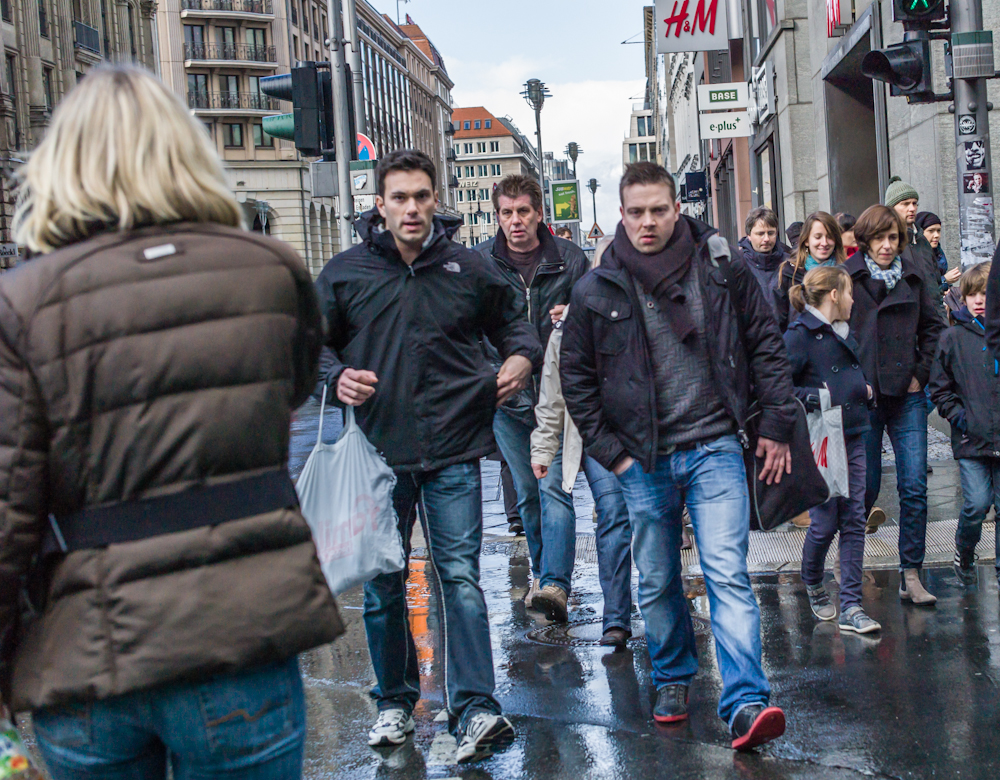
Leica M9, 35mm Summilux, Friedrichstrasse, Berlin, March 30th, 2012

“I Spy” focuses on street photographers using the most extreme mechanisms for capturing their slice of life.  In reality, street photographers are more likely to use wide-angled lenses, freely shown, than telephoto lenses from the equivalent of a duck blind.  The images taken by artifice in “I Spy” — Harry Callahan’s capturing of women on the streets of Chicago from a fixed position with a telephoto lens, Walker Evans’ use of a camera hidden in his shirt — really could as easily have been captured via a more straightforward manner.  And in fact, there are dozens of street photographers that could have been included in this exhibit that use less extreme techniques.
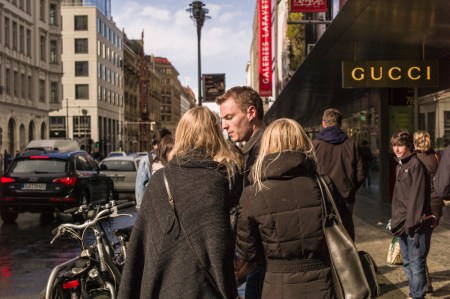
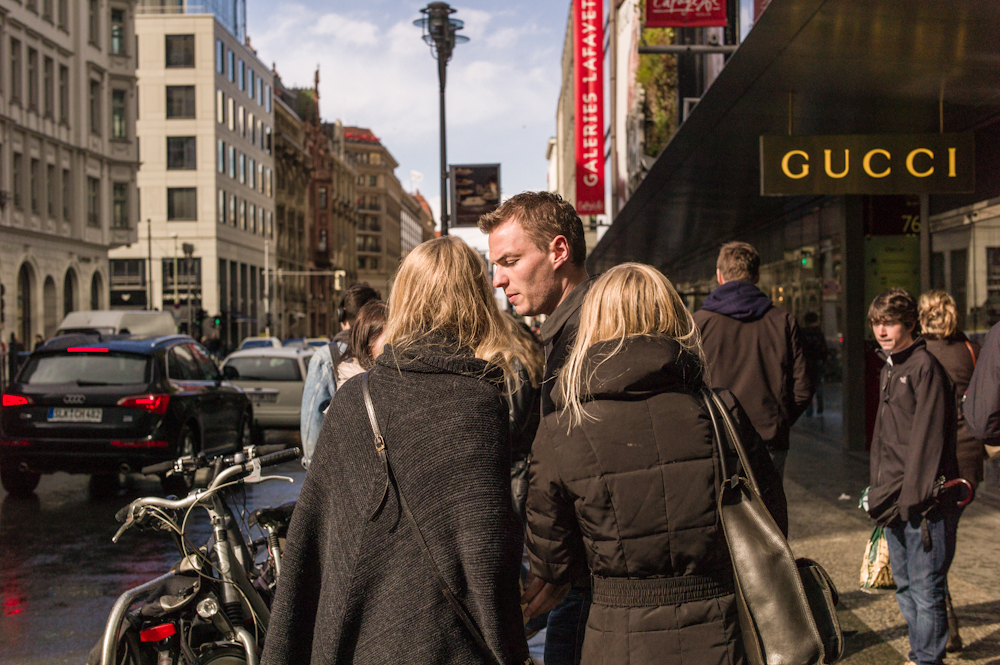
Leica M9, 35mm Summilux, Friedrichstrasse, Berlin, March 30th, 2012

The best single subset of the exhibition are Magnum photographer Bruce Davidson’s images taken in the New York City Subway system in 1980.  It captures all the grit, all the reality of what life was like in New York in that year of the subway strike, of The Clash playing at Bonds, of chaos and disorder.  Today New York is closer to antiseptic Singapore than it is to its old 1970s sexy self.  Davidson captures this long-ago slice of life, not by artifice, but in search of straightforward truth: he carried his camera onto the subway openly, taking his camera, and his life, in his own hands.

Cartier-Bresson said, “Photographers deal in things which are continually vanishing and when they have vanished there is no contrivance on earth that can bring them back again.”  Davidson captured a vanished world, with realism and truth.  He didn’t need to spy to capture the truth.  He just need to get out there in search of the most interesting topic that art can ever serve up: people in the act of living their lives.