Do you see it in here?
Probably not, as it’s official release is Tuesday. Still, if it’s half as good as Furr, we may not listen to much else this summer.
Leica M9, Summilux 50mm, obviously wide open, ISO 80.
Do you see it in here?
Probably not, as it’s official release is Tuesday. Still, if it’s half as good as Furr, we may not listen to much else this summer.
Leica M9, Summilux 50mm, obviously wide open, ISO 80.
They only got to play four songs, but at the 9:30 Club’s 30th Anniversary party on a sweltering D.C. Memorial Day, the Fleshtones made the most of their brief opportunity, so much more entertaining than *The Fall, The Pixies, Cracker, X, Luna, Tom Verlaine, Brian Jonestown Massacre, Calexico, Nirvana, Joe Strummer and the Mescaleros, Wilco, Jesus and Mary Chain, The Mekons, Mazzy Star, The Soft Boys, The DBs, The Apples in Stereo, Lou Reed, The Jayhawks, Alejandro Escovedo, Camper Van Beethoven, Sonic Youth, Ryan Adams, The Feelies, New Pornographers, and all the rest who’ve graced the club. (*Okay, okay, not all of these bands played at the party today, but this is a representative sample of bands we’ve seen at 9:30, in its stanky ol’ F Street origins, as well as its more commodious, air conditioned, smoke free and damned near pleasant home on V Street, which it’s inhabited since the early Clinton Administration.)
It also was great seeing the Slickee Boys play today — the first band I ever saw at the old 9:30 Club, on New Years Eve 1983-84 — and though it’s been more than twenty years since they’ve regularly played together, you wouldn’t have known it from the way Kim Kane and the gang played “When I Go To The Beach.”
The ‘Tones were in excellent shape for a 6:20 PM set on a scorchingly hot holiday. Fortunately, they’d been able to get over to Tulip Frenzy World Headquarters for a hotdog and a burger each, and maybe a cooling swim.

The 9:30 Club was instantly turned into “Hitsburg USA,” and every boy and girl started to do the Frug. “Feels Good To Feel” had Ken and Keith kickin’ to Bill’s beat, and when Peter whipped out the harp, the place just swooned. “Way Down South” was a reminder that New York’s pride was playing South of the Mason-Dixon Line. Next thing you knew, Seth Hurwitz, who says The Fleshtones were the first band he ever actually booked at the old 9:30 Club, muscled his way onto Bill’s stool to play drums to “Ride Your Pony.” Thankfully, while standing next to his kit, Bill kept the beat while Seth earnestly kept up. And then it was over, and not even the promised reunion of Creedence coulda possibly been better.
All of D.C.’s music fans cheered these American treasures — The Fleshtones and the 9:30 Club. The show may still be going on — there was a rumor the Bad Brains and Fugazi were going to reform for the occasion… okay, I started it…but thank Heaven that America’s hardest working combo set up shop on V Street to get us all in the holiday spirit. Summer’s here and its time to hear Solid Gold Sound.
Some thoughts, after having lived with the deluxe set (including the DVD and the booklet):
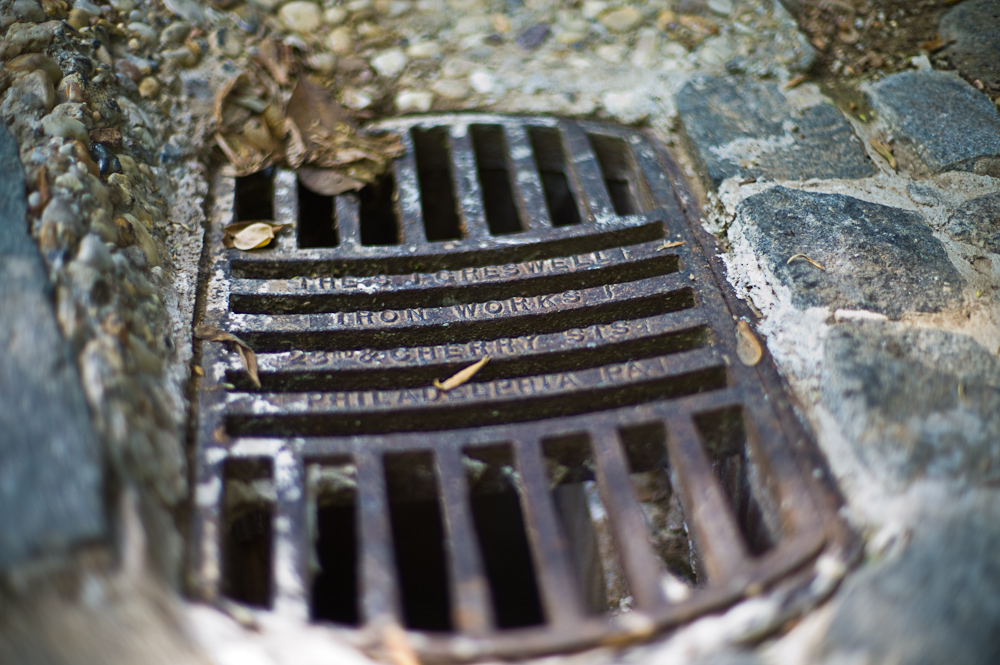
Leica M9, Nokton 50mm f/1.1, wide open.
There are a few great myths in rock. Dylan goes off to lick his wounds and ends up with The Basement Tapes, which become an object of bootleg and legend, so much so that not long after the bootlegs circulate, Don Delillo writes Great Jones Street. In that novel, maybe the best ever written about a rock star, Bucky Wonderlick holes up on the eponymous downtown rat hole street (that was then, back in the late ’60s when everything that wasn’t paisley was actually quite grey), guarding his album from the world.
Or, The Beatles redeem themselves with the extraordinary swan song Abby Road after having bickered on camera during the making of the more or less ordinary Let It Be, finding an elegiac way to take leave.
And then there is Exile On Main Street.
Readers of Tulip Frenzy have borne witness to plenty of prior philosophizing over the meaning of this epic album, most notably here. Now, at long bloody last, we have the remastered version along with the ten new tracks and of course our life is complete. Or would be if that bastard Don Was hadn’t told Rolling Stone that there were lots more songs they didn’t bring to life for this reissue. Thanks, Don.
Our most fervent hope at this moment, however, is that with the admiration the Stones are getting from mining their own past to reclaim lost gems, perhaps it will get them to open up the way Bob Dylan has, with a lack of defensiveness about everything that has intervened since their greatest phase — for wont of a better description, the Mick Taylor Era — and they will thus release more of it. The new Exile songs are a good first step, and so is offering video from Ladies and Gentlemen, The Rolling Stones and Robert Frank’s film, the title of which we can’t print in a family blog. More, Mick. More, Keith. Quit protecting Ron Wood, and let us hear more from the band… those recordings you made of the ’71, ’72, and ’73 tours. It won’t devalue your mythos, but in fact may enhance it.
Mick seems intent on creating new myths, however. We used to think you couldn’t believe a word Mick says, but we’re now inclined to believe about half. Certainly much of what he and Keith have told journalists about the re-release of Exile has been entertaining. So now we know, or think we do, that that is the 60+-year old Mick Taylor playing lead on “Plundered My Soul.” Okay, great. But Mick’s saying that “none” of the new songs had vocal tracks on them can’t be true. After all, we hear Keith in fine voice on several of them, and Keith has not been in fine voice since the tail end of the Reagan Administration, if that recently. Yes, some of Mick’s vocals (“Pass the Wine (Sophia Loren)”) are clearly new. But we at least choose to believe that other tracks have vocals of proper vintage.
Let’s skip to the chase: We have previously raved about “Plundered My Soul,” a worthy find, steeped in the era, perhaps too similar to “Tumbling Dice” to have been released the first time ’round.
We think that “Pass The Wine (Sophia Loren)” will be playing on our iPod for years to come — a syncopated soul song that predated the likes of “Fingerprint File” with the added benefit of Nicky Hopkins and Mick Taylor and Price/Keys in fine breath. “I’m Not Signifying” is a mesmerizing blues with — we’re pretty sure — Ian Stewart Nicky Hopkins doing his best to radiate the 88. Mick Taylor gets off great slide licks throughout, and Mick reminds us of the rightness of Keith’s compliments about his harp playing.
“Dancing In The Light” would easily have found its place on Exile‘s ur Alt.Country second side.
“So Divine (Aladdin Story)” sounds like an outtake from the sessions for “Child of The Moon,” or as has been stated in this space, “I’m Going Down.” Certainly this was one of the cuts that came out of the earlier Olympic sessions, not a jam emanating beneath the floorboards at Nellcote?
“Good Time Women” shows how “Tumbling Dice” started out as a Chuck Berry strut, and is fascinating for it — worthy in its own right, not just for what it reveals about that song’s elegant scaffolding.
We love how the rough and ready version of “Loving Cup” reveals perhaps our favorite song on the original Exile in an even country-er light.
The best element of the new version of “Soul Survivor” is not Keith’s nonsense lyrics, it’s the way that, without Mick and the chick singers, you can hear the backing tracks in their multidimensional glory. Thank you, Stones, for letting us hear one of the greatest of your songs in its elemental form.
“All Down The Line” was a song the Stones tried to nail many, many times before finally getting it right in Nellcote, and afterward in Sunset Sound. This earlier versions strips it to its essence, and we’ll take it.
The only thing that might undercut Don Was’s tease about the “many” more songs in the Exile vault is the presence of “Title 5,” which beyond the novelty of hearing a Stones surf jam — after all, surf was a native American artform, just like soul and country — has little to offer.
All in, with just a handful of listens, we are ecstatic at what the Stones have released this morning. Did we mention that the remastering of the main 18 songs has that glorious mixture of brightness and an LP’s softer edge, discarding the brittleness of the original CD mastering?
Maybe the new myth is how a band that so thrilled us at age 15 could do it again, more than a few years later.
Just going by what NPR, God bless them, is streaming from next week’s re-release of Exile On Main Street, we have some enjoyable hours ahead of us. Hearing Keith sing a slowed-down, raw version of “Loving Cup” renders that second-side favorite almost wholly new. We can already tell that we’ll also sequence the countryish “Dancing In The Light” with the songs from the ur-Alt.Country second side. “So Divine” sounds less like it was part of the Exile sessions and more like something captured in a different set of sessions… maybe around the time of Metamorphisis’ “I’m Going Down.” (Whenever that was.)
Just from these snapshots, added to the release we already have of the great “Plundered My Soul,” we’re getting a sense of the best archaeological dig since the days of Howard Carter.
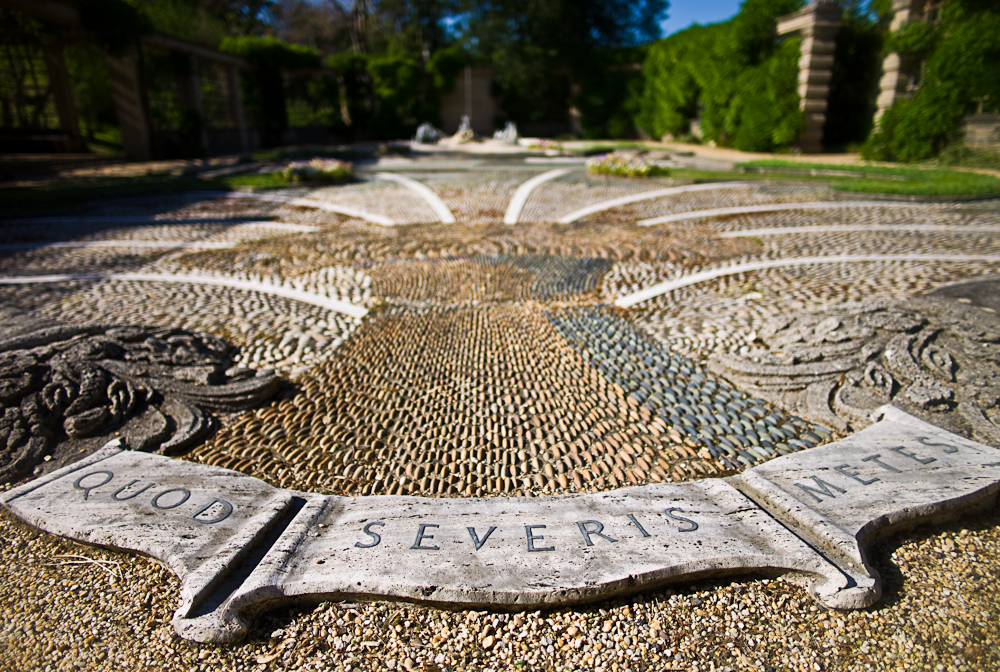
Leica M9, 21mm Summilux. Note the sheaf of wheat spreading above the words.
The Sunday Times (London) buries the lead in Paul Sexton’s otherwise terrific article on the making and re-release of Exile On Main Street.
In it, Keith declares that he was clean, if not necessarily sober, throughout the making of Exile, and only got back on the stuff when the recording was over. This may be true. On the other hand, we have Robert Greenfield’s and others’ reports that a) almost as soon as the Stones set up shop in Villefranche, Keith made contact with various dealers, from the guy who sold Jim Morrison his fatal dose, to the Marseilles mobsters who stole all of Keith’s guitars one night for failure to pay for delivered supplies, and we won’t even mention Spanish Tony, b) Gram Parsons was banished, never to be seen by Richards again, because their louche shenanigans kept the album from being made, etc. It’s possible Keith’s memories are right and everyone else wrong, but we tend to doubt it.
Anyway, nice piece, with a track-by-track analysis of the unreleased songs we’re about to hear. Does declare that on “Plundered My Soul,” the lead is played by the 2010-era Mick Taylor. Interesting, if true.
Leica M9, 21mm Summilux, wide open.

I found the wonderful article wherein the New Pornographers’ sound is likened to what might have happened had George Martin produced Cheap Trick.
Money quote:
“Viewed from that perspective, Together couldn’t be more aptly titled, for it’s full of moments when those distinct influences interact in wonderfully odd ways. In “Sweet Talk, Sweet Talk”, for example, Newman cautiously lays a melody over a stuttering chord progression before the song’s chamber pop explodes into ‘70s guitar rock, with Case’s ethereal voice lifting the song into the atmosphere before it falls back down into Newman’s meticulous verses. If, perhaps, George Martin would have produced Cheap Trick, the result might very well have sounded like this.”

 Tulip Frenzy