Archive for 2014

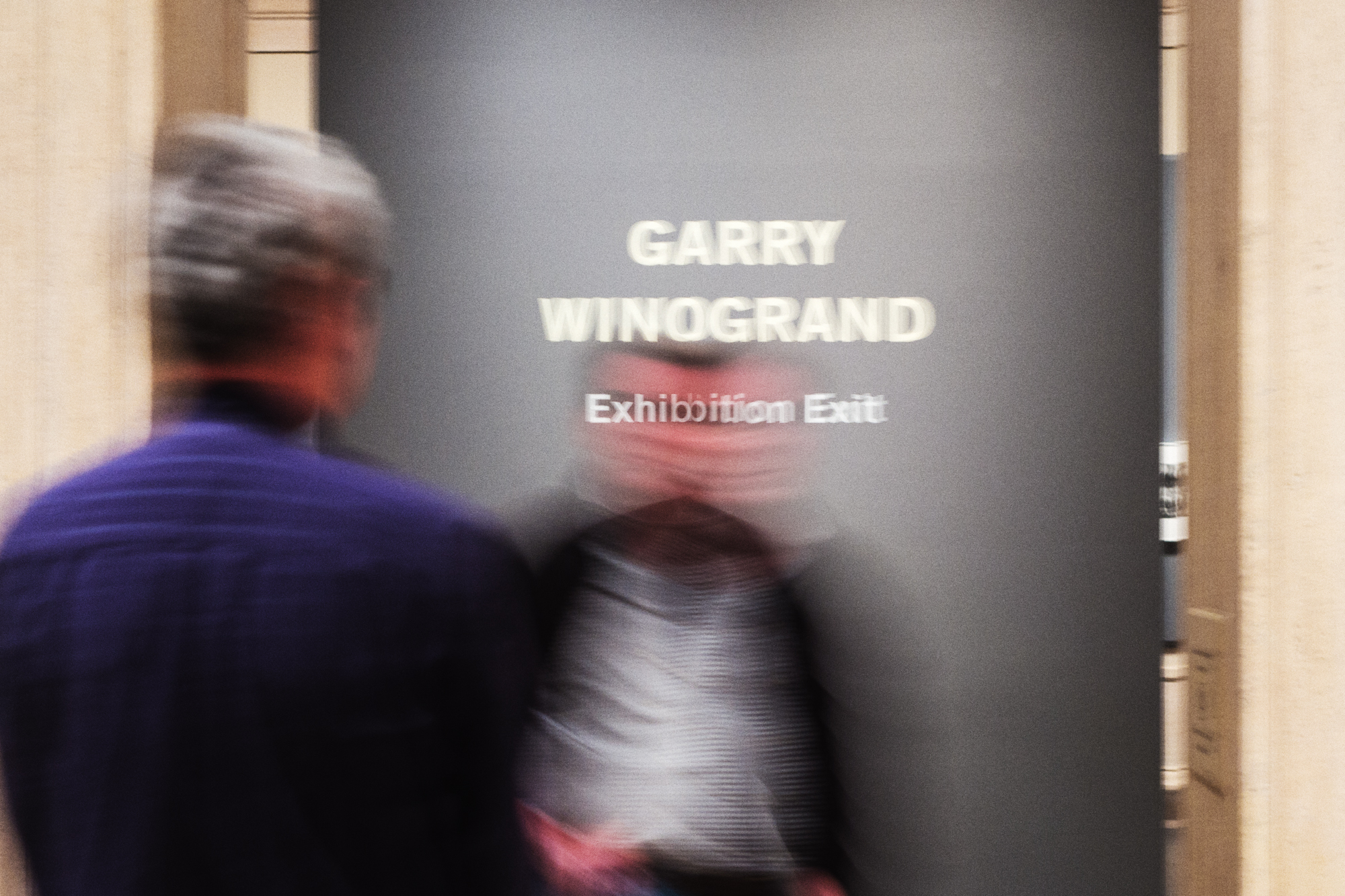
I Took A Picture At The Garry Winogrand Exhibition To See What The Garry Winogrand Exhibition Looked Like As A Photograph

Posted in Uncategorized with tags , , , on March 24, 2014 by johnbuckley100

Garry Winogrand

The Garry Winogrand exhibition at the National Gallery of Art is a stunner, the best photography exhibition in D.C. since the Andre Kertesz show in 2005.  It’s a very well-thought through combination of Winogrand’s iconic images, some of the pictures he took in his final years that he never even had the patience or interest to review, punctuated by a filmed interview from 1977 that so perfectly captures the man and his approach that it’s worth the price of admission.  (Okay, so admission’s free, better to say, worth the effort to get to the National Gallery of Art.)

They couldn’t have been more unalike as people, but the exhibition makes one realize that in many ways, Winogrand was our Henri Cartier-Bresson.  HCB was an aristocratic French communist, as reserved and formal in his Surrealism-influenced compositions as the Bronx-born, deliberately informal Winogrand was outwardly, and in every way, sloppy.  But Winogrand’s images of America in the ’50s-’70s are every bit as iconic as HCB’s images of Europe, Mexico, and Asia between the ’30s and the ’60s.

See Winogrand’s photograph of the man flipping in the air in the streets of New York.  Then look at HCB’s man leaping across the puddle.

In Winogrand’s image, the man’s foot mirrors the bird’s wing on the billboard; in HCB’s image, the man’s movements mimic the dancer on the poster.  Did Winogrand mimic HCB?  We doubt it — much of what we know about Winogrand, from reading and from the show, would suggest he was too into the moment to have a formalist’s composition in mind as he squeezed the shutter.  And yet is the image the equal of HCB’s?  Maybe not, given that Winogrand was drawn to theatrical and staged events, and HCB seems to have captured his “Behind the Gare St. Lazare” from pure happenstance.  But it’s a great picture.

Winogrand’s dictum — “I photograph to see what the world looks like in photographs” — is as important an influence on succeeding generations of photographers as Cartier-Bresson’s notion of The Decisive Moment.

The show gives a wonderful sense of Winogrand’s larger-than-life personality, his sheer voraciousness as a photographer in his prime, the intelligence that bristled when he took pictures, even as he denied there was a real intelligence at work.  His was a very ’60s philosophical attitude, eschewing meaning from the photographs other than a meta consideration of the photographs as more than the events they depicted. “How do you make a picture that is more interesting than what actually happened?” he asked, sincerely, which is the photographer’s equivalent of Philip Roth asking how it was possible for fiction to keep up with the absurdity of the world, circa 1968.  When the events in life were so over the top, only a true artist could exceed them.

Winogrand’s ability to fit everything into the frame was both his strength and weakness. So much of what he captured with his machine-gun overshooting of everything he observed was perfect, and so much was excess, in need of cropping, that you begin to realize that out of the hundreds of thousands of pictures he took, these mere hundreds in the exhibit represent a frustrating ratio.  In Winogrand: Fragments From The Real World, MOMA photo chief and Winogrand champion John Szarkowski writes with ill-hidden frustration about Winogrand’s indiscipline, the pictures compulsively taken in his final years that he barely even bothered to have developed.  The responsibility for someone else to have to sort through them all was too much even for the man who, through his including of Winogrand in photography’s pantheon, helped make the case for him as more than a street photographer.  And yet the greatness of this show, and the excellent monograph that accompanies it, is how well the two aspects of Winogrand’s art — the incredible energy of events squeezed in the frame, even as later in life he seemed less inclined to push for absurdism and meaning — are reconciled into a whole.  Not coherence, perhaps.  But the life’s work of a troubled and brilliant artist.

The show at the National Gallery has all the great pictures we remember, and it reminds us of how things looked in the NYC of our youth, of how LA looked when we first saw it in the early ’80s.  That his appetite for life seemed finally to run out of energy, even as he compulsively snapped away, takes nothing away from Winogrand’s importance.  It’s a great show.
Alone In The Bustle Of The City

Posted in Uncategorized with tags , , on March 23, 2014 by johnbuckley100

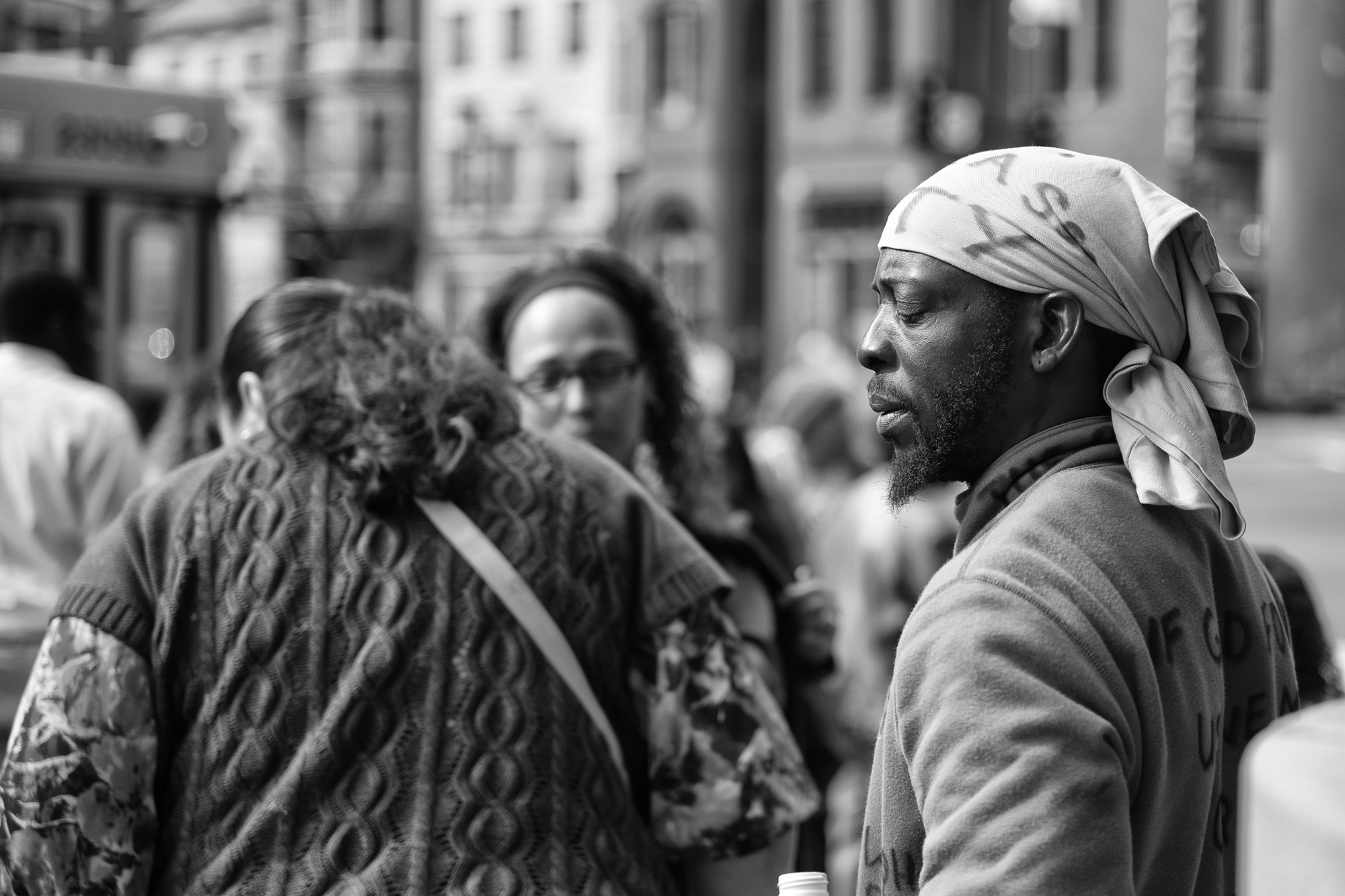
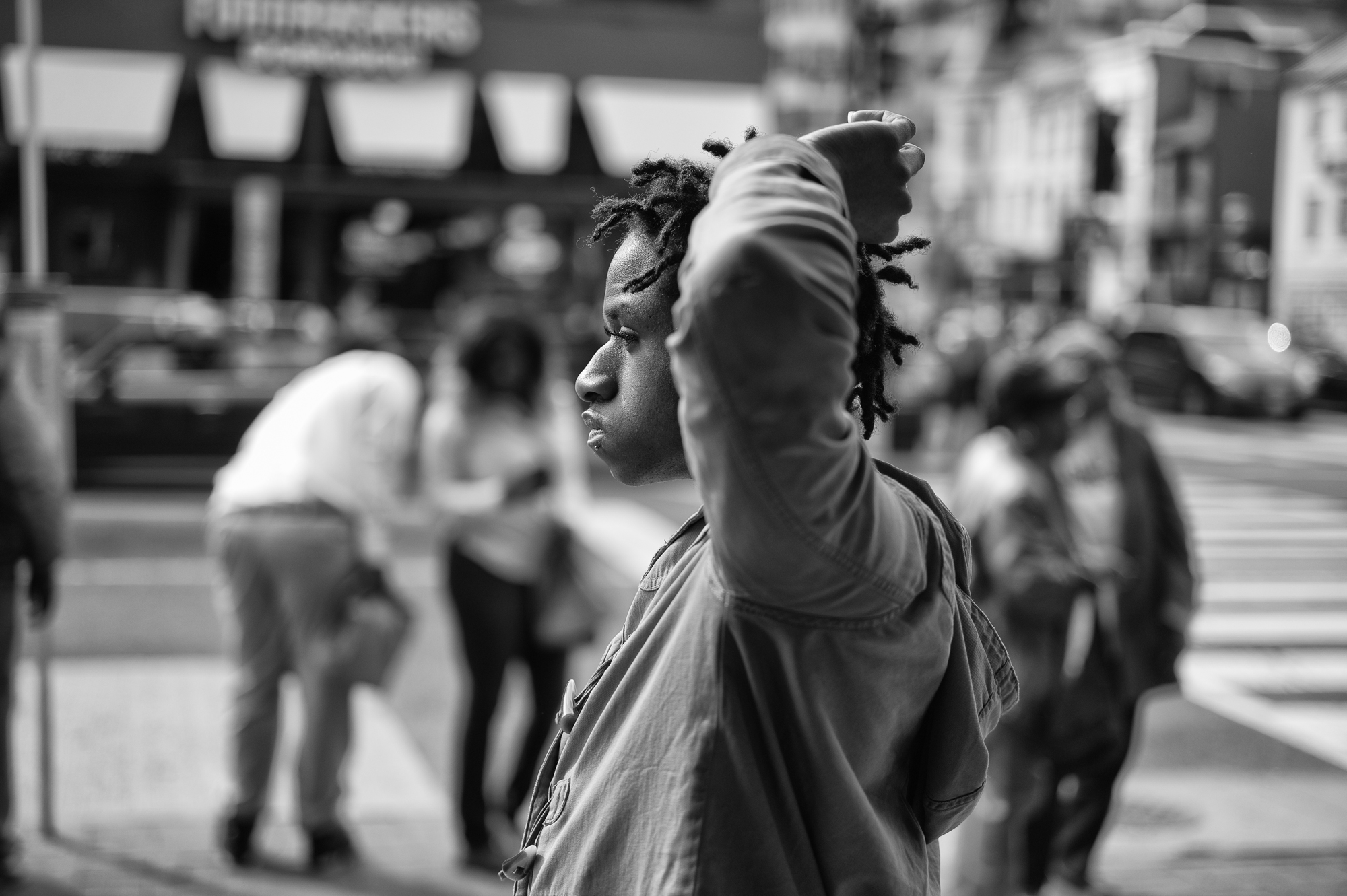
D.C. Street Portrait II.  Leica Monochrom, 50mm APO-Summicron-ASPH, yellow filter, LR5 and Silver Efex Pro 2.

DC Street Portrait2

Cherry Glazerr’s “Haxel Princess” Gets An A-Grade From The School Of Rock

Posted in Music with tags , , , on March 23, 2014 by johnbuckley100

Clementine Creevy is the Mikaela Schiffrin of indie rock.  Where the latter won her first World Cup Slalom globe by her 18th birthday, Creevy’s band, Cherry Glazerr, released its excellent first album Haxel Princess just weeks past Creevy’s 17th birthday.  Drummer Hannah Uribe is a sweet 16.  (The only male band member, bassist Sean Redman, is 22.)  There have been L.A. teen phenoms going all the way back to The Runaways, but few have produced as pleasurable fluff as this.

This is not the 17-year old James Joyce reviewing Ibsen’s “When We Dead Awaken,” and shocking the old Norwegian playwright when he finds out a mere kid has done the trick.  There are songs here about grilled cheese sandwiches (“Grilled Cheese”), so anyone looking for profundity will have to wait for the next, dunno, Fiona Apple album.  But if you like albums with lyrics like “I’ve got a crush on you” while the band picks up momentum with song structures familiar to The Breeders or Veruca Salt or other punk-pop outfits from the decade in which all of Cherry Glazerr was born, this rec will bring a smile to your face.

Cherry Glazerr: feel free to quote this in your college applications: “Tulip Frenzy believes that [fill in name of college] would greatly benefit from this band playing on the lawn of the quad on sunny Fridays, while the Red Bull flows and the frisbees fly.”

Contemplation

Posted in Uncategorized with tags , , on March 22, 2014 by johnbuckley100

Sometimes it’s hard to get a reflective moment when out on the city streets.  We’re not sure exactly what he was thinking.  We’re glad we were there to make a picture from it.  Leica Monochrom, 50mm APO-Summicron-ASPH, yellow filter, wide open, LR5 to Silver Efex Pro 2.

DC Street Portrait1

Quilt’s “Held In Splendor” Is A Patchwork Of Sonic Gorgeousness

Posted in Music with tags , , , , , , , , on March 22, 2014 by johnbuckley100

Quilt would prefer it if, when writing about their beautiful second album, Held In Splendor, people wouldn’t immediately invoke the Summer o’ Love, the Mamas and Papas, all those harmonically ambitious bands that played into the wee hours as women in long skirts danced around the driftwood pyre while the menfolk nodded and communed with the shadow of the moon.  Fine then, let’s put ’em in a more contemporary context.

Their second album is produced by Woods’ polymath Jarvis Taveniere, which gives you a reference point to which you’ll  affix your navigation quadrant and map their current location.  Physically it’s Boston, and thank Yahweh for that because it’s so much more original than saying they come from Brooklyn, like other bands that sound just like them: you know, bands with jangly guitars, and four-part harmonies, and a bass player who manages to ground the weirdness in muscular urgency.  But let us also say that if the late Bill Doss of Olivia Tremor Control was in the room, he would nod in admiration.  And that another band Jarvis has produced, Widowspeak, would likely manage Quilt’s fan club if they didn’t have their own album to do.  No, we won’t invoke the Summer o’ Love, we’ll just say that when Quilt played Portland the other week, we bet all those kids who love Houndstooth came out in force.

Shane Butler and Anna Fox Rochinski were art-school students when they formed Quilt at the dawn of the Obama years, and we bet their teachers shook their heads in dismay when they veered into music. For the rest of us, art school’s loss is our earbuds’ gain as angels dance around guitar and keyboard weirdness that can call to mind both Magic Trick and the Magic Castles in the span of a single song.  Where Widowspeak lacks fiber, Quilt has just enough bulk to maintain a consistent weight.  Held In Splendor is wonderfully produced, weird in the way Prince Rupert’s Drops are weird, thrilling in the way Woods are thrilling.  Yeah, this is a good ‘un, and we’ll just state the obvious: if these guys really were from the late ’60s Bay Area, Altamont would never have happened, and by 2014 the land would be harmonious and we’d all be happy vegans.  ‘Course, they’re in the here and now, and so you have the chance to hear ’em now.

They open for Woods at the Rock & Roll Hotel on April 26th.  We know you’ll be there.

Where The Mind Goes By Mid-March

Posted in Uncategorized with tags , on March 21, 2014 by johnbuckley100

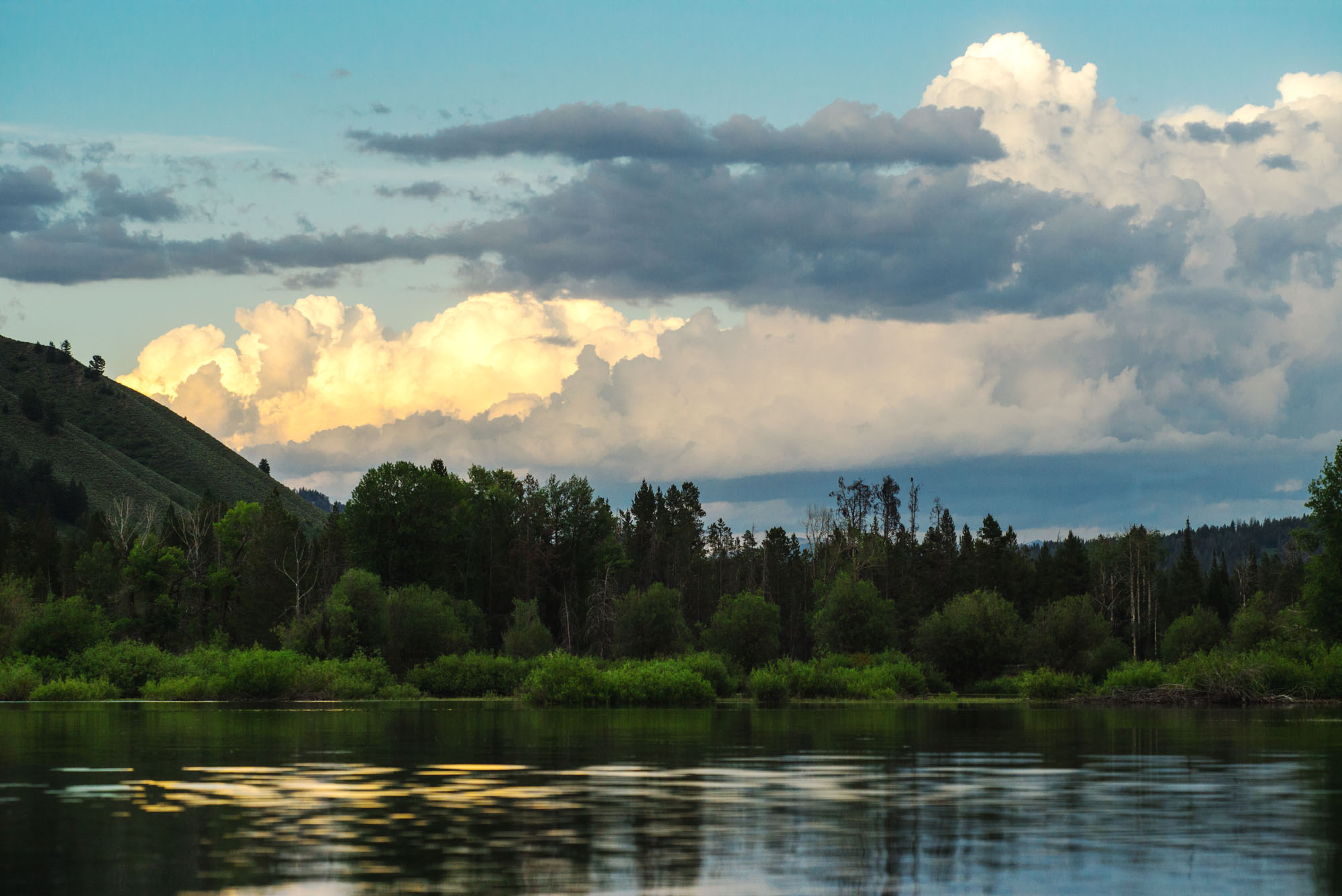
This is not March Madness.  This is the very essence of sanity, to dream of this on a grey March day when winter lingers.  Leica M, 35mm Summilux Asph FLE, LR4 and then to a Fuji preset in Nik Color Efex 4.

Snorkeling

Pickets

Posted in Uncategorized with tags , on March 16, 2014 by johnbuckley100

Handle


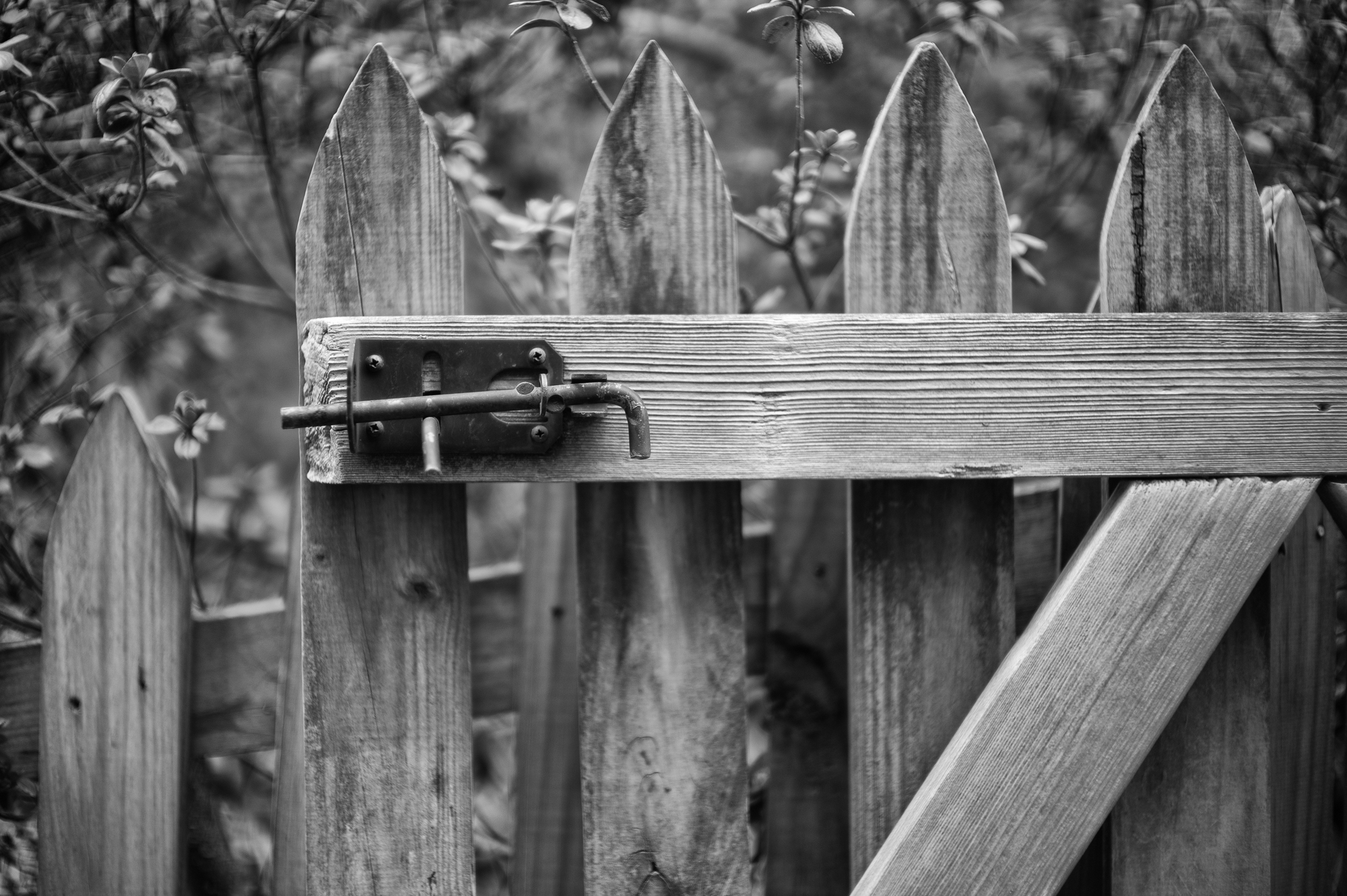
Leica Monochrom, 50mm Noctilux

Dean Wareham’s Reemergence Is The Most Delightful Thing Happening In Music Today

Posted in Music with tags , , , , on March 15, 2014 by johnbuckley100

There’s a lot of competition for the title of “most important figure in alternative rock not grasped by the masses,” but surely Dean Wareham wins it.  Both his prior bands, Galaxie 500 and Luna, have cult followings, and interestingly they don’t completely overlap — those who adored the prior don’t necessarily love the latter, and vice versa.  We loved both, and not fully satisfied with the first couple of post-Luna Dean & Britta albums, it was a welcome development in late autumn 2013 when Wareham released a really excellent “mini album” entitled Emancipated Hearts.  This past week he released Dean Wareham, his first real solo album, and in and of itself it is worthy of celebration.  Combined with Emancipated Hearts it may justify a reevaluation of Wareham, and the critical appraisal that he’s due.

Wareham’s an unusual figure in rock’n’roll, New Zealand-born, New York City-raised, an attendee of The Dalton School and Harvard who also wrote one of the best rock-star autobiographies ever, Black Postcards, which came out in 2008, three years after Luna’s demise.  He packs a non-standard punch, insofar as Ivy League-educated alternative rock figures go, in that his singing voice has always been an acquired taste, he plays the most tasteful, masterful lead guitar, writes melodies as gorgeous as anything by Dylan or Robyn Hitchcock, and yet even as a clearly strong writer, few of his songs have much lyrical weight to them.  This is one reason, probably, why he’s never been championed by rock critters as the Living Master that he is.  His songs are beautiful, his bands are great, his singing actually is endearing, his guitar playing prompts drooling, but he’s never strived for real profundity as a songwriter.  And in fact, as soon as we heard Luna’s final album, the elegiac and gorgeous Rendezvous, we suspected things were coming to an end, because he could barely bestir himself to populate the songs with something other than nonsense couplets.

Dean & Britta’s 2010 13 Most Beautiful: Songs For Andy Warhol’s Screen Tests, a body of work commissioned by the Warhol Foundation folks in Pittsburgh, was a masterpiece.  And then a few of the songs on Emancipated Hearts, particularly the title track and “The Deadliest Day Since The Invasion Began,” revealed a lyrical weight worthy of Wareham’s obvious literacy and articulation.  He’s trying again, and with Dean and Britta having moved from NYC to a new milieu in Los Angeles, a reemerging Wareham is producing the best music of his long and glorious career.

Dean Wareham is produced by My Morning Jacket’s Jim James and it is an old-fashioned, two-sided LP.  Yes, of course, it’s a digital download and a CD, but it is structured pretty much as two distinct sides.  Something that has always been hard to reconcile is Wareham’s admiration both for the songwriting of his friend Lou Reed and his taste for Glen Campbell.  Yes, you read that right.  But on his solo album, the softer first side and the harder-hitting second half for the first time make these seemingly irreconcilable aspects of his musical personality make sense.  We have spent years culling our favorite songs from Luna albums onto play lists, which assumes also that there are songs we leave behind.  But this is an album you can play all the way through, enjoying everything.

It really takes off in the album’s final 25 minutes, beginning with the breathtaking “Holding Pattern,” but we can’t imagine dropping the first side’s songs out of any playlist.  “Babes In The Woods” finishes with a structure those who loved “Friendly Advice” from Luna’s live shows will surely recognize, and both versions of “Happy & Free” will bring a smile to the faces of anyone who’s spent the evening driving with Galaxie 500 or Luna on the tape deck.

Black Postcards was a book that reminded mamas not to raise their kids to be rock stars, but 25 years or more into his career, Wareham’s status as national treasure is more than confirmed by Dean Wareham.  We think it is his most satisfying album, and that’s really saying something.

Delicate Connections: New Pictures At The Stephen Bartels Gallery

Posted in Uncategorized with tags , , on March 12, 2014 by johnbuckley100

Easy Ryder (1 of 1)

Leica Monochrom, 50mm Noctilux

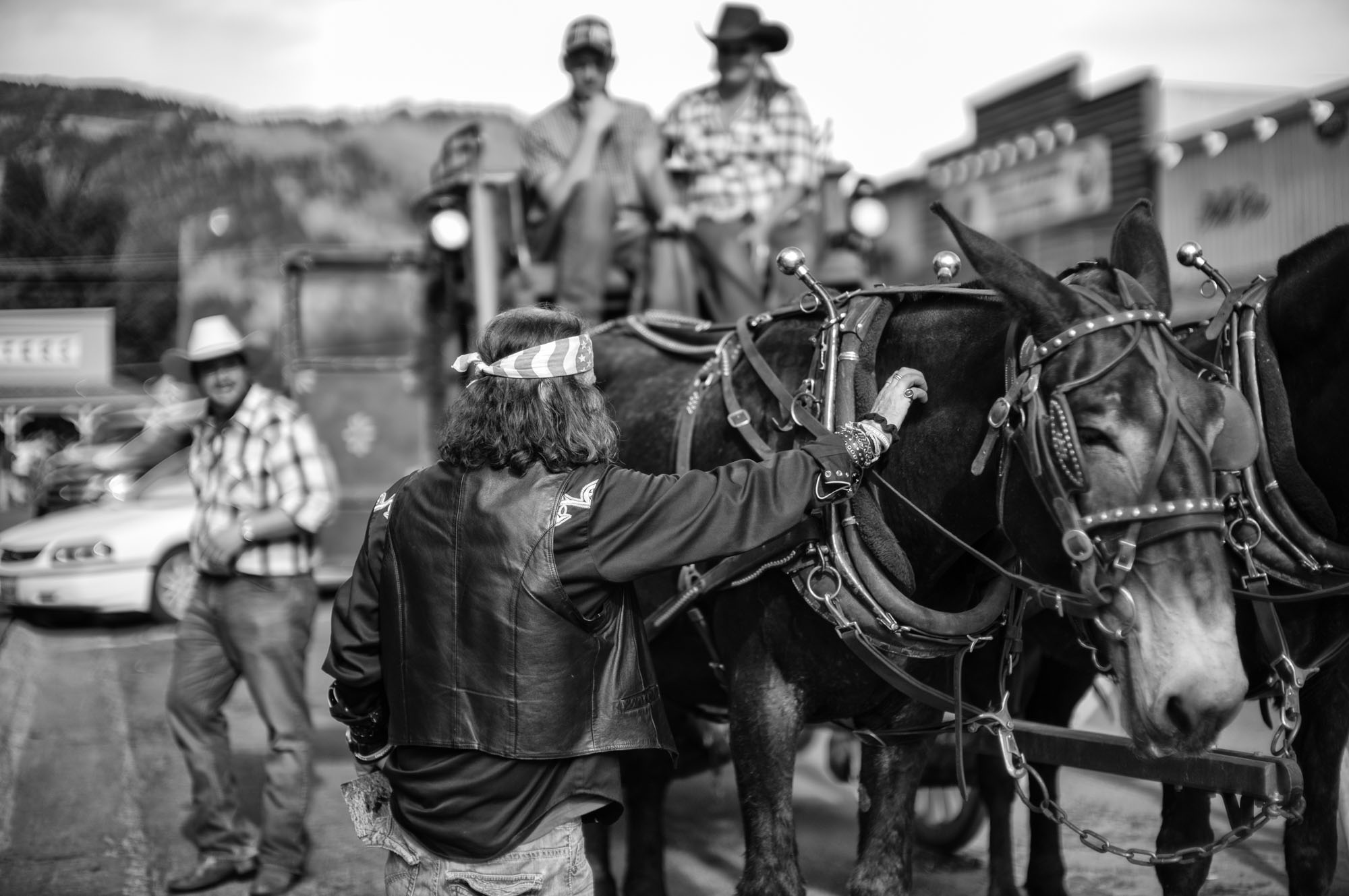
We have a new set of photographs for sale at London’s Stephen Bartels Gallery, organized around the theme of “Delicate Connections.”  A mother holds her children’s hands lest she and they fall on the ice.  Captain America wishes only to touch a horse, even as the men on the carriage laugh.  An elderly couple hold hands in a farmers’ market.  So often, our connection to others is based on a touch, a gesture.  Hard to capture that moment, but worth trying.

Thoughts On The Leica M After One Year’s Use

Posted in Uncategorized with tags , , on February 28, 2014 by johnbuckley100

240Writeup

One year ago this weekend, I was lucky enough to receive a Leica M (typ-240).  As a photographer who had rediscovered his love of the craft by using a Leica M7 (2002), and then happily taking the leap to digital with an M8 (2006) and an M9 (2009), it was immediately clear that with the M, Leica had come as close to perfecting the digital rangefinder experience as seems possible.  The Leica M has a 24 megapixel CMOS sensor, and from the first day, I found the image quality to be as good as the legendary M9’s, so long as one adjusted his post-processing technique to be careful not to oversaturate the colors.

There were immediate advantages in using the M over the M9, and especially the M8: its high ISO performance enabled one to shoot with much greater latitude at night, as as I noted after using it for a month.

MeridaNight


One still had all of the advantages of using a rangefinder — speed of manual focusing, more intuitive, user-controlled operation, and of course, the Leica’s small size, but now, for the first time, you also had an option to set up the M as, in essence, a DSLR, and thus use long lenses. For the M offers Live View and with an adaptor — Leica’s own R-to-M lens adaptor was made available only last month, 10 months after the camera arrived, but we purchased a decent stand-in early — one could shoot Leica’s great R-mount telephoto lenses.  As I noted in August, after spending a considerable amount of time with the M out West — and thus for the first time, able to shoot telephoto lenses on a rangefinder — it made me think of the M as a truly multipurpose tool.

Oxbowcloud1 (1 of 1)


I could now incorporate it better into landscape photography, which we welcomed.  The versatility available to the user — being able to shoot at night…

Last Fair Shot (1 of 1)


while retaining the rangefinder’s advantage in being able to take intimate, spontaneous street photos without freaking out the subject…

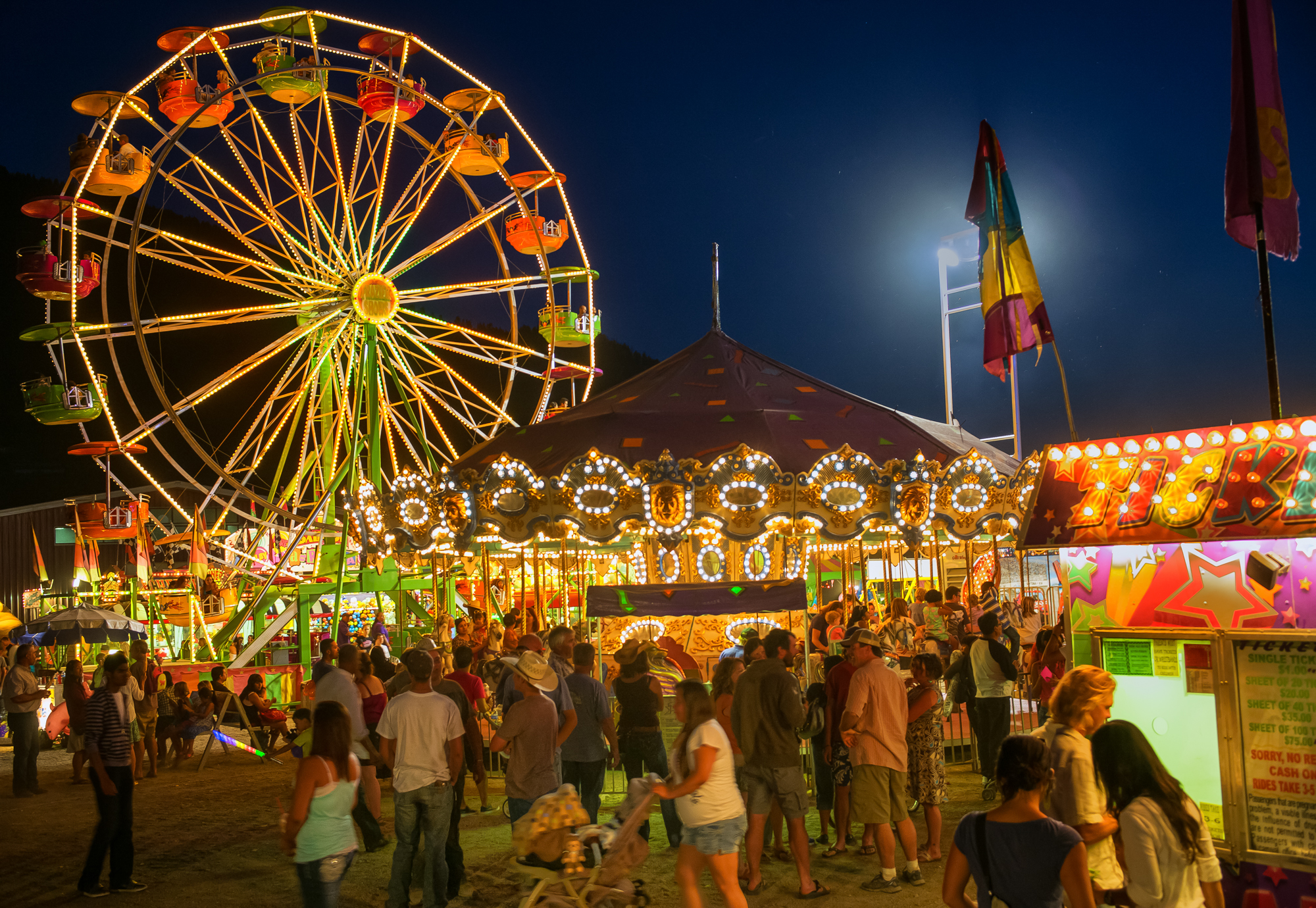
Day two Teton Fair 10 (1 of 1)


made using the camera a complete joy.

I can’t say that using mine has been trouble free.  Mine has a persistent annoying flaw where, after taking a number of shots in succession, the LCD reveals the images whirling past like they’re on a carousel.  It’s really odd.  It takes a minute or so to calm down and have me be able to look at the last image I shot.  Yes, I could send this to Leica NJ or to the hospital in Solms, but it’s an annoyance, not a deal breaker.  Should a camera this expensive have any flaws? No.  But we live with it.

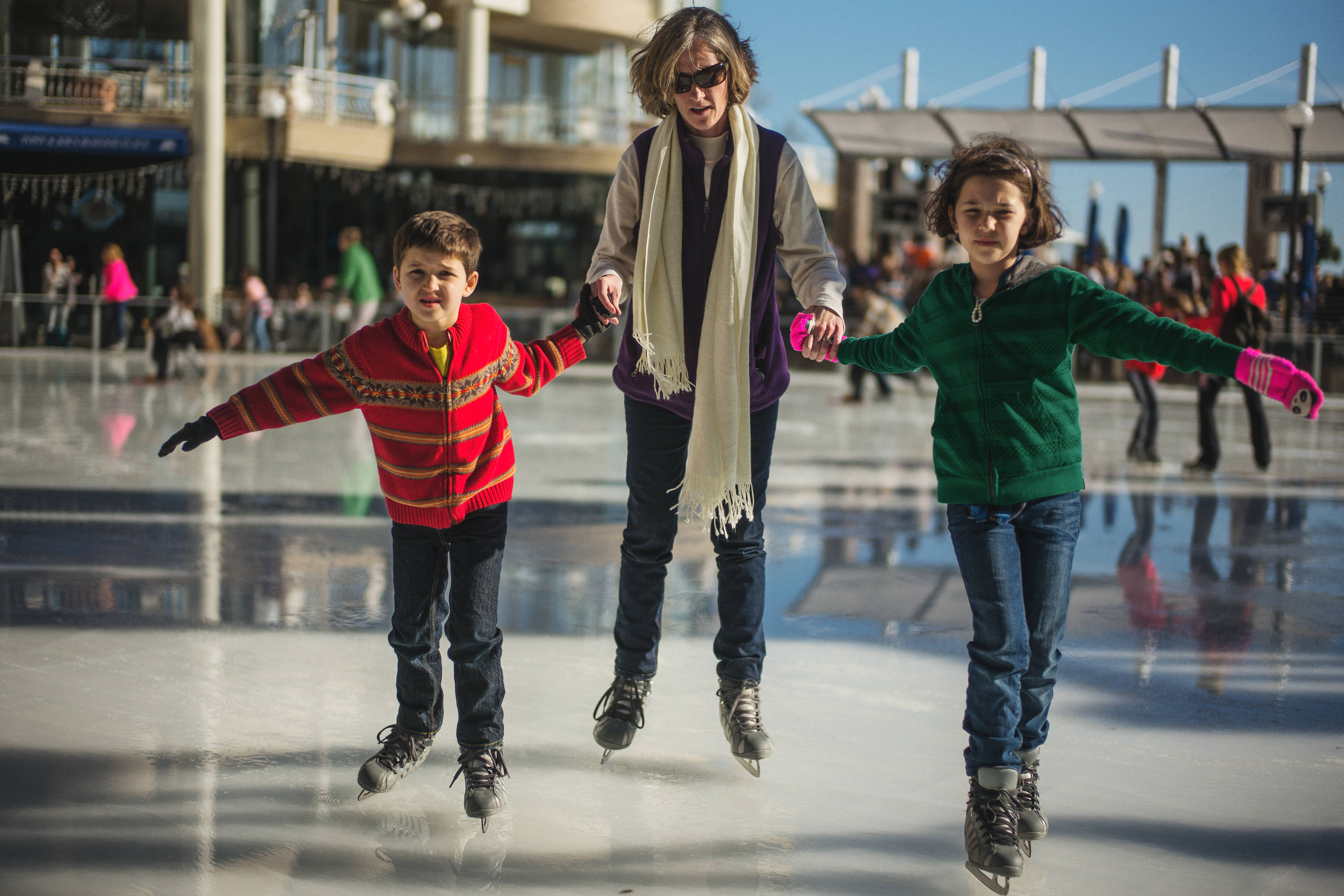
The new brightly lit frame lines in the viewfinder make the M’s intuitive focusing even better than the M9.  Some pictures, such as the one below of the mother with her children skating, can be captured only via luck, or the practice that comes with having used a Leica for a decade or more.  It’s my belief, however, that the rangefinder in the M is a better calibrated instrument than any previous Leica, because more pictures seem to catch exactly what I was hoping for.

Unbearable Lightness Of Parenting


When the Monochrom came out in 2012, many of us noted that the files it produced were more malleable than previous files we’d worked with, meaning that you could, in post-production, get effects and looks beyond what we’d been able to achieve previously.  I found the same thing to be true with the M.  I happen to like deeply saturated colors, and when I shot film, I often used Fuji Velvia.  Some found the look of the M’s files to be too vivid; I found that, whether it was in Lightroom or using Nik’s Color Efex Pro4, I could get the look, and feel, I was after.

240Writeup-4


The camera seemed to be able to take maximum advantage of Leica’s lenses.

untitled (1 of 1)-7


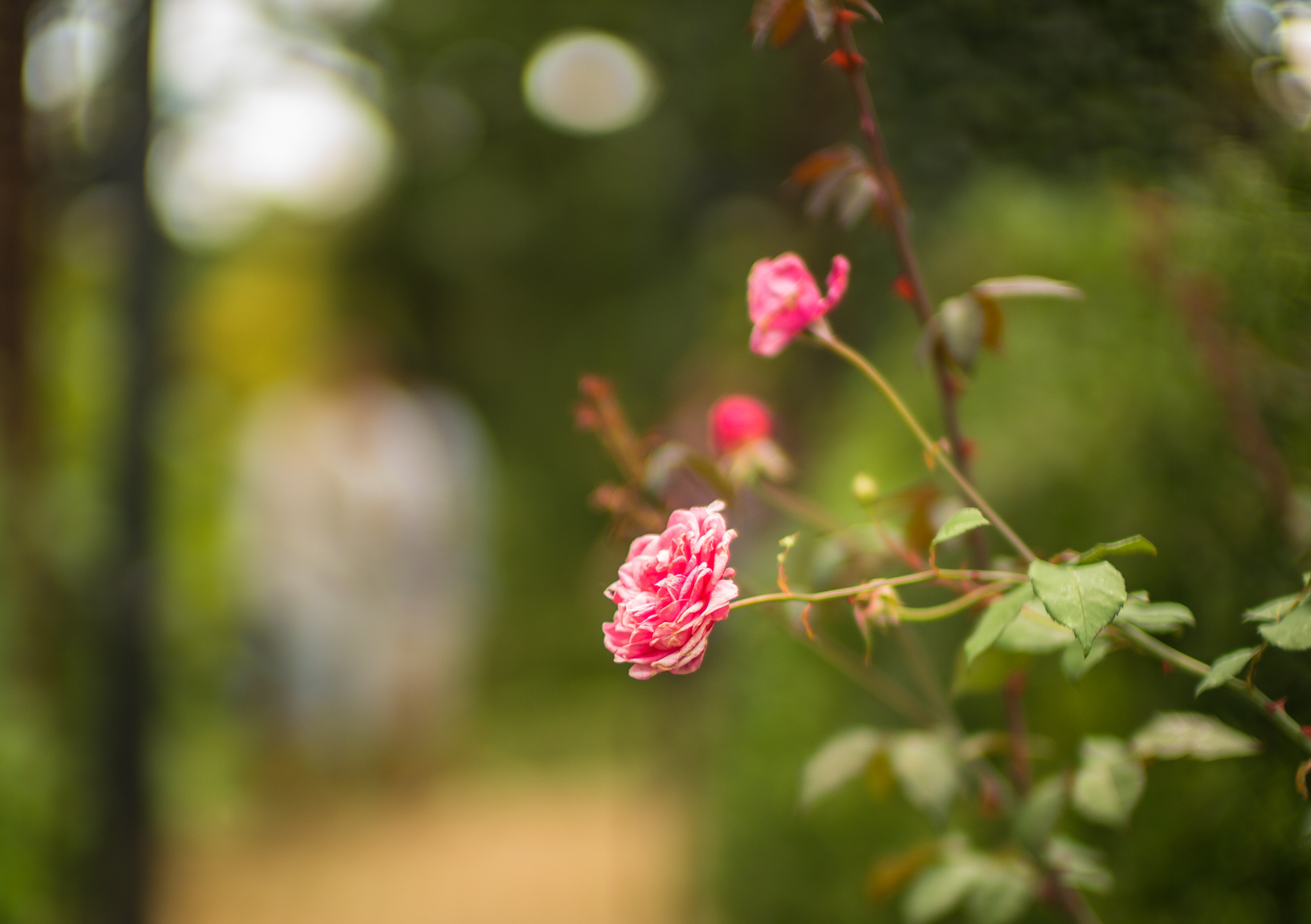
And it was especially clear that the combination of the M with the Noctilux was as special as the Noctilux’s marriage to the Monochrom.

By Any Other Name


Over the course of a single year, the camera has provided me with an inspiring opportunity to experiment with how I see the world — which is really all you want from a camera.  Right?  A tool that inspires you to try new things is a tool you can really learn to love.

Paper Fans


All I know is that after a single year of using the M, I believe my photography is getting better, that the tool I am using enables me to have my camera be, as Cartier-Bresson said his M was, an extension of my eye.  It is possible there are better cameras out there, and Leica may even be able to improve upon the M.  But after one year using it, I am still somewhat stunned at how much it enables me to fulfill ambitions I did not even know I had.

The Kiss