Archive for the Music Category

Nashville Garage-Rock Tyro Ron Gallo’s “Heavy Meta” Just Stove Our Brains In

Posted in Music with tags , , , , , on February 26, 2017 by johnbuckley100

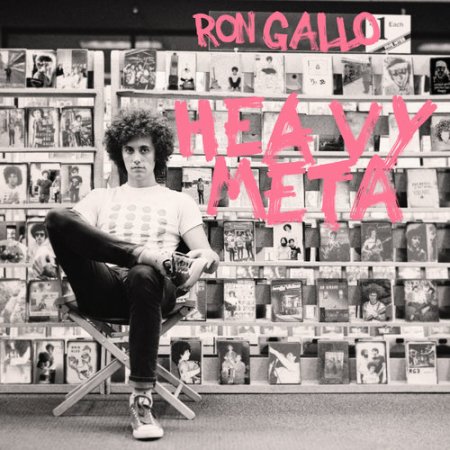
rongallo-cover2

From the album cover of Heavy Meta, you’d think Ron Gallo was getting ready to audition for The Jimi Hendrix Experience, what with the white guy’s Afro and all.  And that’s not a bad place to set certain coordinates — we’d love to hear him play “Hey Joe,” because he’s a solid singer and an ace lead guitarist.  Trust us when we say, we haven’t gotten so knocked over by discovering a new tyro of real rock’n’roll since we first heard Ty Segall’s Goodbye Bread.

Not to be confused with the ’70s paparazzi of the same name, Ron Gallo had us before we ever heard this incredible album.  See, in the new Uncut, which gives him the treatment he deserves — interview, record review, even a spot on their monthly featured songs — he identified Robert Quine as his musical inspiration.  That’s an excellent place to begin, and in fact, “Put The Kids To Bed” sounds a lot like Quine’s playing with Richard Hell and the Voidoids, while “Don’t Mind The Lion” could be a Lloyd Cole song with Quine playing lead.  But even though Gallo has many easy reference points — his voice can quaver like Devendra Banhart, various songs resemble what we imagine Damon McMahon’s punk projects separate from Amen Dunes sound like, and he’s enough of a classicist that on “Black Market Eyes,” the guitar figures quote at length from Small Faces’ “Flying”– this is an original, powerful artist with a crack three-piece and an album well-enough produced we know it won’t languish in the up’n’comer pile for long.

We can imagine others referencing in the same sentence Brendan Benson, The Cramps, maybe even Roky Erickson.  But let’s give Ron Gallo credit where it’s due: he has on “Heavy Meta” just launched headlong into the center of the rock’n’roll universe, with an album that anyone who loves Ty Segall, Thee Oh Sees, or even Jack White will immediately respond to.  Filled with energy and brains, this record is going to dominate the early innings of 2017, and we know we will be listening to this 29-year old phenom for years to come.

Opening for Hurray For The Riff Raff at the 930 Club in DC on April 23rd.  See you there.

Ty Segall Revives The Lost Art Of The Album

Posted in Music with tags on February 5, 2017 by johnbuckley100

ba75464c379f3e3f975c0a94673e6f59Just when you think Ty Segall is mortal, he astounds you all over again.  We didn’t love Emotional Mugger when it came out a year ago, though we admired its conceptual breadth. But with the eponymous Ty Segall, the West Coast wunderkind has done more than release the best album of an intense, hugely productive career.  He has revived the album format, which has been under assault since the dawn of MP3s.

Sticky FingersImperial Bedroom, even — especially? — Sandinista were all exemplars of that long lost artform, the pacing of an album as a collection of disparate songs, showcasing different idioms and genres, all adding up to a defining whole.  Last year’s Emotional Mugger was a concept album, a series of connected songs, but the music didn’t really gel.  Or at least it wasn’t a collection of songs I much wanted to listen to a lot.

On Ty Segall, the young genius has pulled together a collection of songs that are remarkably different from one another, but they don’t pull apart, they spin with centripetal force.  The most astonishing song of the lot is the 10:21 suite, “Warm Hands (Freedom Returned)”, which in five movements takes in the whole of Segall protege Wand’s prog, the Santana-influences of the Stones’ “Can’t You Hear Me Knocking,” and two or three of Mr. Segall and his pal Mikal Cronin’s modern Power Pop’n’Punk flavorings.  It’s a tour de force.  But the whole album is, really.

Since Segall’s advent at the beginning of this decade, rock’n’roll has been revived, and he’s the biggest reason.  Yes, we would still have Thee Oh Sees if Ty had not burst upon the scene.  But for at least seven years, Segall’s influence on other artists, and his own great output of self-produced, largely self-created records has added up to a movement.  He’s Shiva, creator and destroyer, making rock’n’roll relevant again.  With Manipulator a couple years back, he seemed to cast his lot with commercial success, and produced one of the catchiest collections of radio rock this side of the White Stripes or the Black Keys.  With Ty Segall, he’s gone for some thing bigger.  An *album* you mention in the same sentence as Sticky Fingers, Imperial Bedroom, even Sandinista.

Radiohead Tops Tulip Frenzy’s 2016 Top 10 List

Posted in Music with tags , , , , , , , , , , , , , , , on December 10, 2016 by johnbuckley100

cd

Disastrous years, moments when the entire world threatens to unravel, produce the best music.  The bumper crops of great albums arise in years like 1968, 1974, 1979, 1998, 2001, 2008, as if the one mercy we may be granted as life unspools is a good soundtrack.

And so it is that as the gang at Tulip Frenzy sat down to discuss the best records of 2016 — a year we all concluded may have been the worst one for our nation since 1862, or at least 1930 — we found more albums in contention for our heralded Top 10 List than in any 12-month cohort since we began formally compiling our lists earlier this century.

Here’s whose albums didn’t make the list, so you get a sense of the competitive sweepstakes: Angel Olsen, Parquet Courts, Brian Jonestown Massacre, The Fleshtones, The  Mekons, The Rolling Stones, Kevin Morby, Cheena, Black Mountain, Heavens Gateway Drugs, Feels, Wire, Ty Segall, and Capsula.  Longtime readers of Tulip Frenzy will recognize several of these bands as among our very faves, and each produced remarkable recs we listened to over and over and over again.  We considered Capsula’s glorious Santa Rosa — the most melodic punk album since their 2006 Songs & Circuits — literally until this morning, and in the end couldn’t make room for it.  Kevin Morby’ s Singing Saw was the soundtrack to our springtime.  And yet none of these records made the cut.  Wow, so who did?

a3191513484_10

The #10 Album Of 2016: Morgan Delt’s Phase Zero

In August it was abundantly clear that Phase Zero by Morgan Delt was going to be our Psych Album of The Year, virtually guaranteeing its placement on the 2016 Top 10 List. We called it a “gorgeous, weird, melodic, inventive, soothing, trippy self-produced album in which he plays all the instruments.” It held up in the months since, and his show at DC9 revealed him to be a young beanpole hippy with flowing red locks and a kickass band.  We suspect he’ll move up the list in the months and years ahead.

The #9 Album of 2016: David Bowie’s Blackstar

Like a great grey owl showing up on your fencepost, David Bowie’s death coming at the very beginning of the year was a portent of the disaster to come.  That Blackstar was released literally the day before we got news of his untimely end was like a cruel joke, or the most brilliant performance-art piece of all time.  At that time, we wrote, “That he finished with Blackstar is like the Beatles going out with Abbey Road: an amazing grace upon which to conclude one of the transcendent careers in contemporary music.”  Some have put Blackstar at the top of their 2016 list.  We think as a concept it definitely deserves that, but as music, it was merely great — especially the way Bowie’s coda brought him back to his teenage enthusiasm for the jazz of Gary Mulligan.  But whereas 2013’s The Next Day was high on our list, we reduce Bowie’s finale to a few amazing songs, but not anywhere close to the best complete album of 2016.

quilt

The #8 Album of 2016: Quilt’s Plaza

We called Plaza Quilt’s masterpiece when it was released in February, and it has held up well against walk-off home runs, 50-yard field goals into the wind, and the hot streaks of others. “These guys are so much more than an art-school project,” we wrote then, referencing how they were formed in Boston a few years back.  Plaza is to Quilt’s last album, Held In Splendor, as Revolver was to Rubber Soul: paradoxically more commercial and slick, and yet more experimental and ambitious. Anna Fox Rochinski’s voice is in a category with Syd Straw and Neko Case — yeah, I just wrote that — and when she is singing the 60% of the Quilt’s songs that joyfully get released, this Beatles-influenced band is transcendent.

mi0004023824

The #7 Album of 2016: P.J. Harvey’s The Hope Six Demonstration Project

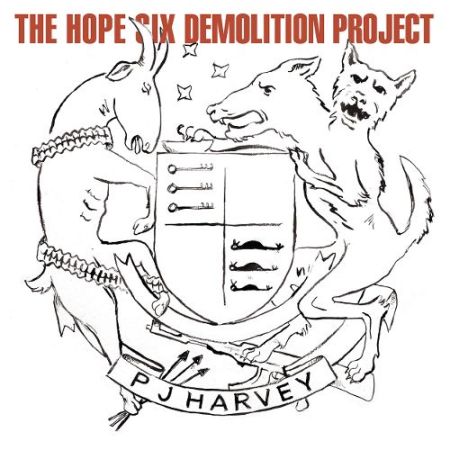
We had high hopes for Polly Jean’s album, which was mostly focused on her drive-by tour of the worst nabes in our hometown of D.C..  After all, in 2012, even though we ultimately gave Radiohead the top honors in Tulip Frenzy’s Top 10 List (c), her Let England Shake claimed runner-up honors, and we believe her Stories Of The City, Stories Of The Sea could well be the previous decade’s strongest work.  But it was weird that, as powerful as this new record was, it seemed like a slight misstep.  We said at the time, “when she creates an album this beautiful, and this powerful, she’s revealing, once again, that Polly Jean Harvey is one of the very few artists in 2016 using rock’n’roll to grapple with the world at this level.” Yet over the course of the year, we played it far less than we expected, given how much we adored the original song released from it, “The Wheel.”  This is a powerful, serious work of art, but it’s placement in the back half of this list reveals it to be a little less enjoyable than we would have wished.

a1259513626_10

The #6 Album of 2016: Cosmonauts’ A-OK

We have long had a soft spot in our heart for the So-Cal psych-punk band Cosmonauts, and with A-OK they produced not only the summer’s soundtrack, they broke through as purveyors of catchy tunes thundering along with a power and pace that would make fellow Orange County natives Anton Newcombe and Ty Segall equally proud.  A long time ago, when explaining why Elvis Costello got more airplay than the Clash, Joe Strummer said, “Well Elvis, maybe he sings a bit better than we do.” Singing is not Cosmonauts’ greatest strength, though it is serviceable enough.  But the comparison to Strummer’s Clash, yeah, works.

artworks-000169196666-va5smn-t500x500-1

The #5 Album of 2016: Tim Presley’s The Wink

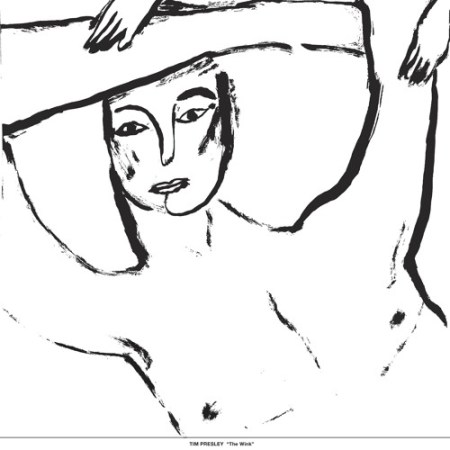
Tim Presley has been at or near the top of our Top 10 list each year since his Darker My Love took top honors in 2010.  We thought White Fence’s To The Recently Found Innocent was not only the best rec of 2014, it has secured a permanent place in the canon, possibly our favorite album of the past decade.  We know that White Fence could rock hard live, even as Presley’s home recordings under that name could  at times seem incomplete, low-fi psychedelic noodling.  When his collaboration with Cate LeBon, under the name Drinks, came out in 2015, we feared the worst, for it seemed like a return to the bad habit of meandering, underpowered preciousness.  But woo hoo, The Wink was a remarkable “solo album” from a guy whose White Fence recs are mostly made with just him, alone with his cat, and occasionally Ty Segall.  In October we wrote, “The Wink is an astonishingly great album, the product of an eccentric genius with an oddball sensibility and a reverence for the artists he admires. The title track sounds like it was ripped from a master tape of Bowie’s The Lodger — an homage to a dead hero in which Presley took the time to reverse engineer the best songs from Bowie’s best album. A dozen bands before now have tried capturing the spare perfection of the first Gang of Four album, but on “Clue,” Presley’s the first artist I know of who has ever truly caught the interplay between Jon King’s vocals and Andy Gill’s guitar. But of course, the major artist that Presley channels best on his solo album is Tim Presley, for we hear throughout the 12 songs here chord progressions and melodies spanning his career…”

psychicillslp

The #4 Album of 2016: Psychic Ills Inner Journey Out

We were really unprepared for what a great record Inner Journey Out was, writing upon its early summer release, “Inner Journey Out is for playing when heading on a road trip to Big Bend, to Marfa, on that long thin ribbon of highway wending toward the West as the shimmering heat makes the cactus liquid.” The fact that Tres Warren and Elisabeth Hart are transplanted Texans living in New York partially accounts for how their gritty, urban Velvets-inluenced sound also has one foot firmly planted in country blues.  With Hope Sandoval singing marvelously on “I Don’t Mind,” it was easy to think of Inner Journey Out having a spiritual link to Mazzy Star, but the album this most reminded us of, in a strange way, was Exile On Main Street, an ambitious, sprawling work that never drifted far from classic American roots-music idioms.  Every time we played this record, it brought a smile to our face, and from mid-summer on, we were chanting, “Top 5, baby.  This one’s a contender.”

61jkuod4ngl

The #3 Album of 2016: Alejandro Escovedo’s Burn Something Beautiful

For more than 20 years, every Alejandro Escovedo album has been a source of solace, an inspiration.  He is so perfectly placed to appeal to us: an Austin roots-rock hero cum occasional chamber rocker who played in the late ’70s San Francisco punk band The Nuns, and growing up loved Bowie and Mott The Hoople as much as we did.  But after 2010’s great Street Songs of Love, which was the #2 album on our list that year, we wondered if Al would again be so inspired.  What a joy it was to discover that in Burn Something Beautiful, he may have produced his best record of this century.  We exulted when it came out, “anyone who has ever thrilled to hear how Alejandro assembles a classic rock’n’roll album based upon his experiences and unique vantage point will see this one for what it is: his best album in this late hard-rocking phase of an amazing career.” A big part of the joy this record inspired was the sound of his band, with Peter Buck and Scott McCaughey, mainstays of Robyn Hitchcock’s recent albums, at its core.  The strength of Burn Something Beautiful was Al himself, whose great songwriting and, on this one, fantastic voice made this a record we will playing for as long as we’ve played With These Hands and Thirteen Years.

cf-080cover_1024x1024

The #2 Album of 2016: Thee Oh Sees A Weird Exits

John Dwyer, it turns out, is an old fashioned band leader, a figure as much like Miles Davis as the punk and garage rocker he started out being.  On A Weird Exits (and its shorter companion, An Odd Entrances, which came out last month), Dwyer cranks up the latest incarnation of Thee Oh Sees — a double-drum, bass + all Dwyer combo — to take us on a musical journey through psych, prog rock, jazz, and even blues.  If you tuned in even as late as 2011’s Castlemania, you might never have predicted what this particular Oh Sees album would sound like.  Of course, tucked way in the back of the latest issue of Uncut, we get a sense of Dwyer’s heterodox sensibility, for in a feature entitled, “My Life In Music,” the records he calls out as his favorites are by Can, Grand Funk Railroad, Robert Fripp, Hiragi Fukuda, Michael Yonkers, Uriah Heap, Eric Dolphy, and Henry Flynt & The Insurrections.  What, you were expecting The Germs and Pere Ubu?  I might have… But nah, this guy goes way deeper.  As we noted in August when A Weird Exits came out, it’s time to take John Dwyer seriously.  “In just a 30-minute snippet of time, such a short interlude in your life, John Dwyer has taken us from the most exciting garage rock of the epoch to deep, moving contemplation. The guy has it all, including originality. A Weird Exits, its title rendered ambiguous by the extra “s”, is not only the best Oh Sees album since Floating Coffin, it should be that album that makes audiences of all stripes sit up and notice. It’s time to take John Dwyer seriously.”

cd

The #1 Album of 2016: Radiohead’s A Moon Shaped Pool

The only flaw on this album was the absence of a hyphen between “Moon” and “Shaped” in its title.  By including concert staples such as “Identikit” and “True Love Waits,” A Moon Shaped Pool felt a lot like Radiohead finishing up old business before it could move on.  With Jonny Greenwood’s orchestration of amazing songs like “Burn The Witch,” Radiohead came as close as can be to Steve Reich territory, which just confirms they’re playing at a different level from all contemporaries.  We gave The King Of Limbs #1 honors in 2012, even as other critics exalted P.J. Harvey’s Let England Shake and we still think we were right.  With the addition this year, though, of In Rainbows Disk 2 — an unexpected release of companion songs from the 2007 original — Radiohead has spent more time in our earbuds than probably any band other than Bob Dylan, which fans o’ T Frenzy will recognize as a profound statement.  We loved A Moon Shaped Pool, recognized it right away for what it is, a peerless, non-rock’n’roll album that added up to the best music of 2016.


Alejandro Escovedo’s “Burn Something Beautiful”: A 2016 Highlight Of Real Rock’n’Roll

Posted in Music with tags , , , on October 30, 2016 by johnbuckley100

61jkuod4ngl

Rock’n’roll is a derivative art form that as a genre of popular music has lasted an unusually long time.  The distance stretching back to when the Beatles hit our shores is longer than the period between World War I and “I Wanna Hold Your Hand.”  Yeah, World War I.

So one factor that surely influences our appreciation of artists is which antecedent sensibilities inform their work — can we hear traces of the Rolling Stones or the Velvet Underground in what they do?  Is it clear they listened to punk rock in its day?  Yes, of course, the work should be judged on its own, but since rock’n’roll iterates off a simple four-chord standard, the artist’s vantage point really matters.

We recently wrote about Tim Presley, whose bands Darker My Love and particularly, White Fence, have been important to us.  And of course when we listen to Presley, we know exactly how much this guy who grew up with the last name of rock’s first superstar enjoyed the Who and the Kinks, punk rock and David Bowie, and it adds to our appreciation of him.

The great Austin troubadour Alejandro Escovedo has always worn his influences on his sleeve: Mott the Hoople, Lou Reed, the Rolling Stones, Texas songwriters like Townes Van Zandt.  He’s finished sets with covers of songs by Mick Jagger and David Bowie.  And he himself embodies distinct periods in musical history, from his San Francisco punk band The Nuns, to an early stab at alt.country, Rank and File, to ’80s Austin power rockers True Believers.  He can write gorgeous ballads and thrilling rockers, and the protean assemblage of musicians he takes on the road or into the studio can include cello players and violinists, pedal steel and guitar virtuosi, kick-ass drummers or no drums at all.  Most important, his vantage point on rock’n’roll is historical, well informed, with a rock critic’s curatorial sensibility.  But no matter how pretty his songs, no matter how delicate the chamber-pop interplay between cello and acoustic guitar, his default preference is for rock’n’roll. He’s given us, over the past 25 years of albums and live shows, some of the greatest music we’ve ever heard.

And now comes Burn Something Beautiful and the musicians who back him up include Peter Buck on guitar, and on bass Scott McCaughey — who separately have forged the sounds of bands like R.E.M. and together have made some of Robyn Hitchcock’s best albums — not to mention having Jenny Lewis (Neko Case) and Corin Tucker (Sleater-Kinney) on back-up vox.  This is the best sounding of Alejandro’s hardest rocking albums, the songwriting is consistently great, his singing is on-key and delightful, and we have found ourselves as excited about listening to one of his records as we have been since With These Hands came out 20 years ago.

And what roots are exposed here? Well, can’t you hear Bowie’s Spiders From Mars playing “Beauty and the Buzz”?  “Johnny Volume” has a final line — “I’m just looking for a kiss” — that of course invokes the New York Dolls, and Alejandro tells the whole story of ’70s NY bands in one gorgeous song. “Shave The Cat” adds T. Rex to Escovedo’s explicit influences, which makes sense since Monster revealed the glam bands of that era as Peter Buck’s faves. Long ago, Whiskeytown invited Al to sing on Stranger’s Almanac, and on “Redemption Blues” we hear an update of that sound.  And Lou Reed’s influence?  Everywhere.

Anyone who loves Mott the Hoople or Lou Reed will love this record.  More importantly, anyone who loved R.E.M.’s Monster (made after Peter Buck had spent time with the Fleshtones, and learned a trick or two from Keith Streng about how to build a world upon barre chords), will dig this.  Most important of all: anyone who has ever thrilled to hear how Alejandro assembles a classic rock’n’roll album based upon his experiences and unique vantage point will see this one for what it is: his best album in this late hard-rocking phase of an amazing career.


Speaking Of Bands And 40th Anniversaries, The Mekons Present “Existentialism” As A Book And CD

Posted in Music with tags , , , , on September 11, 2016 by johnbuckley100

mekons_2

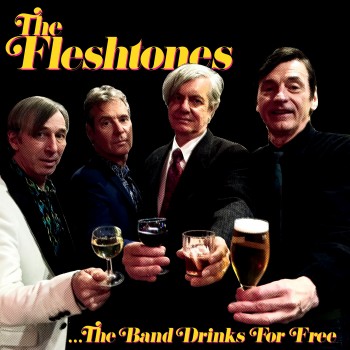
Now this is getting ridiculous.  Fresh upon the release of the Fleshtones’ sublime The Band Drinks For Freeand hot on the heels of Television’s amazing performance last week at DC’s 930 Club, we opened up our mailbox to find Existentialism, a 95-page booklet with a 12-song CD tucked in, newly released by the Mekons.  What do these three bands have in common?  Perhaps only this: each was formed during the final year of President Gerald Ford’s hapless regency.

When last we vectored in on our old friends, the Meeks were releasing the distilled ferment from their sojourn to the Isle of Jura, off the Scottish Coast.  Jura was something of a gimmick and something of a miracle: a subset of Mekons, along with the formidable Robbie Foulks, did a brief tour of Scotland and took to an island sanctuary to record an album that was fun, but ultimately light, listenable if ultimately inessential.

It wasn’t Rock N’ Roll, nor of the quality of the 1990s masterpieces, OOOH! (out of our heads) and Journey To The End Of The Night, but it was a reminder of the Mekons’ greatness, of the power of Jon Langford and Sally Timms singing together, even if we missed Steve Goulding’s drums and Tom Greenhalgh’s sad sack warbling.  But just as that album was a clever one-off, like what would happen if the characters in a Shirley Jackson novel picked up pots and pans to play music to ward off the ghosts of a Scooby Doo haunted house, now comes Existentialism, itself a one-off, but of a more interesting, substantial nature.

Years ago, co-40th birthday boys, the aforementioned Fleshtones, recorded a live album and had it released on cassette mere hours later.  Existentialism took longer to release, but not to record, as it all came together one summer ago on a theater stage in Brooklyn, the full band — yep, Grenhalgh and Goulding, though apparently not Rico Bell — performing, like a bluegrass band, before a crowd and a single microphone.  And it works!

If e’re you forget that the Mekons can get a groove on, it’s disproved by the opener, “Flowers of Evil, Part 2.”  Not wobbling, though a certain amount of warbling ensues, and the band is in fine form throughout.  By the time we hear Langford singing about a familiar topic (“O Money”), there is only one band on earth that could have existed to produce this — just as only one band would have recorded a commentary on Brexit entitled “Fear and Beer.”  “1848 Now!” may be their best song since 2011’s “Space In Your Face.”  As a whole, Existentialism takes a straight line back to the Mekons’ punk rock origins, their being thrown in a studio by Andrew Last and Fast Records just to see what came out — metaphorically conveyed by the cover photo of their first rec, The Quality of Mercy Is Not Strnen, which delightfully depicts a monkey not quite get that line of Shakespeare typed.

But in a season when Acura has wondrously called up the Mekons’ 1978 single “Where Were You” in a commercial, Existentialism is a reminder that the Meeks are alive and well, the rag tag army able to reconvene episodically.  Like an old couple that have to role play to get the juices flowing, they may need a concept to do so — hey, let’s go to an island and lock ourselves in a makeshift studio! hey, let’s play an album of cool new songs live before an audience, record it and be done with it! — but in the end, man, is it worth it.

Television, A Friend From Many Stages, Return To D.C.’s 930 Club

Posted in Music with tags , , , , , , , on September 7, 2016 by johnbuckley100

television

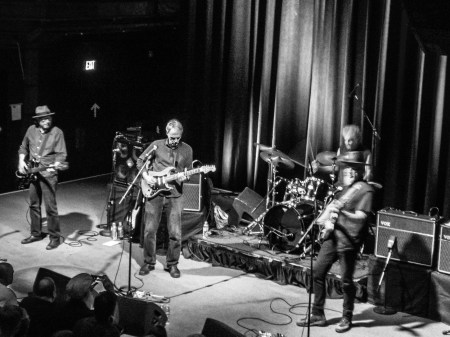
Speaking of bands who’ve been around for 40 years, Television played at D.C.’s 930 Club, and to say they were in fine form understates the impact of the Platonic ideal.

With only one song from 1992’s Television — “1880 or So” — and none at all from Adventure, this set was Marquee Moon all the way.  Only it was like Marquee Moon from the inside out: no “See No Evil,” and we heard “Prove It” and “Torn Curtain” before “Venus.”  A special highlight was hearing the gorgeous “Guiding Light,” and the closer of the set, “Marquee Moon,” was as good as we have ever heard it — and our hearing it live traces back to New Year’s Eve 1976.

Richard Lloyd has left the band, but Jimmy Rip — who has played with Verlaine since his 1980s solo tours — filled in and then some.  Yes, it was a little odd to hear a stand-in play Lloyd’s lines, but Rip is such an excellent guitarist in his own right, it was like hearing a gifted Branagh fill in for Olivier as Hamlet.

Richard Lloyd once famously said that with while some bands look to see whether they have the crowd moving, Television always judged its performance by whether the audience was motionless.  And yes, when Verlaine and Rip traded guitar lines, the crowd reaction was transfixion.  Verlaine was as loose as we have ever seen him, fronting Television or his own band (often comprised of a similar set of musicians.)  The volume was low, the torque was loose, and it was magnificent.

automotive-week-9

The last time we saw Television play was at Georgetown, when they were pushing their 1992 eponymous  reunion album.  The playing then was a bit like this: quieter and more self-contained than those shows we saw as they were exiting stage left in 1978.  But then and now, there was plenty that was raucous contained at an adult volume.

We once had Tom Verlaine explain to us, while sitting in our apartment in New York for an interview for the Soho Weekly News, that Television’s two-Fender guitar sound was aimed at extracting the jaggedness of wild songs.  But last night, he and Rip convened a harmonic convergence — on the unreleased, and very long, “Persia,” the fusion music had the audience guessing where the Farfisa , violins, and synths were hiding, though it was only the two guitars.  And on that post-Bolero finish to “Marquee Moon,” the return to the melody was like a post-coital urge for more, unheralded by the drums.

Fred Smith, the Harvey Keitel of rock’n’roll, was his wonderfully understated self, and Billy Ficca proved anew why he’s the greatest jazz drummer to ever center a punk-era band.  But it was Verlaine, of course, who people came to see, and both his singing and his magically elusive guitar were a reminder that one of the greatest bands in history can still evoke the era in which we first saw them, all those years ago.

The Fleshtones’ “The Band Drinks For Free”: The Tulip Frenzy Review + Bonus Exclusive Interview With Peter Zaremba

Posted in Music with tags , , , on September 2, 2016 by johnbuckley100

thefleshtones_thebanddrinksforfree_cover-350x350

You’re walking down a darkened street when you hear the first sounds of a party in a loft above.  You are not in a glamorous neighborhood, there’s a bit of danger in the air, but the sound of a live band playing is intriguing. Wait, you say, is that Ten Year’s After’s “Love Like A Man”?  The band sounds pretty good so you follow the music up the stairs.  Inside the loft, the party’s in full swing, the guitarist and bass player are standing on top of the kitchen counter and while the singer alternatively plays Farfisa and his harmonica, the drummer is pounding away from his perch on the dining room table.  Someone hands you a drink and you take it, but the guy clutches your arm when you try walking away.  He points to the musicians, by now leading a conga line around the disheveled loft.  “The band drinks for free,” he says with a smile and wink.  You get it, and reach in your pocket to pay up.
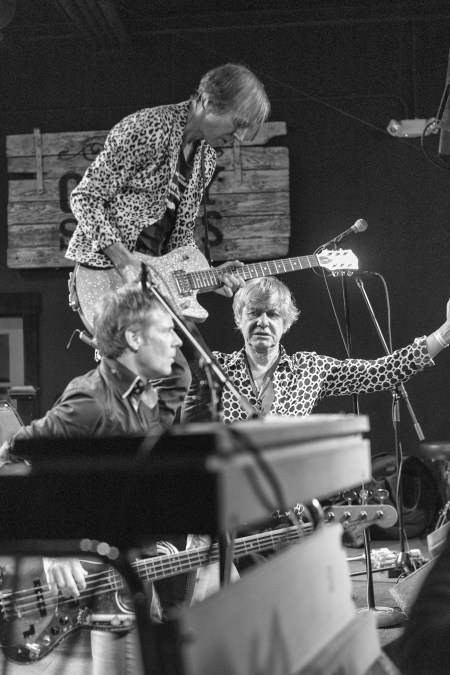
Fleshtones

The Fleshtones celebrated their 40th Anniversary in May, and The Band Drinks For Free is their 21st album.  While this mythical, celebrated, hard-luck institution — memorialized by a great book (Sweat: The Story Of the Fleshtones, America’s Garage Band), a terrific movie (Pardon Us For Living But The Graveyard Is Full), and still out there on the road many weeks of each year — may be immortalized in cool cats’ memories principally as the most entertaining live band in history, the fact is that they have, over the decades, produced a string of incredible studio albums. We are pleased to report, based on intimate study of the group, that this new ‘un, out today from venerable YepRoc Records, ranks among their very finest.  By that we mean it ranks with The Fleshtones Vs. Reality, and clearly is on a par with other platters of miraculous songwriting and boss performances such as Beautiful Light and even Roman Gods.  It is unquestionably better than that last moment when the fickle spotlight swung the Fleshtones’ way, when Take A Good Look (2008) came out and provided a well-deserved opportunity for rock critters across the land to do what should have been done long before: pronounce the Fleshtones living gods.  It is hard to believe, but trust us when we say: the Fleshtones in 2016 are every bit as vital as they were in ’76, ’86, and ’96.

(There is only band with the longevity and storyline remotely similar to the Fleshtones, and it’s the Mekons, AFAWK the last continuously performing, semi-intact band from that magical late ’70s era.  But the Mekons have had shifting membership and while we pray they continue forever, it’s not the same thing — the Mekons seem to need a concept to record a new album (hey, let’s go to a Scottish island, or perform around a single mike in a Brooklyn club), while the Fleshtones, their line-up intact for more than a quarter century, just go on, and on, and thank Heavens they do.  Fleshtones songs, on some of their 21 albums, might seem rushed, or they might not fully gel, but they are never generic.  And unlike another band that goes on and on — the Rolling Stones — while we can’t wait for Mick and Keith to hang it up and go sit on the beach and count their Bitcoins, we pray the Fleshtones never hang up their plectrums.)
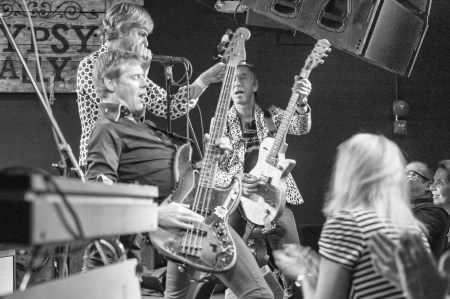
Fleshtones-6

The Band Drinks For Free sports fours songs by lead singer Peter Zaremba, four by guitarist Keith Streng, two songs by bass player Ken Fox, and two covers, including Alvin Lee’s great “Love Like A Man.”  Let’s focus on that cover for a moment, because it tells the uninitiated (wait, how can there be uninitiated when it comes to the ‘Tones? they’ve been around since the Carter Administration…what the Hell’s the matter with you?) much you need to know. How the Fleshtones approach “Love Like A Man” tells you a lot about their cock-eyed approach.  The original, from Cricklewood Green, Ten Years After’s great post-Woodstock album, is ponderous, lacks swing, though it is undeniably tuneful and great.  The Fleshtones treat it as a garage rock gem, a party song cut down from nearly eight minutes to 3:30.  It sets the tone for what’s to come.

On TBDFF, Peter Zaremba contributes some of the most fun songs of the band’s storied career, with “Rick Wakeman’s Cape” sounding like a cross between the Stones’ “2120 Michigan Avenue” and ? and the Mysterians.  On his songs plus the two written by Keith and Ken that he gets to sing, his voice is in fine fettle.  Keith Streng, who has stepped up almost as a coequal vocalist in recent years, has a remarkable voice — he’s like an athlete still able to roll along because he protected his body in the early years — and on the incredible “Respect Our Love,” he has the anthem he’s waited 21 albums to sing.

The tone of the record is elegiac, not quite nostalgic, as the Fleshtones reflect on a long career while still showing they have a full tank o’ gas.  This album swings, showcasing one of the great rhythm sections in rock’n’roll history with Bill Milhizer and Ken Fox propelling the songs on which Keith’s guitar and Peter’s Farfisa lay down their signature lines.  The backup singing of Vibek Saugestad rounds out the familiar boy’s choir with emollient tones, and Lisa Kekaula of the Bel Rays brings home “Love Like A Man” with the intensity of Merry Clayton on “Gimme Shelter.”

Tulip Frenzy has been along for the ride with the Fleshtones since we first saw them at Maxwells that hot summer night in ’79, and we’ve traveled cross country to write about them, hung in the green room while they opened for the Police, hosted them for barbecues, and dragged dozens of instant converts to see ’em.  We know whereof we speak when we say, 21 albums in, the Fleshtones have, in The Band Drinks For Free, their best album in nearly 30 years.  These guys are still going strong.  They still exemplify real rock’n’roll.  They are still worthy of their breakout record, their Madison Square Garden gig, their star on Hollywood Boulevard.  Now’s your chance to help — download the album today.
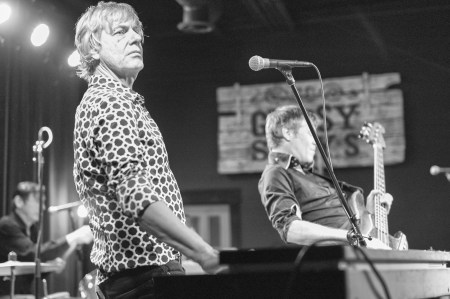
Fleshtones-12

But wait, who’s that there sitting on the couch?  Why, it’s Peter Zaremba!  Before we go, let’s ask him a few questions about The Band Drinks For Free.

Hey Peter, congratulations on the 40th Anniversary of the Fleshtones and the release this week of “The Band Drinks For Free,” your 21st album.  The gang at Tulip Frenzy rank it up there with “The Fleshtones Vs. Reality”, “Beautiful Light,” and “Roman Gods,” and it’s the band’s best platter since “Take A Good Look.”  Tell us about the magic that took place with Florent Barbier in the studio.

Peter Zaremba: First of all, thank you, I’m really flattered. Some of the folks at Tulip Frenzy are notoriously hard to please. We’ve got a great rapport with Florent -he’s a long time fan. We got to know him well while touring France with the band the Roadrunners in the ’90s. He was their drummer. It’s pretty comfortable recording at his place in Williamsburg, at least for Keith and me. We can walk to Flo’s. We’ve gotten pretty relaxed recording and don’t have a producer breathing down our necks and making us nervous. And we were much more prepared for recording – which was stretched out over a year and a half. In the end we had too much material. We even left the title track ‘The Band Drinks For Free’ off the album. How’s that for a radical move?

On TBDFF, you and Keith each penned four songs, Ken penned two, and you’ve got two covers.  Is that the basic pattern of Fleshtones songwriting over the past several records?

PZ – hmmm, I hadn’t done the math. Looks about right though. Like I said, we came in with a lot of material, so this kind of balances out our contributions. And we can always do another record with what’s left. Song writing is seeming to flow easier now after 40 years, unlike how we had to labor over our early tunes. I believe it was you who tagged ‘Shadow Line’ as a ‘pastiche’ in a review. Of course you were right. Anyway, we’ve finally stopped torturing ourselves over the songs and are enjoying writing and recording more. About time!

One pretty significant change on Fleshtones records since the ‘90s is Keith singing more.  What a voice!  Is this a function of Keith writing more songs, or him having discovered, around the time you guys started covering “Communications Breakdown,” his inner Robert Plant?

PZ – Inner Robert Plant and more! Actually Keith singing more is the result of a little thinking. He sang about half of our first album ‘The Fleshtones Blast Off’ because these were the first songs he wrote and just heard them that way. Then we decided I should sing all the songs. I was the lead singer after all. But them we realized I had difficulty singing some of the material, so we decided to start letting whoever can sing a tune the best just sing it. This is a process we’re still working on -making use of all of our vocal abilities, but Keith did let me sing his ‘How To Make A Day’ on the new album, something I was very honored to do.

We were deliriously happy to hear you cover “Love Like A Man,” our second favorite song from “Cricklewood Green.”  What’s the connection between your covering a Ten Years After song and your writing a song referencing Rick Wakeman?

PZ – I’m deliriously happy to hear us cover it too, and really love our version español ‘Ama Como Un Hombre’ which is actually the version we play live (the 45 will be released for coming Black Friday). It was Keith’s idea to do ‘Love Like A Man’ as if a garage rock band was covering it, although I think I obsessed on taking the song to it’s garage rock limits. There’s no real connection to “Rick Wakeman’s Cape” (which came to me in a dream) except it’s wound up on the same album, but there are no coincidences, right?

And by the way, did you really steal Rick Wakeman’s cape from Madam Tussauds?

PZ – haha, just mashing up all the ridiculous Rick Wakman imagery in my head (of which there is plenty), you know, him posing with the wax dummies of Henry’s wives for the cover of his album. Weren’t those in Madame Tussauds? I was there a long time ago with my sister. All I remember is they had Telly Savalas and those ghastly murder victims in the chamber of horrors. Maybe the Beatles, but they never went in for capes. Now I do.

There are some great cameo appearances on TBDFF.  Tell us about the band’s bringing in Lisa Kekaula and Vibek Saugestad to help out with vox/piano.

PZ – Well we’re lucky that Vibeke is married to Ken Fox, so she can’t say no. She also does a lot of backing vocals and helped with working out the notes of some crucial riffs. She has a musical background, unlike the Fleshtones. It was Keith’s idea to get someone like Lisa Kekaula of The Bel Rays to sing the final verses of ‘Love Like A Man’ which were originally intended for him. So we figured why not just ask her? We’ve played a lot with the Bel Rays and form a small mutual admiration society. She said yes and absolutely nailed the part -kicking the track up into the next dimension just like it needed.

There’s a distinctive elegiac tone to the album — not quite nostalgia but fond looking back on your youth and the band’s earlier days.  Is the mood of the band, entering your fifth decade, looking back on the Fleshtones’ remarkable legacy as well as the future?

PZ – I’m glad ‘not quite’ nostalgic. The mood is there. We’ve been around for 40 years and as humans have experienced a lot. It’s only right that this should be imparted to our music. At this point I like the idea of projecting an image of a band who should know better.

“The Sinner” is, as far as I can tell, the first blues song you’ve recorded.  Is this your “Yer Blues?”

PZ – It’s the closest thing we’ve ever done to the ‘white English kids playing the blues’ stuff like the Stones and Yardbirds that we loved so much growing up, although we did record our ‘Worried Boy Blues’ for, I think “Beautiful Light’ or was it ‘Laboratory Of Sound’ album. I thought we were finally up to it, although the guys thought I was nuts. I just figured we had to avoid all the bad moves that mar all the bad blues that so many other white bands did, especially in the late 60’s and 70’s. How did we do?

You’re touring China??  Do tell!

PZ -We sure are touring China – a totally un-foreseen development. We needed to expand the Fleshtones fan base a bit. We tend to go back to the same (wonderful) places year after year. Japan seems oddly impossible for us, Brazil fell through because of the collapse of their currency. Danny Amis of Los Straightjackets did get us back to Mexico for the first time in over 20 years last June but we needed more. So I asked Eric Beaconstrip, a Frenchman in the British band King Salami & The Cumberland 3 for some suggestions. His band really gets around, mostly through a world-wide network of rock and roll supporters. He suggested contacts in many countries around the world including the band ‘Round Eye’ in China. Now, playing China was never in the career strategy of the Fleshtones but Catchy of Round Eye was really happy to hear from us. He put together the tour ASAP. Once again, this is a case of rock and roll fans being today’s life-spring of music, instead of the promoters (although there are a handful of promoters who are keeping music alive around the world. I’m very sad that we lost one of them recently – our friend Nicky Trifinynadidis who was responsible for bringing the Fleshtones and so many other bands to Greece). So, the Fleshtones are on our way to China, can’t wait to bring them ‘Super-Rock’ -they don’t know what they’ve been missing!

_

So, people of the world, you don’t know what you’re missing if you haven’t heard The Band Drinks For Free.  Get off the stick and get this album by one of the surviving wonders of the world, the miraculous, magnificent Fleshtones.


Morgan Delt’s “Phase Zero” Is The Best Psych Album Of 2016

Posted in Music with tags , , , , , , , on August 28, 2016 by johnbuckley100

a3191513484_10

When Bill Doss passed away in 2012, we despaired of ever again hearing an album that blew our mind quite the way Music From The Unrealized Film Script: Dusk at Cubist Castle by The Olivia Tremor Control did when we first heard it 20 years ago.  But then earlier this summer, the mysterious Morgan Delt released “I Don’t Wanna See What’s Happening Outside,” which leads off his second album, Phase Zero, and if it’s possible to get the same rush the second time through, yep, this song did it.

Here’s everything we know about “Morgan Delt”: that’s not his real name, his eponymous first album was every bit as weird as a typical Olivia Tremor Control outing, he works as a graphic designer in California, Sub Pop were wise enough to lock him in a studio all by himself, and he’s playing September 20th at DC9 in the Nation’s Capital. Oh, and Phase Zero is a gorgeous, weird, melodic, inventive, soothing, trippy self-produced album in which he plays all the instruments.

“I Don’t Wanna See What’s Happening Outside” really does begin like a lost OTC track, and then fades into the boss “The System Of 1000 Lies,” like the best psychedelic album of your amped-up dreams.  The album is mostly those strangely treated six-string guitars, some keyboards for texture, and yeah, underneath it all, we suppose, are bass and drums, but think of this essentially as a longhaired guy singing gorgeously over slow and meandering highly electrified guitar lines, while floaters cross your vision and all solid walls have finely limned colors bleating and tricking your olfactory nerve ends.

We invoke, of course, the Elephant 6 bands, of which OTC was simply our (second) favorite (after the Apples In Stereo), but there is another, important reference point here, and it’s the trio of cross-indexed records made in the mid-70s by Cluster, Eno, and Harmonia (which consisted of the two guys in Cluster plus a guitarist genius pal.)  Their mostly instrumental early German electronica platters have been pulsing across our earbuds for many, many years, but never so intensively as in the last year when a deluge of Cluster and Harmonia recs became available to the non-Teutonic world, and yes, seems like Mr. Delt has been snuffling up these tracks for a long time too.

By the time the most excellent Phase Zero hits “Some Sunsick Day,” we are deeply into Eno’s “On Some Faraway Beach,” and we’re ready to come back to reality, weary, changed, a little emotionally wrought, no longer hearing through our nose and seeing through our ears, but satisfied that we’ve seen God, and his name is Morgan Delt.


We Can’t Wait For The Next Dose Of Heaven’s Gateway Drugs

Posted in Music, Uncategorized with tags on February 9, 2016 by johnbuckley100

1450296_548953218530797_1210322013_n

It’s February and the world has already been enriched by an incredible release by David Bowie, even as we eagerly await Iggy Pop’s new record. What year is this again?

Sure, The Aura’s Saturn Day E.P. just came out, so maybe it only sounds like it’s the ’70s.  But somewhere midway through the cabin-fever phase of winter, we jacked into a sonic jolt of ’60’s-sounding confection released since 2013 by the wonderfully named Heaven’s Gateway Drugs, and damn if they have not made that morning commute through igloo tunnels and slush all the merrier.

Here’s the precise route we followed to our new discovery: Uncut steered us toward Heaters, the Grand Rapids-spawned Psychabilly band, and we liked their Holy Water Pool so much that we stuck our mitts deep into the guts o’ Google and began pulling up whatever we could find.  Sure enough, Heaters’ve played a few times with a band from Fort Wayne, Indiana going by the instantly alluring moniker of Heaven’s Gateway Drugs, and once we listened to their 2015 single “Copper Hill,” we were ready to sell our possessions and hit the road.

Here’s what they say on their website:

“Heaven’s Gateway Drugs is a counterculture cult rock band hailing from Fort Wayne, Indiana, a rust belt city best known for its abundance of churches and strip clubs. Despite being born in a location that couldn’t be farther from a psychedelic epicenter, Heaven’s Gateway Drugs creates a unique combination of freakbeat, west coast psych, mod, and eastern drone to create a sound that is just at home today as it was in 1968.

This description only addresses part of the total experience that is Heaven’s Gateway Drugs. The group is led by Ben Carr, an enigmatic, psychedelic Pied Piper of sorts who entrances audiences with his movements and urges those in attendance to become one with the band. Remember always, ‘you are Heaven’s Gateway Drugs.'”

With that in mind, we downloaded their first two albums, You Are Heaven’s Gateway Drugs, self-released in 2013, and Apropos, which came out the next year.  Days later, when we stumbled out of the rec room here at Tulip Frenzy World HQ, we reached out to the band with some questions, principal among them finding out when their third rec would be released into the wild.  Here’s what they told us.

Q. I’ve really enjoyed listening to the “Copper Hill” single, and then to Apropos and You Are Heaven’s Gateway Drugs. Is “Copper Hill” a glimpse of what we might expect on a third HGD album, or is it meant to stand on its own?

A. “Copper Hill” was chosen to be the lead single for the upcoming record because we definitely felt it stood on its own while also offering a preview of the rest of the album.

Q. Where do things stand with your third album? Tell us about what you’re going for, and how it expands upon what you’ve done before.

A. The album is finished, we are currently waiting on the artwork, and as soon as we have that everything will be sent to the press. So if all goes well we should have the vinyl in hand in a couple of months. After Apropos was recorded the band went through some line-up changes over the subsequent months. All the songs on this new album were written with the band’s new line-up and while there are some sonic differences, it feels very much like a Heaven’s Gateway Drugs record.

Q. Coming upon the band in sort of reverse order of your releases gives an interesting — maybe confusing! — glimpse into what’s going on, as “Copper Hill” to our ears sounds a little more like a follow up to You Are Heaven’s Gateway Drugs than Apropos. Where does that 2015 song fit in the band’s evolution?

A. That is an interesting observation. Both “Copper Hill” and You Are… were recorded to tape which always imparts some kind of magic in the tone of the recording. Also, the fact that we have some new members means we worked to find our sound as a new unit much like we did on the first record when the band had just formed.
Q. You Are Heaven’s Gateway Drugs has a really great sound, and when I hear it I can imagine you on the river stage at Levitation/Austin Psych Fest as the kids sway in the evening light; with the exception of “Fall Back Down Again,” Apropos seems a little more of a highly crafted pop album. The former album seems like it could have been recorded in LA circa 1968, the latter seems like London six months later. How do you guys think of the evolution between album #1 and #2?

A. That’s a huge compliment, thank you! We made the trip down to Austin for Psych Fest 2 years ago and the River Stage was amazing. Everything was new with the first record. When we first formed the group, no one brought songs to the band with them, we wrote everything together at rehearsals. I think the first album captures us feeling out where we wanted to go with the band. By the time we began working on the songs for the second album we had a better sense of who we were and what we wanted to go for sonically.

Q. Your sound is unique and original. Which actually makes us even more curious about what bands you consider influences — both the bands you guys have loved over time and whose records you love right now. To us you really are in your own category — not psych, not ’60s revivalists, not garage, but elements of all three. We think we hear echoes of bands like BJM and the Warlocks, but then you seem like you’re invoking, I dunno, the Kinks or some other mid-’60s British Invasion band after they had their first hit of weed. So the maybe question is: who plays at your dream festival?

A. All of the bands you listed and most of the bands playing Austin Psych Fest this year. That line-up is insane.  (Editors note: Levitation/Austin Psych Fest this year features Brian Jonestown Massacre, The Black Angels, Black Mountain, Courtney Barnett, woods, Super Furry Animals, and more!)

Q. What are your plans for world domination, because clearly as great as Fort Wayne may be, it’s time you were knocking ’em down in LA and NY, too. Touring in 2016? CJM? East Coast? West Coast?

A. Being based out of the midwest we can get to a ton of cities in 3-4 hours so we tend to do lots of weekend warrior runs. Once the record is out there will be some longer jaunts. CMJ would be great and hitting some other places out east while we’re there. We have a ton of friends in Austin so we’d love to get down there for a visit as well.

So there you have it. 2016 will be notable for new PJ Harvey, new Woods, and that Iggy collaboration with Josh Homme sounds amazing.  For us, though? We can’t wait for the new album by Heaven’s Gateway Drugs, who have lit up our winter with an amber and pulsating glow.

Here’s the gateway to Heaven’s Gateway Drugs.

Tulip Frenzy Exclusive Interview With Driftwood Pyre, Whose Debut Was Our 2015 Album Of The Year

Posted in Music, Uncategorized with tags , , , , , on December 8, 2015 by johnbuckley100

0005536096_10

On Sunday, we revealed that Driftwood Pyre had beaten a tough field to claim the #1 spot on Tulip Frenzy’s 2015 Top 10 List.  This likely made sense to anyone who has heard this brilliant band, and especially those who read our rave review when the album came out in early November.

Driftwood Pyre founder Liam Watkins was a prime mover behind the band’s Minneapolis forebears, First Communion Afterparty.  He now joins Tim Presley (Darker My Love and White Fence) as the only person to have parlayed two different bands  into snagging top honors in Tulip Frenzy’s annual ranking.  Through EXAG ‘ Records, he graciously agreed to answer some questions.

1. Congratulations on taking Tulip Frenzy’s Album of The Year honors. Tell us about how the band came together and the process of recording the album. We know you and Aaron (James) began putting the band together in 2012, but would love to know more about how all the members of the band joined, and over what span of time the album was recorded.

Thank you so much for your continued support! We are ecstatic to be featured at the top of such a fine list of musicians. When I started Driftwood Pyre back in 2012 I set out to create a collective. The idea was to make a one-off album and feature many artists backing me up on the songs I was writing in the studio. Recording with Aaron was incredibly easy because he is truly a one-man band. He covered the early drum, bass and some backing guitar tracks.

After a few sessions Aaron and I had set the foundation and invited Joe Werner, my former bandmate in First Communion Afterparty, to lay guitar tracks down. It was at this point that the three of us had decided that we needed to solidify a line up and scrap the collective idea.

Jeanne Oss was a friend and former roommate of mine who had recently moved to Minneapolis and was really interested in playing with a live act. We had her come into the studio to lay down some organ and vocal tracks and knew immediately that we wanted to add her to the line up. All that was left was to find a drummer and after about three weeks of practicing with Aaron substituting on drums he had good news. Courtney (Olsen) was an old friend of Aaron’s from when they lived and played in bands in Los Angeles. She had just moved to Minnesota and was looking for a new project.

When Aaron told us we had found a female drummer I was so excited. I love working in creative environments with women and I knew she would be the perfect fit. We continued to write, record and scrap song after song over the next 2 years as we perfected our sound.

In October 2014 we were approached to sign with EXAG’ Records in Belgium and about two weeks later Jeanne Oss took a job opportunity in San Francisco which was very bittersweet at the time but we were fortunate enough to have recruited Marie DeBris, formerly of FCAP and Magic Castles, to play organ and percussion for us.

2. What’s the songwriting dynamic in the band. We clearly recognize songs that have your signature on them, but do you and Aaron share songwriting duties? Whole band get into the act?

Joe Werner and I are the songwriters in the band but everyone writes their own parts. Usually my songs are created from playing a random riff during practice and if it catches the attention of the band and everyone jams on it we will give it structure and lyrics. Joe has a more traditional approach to his writing and spends a lot of his time outside of practice writing song after song.
3. Now that the album is out, tell us about plans for 2016, and particularly whether you are going to tour outside of the Upper Midwest. (We certainly hope you get to the East Coast…)

We have tentative plans to tour Europe in 2016 and would like to play CMJ and SXSW in the next year. Touring is something that we all are ready for and it is very important for us to reach our audience outside of the Minneapolis psych scene.

4. We are only familiar with First Communion Afterparty as a prior reference point for Driftwood Pyre, but as stated in the review last month and in the Album of the Year write-up, it seems like Driftwood Pyre is — to paraphrase Paul Westerberg — maybe slightly more in the center of the dial than all the way over to the left. Is that conscious? Reflect a change? Or just a reflection of where the songwriters and musicians were when they sat down to produce the record?

We definitely set out to do something different. I didn’t want this to be FCAP version 2.0 and never wanted to come across as a one-trick pony. Our musical influences have evolved quite a bit over the past 10 years and ultimately we wanted to play music that people could dance to.

5. You may have noticed that two other bands from Minneapolis were in the Top 10 (Magic Castles, Flavor Crystals.) Where does Driftwood Pyre fit in? Other bands with whom you are simpatico that we should check out?

I’ve watched the Minneapolis psych scene grow since 2005. Many amazing acts have come and gone and a few heavy hitters like you have mentioned have held on but it’s not our intention to adhere to what a traditional “psych” band is supposed to sound like. I can definitely say that we are the black sheep of our local psych community but we are more interested in what is happening outside of Minneapolis.

Another Minneapolis favorite I think you guys should check out is Chatham Rise. They are an amazingly talented band and they make incredible records.

6. Even though your record is just out, we’re obviously eager for what comes next. Do you have plans for studio time in the months ahead?

We have 6 tracks for our next album already recorded and mixed. The sophomore album has been written in its entirety and we are working on material for a third release.

So… exciting news.  And you heard it here first about the second Driftwood Pyre album nearly out.  Tulip Frenzy’s #1 gift from Santa would be learning that the band is going to play DC when they head to New York for CMJ.  Wherever you are, this is a band you must check out.