Archive for the Uncategorized Category

David Bowie’s “Blackstar” Single And Coming Album

Posted in Uncategorized with tags , , on November 27, 2015 by johnbuckley100

Just as he surprised us in 2013 with the release of The Next Day, we were stunned last week to hear the first track off of Blackstar, to be released on January 8th, Bowie’s 69th birthday.  Imagine if Station To Station were recorded with Weather Report, or if Young Americans had Wayne Shorter, not David Sanborn, on sax, and you’ll get a sense of what the amazing 9:57 long title track sounds like.

“Darkstar” is a beautifully contained suite broken into a prelude and a soulful back half, with Bowie’s voice having never sounding better.  With Tony Visconti producing, the band in the studio is essentially the same set of musicians Donny McCaslin used on his 2012 Casting For Gravity, and starting with McCaslin himself on woodwinds, these are as flexible a set of jazz fusion musicians as could possibly exist in the current century.  We cannot stop listening to it, and cannot wait until the album is released in the new year.

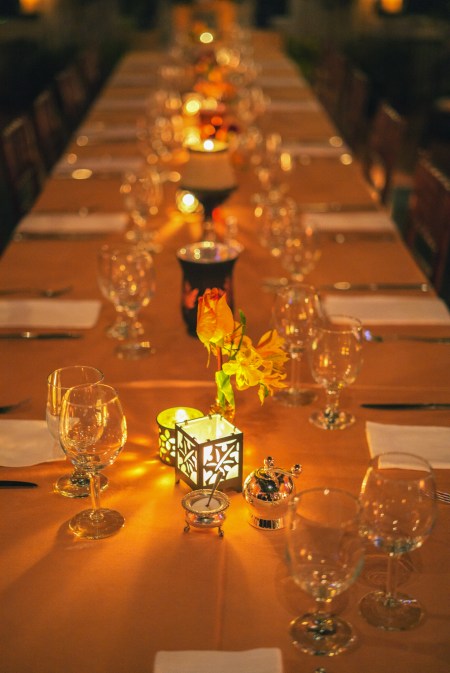
On A Night Like This

Posted in Uncategorized with tags , on November 27, 2015 by johnbuckley100

Thanksgiving 2015Thanksgiving 2015, Sharon, CT.

Photo Book Career Retrospectives From Mark Cohen, Dave Heath, And Hiroji Kubota

Posted in Uncategorized with tags , , , , , on November 24, 2015 by johnbuckley100

2015-09-23-1442969450-3279703-framecover-thumb

For 60 years, Mark Cohen has wandered through the streets of small cities in Eastern Pennsylvania, Leica and flash attachment in hand, surprising people for  1/250th of a second as he captured — ah, the things he captured: knees, torsos, parts of faces, the very souls of ordinary folk, recorded for posterity as what and who they are.  Each picture “tough,” in the way that Garry Winogrand and Joel Meyerowitz used the word, Cohen is no anonymous street photographer in a big city.  He didn’t just take his picture and move on.  Instead, at the same time he actually earned his living taking studio shots of children and couples, out on the same streets his clients walked he invaded peoples’ spaces and got in their faces and emerged with perhaps the most remarkable and distinctive oeuvre of any American street photographer of the last half century.

And now this work is collected in a wonderful career retrospective, each image laid out by hand by Cohen, so you can see the patterns that all along he’s seen — three pieces of bread in a puddle/three fingers gripping a flat-top head; clothes lines across different backyards; a young girl’s eyes from below as she hangs from a swing/the hand of a woman protecting her breast from the intrusion of the camera.  Frame (University of Texas Press, $85.00) shows Cohen’s work in color and mostly black and white, in Europe and Mexico but mostly Wilkes-Barre and Scranton.  It builds on his previous photo books such as Grim Street and answers any doubts about whether Cohen is a genius of the captured fragment. While videos of Cohen at work show the way he stalks the streets and alleyways of Wilkes-Barre, coming upon local citizens and shocking the bejesus out of them with his camera and flash, there is a distinction that is necessary to make, though hard to convey, between Cohen and a photographer like Bruce Gilden.  While they use similar techniques, there’s a humanity found in Cohen’s work that we find missing in Gilden’s, an aesthetic in search of beauty, not harshness.  For the aspiring street photographer in your life, this is the holiday photo book you should buy, if only to puzzle over how someone could extract such art, so bravely, from the confines the small community he lived in all these years.

f3f3a87053de4833f95217bedbe293ba

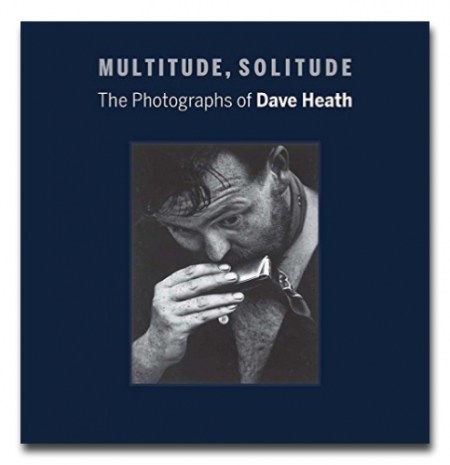
Over a long career, Dave Heath has been a photographer’s photographer, known to the cognoscenti for his fine eye and poignant approach in capturing emotion.  His technique is in many ways the opposite of a photographer like Cohen — a significant percentage of the images captured in Multitude, Solitude (Yale University Press, $65.00) were taken with a telephoto lens, that face in the distant crowd isolated and captured from afar.

Best known for his book A Dialogue With Solitude, which came out in 1961, Heath is getting renewed appreciation due to the work of his gallerist, Howard Greenberg, and the Nelson-Atkins Museum of Art, which is responsible for organizing the retrospective collected in this book.  We like Heath’s work, and appreciate his story, wherein a life of hardship made him attuned to the vulnerability of the people he took pictures of, often without them even knowing.

KUH1978001K002

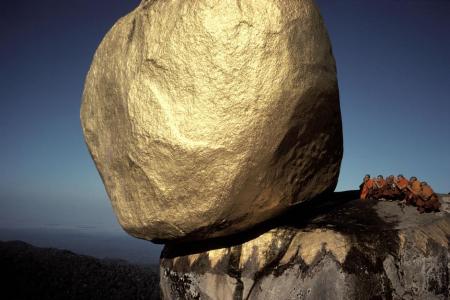
Magnum photographer Hiroji Kubota has a career retrospective out entitled, appropriately, Hiroji Kubota Photographer (Aperture, $63.75). It reveals him to have had a Zelig-like career — working for Elliott Erwitt, taking pictures of anti-war demonstrations in the U.S., the Civil Rights movement, Phnom Penh just before the Khmer Rouge takeover, China under Mao, North Korea over many years.  The work, like the personality revealed in the interview that is interspersed with the images, is lyrical and at the same time very direct.  While we had never focused on Kubota before Aperture’s recent excerpt from the interview in the book, of course we, like you, had seen the work without truly appreciating a single sensibility was responsible for so many famous images. Kubota is one of the most remarkable documentary photographers of the age, and you should check out this comprehensive and gorgeous book, which his work so clearly deserves.

Years Later, Will Thousands Claim They Were At Wand’s Show At The Black Cat?

Posted in Uncategorized with tags , , , , , , , on November 16, 2015 by johnbuckley100

Wand 1

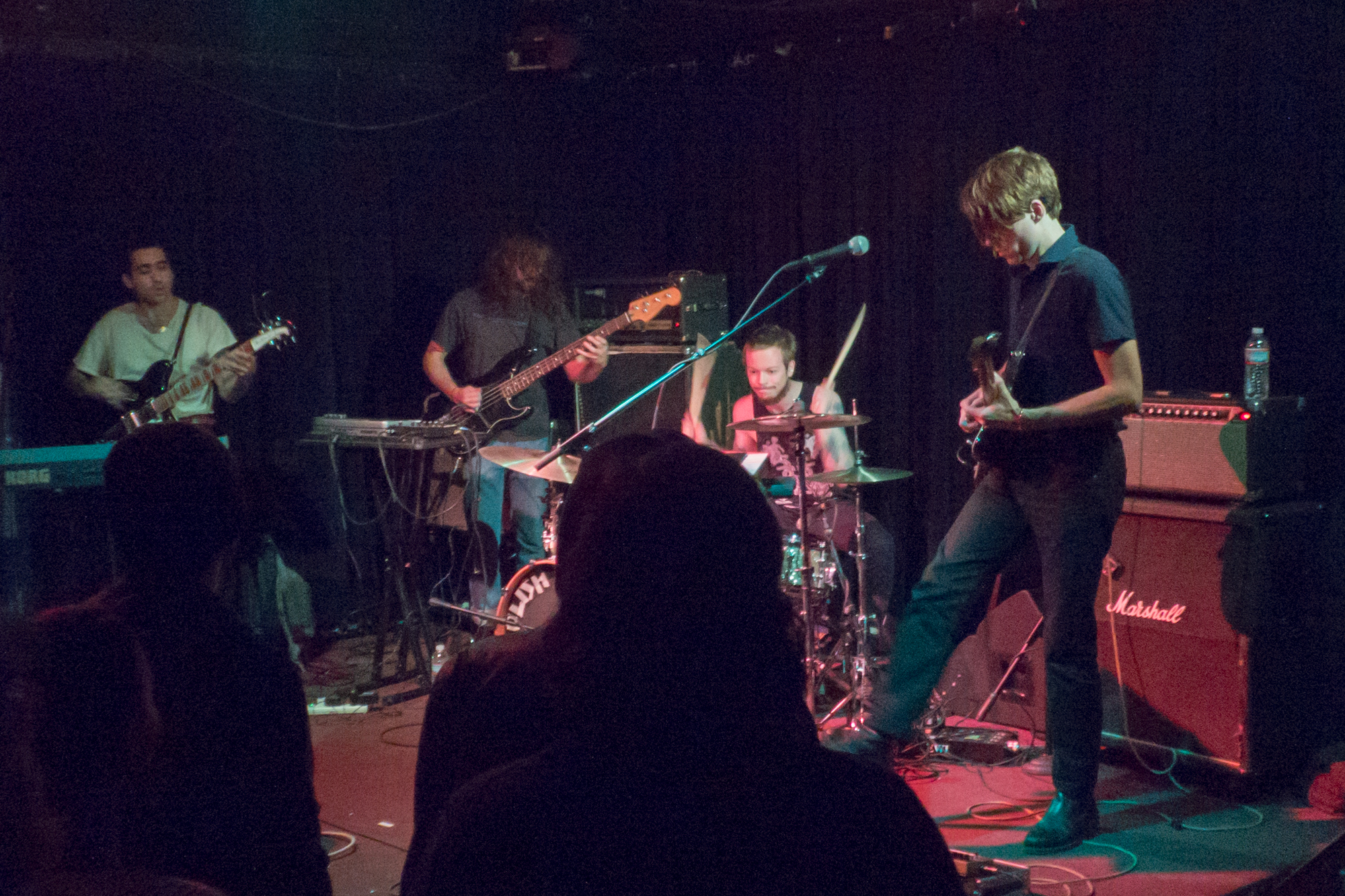
About three times as many people claim they were at Nirvana’s winter ’91 show at the old 930 Club as could possibly have fit in that skanky room.  Last night, not too many of us were privileged to have been in the backroom of the Black Cat to see Wand, a band that thunders every bit as much as their precursors, while sharing their genius for melody and that genre-busting tightrope walk between metal and pop.  The 70-minute show was at times transcendent.

A year is a long time in pop music, but was it really just last fall that we saw Wand open for Ty Segall, leading us to discover their remarkably accomplished debut, Ganglion Reef?  Since then — all in calendar year 2015 — the band has released two new albums, each better than the last one, a progression of talent that shows great things to come.

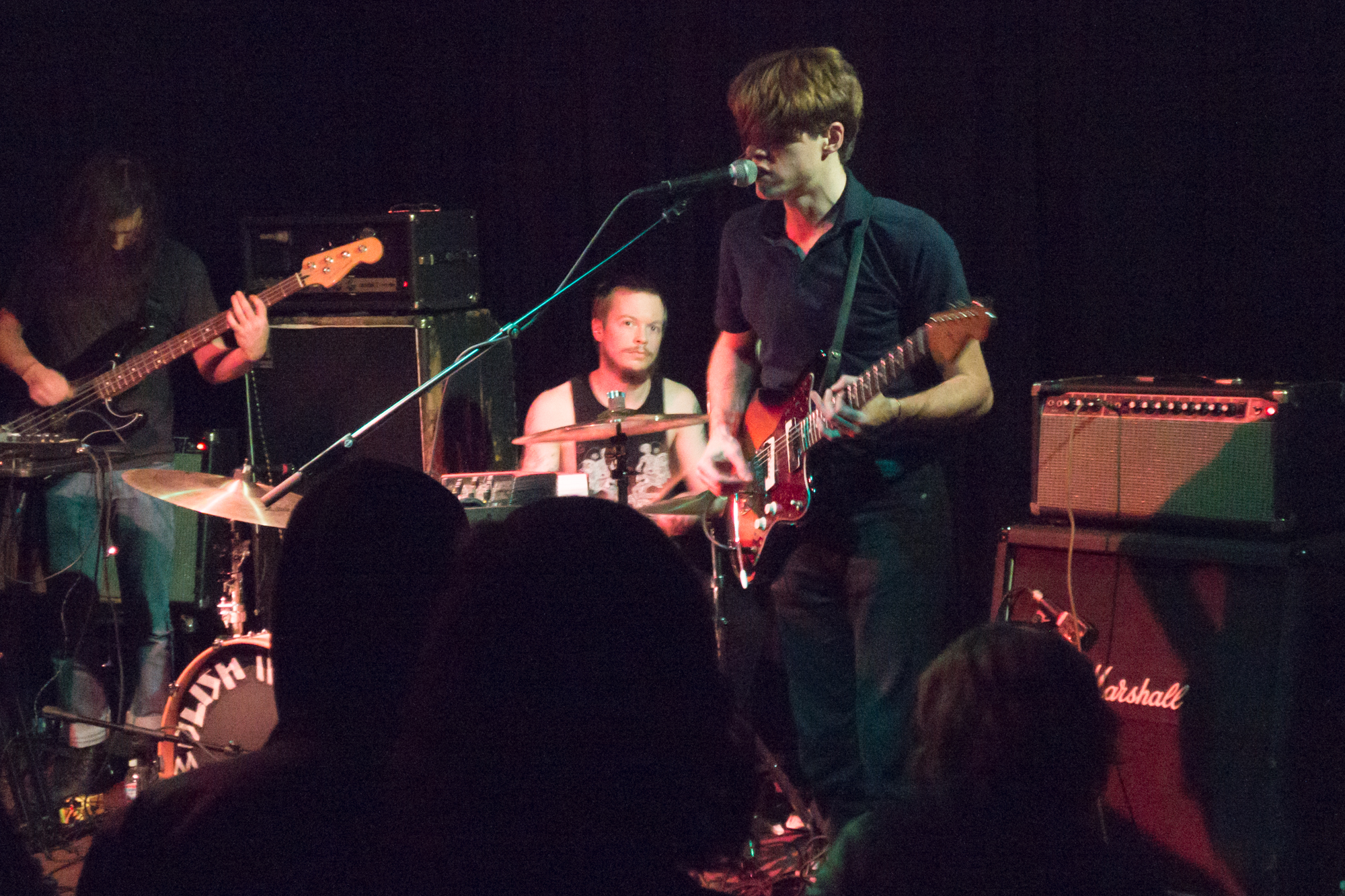
The band is now a foursome, so that Cory Hanson has extra help on keyboards and guitar.  As the singer and principal guitarist, the clean-cut Hanson cuts a fascinating figure.  It’s fully to be expected to find him on a stage, but he looks less like someone who can ply the line between noise-rock and Power Pop than someone you’d see on a tech conference panel being grilled by Kara Swisher on why his start-up’s billion-dollar valuation is justified. Wand plays pretty melodies that stick in your head and then, on a dime, they pivot to chest-jarring fuzz-metal.  As the bandleader, Hanson seems as if at any moment he could turn and walk through a different door, and you’d find yourself listening to music in a completely different tempo, volume, and level of intensity.

Wand 2

But no take on Wand is complete without mentioning that Evan Burrows is a one-man nuclear power plant piston-pounding the drums. If drummers had world rankings like tennis players do, Burrows would be that phenom that went from number 128 to the Top 5 in a single season.  This is evident on the records, manifest live.

We have already stated our dilemma in determining which of Wand’s 2015 records will make Tulip Frenzy’s 2015 Top 10 List.  And honestly, we wish we could call 1000 Days and Golem a double album and be done with it.  But something else came to mind last night when watching this intimate show in which Wand just detonated on stage.  Hanson reportedly was Mikal Cronin’s roommate in LA, and Ty Segall has taken the younger tyro under his ample wing.  In the summer of 2014, Tulip Frenzy declared that we live in a Golden Age of Rock’n’Roll due to the output and sensibilities of Ty, Thee Oh Sees’ John Dwyer, and White Fence’s Tim Presley, and last’s night show by Wand simply confirmed the thesis.  But what also was clear that any listing of West Coast bands and figures leading us to this Periclean age has to include Wand and Cory Hanson.  Those of us who were privileged to be at the Black Cat last night know this.  And we fully expect that a decade from now, hundreds of DC hipsters will claim they were there too, and have known this all the while.

Making A Playlist From Dylan’s “The Cutting Edge 1965-1966 (Deluxe Edition)”

Posted in Uncategorized with tags , , , , on November 12, 2015 by johnbuckley100

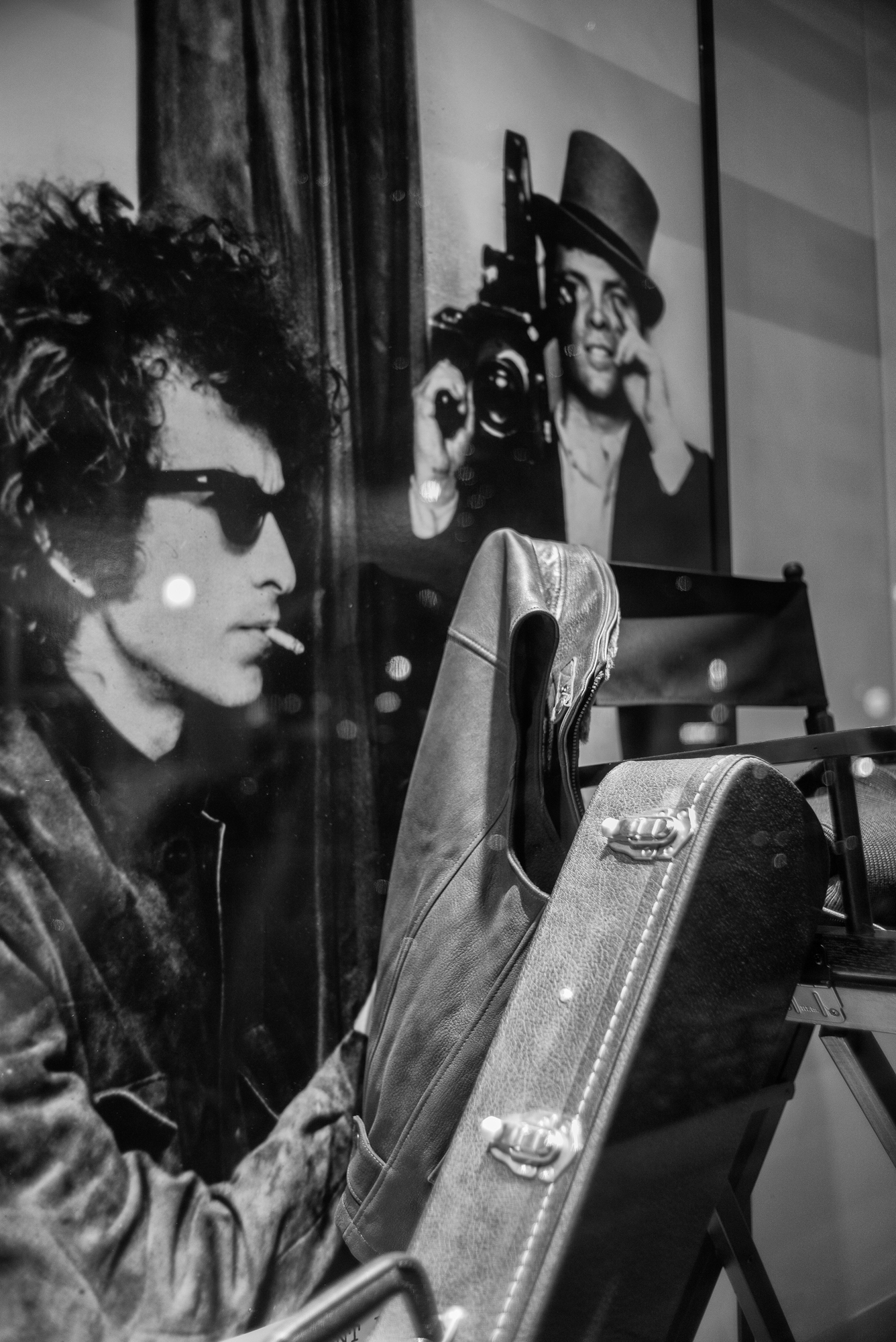
Dylan 65

From the display window of the Paul Stuart Store (!), City Center, Washington, D.C., November 2015

It’s a lot to work through, six CDs of alternative takes from those fourteen months in which Dylan recorded his three early masterpieces.  But if you are disciplined, and create in a more or less chronological order the songs as they were recorded between January 1965 and February ’66, a really pleasing playlist takes shape.  As a public service, we offer it below.

Some quick notes on what we’ve done and what’s not here.  Where the better version, or perhaps we should say the more pleasing version to our ears, is on The Cutting Edge 1965-1966: Deluxe Edition, we’ve used that.  And where the better version is the one used on Bringing It All Back Home, Highway 61 Revisited, and Blonde on Blonde, or materialized on previous editions of The Bootleg Series or other compilations, that’s what’s utilized.  (We didn’t use one of the many alternate versions of “Like A Rolling Stone” that spill over an entire, fascinating CD showcasing the song’s evolution. We of course used the one that made it to AM radio.)  And as for what’s not here, well, we were never a big fan of songs that, on the official releases, sounded like amped up, perfunctory blues and rockers (cf. “Leopard Skin Pill-Box Hat”.)  Yet on this Deluxe Edition, as with Tell Take Signs, the alternative versions of numerous songs we might have skipped over, really worked.  Without further ado, here’s our playlist, with easy to follow annotations of what’s from where:

  1. “I’ll Keep It With Mine” (Take 1, Remake) T.C.E.
  2. “She Belongs To Me” (Take 1, Remake) T.C.E.
  3. “Outlaw Blues” (Take 2, Alternate Take) T.C.E.
  4. “On The Road Again” (Take 4, Alternate Take) T.C.E.
  5. “If You Gotta Go, Go Now (Or Else You Got To Stay All Night” The Bootleg Series, Vol 1-3
  6. “It Takes A Lot To Laugh, It Takes A Train To Cry” (Take 3, Remake) T.C.E.
  7. “Sitting On A Barbed Wire Fence” (Take 2), T.C.E.
  8. “Tombstone Blues” (Take 9) T.C.E.
  9. “Positively Fourth Street”, Biograph
  10. “Like A Rolling Stone”, Highway 61 Revisited
  11. “From A Buick 6”, Highway 61 Revisited
  12. “Highway 61 Revisited” (Take 5), T.C.E.
  13. “Just Like Tom Thumb’s Blues, Highway 61 Revisited
  14. “Queen Jane Approximately”, Highway 61 Revisited
  15. “Can You Please Crawl Out Your Window”, Biograph
  16. “Visions Of Johanna”, Blonde On Blonde
  17. “One Of Us Must Know (Sooner Or Later)”, Blonde On Blonde
  18. “Leopard Skin Pill-Box Hat” (Take 3), T.C.E.
  19. “Stuck Inside Of Mobile With The Memphis Blues Again” (Take 14), T.C.E.
  20. “Absolutely Sweet Marie” (Take 1, Alternate), T.C.E.
  21. “Temporary Like Achilles” (Take 3), T.C.E.
  22. “Obviously Five Believers” (Take 3), T.C.E.

Random Notes: As you can see, there’s nothing here from the official Bringing It All Back Home, and we think this is for two reasons.  One, that album seems to have comprised the versions of the songs with the highest torque, and on The Cutting Edge, the alternative versions, possibly less perfect performances than what’s on the official album, somehow come across slightly less caffeinated.  Second, a pair of classic songs from the period — “Subterranean Homesick Blues” and “Love Minus Zero/No Limit” — somehow didn’t seem to fit with the playlist as a whole; we had ’em on there, but took them off.  You may try a different approach.

Finally, we should say, just because we went with the previously released versions of some songs, doesn’t mean what’s on The Cutting Edge is not worth listening to.  It’s just that some songs were on the official releases for all the right reasons — they’re better.  We should note that at least two songs here — “Sitting On A Barbed Wire Fence” and “Highway 61 Revisited” — have at least as good versions out there on various editions of The Bootleg Series.  We just happened to really like these versions on The Cutting Edge.

Follow Tulip Frenzy on Twitter @johnbuckley100

This Is The End

Posted in Uncategorized with tags , on November 7, 2015 by johnbuckley100

October Leaves 2932 NM2

Lotta leaves to rake…

“In Triangle Time” Is Another Side Of Kelley Stoltz

Posted in Uncategorized with tags , on November 7, 2015 by johnbuckley100

By our count, In Triangle Time is Kelley Stoltz’s 7th album, and in the decade we’ve been listening to him, playing his music for all to hear, tuning into shortwave just to make out the distant early warning of new music beaming from his San Francisco atelier, he’s never made a record that was, on the scale between “unworthy” and “classic,” anything less than “remarkable.”  At least 10 of the 12 songs on this first album released by John Dwyer of Thee Oh Sees’ Castleface Records tip well to the right on that continuum — radio worthy, enormously tuneful, the product of an amazing band of musicians which, if you’d never heard anything about Kelley before, you wouldn’t realize were all him.

And yet just as Stoltz has produced an album either recorded in a “real” studio, or in surroundings seriously upgraded from when his home recordings had to be made with the microphone wedged into the socks drawer — legend has it that he couldn’t afford a mike stand — the sounds herein constitute a real departure, and it has taken us a bit to reckon with them.

Between 2006 and 2008, on Between The Branches and the magnificent Circular Sounds, Stoltz produced from a home studio music that exhibited the artisanal craftsmanship of a cobbler locked above the John Lobb store, hand stitching leather boots. His many fans loved these albums not just because of the amazing care that went into this harpsichord run, that Rickenbacker riff, the Aynsley Dunbar drum roll.  We loved this music because Kelley could self-harmonize better than Steve Miller on Your Saving Grace, because Powerman-era Ray Davies seemed a songwriting inspiration, because unlike the majority of musicians who have produced albums all by their lonesome — from Skip Spence to Paul McCartney, John Fogerty to Prince and even Ty Segall — Stoltz could play literally any instrument, from drums to piano to guitar, at least as well as any sideman he might have recruited to his Batstudio.  Through the entire run of Kelley Stoltz’s career, these amazing tourbillons he’s produced — songs with complicated wheels spinning in the middle of them — have contained surprises, startling moments.  Listening to a Kelley Stoltz song can be like biting into a chocolate and finding it has a nougat center, no wait, that’s key lime, oh, cherry.

Interestingly, the week before In Triangle Time was released, Stoltz released two items — a sort of grab bag of mostly substandard songs entitled The Scuzzy Inputs Of Willie Weird, but also an EP straightforwardly titled 4 New Cuts.  On the EP, there are at least two songs as good as anything Kelley’s ever done, and importantly, “Redirected” and “Some Things” have that classic, playful Kelley Stoltz sound, every bit as good as the best song on his last full album, 2013’s Double Exposure, which Jack White, like John Dwyer, set forth upon the world with a musician’s generous desire that all appreciate this guy who’s churned out record after record doing everything himself including, likely, pressing the vinyl.

So with evidence that Kelley is producing new music that sounds like his old music — New Cuts (emphasis mine) — what are we to make of his new album?  In Triangle Time shows what to many will seem like an entirely new side of the artist.  It has a big, booming sound, as if he’s moved from a two-track studio to wherever it is the latest Beyonce album was cut.  More than ever before, electric keyboards and bass dominate the instrumentation.  And the sound has shifted paradigms from the fairly delicate late-’60s craftsmanship of his records at the end of the ’00s, to that moment between ’79 and ’83 when synthesizers began to dominate New Wave music, just before it all got ruined by the brittle shift from vinyl to CDs.  In fact, comparing this album to what Kelley’s done previously is not so much like Dylan going electric as like your favorite photographer shifting from film to digital.

It’s ironic, we guess, that in clearly more comfortable surroundings, Kelley’s moved from finding that perfect acoustic piano sound to the seemingly easier pallet of electronic keyboards; you’d think it might be the opposite, right?  But when you consider what he’s doing here, it all makes sense.  If earlier, Stoltz was channeling the Kinks and the Who, here he channels favorites from that transition time between New Wave and the pop music that came after.  It is hugely inventive — on “You’re Not Ice,” he proves himself to be maybe the first artist ever to successfully channel Don Van Vliet in a song that pays homage to the best Captain Beefheart music of that long-ago age.  Kelley’s delved into Echo and the Bunnymen territory before, with his note-for-note rendition of Crocodiles.  Here the era is invoked in far more original fashion.

Maybe the best reference point for what we have here is Bowie, for on two consecutive songs — the Young Americans-sounding “Litter Love”, and on Wobbly, which could have been an outtake on any Bowie album between Lodger and Let’s Dance — we have a lovely invocation of the Thin White Duke.  And if you think about it, it would have been as unfair to slag Bowie when Let’s Dance came out — for not sounding like Ziggy or Aladdin Sane — as it would be to slag Kelley for not sounding like he did on Circular Sounds.

In Triangle Time is, as Double Exposure was before it, both an example of artistic growth and an instance where an artists seeks a bigger audience by getting away from the preciousness that attracts rock critters like yours truly.  We actually really like what he’s done here, even as we miss what he did before.  And we are tantalized by the release of 4 New Cuts, as it offers perhaps a clue to the Kelley Stoltz Classic sound that he might get back to in the future.  Or so we hope.
Driftwood Pyre Rekindle The Embers of First Communion Afterparty

Posted in Uncategorized with tags , , on November 6, 2015 by johnbuckley100

Lucky you, people of Earth, for this morning you can download the first album by the Driftwood Pyre, the kickass remnant of the most astonishing psych band our species produced circa 2009-2012, First Communion Afterparty.

In retrospect, we still can’t believe how great First Communion Afterparty were, though their posthumously released Earth Heat Sound was Tulip Frenzy’s 2013 Album Of The Year.  When their first studio album Sorry For All The Mondays And To Those Who Can’t Sing came to our attention in the summer of ’09, we were ready to camp outside the ticket office of the Verizon Center to see them.  How were we to know that they seldom toured beyond the precincts of the Twin Cities, and that we might have been the only person in the Mid Atlantic who saw them for what they were — inheritors of the best elements from the Bless Its Pointed Little Head-era Jefferson Airplane, the harmonies of the Mamas and the Papas, the guitar punch of the Jesus and Mary Chain.  The vocal dynamic of the band was what clinched the deal, Carin Barno able to swing between Joplinesque grit and emollient warbles, with Liam Watkins proving himself to be a classic punk singer happily working off a debt to everyone from Roy Loney to Iggy Pop.

It’s Watkins who walked away from FCAP and nurtured the embers back to life in Driftwood Pyre, a band that is at once every bit as interesting as their predecessors and also more straightforward.  If you’ve a certain cast of mind, you’ll get this analogy: at times, Driftwood Pyre is to First Communion Afterparty as Pink Mountaintops is to Black Mountain — clearly linked by a guitarist/singer/songwriter, but just a little more fixed on rock’n’roll’s center than its nether regions.  And that’s a good thing, if you’re hoping Driftwood Pyre can achieve the global dominance FCAP deserved.

There was something almost mystically powerful about First Communion Afterparty’s Earth Heat Love, and Driftwood Pyre invoke it on songs like “Comatose,” “Take Me To Your God,” and “Karmaceutical.” Watkins follows the links of the great San Francisco bands with guitar lines steeped in the blues, a Jorma Kaukonen-esque pedigree, and his vocal reaches are cosmically inspired.  But as with FCAP, there’s an enveloping harmonic convergence with an angelic chorus of girls ‘un boys softening any hard edges.  While wholly original — though of course we hear FCAP in the song structures — on “The Day Nico Died” we hear the Cramps channeling Dylan ’65, on “Paper Petals” we hear the Gallagher brothers in their Heathen Chemistry prime, and “Super Moon” made us reach for our Mazzy Star.  This is — work with us here — the album we wish The Black Ryder could release, a record paying its debt as much to Rubber Soul as Darklands-era JAMC.  Having just spent a few weeks knee deep in other Minneapolis bands — Flavor Crystals and Magic Castles — it’s nice to hear a psyche band less indebted to the Brian Jonestown Massacre, but would Anton Newcombe look on approvingly from stage left?  Oh yeah.  And when they make Big Hits Of Mid-America Vol. V, all three bands can roar together.

From the sloughs of band-breakup despond… an instant nostalgia from having missed seeing FCAP live… to the joy of discovering that Liam Watkins and his fellow travelers made it to a life-sustaining planet where they can produce amazing new tunes, we couldn’t be happier.  People of Earth, this is a great day.

Follow Tulip Frenzy on Twitter @johnbuckley100

We’ve Posted Our High Heel Race Photos At Tulip Frenzy Photography

Posted in Uncategorized with tags , , , , , on November 1, 2015 by johnbuckley100

High Heel Racer Gallery Tfrenzy

We collected some of the best images from the last two years of D.C.’s High Heel Race and posted them on a gallery at Tulip Frenzy Photography: Images By John Buckley.

Richard Hell’s “Massive Pissed Love”

Posted in Uncategorized with tags , on November 1, 2015 by johnbuckley100

Imagine, if you will, that Richard Hell had never helped form the seminal band Television, that his two albums with the Voidoids were not among the strongest releases from the New York bands circa ’77-’82, that he’d never played on a stage with Johnny Thunders in the original version of the Heartbreakers.  See him instead as one more smart, off-kilter kid drawn to the bright lights and the big city, Manhattan as the world’s greatest university, culture coming at ya from the Film Forum, Village Voice, museums uptown, galleries downtown, oh yeah, and a cast of characters all around you that would inspire artists from Weegee to Warhol to Dylan.

Imagine he absorbed it all, heightened his critical faculties through exposure to the best essayists on rock’n’roll, film, and art, and that he found his place in the city as a writer.  Imagine that along the way he wrote a really excellent first novel, Go Now, and became a writer in demand by small magazines and large, and that he amassed a body of critical work that was original, insightful, and genuinely well written.

Okay now we can go back to appraising Hell in full, we can add the fact that, yeah, the guy really was an exciting frontman for multiple bands, and that when he writes about music, he does so from the perspective both of a fan and critic, but also as what has to be called a rock star.  Add this all up and you get a sense of just how fantastic a book Massive Pissed Love is, Richard Hell’s collected nonfiction written since the Millennium.

His essay, “The Velvet Underground vs. The Rolling Stones” was published in the book Rock & Roll Cage Match, and collected here, we got to read it again and could only marvel.  Hell’s view on Keith and Mick and Lou is fundamentally different, more focused, than ours would be, because we’ve never stood on a stage, as he has, and watched a crowd go wild.  It is one of the single greatest pieces of rock writing ever, and trust us, we’ve read a lot.  His eulogies and memorials to Bob Quine and Joey Ramone are worth the cost of the book, and then some.  We’re a little less enamored with artists like Christopher Wool than he is, but who cares, the writing is strong, whether he casts his eye on film, photography, or fiction.

And along the way he tells stories, really fun stories, that make some of this collection as entertaining as his 2013 memoir, I Dreamed I Was A Very Clean Tramp, which we put up there with Keith Richards’ Life and Dean Wareham’s Black Postcards as the best rock-star memoirs of all time. (Can’t wait to read Elvis Costello’s.)

Buy the book.  Skip to “Sex On Drugs,” or “Jim Carroll Memorial Remarks,” or his essay on Lester Bangs.  For Godsake read the essay on the Stones and the Velvets.  Yeah, if Hell had come to New York and simply become a writer, we’d be celebrating him now.  That he has the insights borne of being one of our favorite rock stars too is just icing on the cake.