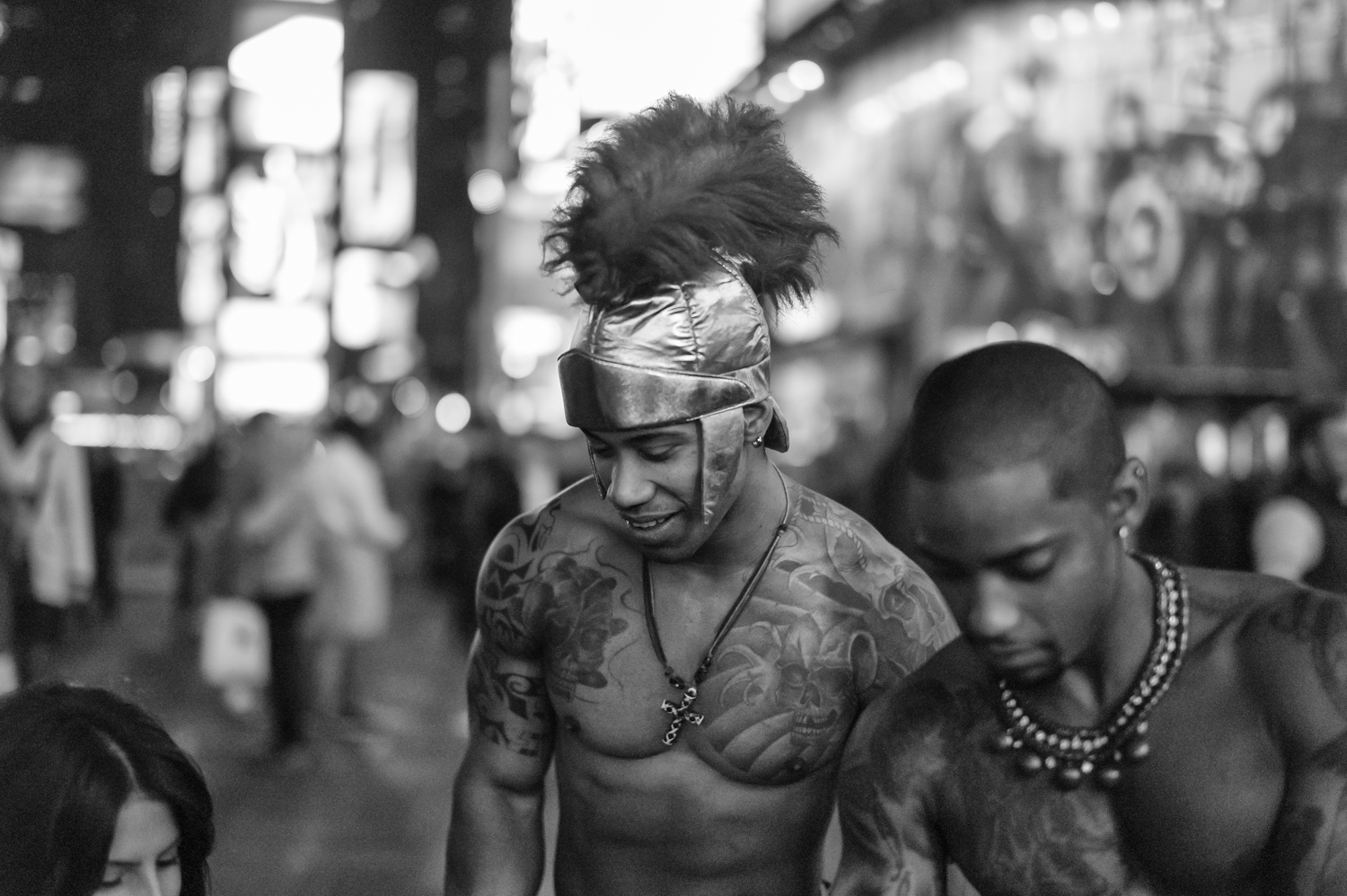
These guys were performing on an October evening when it still was warm enough to show off the tats.
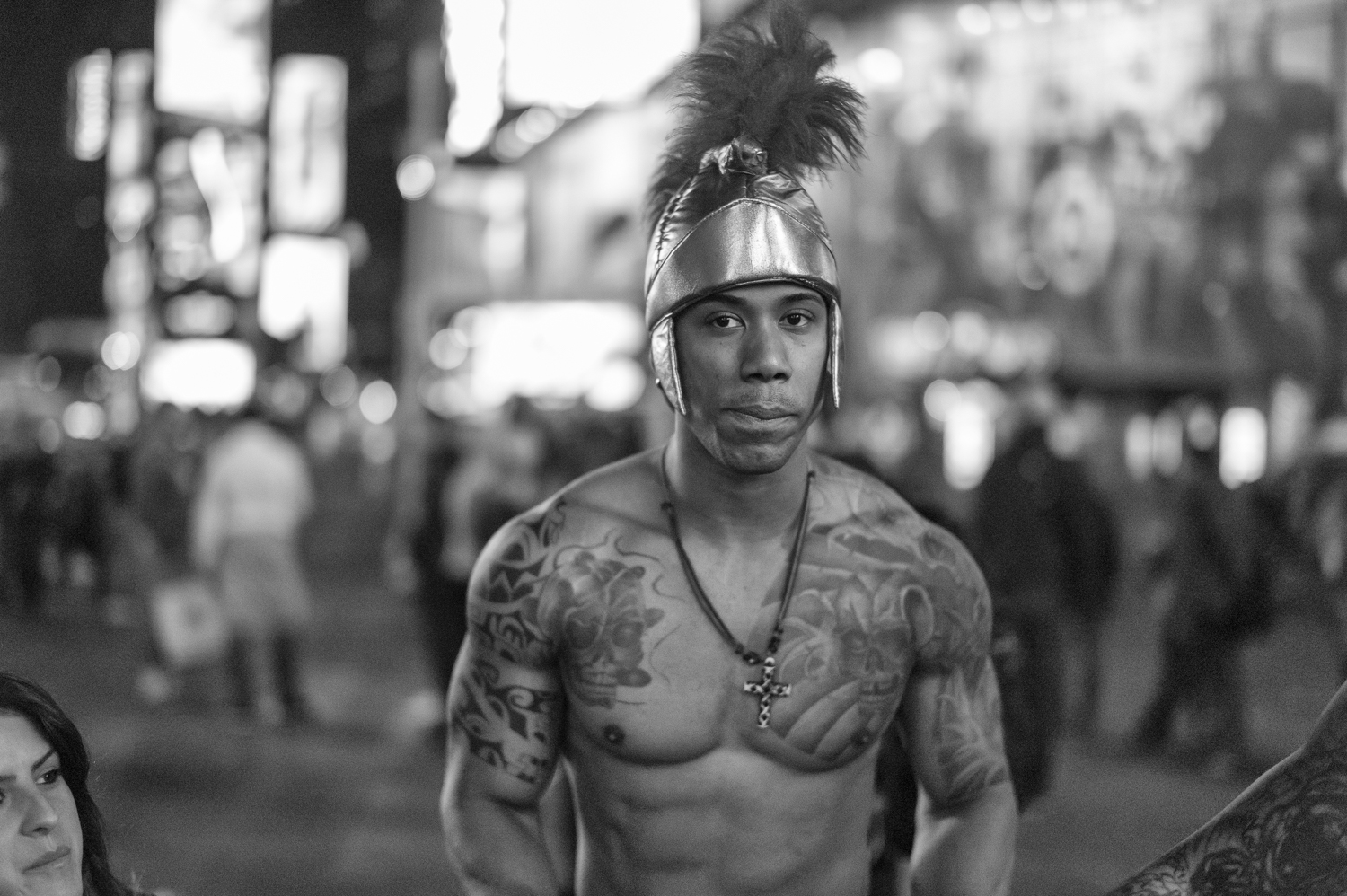
These guys were performing on an October evening when it still was warm enough to show off the tats.
It has been a long time since we’ve gotten to wander through Times Square on a warm autumn evening at 10:30 or so. So much has changed since Giuliani and Bloomberg have rendered the city something closer to Singapore than the dirty town we lived in in the ’70s. The pedestrian mall is filled with cops, and cartoon characters. But even out there on the street, with the Disney characters entertaining the tourists, a slice of the New York we used to live in can still be found. Leica Monochrom, 50mm Summilux Asph.
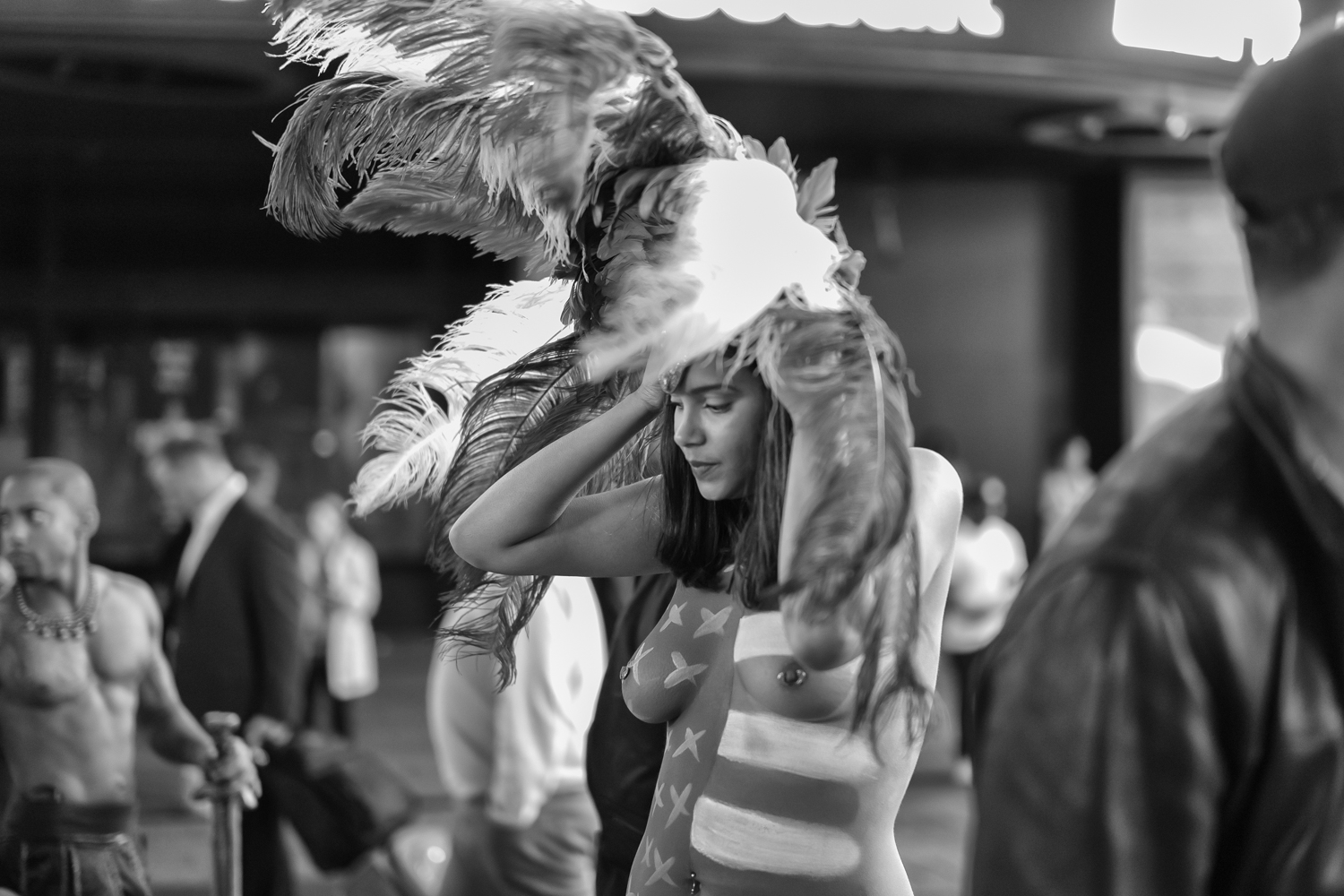
Leica Monochrom, 50mm APO-Summicron-Asph.
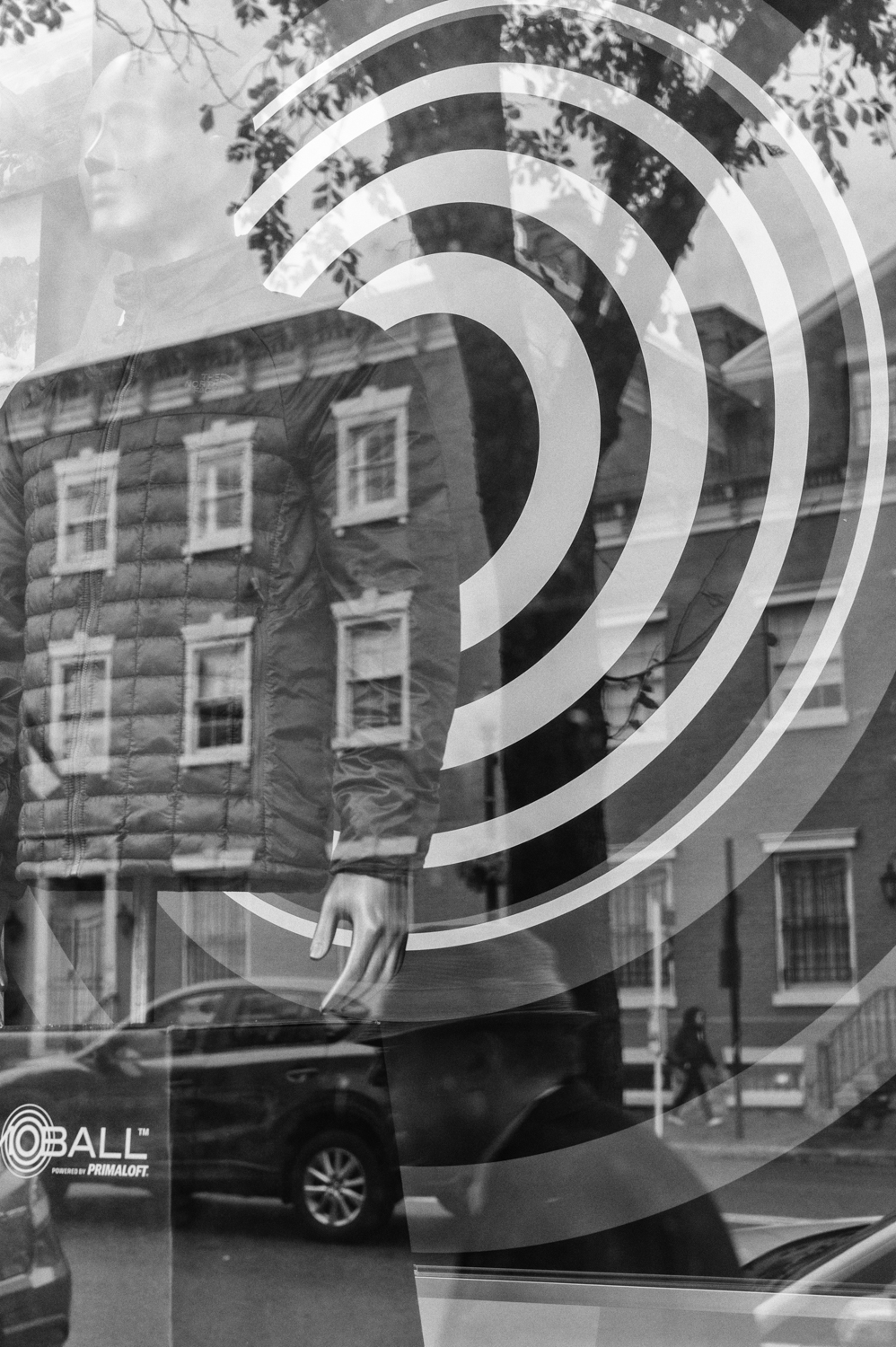
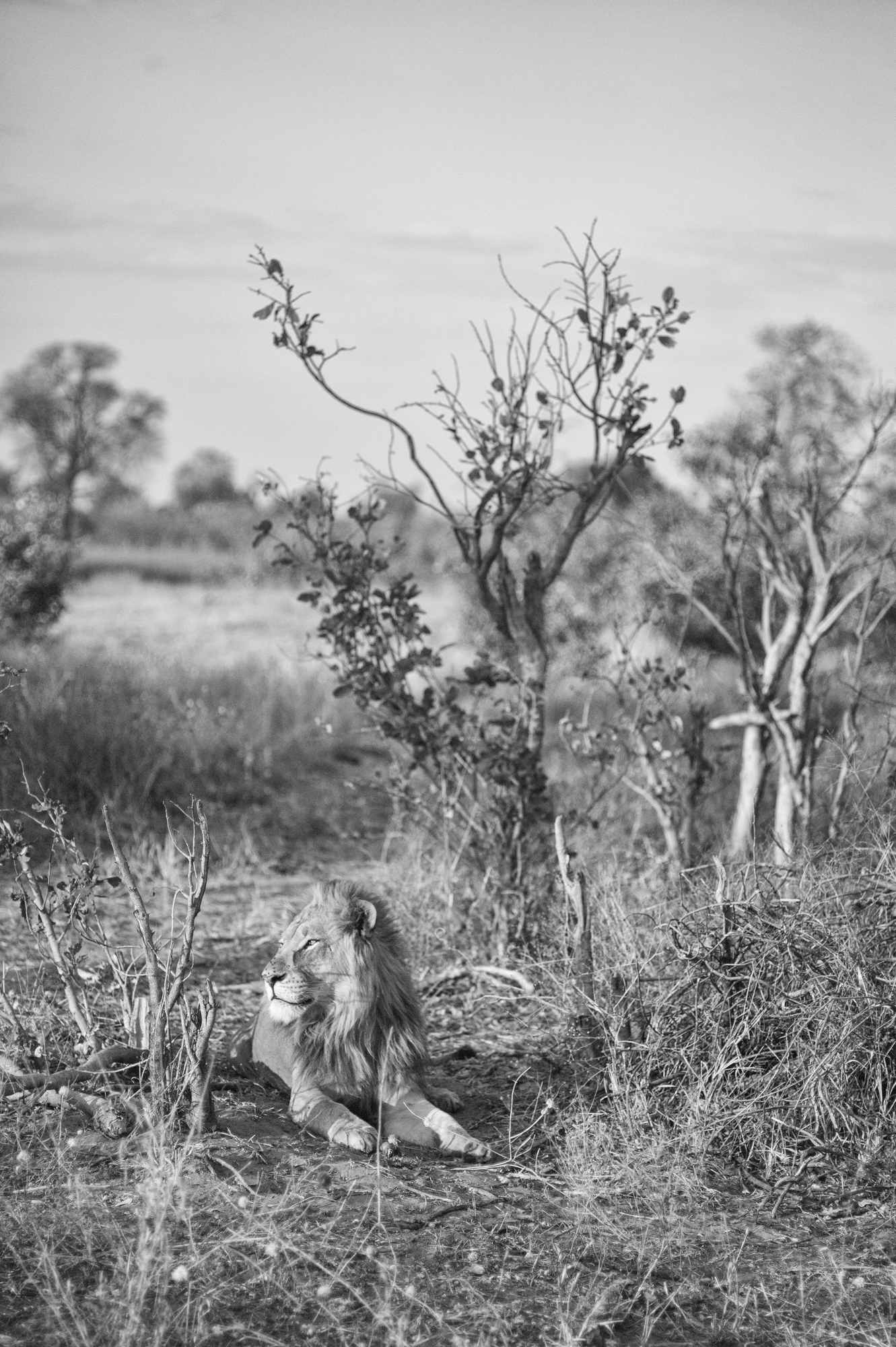
Leica Monochrom, 90mm Summicron, all images w/ ND Filter, @f/2
A few days ago, we published in Tulip Frenzy a field report on using a Leica M-240 as our main camera while on safari in Botswana. We took the M-240 as our main camera because it is, in fact, our main camera. Some people have responded as if we did this out of some need to prove a point, or as a bizarre experiment, given that of course one would more naturally shoot with a Canon or Nikon — DSLRs made for this kind of photography. In fact we used the M because Leica M’s are the only camera system we own.
However, in addition to taking along our M-240, which at least has the benefit of being able to use telephoto lenses via an adaptor, we also took along our Monochrom, the Leica M that only takes black and white images. We took it along because frankly we were determined to escape the bounds of cliche, to take photographs that aren’t typically what one returns from Africa with. Moreover, we thought that taking along the Monochrom, and shooting either the 90mm APO-Summicron-Asph or the 50mm APO-Summicron-Asph (and quite rarely, the 28mm Summicron Asph), and as much as possible shooting wide open (using an ND filter), we might be able to come up with memorable images.
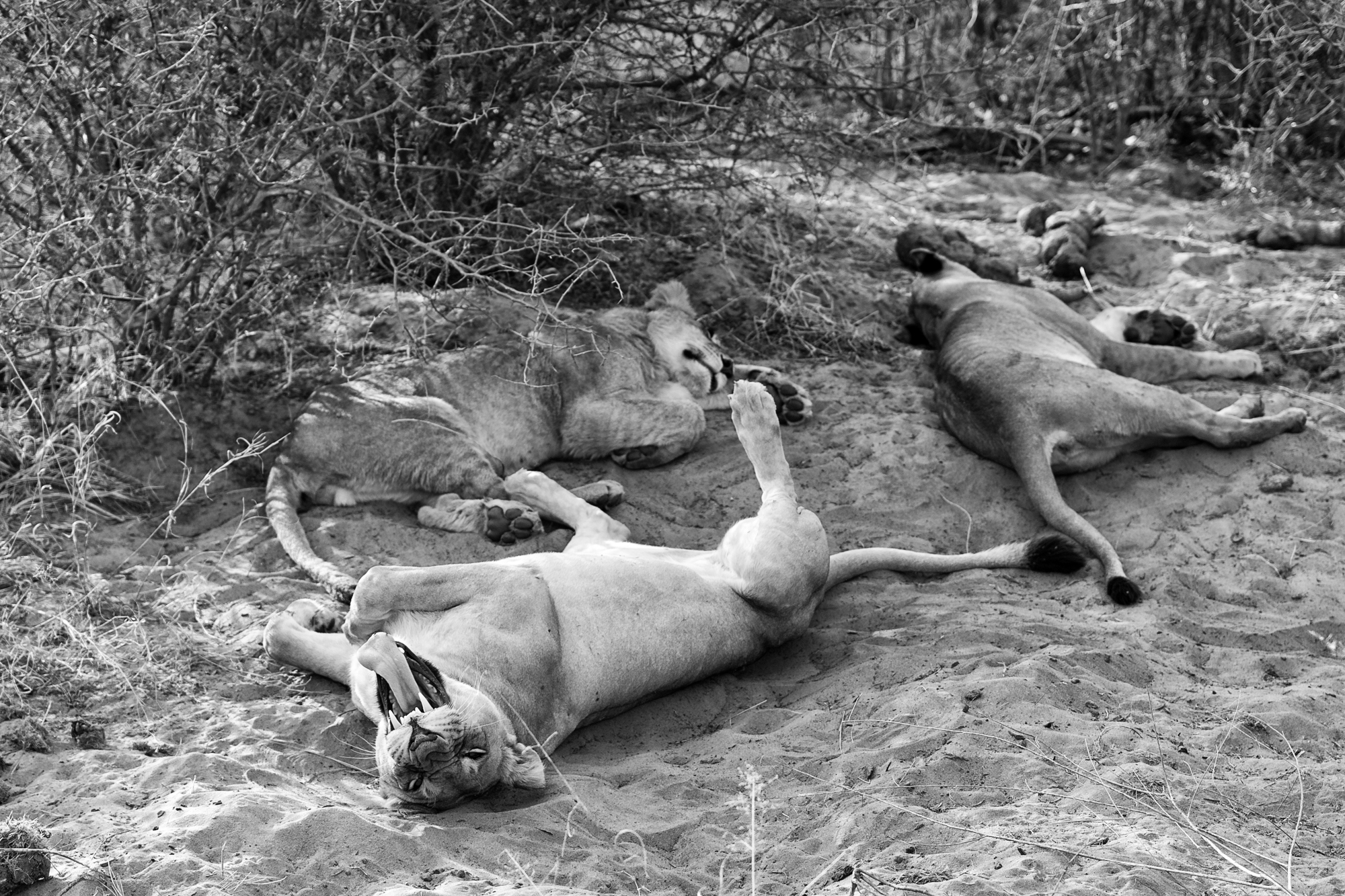
Leica Monochrom, 50mm APO-Summicron-Asph
We have to declare that taking the Monochrom along as our second camera was a complete delight. Thinking in terms of light, not color, in an environment with, at times, a hyper-abundance of both, was a conceptual joy. And the images we took, in our own subjective view, are likely the ones we will print and put up on our walls, because they’re in many ways more compelling images than the color shots.
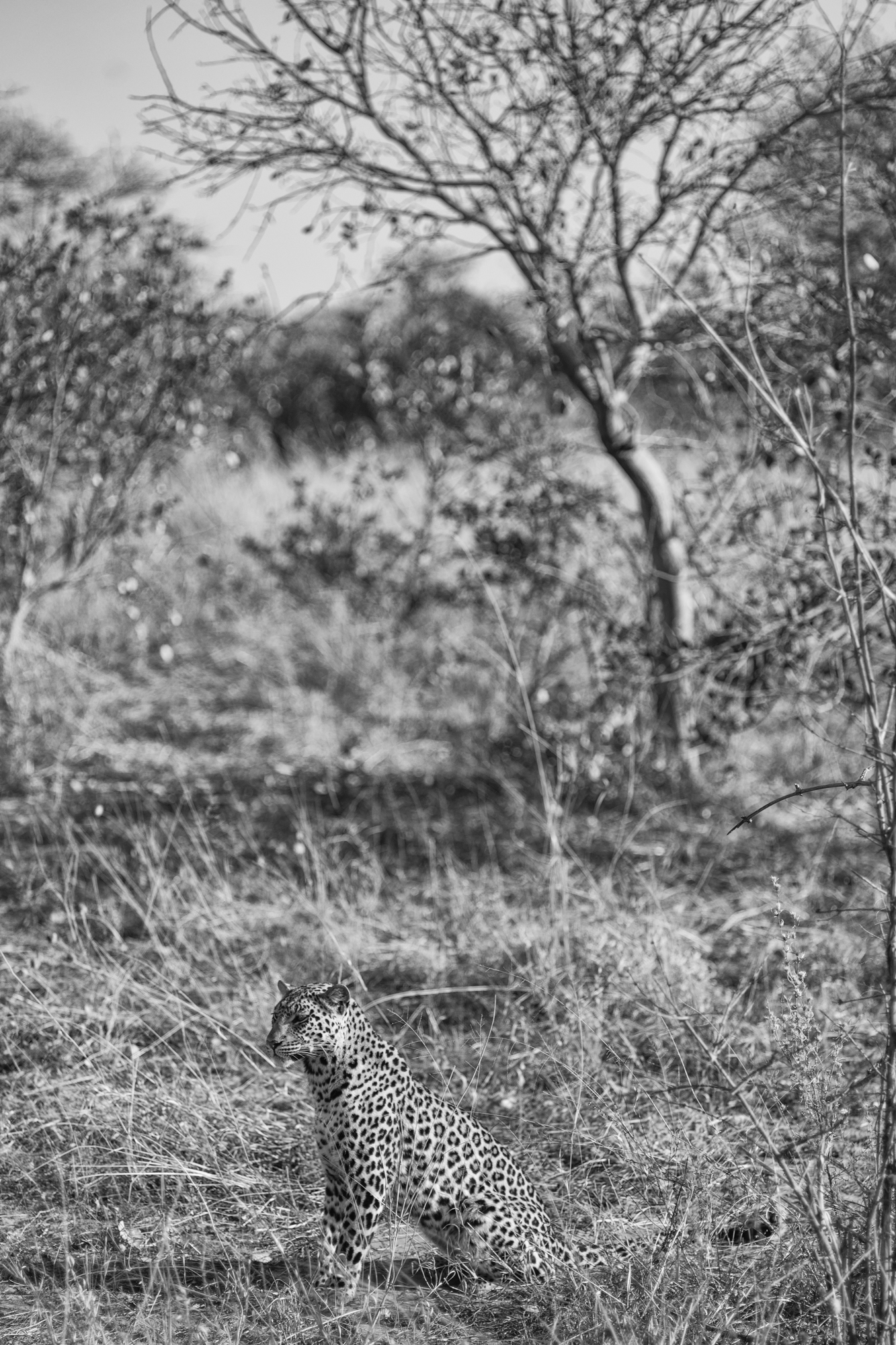
Leica Monochrom, 90mm APO-Summicron-Asph
There was something about isolating the animal against its background — taking advantage of the bokeh inherent in shooting fast Leica lenses wide open — that appeals to our eye. Admittedly influenced by the brilliant photography of Nick Brandt, whose shots of animals in Kenya and Tanzania are so unbelievably naturalistic — as if lions came to his plein air portrait studio — we knew what we wanted to achieve visually. Taking along the Monochrom and using it as an alternative to the Leica M was like shooting in black and white film, with all that entails both in limitations and the liberation of simplicity.
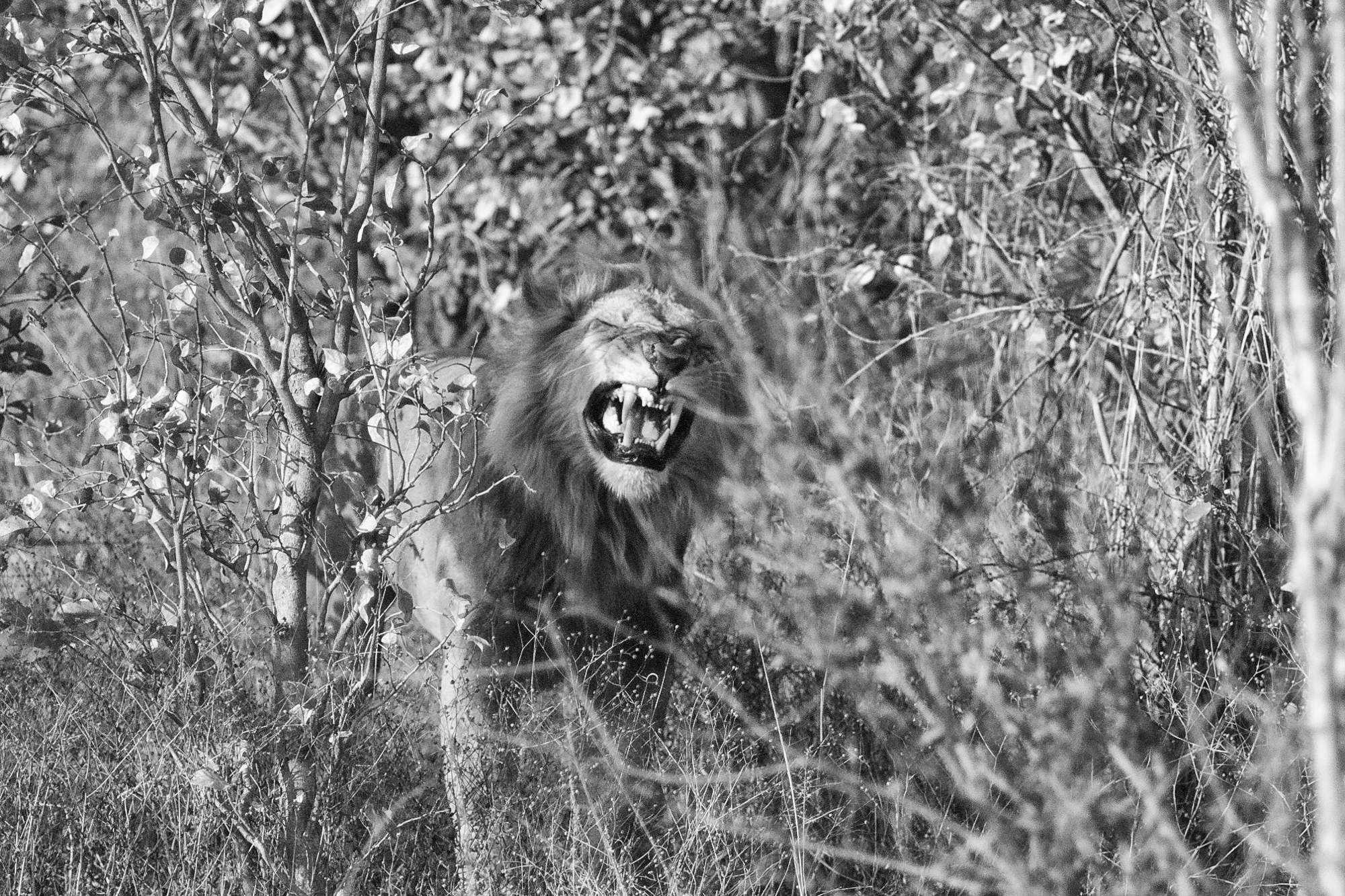
Leica Monochrom, 50mm APO-Summicron-Asph
Those who read our post on using the Leica M-240 last week in Botswana will remember that I complained I had some trouble focusing with the EVF. But after a dozen years using a rangefinder, focusing with the Monochrom was second nature, and I felt in some ways that if I really needed to focus quickly, this was the camera I wanted to use.
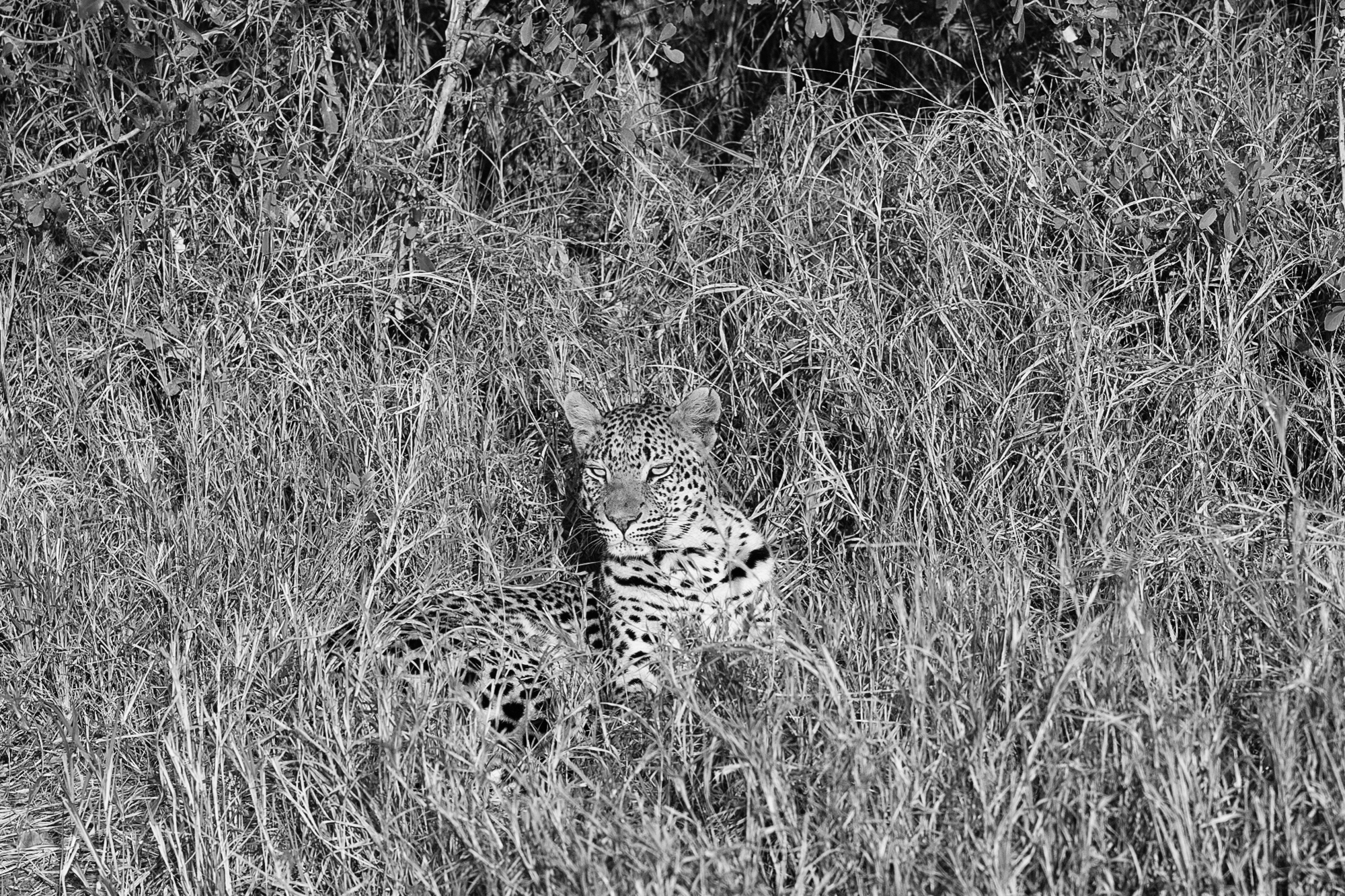
Leica Monochrom, 90mm APO-Summicron-Asph
But it wasn’t just ease of use that made the Monochrom such a delight to work with. It was the conceptual possibility of what one could do shooting within the confines of black and white, and the simplicity of knowing I was only going to shoot wide open. That if I nailed the focus, the contrast between, say, the leopard’s fur and the grass behind it would be pleasing.
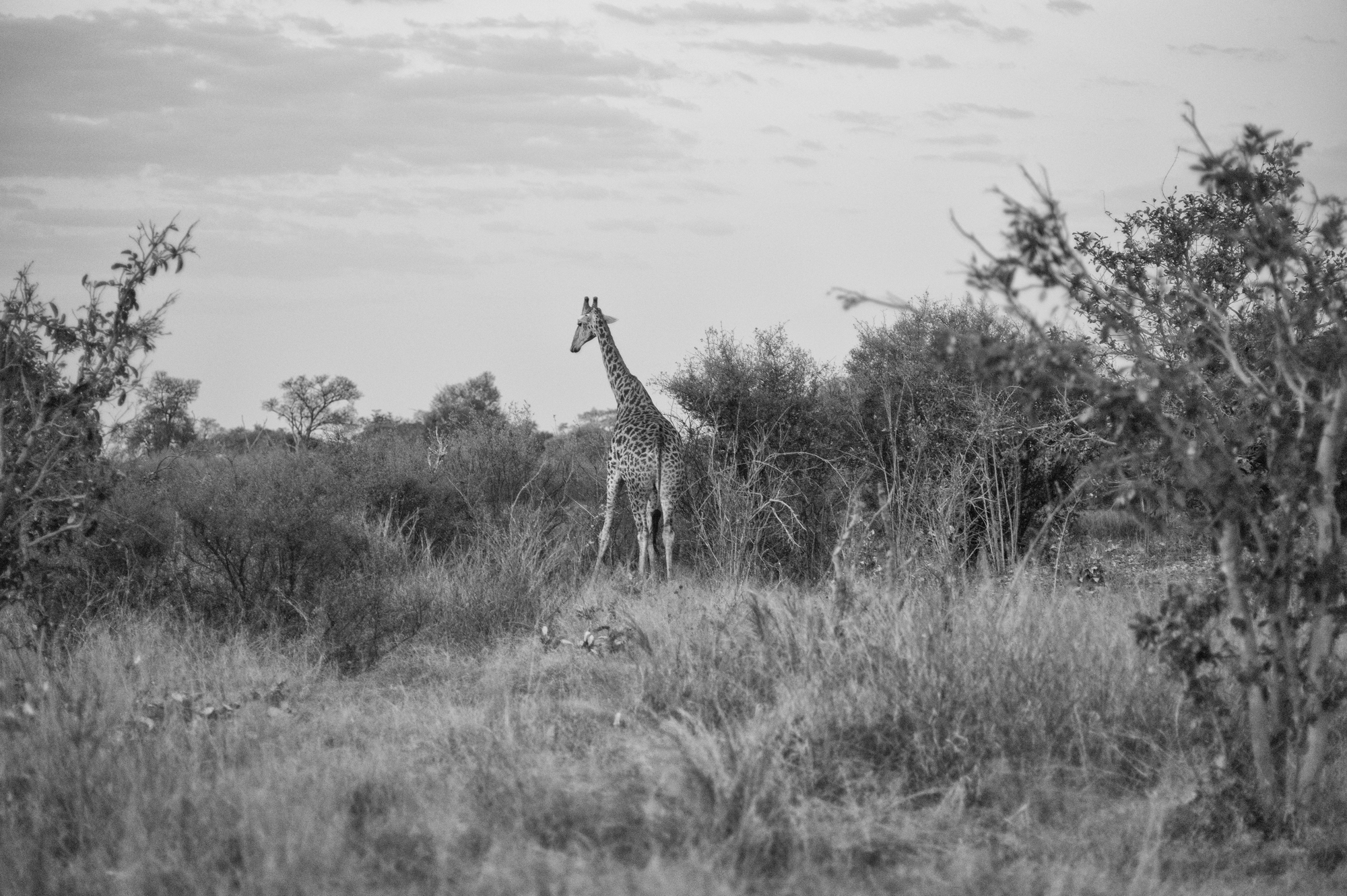
Leica Monochrom, 90mm APO-Summicron-Asph
As always with the Monochrom, you go into taking the picture visualizing it in terms of light and form, not color. Because I had both cameras within reach, I would make a conscious choice about which to use. Yes, sometimes the matter was solved by the expedient of needing a telephoto lens, which meant using the M. Sometimes I used both cameras and took multiple images in color and black and white, leaving it to later to sort out which was better. But sometimes the matter was solved by seeing something and saying, That will simply look better as a black and white image.
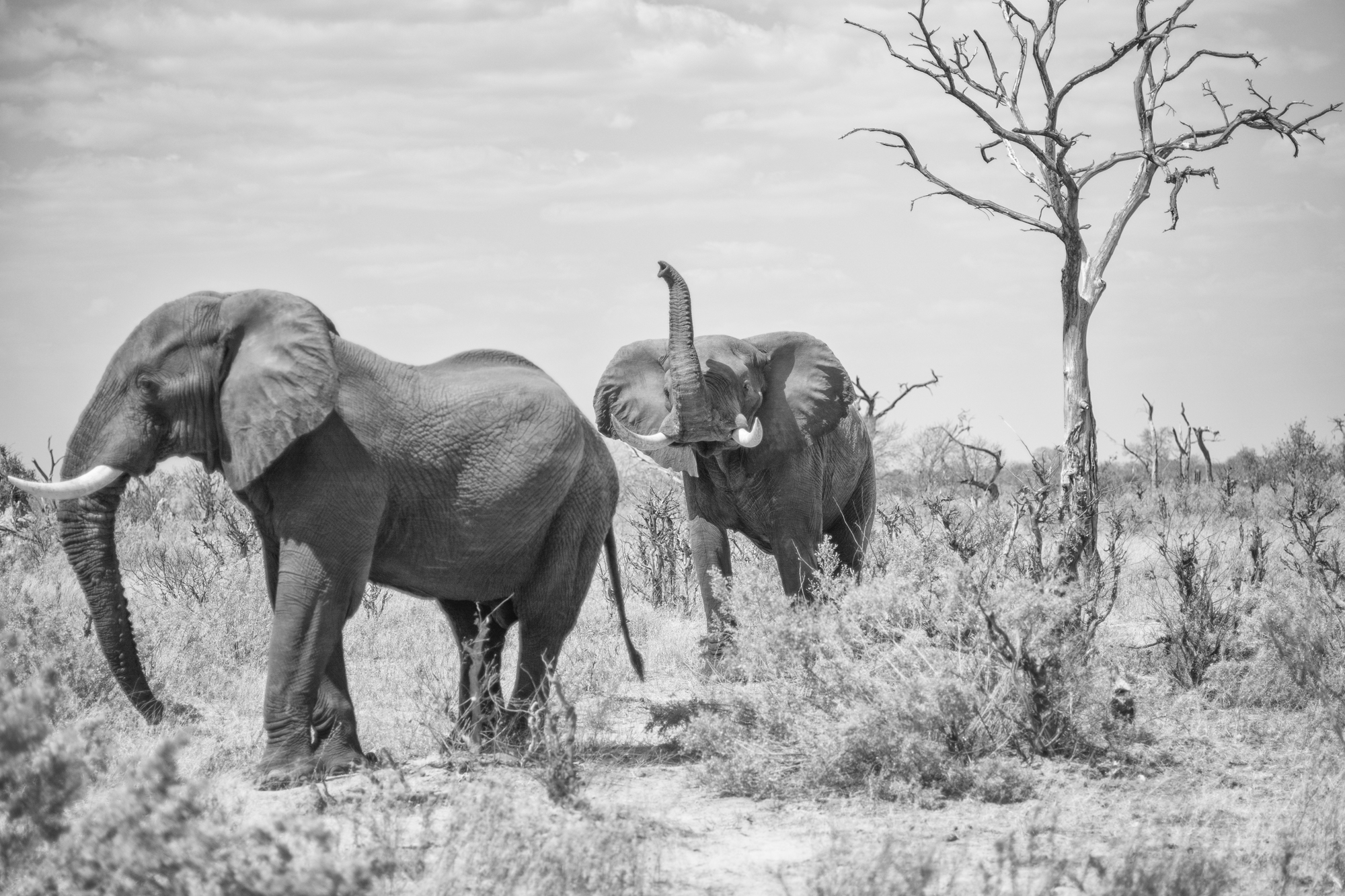
Leica Monochrom, 90mm APO-Summicron-Asph
We said that Africa is filled with light and color, but perhaps it should be noted that where we were, many of the colors were muted — the grasses dry and the same tone as lions fur, surrounded by many dead trees. But of course these conditions lend themselves to monochrome photography.
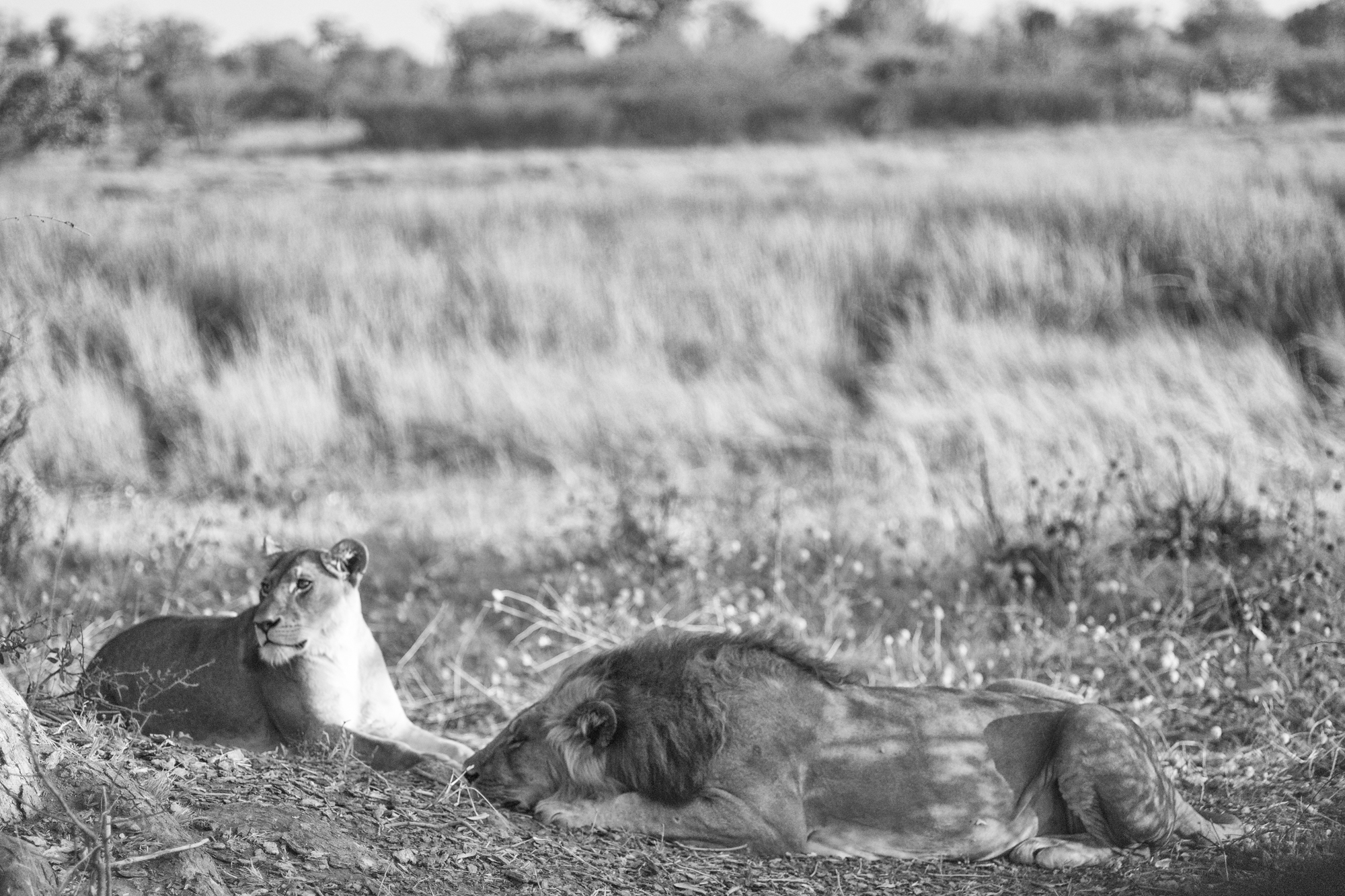
Leica Monochrom, 28mm Summicron Asph
Finally, there was one other reason we loved taking the Monochrom along: it limited us to shorter lenses. This meant both that there was background in the picture — not just the lion’s nostril, but the fields behind it — and that ours was a more intimate view than is often the case when using tellys. The picture above was taken with a 28mm lens, which we often use for street photography. Being this close to a lion is a thrill. We hope this comes through in the pictures.
Please note: if you like these photographs, in the days ahead, several of the ones above will be available for purchase through The Stephen Bartels Gallery.
Yellowstone’s marvels can been quite shocking. Leica Monochrom, 28mm Summicron. Click on the image for full effect.
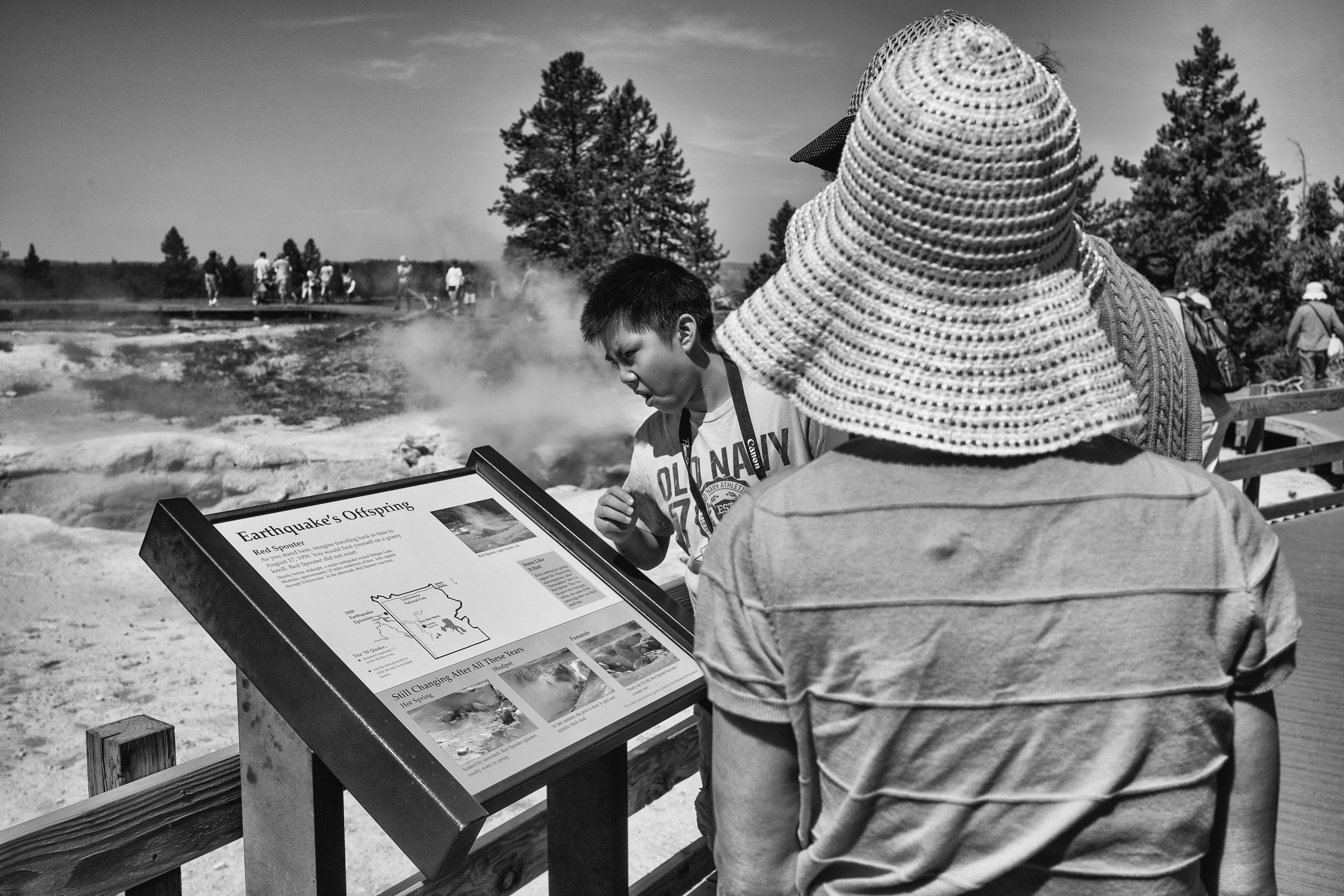
At Yellowstone National Park. admirers of America’s beauty come from near and far. Leica Monochrom, 28mm Summicron.

Leica Monochrom, 50mm APO-Summicron-ASPH. Oh, in case you’re wondering, that’s not Dan Snyder.
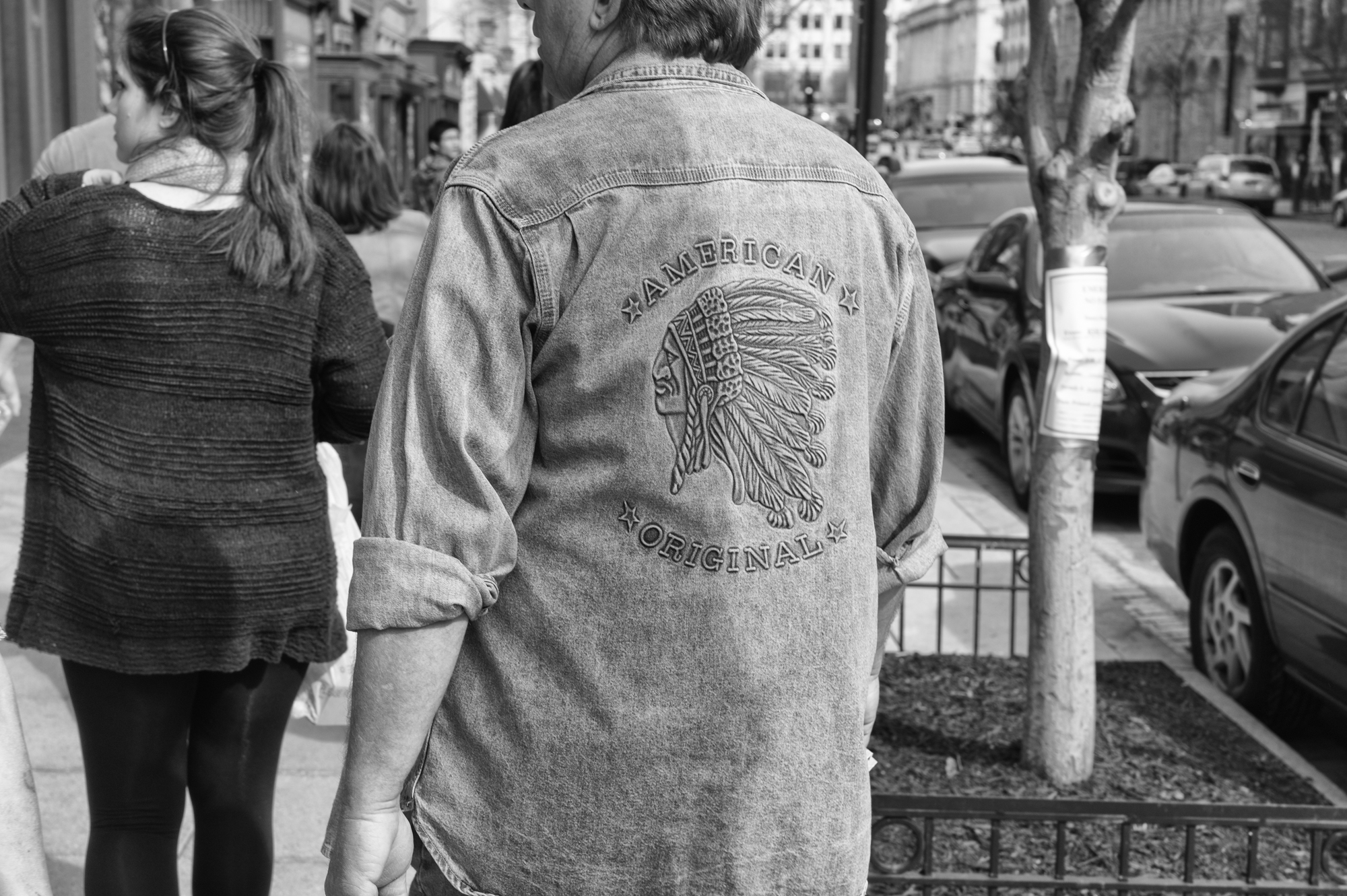
D.C. Street Portrait II. Leica Monochrom, 50mm APO-Summicron-ASPH, yellow filter, LR5 and Silver Efex Pro 2.
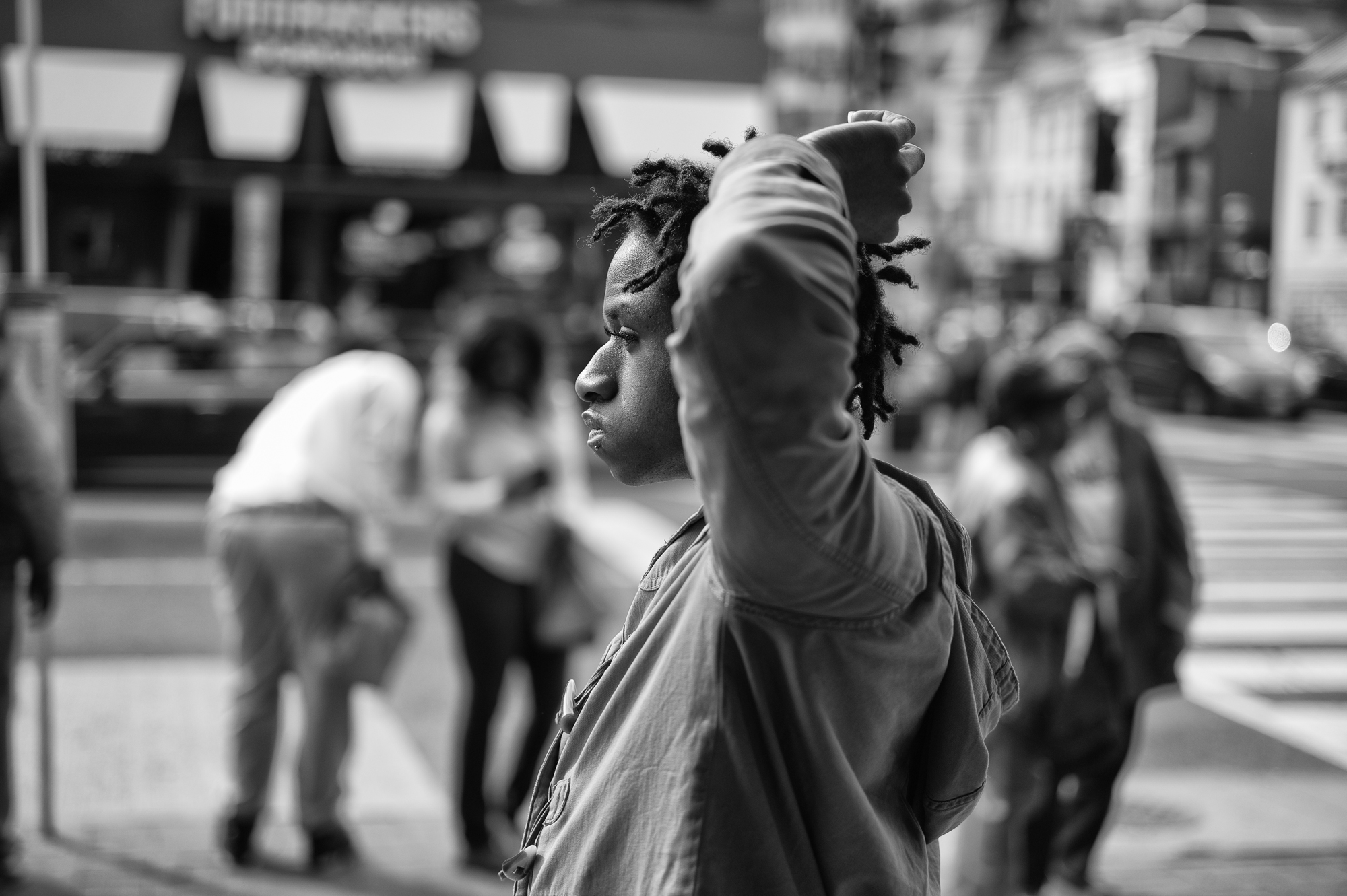
Sometimes it’s hard to get a reflective moment when out on the city streets. We’re not sure exactly what he was thinking. We’re glad we were there to make a picture from it. Leica Monochrom, 50mm APO-Summicron-ASPH, yellow filter, wide open, LR5 to Silver Efex Pro 2.
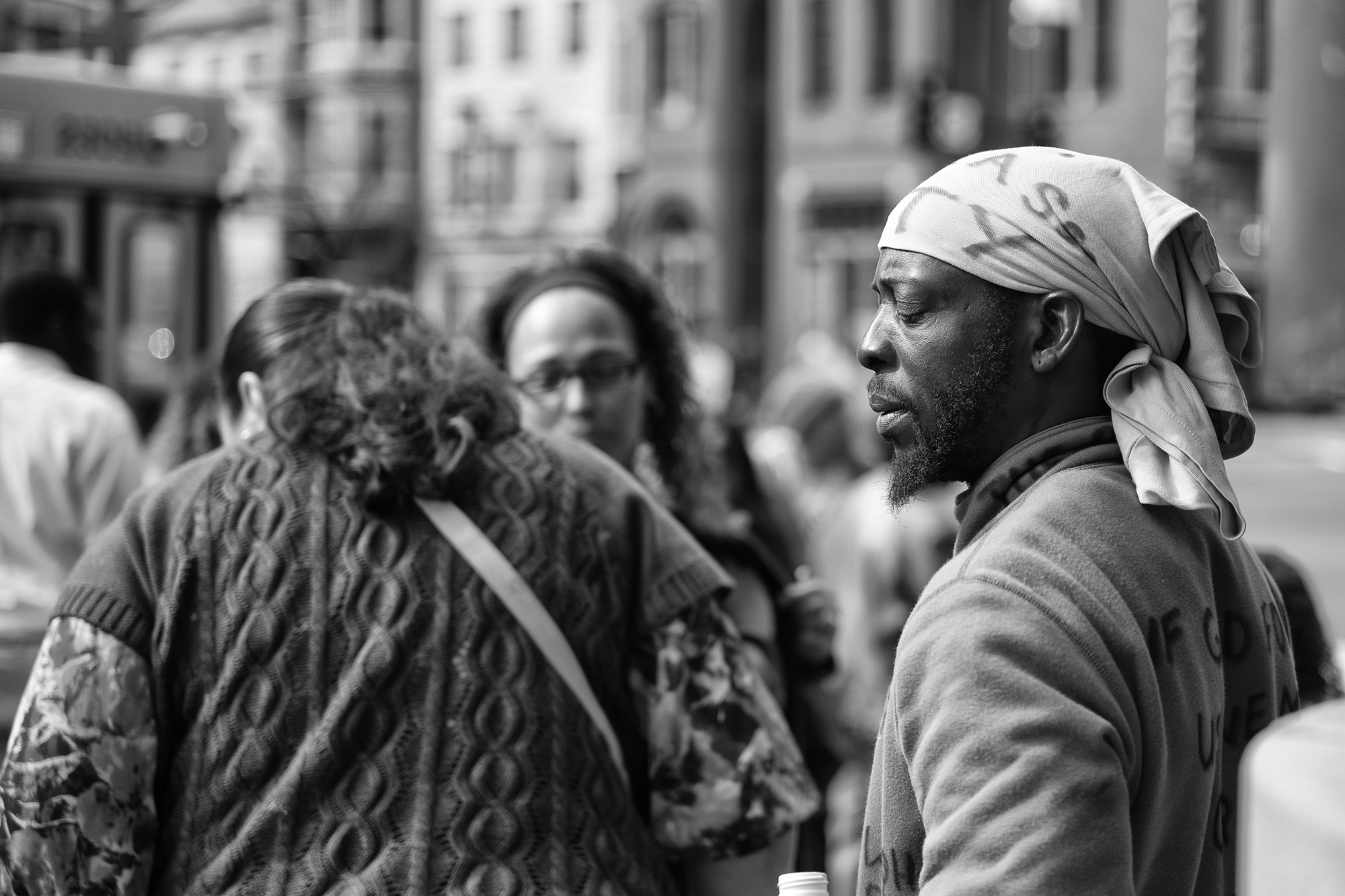
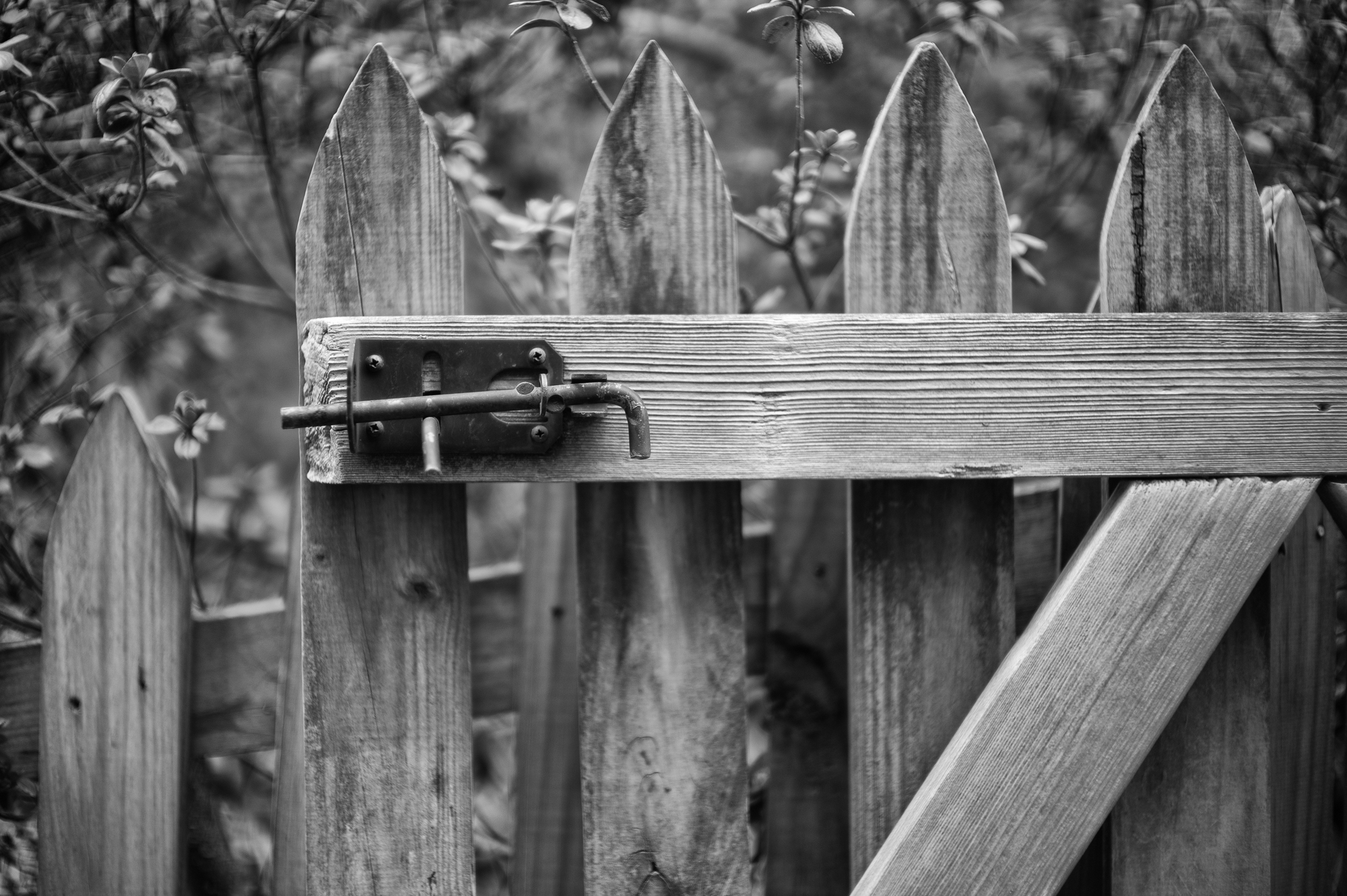
Leica Monochrom, 50mm Noctilux
 Tulip Frenzy