On The 35th Anniversary Of Television’s “Marquee Moon”

Posted in Music with tags , , , , , , , on February 7, 2012 by johnbuckley100

I used to think that if I could lug just one album to the proverbial desert island, as the boat was sinking, I’d be in my stateroom weighing The Clash in one hand, Exile On Main Street in the other.  But as we get ready to celebrate tomorrow’s 35th anniversary of the release of  Television’s Marquee Moon — no question the single greatest album by any of the CBGB bands, the ur-document of an innocent age — I’m wavering.

I say no question, but then Jonathan Lethem has just published will imminently publish his addition to the great 33 1/3d series, in which obsessives weigh in, and at book length, on their favorite albums, and his is Fear of Music by the Talking Heads.  A wise choice, that one, but I’m glad I’ve been reading the quite excellent Marquee Moon by Bryan Waterman, which makes the case for Television’ debut as the standout album of that particularly scuzzy late ’70s epoch.

In recent months, in addition to Waterman’s book, we’ve been able to find the remastered versions of Marquee Moon, Adventure, and Live At The Waldorf issued by Elektra as an all-in-one, and the upgrade in the sound has been remarkable.  Those first two Television albums always sounded good — particularly on vinyl — but the remastered versions make you feel you’re witnessing each movement of Verlaine’s long fingers as they sustain every magic note.

Just as good, Television’s authorized bootleg of Live At The Academy NYC 12.4.92, recorded during their first reunion tour, is now available via Amazon.  And just this week, the 35th anniversary of Television’s opus very much in mind, Uncut published a long, snarky, highly readable interview with Richard Lloyd that illuminates a fair bit of history, not just about the making of Marquee Moon, but about his relations with Tom Verlaine, from the start of the band in ’73 to the final denouement in 2007.  (We’re pretty sure that if Television hadn’t played its last show before the interview was published, plans for Reunion #7 are, as of today, canceled.)

From the moment we first saw Television open for Patti Smith (and John Cale) at the Beacon Theater’s Palladium’s 1976 New Year’s Eve show (a few weeks before Marquee Moon came out), we were signed to a lifetime’s fan contract.  Yeah, we’d seen the Ramones the previous summer, and to anyone in New York it was clear that the Next Big Thing was crawling its way, like an albino alligator in the city’s sewers, up from the Bowery toward all those record label offices in Midtown.  The thing about Television, once Fred Smith replaced Richard Hell on bass, was that these guys really could play, I mean like The Rolling Stones could play, but there was something completely new about the way the guitars jangled, and even though Verlaine moved smoothly, the very gawkiness of his giraffe’s frame was exotic.  His Fender looked tiny in his hands.

Later, we saw what we’re pretty sure was their final New York show — Bottom Line, August 1978 — when it was easy to believe that whatever megadose was coursing through Richard Lloyd’s bloodstream as he closed his eyes and played the long ending to “Ain’t That Something,” well, it had to be good for him.  It wasn’t, of course, and the band went out quietly, as it were, giving birth to what was in the early days two remarkable solo careers, Verlaine’s and Lloyd’s.  Still, by then Television had a career that, even though it spanned a mere two albums, gave them a first-floor diorama in the Real Rock’n’Roll Of Fame.  (The one housed in the old TR3, not that temple to bombast in Cleveland.)

And then they came back in ’92 and we saw them, of all places, in the same gothic hall at Georgetown where Lech Walesa had come to get an award for taking down the Soviet Union just a few months earlier.   If CBGB embodies some rock’n’roll ideal, this was its opposite: an ornate room in a Jesuit college.  And of course they blew it up.  We believe, and Lloyd’s interview in Uncut somewhat confirms this, that the single best period for Television as a live band was during that ’92 tour, when they were out backing the solid Television album, with the incredible “In World,” along with some of the best songs from their two ’70s albums —  “See No Evil,” “Friction,” “Prove It,” “Venus,” “Foxhole,” and “Marquee Moon.”  The only thing missing was “Glory,” or “Guiding Light.” Yes, we missed them at CBs (though not by much.)  But the two shows we saw in ’76 and ’78 paled in comparison to how great they were on that ’92 tour, after years of touring by both Verlaine and Lloyd, and with the joy apparent in how well they played together, the greatest double axe tandem since Keith Richards and Mick Taylor broke up, at just about the time Television was forming on the Lower East Side.

Marquee Moon is worthy of taking to a desert island.  And it is worthy of dusting off tomorrow, in celebration of how well it has held up.  Television may have ushered in the punk era, what with their torn tee shirts and their persuading Hilly Kristol to let rock bands play in a venue he’d designated for Country Bluegrass and Blues & Other Music For Upstanding Gourmandizers, but with they were always a serious band, and amazing musicians.  No matter how many others have tried incorporating their sound, they were sui generis, and sadly — if the definitiveness of Lloyd’s rejection of his old pal Verlaine is any indicator — we won’t see their like, or they themselves, again.

It Was Only A Modest Ice Storm

Posted in Uncategorized with tags , on January 22, 2012 by johnbuckley100

And when we think back to two years ago, it could have been so much worse… (Of course, two years ago, before last summer’s earthquake, those spires were perfect.  Now they’re surrounding by scaffolding…)

Leica M9, Summilux 50mm

Rick Moody’s Overlong Essay On Brian Eno Is Almost Pitch Perfect

Posted in Uncategorized with tags , , on January 22, 2012 by johnbuckley100

So the synchronous publishing of Rick Moody’s nearly endless but well-worth-the-effort essay on Brian Eno’s long career just as an ice storm hit D.C. provided us head-nodding entertainment and a wonderful distraction from the bilious news that Newt had taken South Carolina.  We admire obsessives, and a 9000 word essay on Eno certainly qualifies.  What we liked the most was we agreed with almost every word!  Okay, Moody forgets to praise sufficiently Taking Tiger Mountain By Strategy. (That’s the Eno album that launched 1000 imitators from, strangely enough, Joy Division to Garbage to the New Pornographers.) And he perhaps fails to give sufficient props for what Eno did  for the Talking Heads on More Songs About Buildings And Food, not to mention his seeming to have missed that great Eno/Cale collaboration that produced “Been There, Done That.”  We’d be willing to forgive his failing to mention the great Robert Wyatt collaboration with Eno that produced the brilliant “Heads of Sheep” if only he’d tell us where we could download “Seven Deadly Finns,” which although it has long disappeared, is still the only Eno song ever to crack the upper reaches of the British charts. But he views Eno’s four 1970s pop albums as a cultural high point for Western Civ, understands that those Lou Reed albums with Bob Quine were the ones that mattered, slags Coldplay, worships Radiohead, gives John Cale his props, etc.  And he turns us on to an Eno-sponsored iTunes app (Bloom) that is more fun than our laminated Oblique Strategies cards. We herewith go on the hunt for all Rick Moody first editions.  And Tulip Frenzy offers to adopt him as kindred spirit.

It’s Clear Novelist William Boyd Is Clueless About PJ Harvey

Posted in Uncategorized with tags , , , , on January 22, 2012 by johnbuckley100

In a powerful essay on why World War One lingers in the imagination, British novelist William Boyd (A Good Man In Africa, An Ice Cream War, Stars and Bars, The New Confessions) addresses the hold the War To End All Wars still has on our culture, referencing PBS’ Downton Abbey, Spielberg’s War Horse, and even the — unknown to us — pending Tom Stoppard adaptation of Ford Maddox Ford’s Parade’s End.  The question Tulip Frenzy wants answered is: how is it possible that a British novelist could have written such an essay without a reference to the 2011 Album of The Year (so sayeth Uncut, Melody Maker, and everyone in Albion save for, um, Prince Charles) that was PJ Harvey’s Let England Shake.  Hard for us to believe a more powerful depiction of WWI will come along anytime soon, in any medium…

Mr. Boyd — loved those early novels (and have a soft spot in our heart for the Daniel Day Lewis performance in the movie version of Stars and Bars), but it’s time to open your ears!

Focused On Money

Posted in Uncategorized with tags , on January 17, 2012 by johnbuckley100

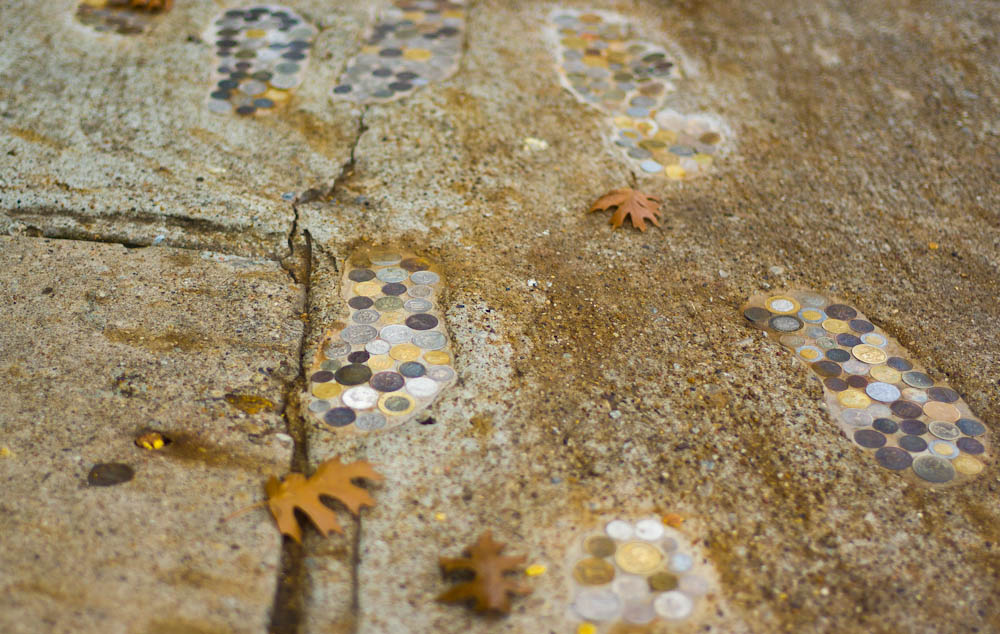
Sidewalk in Dallas.  Leica M9, Summilux 35mm Asph (with floating element.)

(Click on the picture, and maybe you can identify what countries the change comes from.)

Dean Wareham Is Preparing To Record A Solo Album

Posted in Music with tags , , , on January 17, 2012 by johnbuckley100

In a brief and illuminating interview that was published last week, ex-Luna leader Dean Wareham outlines plans for a solo album.  Yes, Britta will be on it, so there’s no news there.  He just avers the boy-girl song-trading has limitations.

Oh, and by the way, his tour diary from the recent Japanese shows he did of Galaxie 500 material was published in the Paris Review.

Here’s a sample:

From the stage tonight I notice three different people crying as I sing “Blue Thunder,” which is a song about the power-steering action in my old 1975 Dodge Dart and doesn’t quite seem worth crying about, though admittedly it is also a song about being alone behind the wheel, and I wail about driving “so far away,” so maybe that’s what did it.

I recently played this song in São Paulo and young Brazilians sang and smiled and danced; it’s odd that the same song evokes smiles in São Paulo and tears in Tokyo. Of course there can be joy and sadness in a song at the same moment, and when you have been waiting five or ten or twenty years to hear a song live, it can hit you with surprising force.

Read the whole thing.  It’s fun, and as we know from Black Postcards, the man can write.


Gold Candles From Calexico’s Saddlebags?

Posted in Uncategorized with tags , , , on January 6, 2012 by johnbuckley100

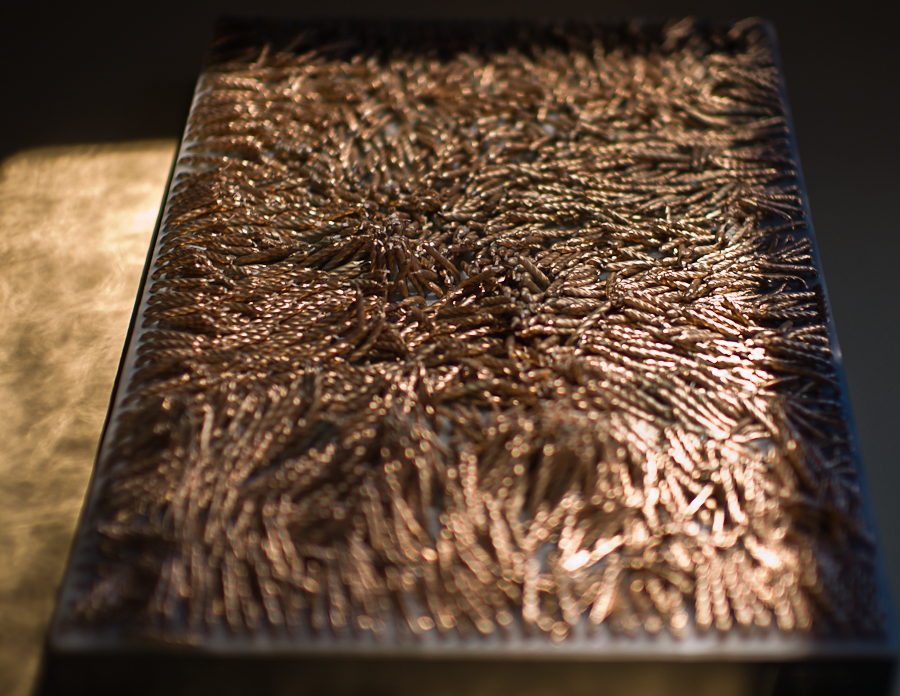
“Take this candle with you,” sing Calexico on “Gift X-Change.”  Which got us to thinking of San Francisco artist Andrew Bennett’s Millennium-era Collapsed Candles masterpiece* — 2000 gold candles stuck in melting wax.

Leica M9, 50mm Noctilux shot wide open, looking up from the floor as the winter sun set.

* For more artwork by Andrew Bennett go here.

Calexico Empties The Saddlebags With Magical “Selections From Road Atlas (1998-2011)”

Posted in Uncategorized with tags , on January 6, 2012 by johnbuckley100

They had us at the concept — for 13 years, Calexico would show up in dusty saloons and smoky gin halls, playing their parched Colorado River delta blues, and all the while — as card games are played by men with vests, and all the painted ladies smile from the stairwell — merchants in the back would sell limited edition vinyl, whole albums of music available only to their concertgoers.  In November, they released the whole shebang as a vinyl-only 600 record set.  (Okay, maybe not that many.)  But then — who knew, til the new Uncut told us? — our friends from the border region went and released a sort of greatest hits of their most obscure releases in a single, 16-cut package, and it is pure gold glinting from the tin shaker.

These aren’t throwaways, the chafe left over when the real records are done.  This sounds like as coherent a single record as their last ‘un, the magnificent Carried To Dust.  Yes, artisanal music flows from the sandy regions, not just Brooklyn.  And given their absence these last three years, we’ve been missing them a lot.  In fact, other than the Black Keys, Calexico is the only American band that seems complete with just two permanent members.  The strange thing about Selections From Road Atlas is that these specialty lagniappes for the long-converted make as powerful a testament for Calexico’s greatness as any single album they’ve ever done.  If you’ve crawled across the desert of American pop music and are thirsty for pure refreshment, those hombres from Tucson have come through once more.  They promise a new album sometime later this year.  Until then, 13 year’s worth of specialty confections from the Saguaro badlands will tide us over.

Your Extremely Rare Opportunity To Dress Like A Fleshtone

Posted in Music with tags , on January 5, 2012 by johnbuckley100

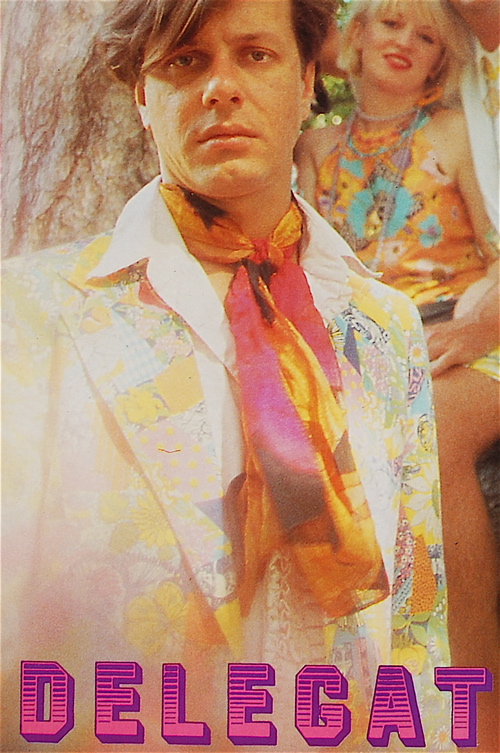
Peter Zaremba emails to say some of his coolest items are available via eBay.  In fact, this rare Lily Pulitzer jacket could be yours.

Here’s how he describes it in the eBay pitch: “Outlandishly colorful vintage ‘Mens’ Stuff’ sports jacket from Lily Pulitzer of Palm Beach, approx size 40, worn by Peter Zaremba of The Fleshtones in the video ‘I Was A Teenage Zombie’ and on the cover of Love Delegation ‘Delegation Time’ LP. Golden buttons -well not gold really but very shiny. Get it just in time for ‘cruise season’. In very good condition. Dry Clean Only!”

He drily notes: Returns not accepted.

Move quickly before the schmatte collectors at the Rock’n’ Roll Hall Of Fame get in on the action.  Your own little piece o’ rock’n’roll history — poifect for fun summer parties drinking Rubies while doing The Gentleman’s Twist — is here:

http://www.ebay.com/sch/eggetravel/m.html?_nkw=&_armrs=1&_from=&_ipg=&_trksid=p3686

New Years Celebrations

Posted in Uncategorized with tags , on January 2, 2012 by johnbuckley100

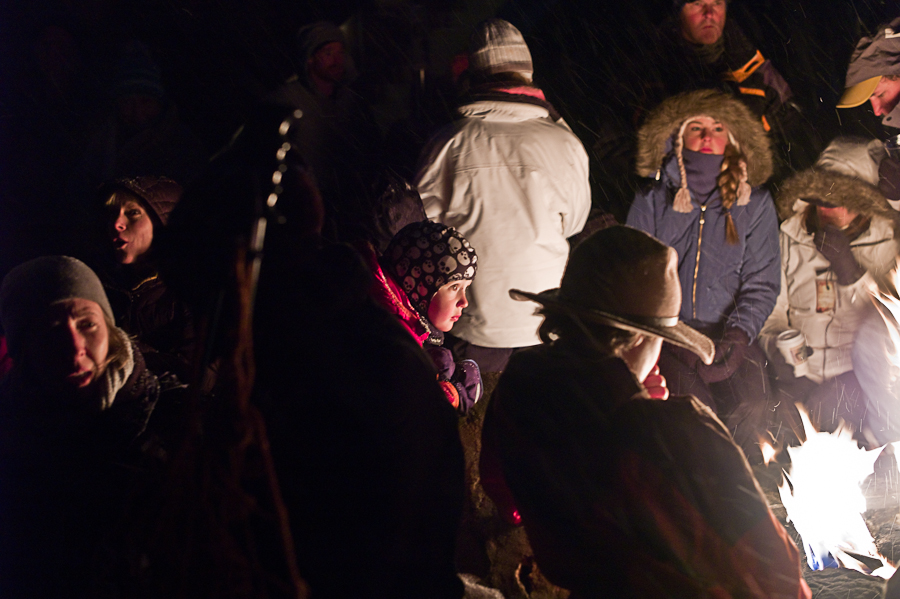
Love the faces to the left.  Leica M9, 50mm Summilux, Jackson Hole Mountain Resort, 2009