Archive for 50mm APO-Summicron-ASPH

Cherry Blossom Time As En Plein Air Portrait Studio

Posted in Uncategorized with tags , , , , , on April 10, 2013 by johnbuckley100

All pictures Leica M-240 with 50mm APO-Summicron-Asph.  Click on picture for detailed viewing.

It’s Cherry Blossom Time in Washington, D.C. and everyone is enjoying the nice weather.

CherryPortraitsreplace

It’s a time for relaxation in the suddenly gorgeous spring, which given how consistently cold the winter was, provides immediate happiness.

CherryPortraitsreplace2

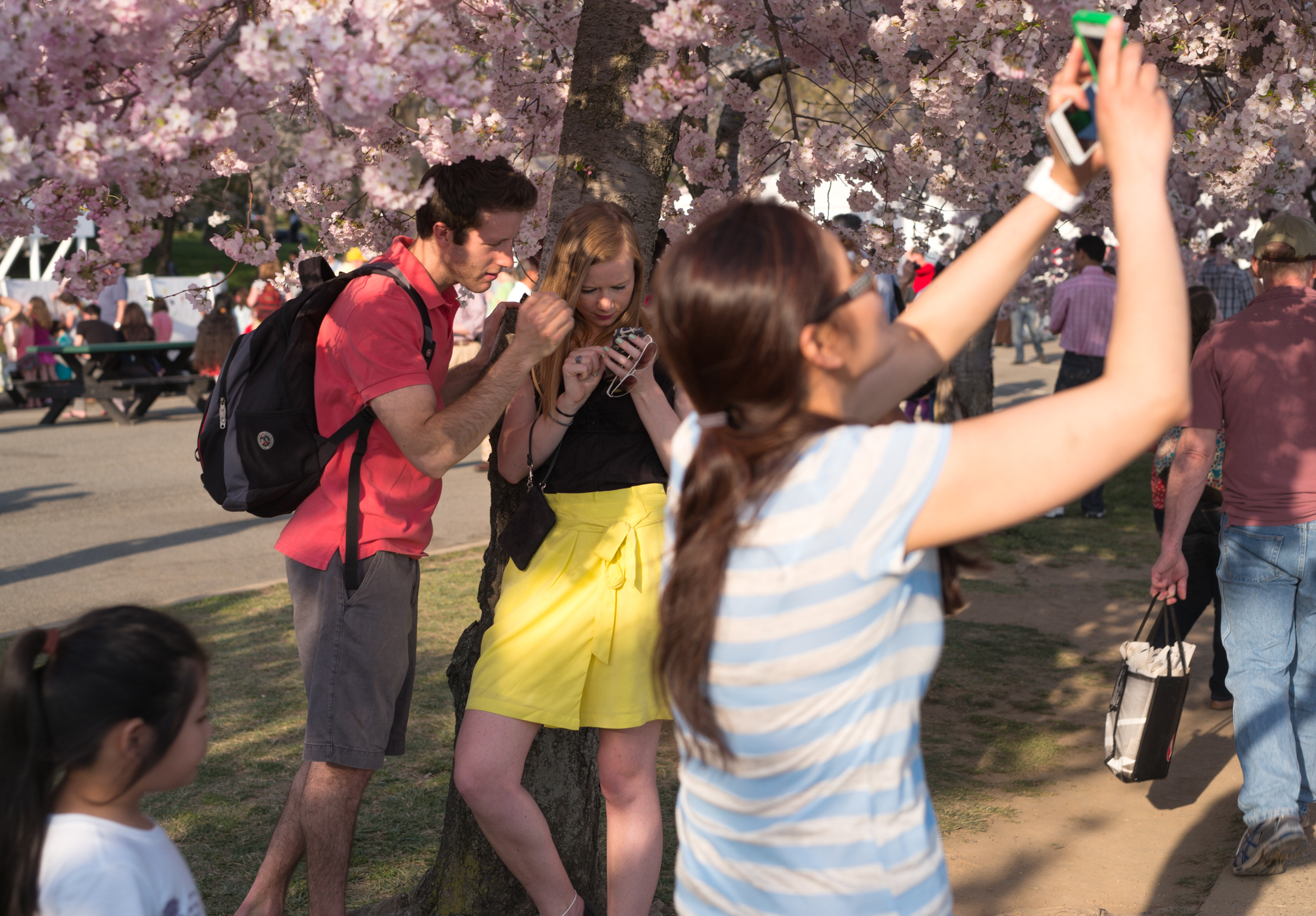
But it’s also a time in which people come to the Mall to have their picture taken, and everyone is either posing for a picture…

CherryPortraits1

taking a picture…

CherryPortraits2

Or reviewing a picture.

CherryPortraitsDjuGetIt

The mass  phenomenon of people taking pictures of themselves is a byproduct of the Smartphone Revolution.

CherryPortraits3

But everyone loves getting their picture taken during Cherry Blossom Time, even if it’s not by the person to whom they thought they’d given the assignment.

Dual Photographers

It can all be a bit much.  Until you see how happy it makes everyone.

HappyFamilyCherry

Peak Day For Cameras Blossoming In The Nation’s Capital

Posted in Uncategorized with tags , , on April 10, 2013 by johnbuckley100

This may be apocryphal, but we read somewhere that 80 percent of all the photos ever taken were taken in the last five years.  It is true that since the advent of smart phones, there are more people taking pictures than ever.  Tonight was the peak of this year’s bloom of… photographers taking pix of the cherry blossoms at the Tidal Basin.  Leica M, 50mm APO-Summicron-Asph, ND filter.  More tomorrow.

Camera Showdown

Wish Us Luck

Posted in Uncategorized with tags , , , , , , on March 17, 2013 by johnbuckley100

In the span of less than a year, the Leica Store in Washington, D.C. has become a remarkable gallery space and photography hub.  Some weeks ago, they announced a juried competition entitled “D.C. As I See It,” open to photographers from D.C., Maryland, and Virginia, but limited to photographs of  the “real D.C.,” taken with Leica equipment.  You might imagine this perked our interest.  Let’s see, live in D.C.  Check.  Take pictures with Leica equipment.  Check.  Take pictures of what we consider the real D.C.  Ok, we said, and we submitted five images.

The three jurors are all eminent Washington photographers, printers, and gallerists, and the two-phase process consists of a review of images submitted digitally, and after a cull, a review of the finalists’ prints.  We are pleased to say two of our images made it into the finals, which means sometime today they either will or will not be chosen for display on the Leica Store’s walls.

We have one color image in contention, taken with a Leica M9 and 35mm Summilux last September, when we were wandering the city with the great Danish photographer and workshop leader Thorsten Overgaard.

Ice Cream Man

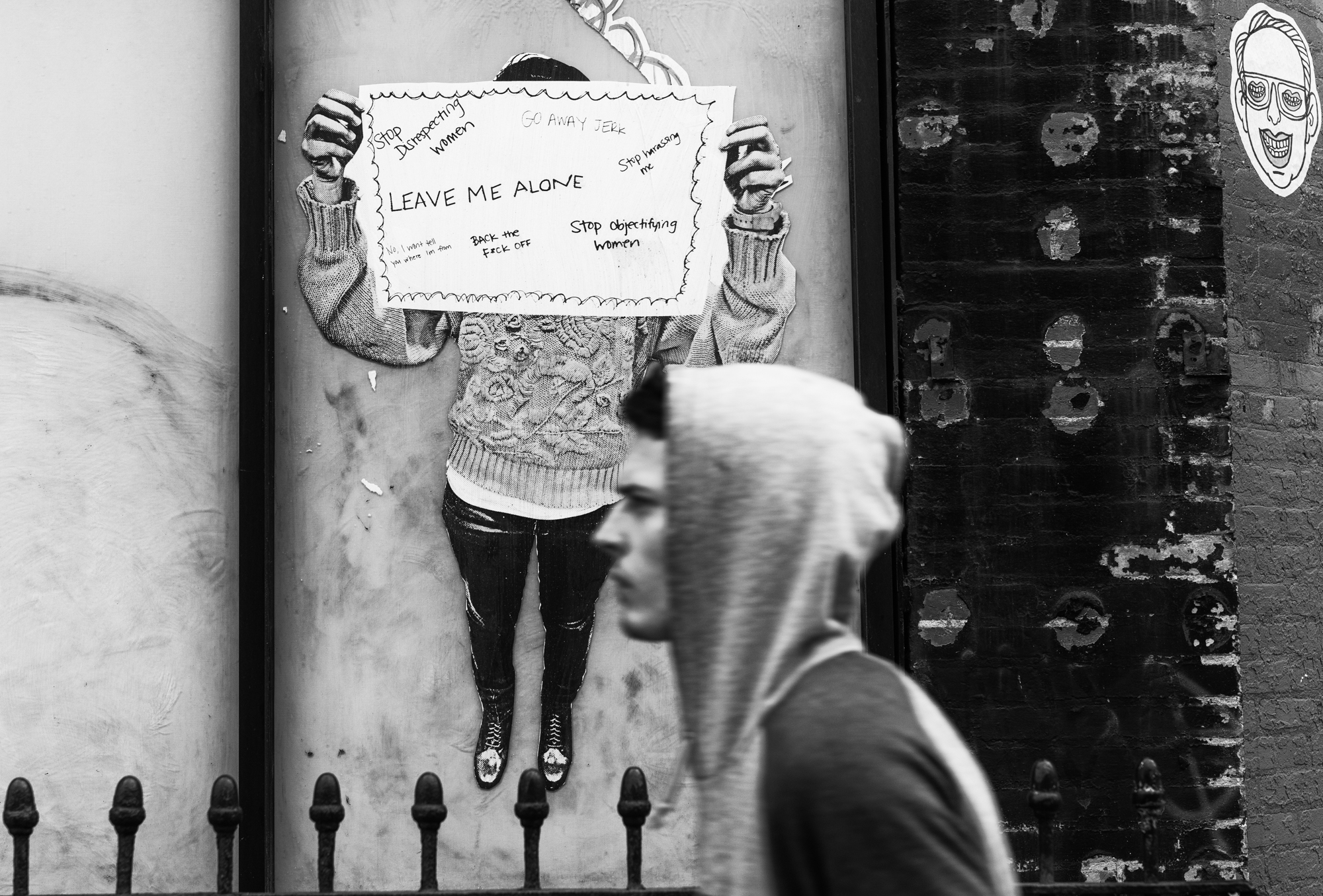
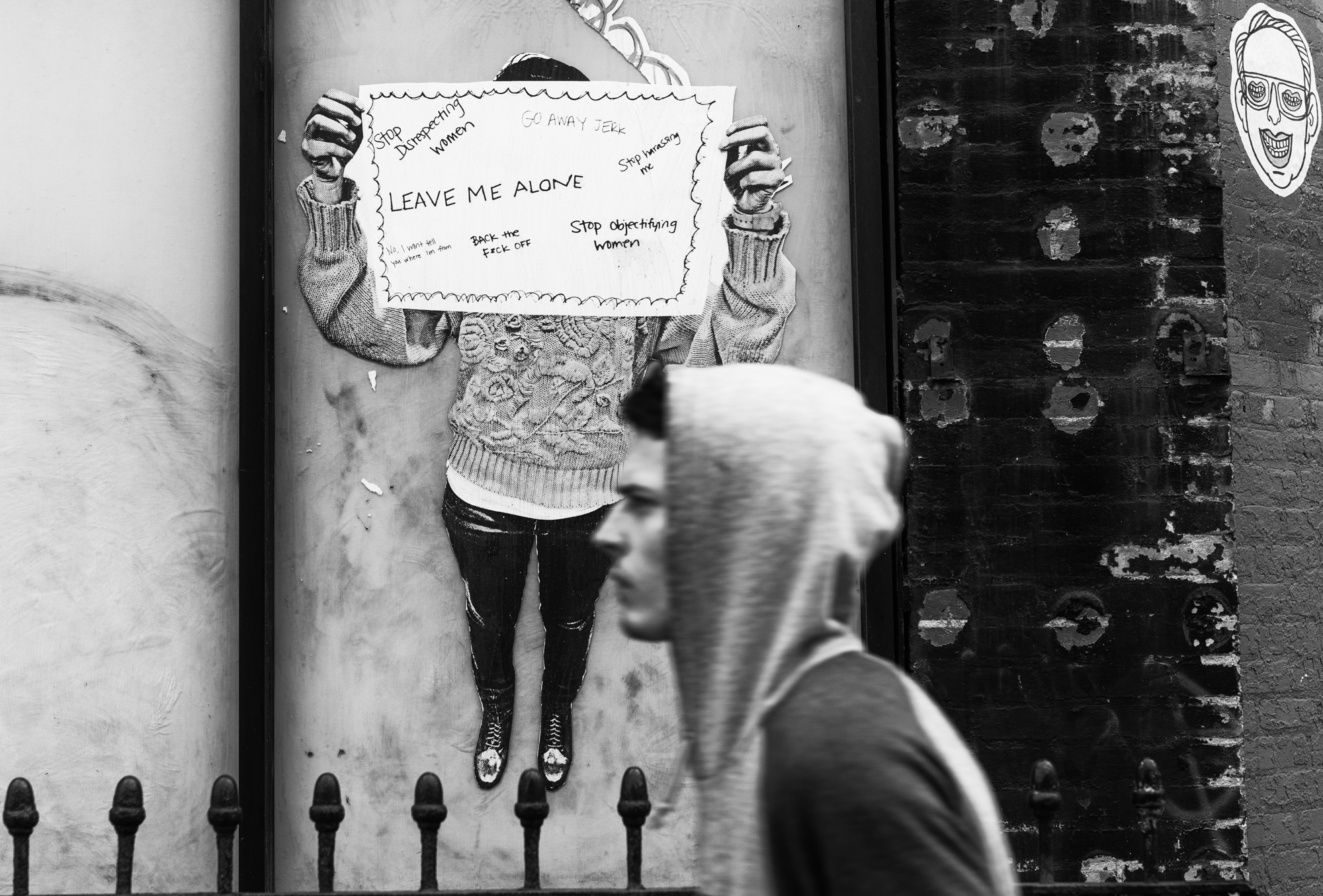
A second image was taken with the Leica Monochrom and 50mm APO-Summicron-Asph near Logan Circle just a few weeks ago.

Leave Me Alone

Wish us luck!  We’ll report in later if either of them makes it.

The Lost Glove Is Happy

Posted in Uncategorized with tags , , , , on March 8, 2013 by johnbuckley100

Some months ago, we commented on the phenomenon of discovering Dean Wareham’s reference to “the lost glove is happy” had an antecedent we’d forgotten about in Nabokov’s Pale Fire.  And then we saw this…  Leica M, 50mm APO-Summicron-Asph.

The Lost Glove

Simple Black & White Bake Off Between the Leica M and Leica Monochrom

Posted in Uncategorized with tags , , , , on March 7, 2013 by johnbuckley100

What follows is not scientific.  One image (taken with the Leica Monochrom) comes from a cloudy day, and was shot at ISO 800.  The other image (taken with the Leica M-240) was taken on a sunnier day, at ISO 640.  Each was taken with the 50mm APO-Summicron-Asph at f/8, Monochrom at 1/125th, and the M at 1/500th.  Both were processed in LR4, and then sent over to Nik Silver Efex Pro2, where we toyed with them in the High Structure preset.  So, similar settings, similar post-production, not quite identical.  My reason for this experiment was to determine whether or not the M-240 takes images that can compete with the Monochrom’s, when converted to black and white.  Here are the two shots; look at them carefully, and after which I’ll weigh in.  Admittedly, you are seeing these in a significantly down-rezzed file so they could be posted online.  As always, click on the image to see them at a better resolution.

M-240:

Tfrenzymonoexample


Monochrom:

TfrenzyMexample


So, same lens, slightly different light conditions.  One image in its native monochrome, the second image converted to black and white.

My conclusion?  I think the M-240 black and white rendering is quite good, and I would not hesitate, after taking a picture, converting the image to black and white.  But I also think the Monochrom image is just that much better — a little more detail in the grays, a little richer.  So, which is better?  I think the Monochrom.  Is the M-240 black and white rendering good enough to use and be happy with?  I think so.

What do you think?

Is That A Leica?

Posted in Uncategorized with tags , , on March 6, 2013 by johnbuckley100

We were wandering around, taking pictures with the new M-240, when the construction worker stopped us.  “Is that a Leica?  Is that digital?  Show me! I’ve always wanted to shoot a Leica.”  Not your ordinary construction worker.  Not your ordinary camera.  Leica M, 50mm APO-Summicron-Asph.  As always, click on the image to get a better sense of the resolution.

240Construction

Second-Day Thoughts On The New Leica M

Posted in Uncategorized with tags , , on March 3, 2013 by johnbuckley100

240-331

All photos Leica M, with 50mm APO-Summicron-Asph.  As always, click on the images for a better sense of the resolution.

Yesterday, we posted a brief set of thoughts on the Leica M (Typ 240), as well as some images.  Among the questions raised by folks on the Leica User Forum was whether or not the files, processed in Lightroom, but without the embedded color profile that will be released outside of beta with the next upgrade, had reds that are too hot, as they were initially with the Leica M9.  The answer is possibly yes, though yesterday’s photos, admittedly, had subject matter that was inordinately red: storefront windows and the like.  Today, we went out looking to capture a more balanced range of colors, and think we did so.

240-332

Files from the M, like files from the Leica Monochrom, are extremely malleable, in Lightroom or various Nik software products (in color, I am partial to Viveza.)  But they do start life quite vivid.  We will not be able to settle the question of whether M files prove, or disprove, one thing or another in the great CMOS vs. CCD sensor battle.  We do know that, these files feel to us, in post-processing, to have quite a bit more latitude to play with than can be found in the M9’s files.  It’s not simply that you have, in a 24-megapixel camera, more to play with after cropping.  (The above image is not cropped.)  It is that, like Monochrom files, with their high dynamic range, there is a processing elasticity that will enable photographers far better than us, and post-processers with greater skills, to craft images we couldn’t have imagined getting just a few years ago, when the 12 megapixel Leica M8 was released.

240-333

Yes, the files come out vivid; the picture above was slightly desaturated, because the bananas seemed a little too bright when they emerged after an initial WB and highlight adjustment in Lightroom.  It’s possible we got the White Balance off, and yes, the picture is a little overexposed in the area of focus.  But we don’t actually mind this — files coming out this way — and think it will be corrected when LR is updated.  Whether or not the profile is what we want it to be, each photographer will have his own way of adjusting the images to his or her own preferences.

240-334

As for the M in use, it is, to us, a dream street camera, as its predecessors have all been.  It is quick, intuitive, quiet, feels good in the hand.  And, it must be said, the deficiencies in prior Leicas when it comes to the LCD have been corrected, at least to our satisfaction.  The 3-inch LCD is large and bright and vivid.  Yes, Leica is simply catching up to the market.  But thank Heavens they are, at last, in this regard.

240-335

Back to the files: there is a significant amount of shadow detail to be harvested at low ISOs (this was at 320, and the boat was, out of the camera, pretty dark.)  We can only imagine that once we start playing around with higher ISOs, we will find there is also much to work with.

240-336

With a lens like the 50 APO-Summicron-Asph, there is that great Leica look.  We read one person’s comment on yesterday’s photos posted that the images, captured on the CMOS sensor, looked more like a Nikon or Canon than the traditional Leica look.  That really isn’t the way we see it.

240-337

We believe the M has the signature Leica three-dimensional pop,and ability to isolate the subject while shooting wide open.  There was variable light today, and while we brought a Neutral Density filter, we didn’t use it.  The image above was shot at ISO 200 (the base ISO), at f/2.  We had virtually no real blown highlights, in part because we set the EV at -1/3.

240-338

Even at f/5.6 and ISO 200, there is a good deal of subject isolation.  In brighter, more even light, we would have felt comfortable shooting the above at a wider aperture, using an ND filter.  Again, this is a classic rangefinder in how you see and what you can do.

240-339

It is a camera, like previous Ms, that you can feel comfortable walking around the city with, because it is small and unobtrusive.  Whatever advantages top-of-the-line Canons and Nikons have over the M, they are massive in comparison.  We look forward to seeing the quite small Sony RX1, but even with that Zeiss lens, we doubt one can walk down the street, realize you are missing an image, and then whirl to get it, the way one can with a rangefinder.

In two quick outings with the M, in both cases using it as a classic rangefinder, we are prepared to say it meets all our expectations and more.  We are beginning to master using it with the EVF, and as soon as the adaptor arrives, look forward to using it with long lenses.  For now, though, we’re satisfied using the M as what it absolutely can be: a camera in the tradition of the Leica M3, updated for possibilities of modern life.

240-3311

UPDATE: We have also done a review of the M after one month’s use.  Go to “Observations On A Month Spent With the Leica M-240.

Initial Thoughts On The Leica M (Typ240) When Used In Classic Rangefinder Mode

Posted in Uncategorized with tags , , , on March 2, 2013 by johnbuckley100

240-1

All photos Leica M, 50mm APO-Summicron-Asph

For years, Apple computers operated out of the mainstream.  With an elegantly different approach to personal computing, Macs were used by a fervent few who well appreciated their superior characteristics, and occasionally acknowledged their limitations.  There are many reasons why today the market for Macs is growing, while that of Windows-based PCs is, at best, stagnant, but an important business threshold was crossed when Apple enabled third-party developers to come up with a way of loading Windows onto a Mac, in essence letting Mac users have what they wanted, but at the same time, conceding to the marketplace that they were also capable of being used in the more conventional manner of a PC.  Few actually ever used a Mac as a Windows machine, but it was a smart concession for Apple to make.   They “normalized” their specialty product, thus opening it up to a broader audience while in no way diminishing what its adherents cherished. I thought of that this afternoon when using, for the first time, the new Leica M.

The Leica M, which aficionados refer to as the M-240, or M (Typ 240), has everything we loved about the Leica M9, and more.  With a CMOS sensor, instead of the M9’s CCD sensor, the new M is capable of both Live View and use of an external Electronic Viewfinder, which means that when accessories are added, the classic Leica rangefinder — a separate category, like a Mac, that stubbornly persists despite the market dominance of Canon and Nikon DSLRs — can now offer many of the things a DSLR offers, which in our analogy stands for Windows.  Moreover, with Live View, and an EVF, and importantly, a small adaptor, Leica R lenses can now be used on an M body, which means that essentially for the first time, one can use a digital M with telephoto lenses beyond the 135mm focal length.  All these represent concessions by Leica — a tiny company that to its devoted followers produces a superior platform for certain kinds of photography — and an opportunity to appeal to the masses.  But would Leica be giving up something special when it so “improved” the M?

240-2

This morning, the UPS man arrived with a new M — which because this is what you have to do with a company whose products are so sought after by a decisive few, we’d placed an order for it two years ago, well before it was announced.  The announcement came in September at the biennial Photokina trade fair in Cologne, but only in the past few days has someone in Solms, Germany nodded, and boxes emerged to be shipped around the world. In Leica circles, this is a huge moment, though in terms of the world’s attention, it is not, it must be admitted, like the line-waiting excitement generated by a release of a new iPhone.  For one thing, this is because this isn’t a mass product, but also because the devoted know that Leica can only produce some number of dozens of cameras per day.  There’s no point in waiting in line if the camera with your name on it won’t be made for another month.

Our initial thoughts, even without using the M with Live View and an EVF, nor with the adaptor that would make R lenses work, is that the M is, well, a real Leica M.  But the changes readily apparent in just a short walk around the city on a brutally cold day are incredibly impressive.

240-3

Now it must be said that we have not downloaded the Lightroom beta which has a color profile for the M (Typ 240), so the pictures shown here are based on the embedded profile that, we suspect, thinks these images came from an M9.  (We’re not sure how this works.)  To our eyes, the colors aren’t yet as good as they likely will be when a color profile has been released by Adobe in a standard upgrade.  Our sense, though, is that absolutely nothing has been lost in the switch from a CCD to a CMOS sensor.

240-4

As for how the M shoots, our initial impression is that you do not notice the very slight addition in the camera’s weight, and the form factor is so similar to the M9 and M8, that it instantly feels right in the hand.  We have not yet gotten the new accessory grip, but the very small protruding thumb rest on the upper right side of the camera, when used with a Gordy wrist strap, makes the M feel safe and snug when shooting.

We were very pleasantly surprised by the way the frame lines work. An advantage of rangefinder photography is that, because you are not viewing the scene you’re about to photograph through the lens, but instead through a viewfinder at the center of which are frame lines that indicate the parameters of the image you are about to preserve on film or a sensor, you have a much more informed understanding of the scene, which leads to an intuitive reflex of quick composition.  But the new M has electronic frame lines (edit: that are back lit), which if wandering around with the camera turned on, only materialize when you activate the camera by pressing down slightly on the shutter button.  It’s a small thing — having the frame lines suddenly materialize amidst a broad view of what is in your finder, and thus potentially in your picture — but it instantly forces the eye to decide whether what is in the center is the image you want, or whether you want to adjust to get something repositioned.

240-5

Another delightful improvement is that the shutter “click” is to our ears as silent and unobtrusive as it was on our film M7.  The Girl Scouts above did not know the photo had been snapped, because they couldn’t hear it.  It is an incredibly subtle sound.

In the days ahead, we will take the M out for usage in its “DSLR mode” — that is, we will use Live View and the EVF to get a sense of how different it is when the Leica M takes on the characteristics of a DSLR.  For today, we just wanted to see how the M behaves as an M, in classic rangefinder mode.  To any Leica fans who have worried about what horrors were being wrought by the changes Leica announced last September, we can reassure you: for less money (in 2013 dollars) than you spent in 2009 on the Leica M9, you have a camera that seems identical where it doesn’t seem better.  This is a very exciting development.

NOTE: On March 3rd, we posted a second set of thoughts an images on the Leica M here.

Leave Me Alone

Posted in Uncategorized with tags , on February 28, 2013 by johnbuckley100

Near Logan Circle, we found a remarkable piece of street art.  Fortunately, the right person walked along at just the right moment.  Leica Monochrom, 50mm APO-Summicron-Asph, orange filter, processed in LR4 with a brief trip to Silver Efex Pro2. You may need to click on the image to get all the detail.

Leave Me Alone

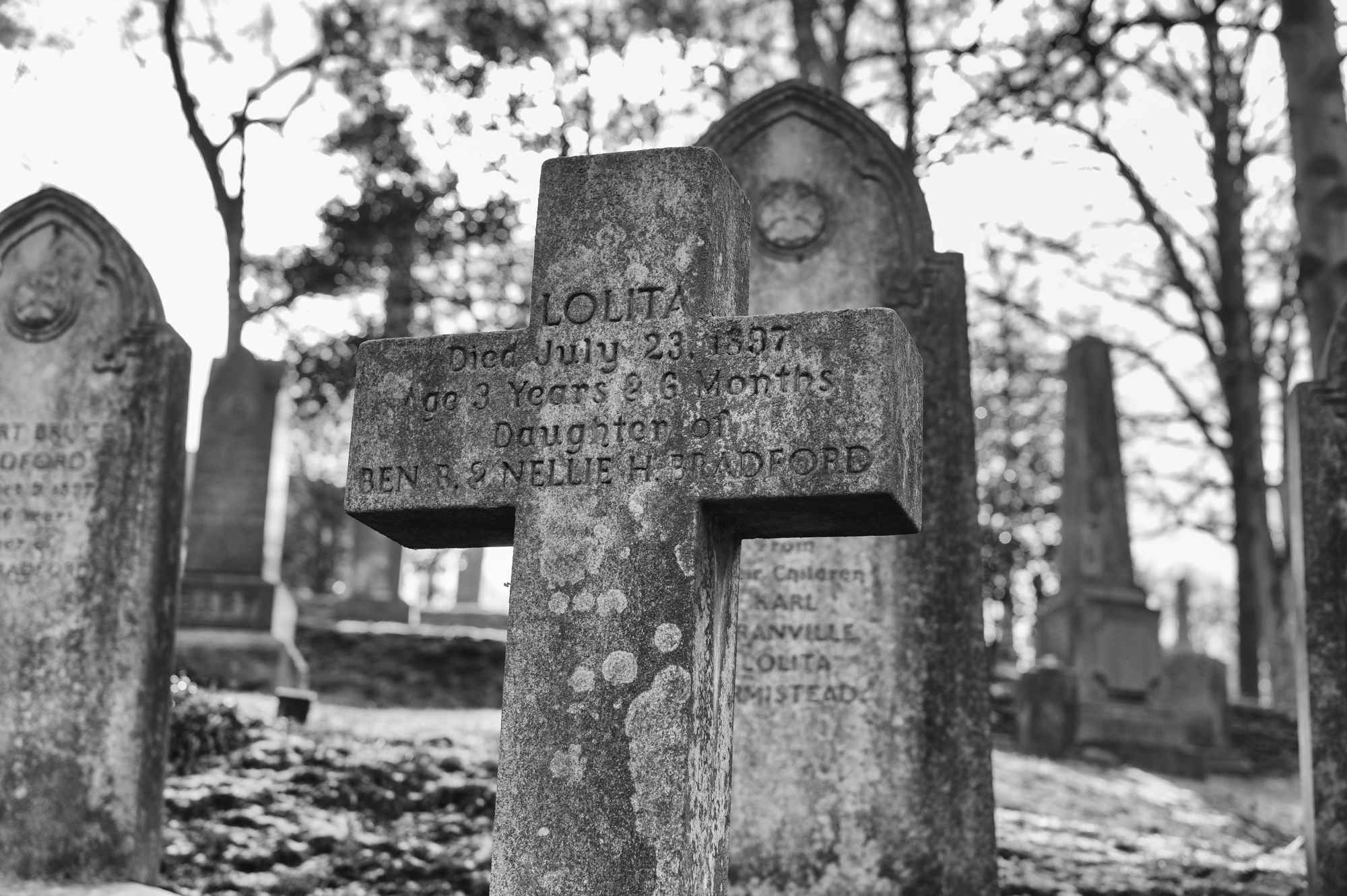
Lo. Lee. Ta.

Posted in Uncategorized with tags , on February 23, 2013 by johnbuckley100

Probably not the same one.  Leica Monochrom, 50mm APO-Summicron-Asph, yellow filter.

Lolita