On Taking The Leica Monochrom On Vacation

Posted in Uncategorized with tags on July 7, 2015 by johnbuckley100

Fireworks 2015

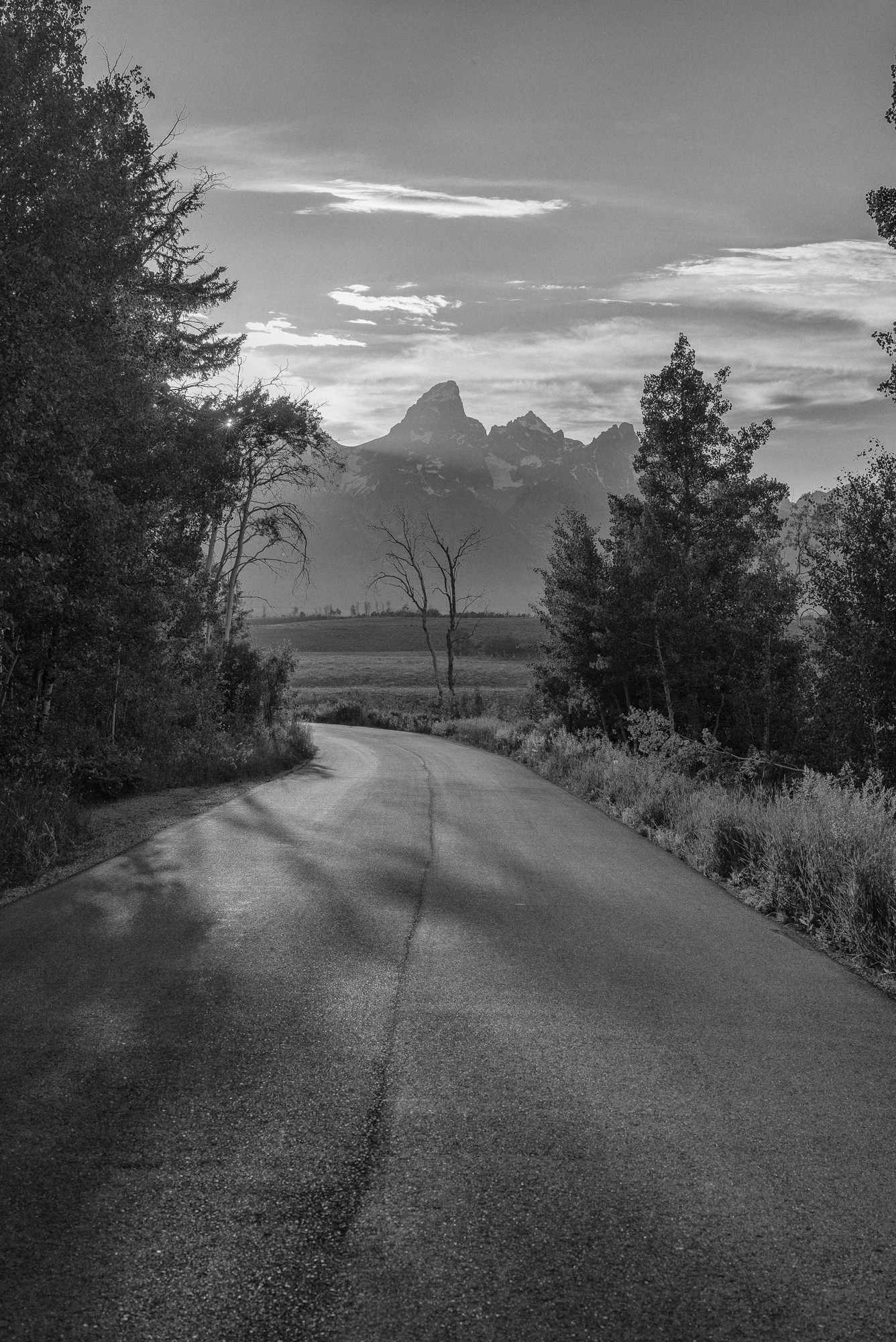
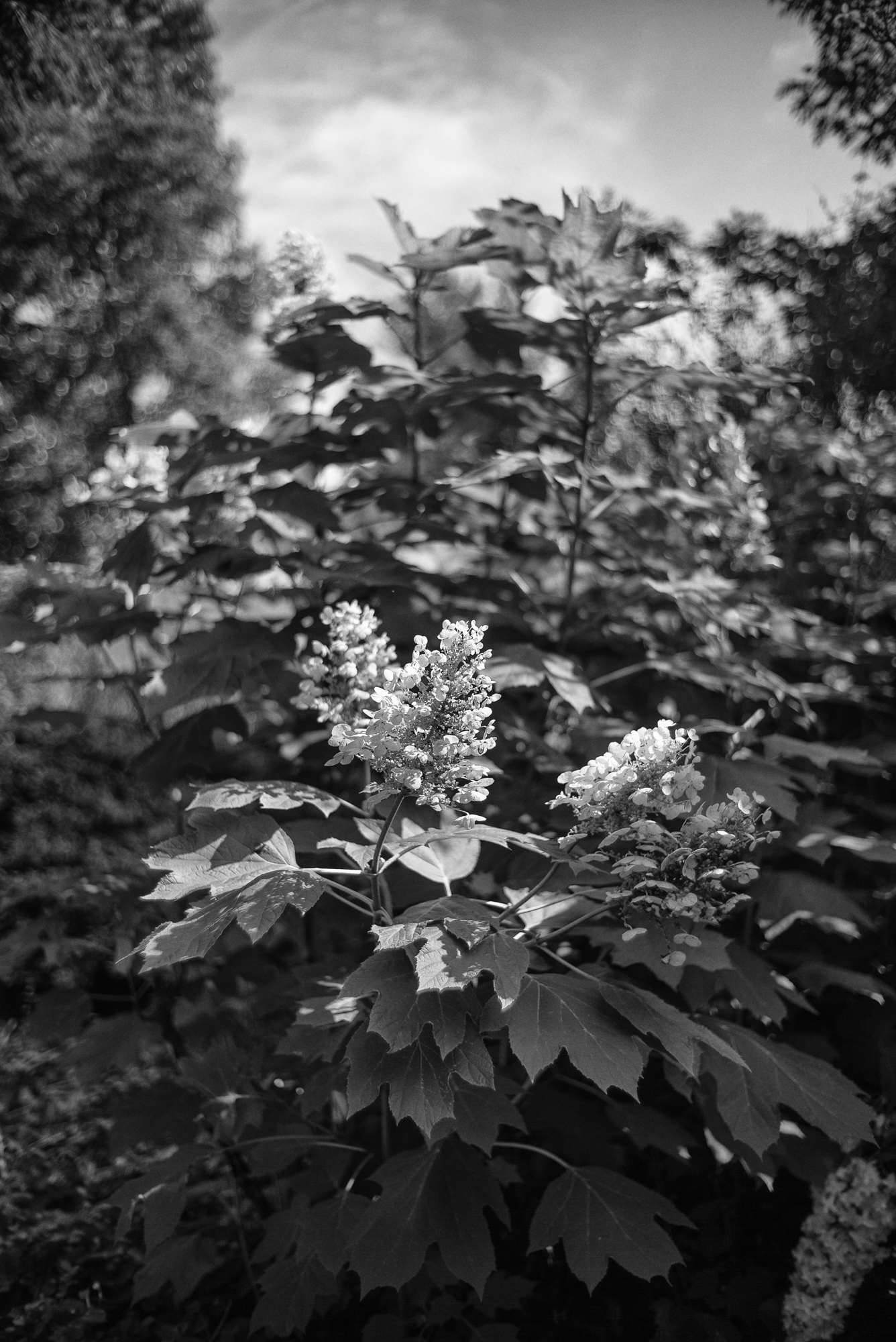
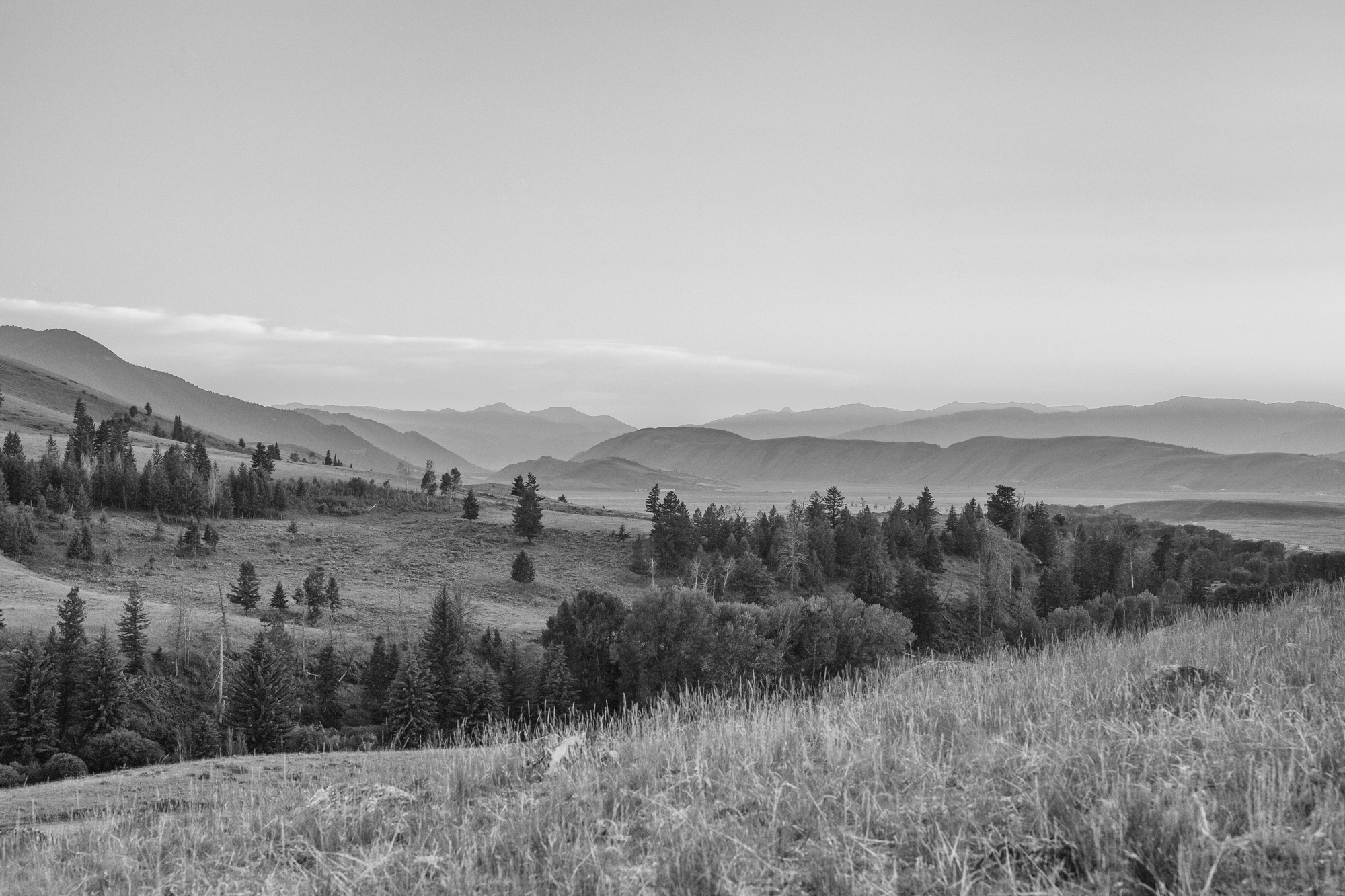
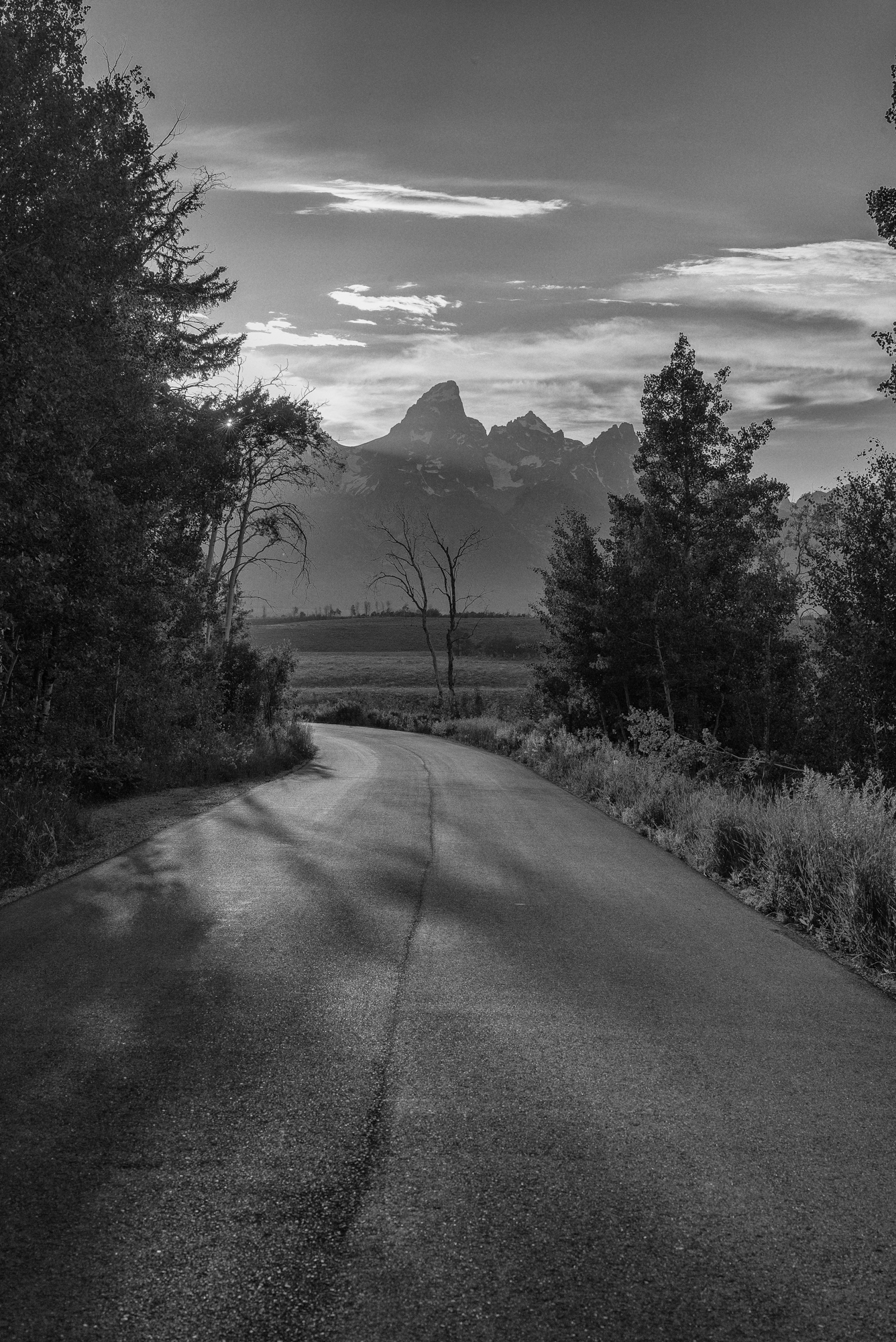
Vacations are in Kodachrome, bright with light and color.  From northern climes, we go to the vivid tropics in the winter.  And if we are lucky enough in summer to be able to go to the Mountain West, to the beach, or to cities to which we have always wanted to visit, of course we remember what we’ve seen as we saw it, in saturated color.  But with the release in mid-May of the Leica Monochrom (typ-246), our hankering to shoot in black and white meant we looked forward to an annual visit to the Tetons with a slightly different set of intentions, a different eye.
Jenny6 Brighter

Yes, we brought an M that shoots in color, too, and we have used it.  But to see a familiar environment through the sensibility that shooting with the Monochrom forces upon you is to open yourself to a certain poetry, or said with less grandiosity, to an historic way of seeing.  (Historic here referring to Ansel Adams, Edward Weston.) Now, the image of fireworks in Jackson Hole on the 4th of July could not have, I believe, been taken with my M — I was shooting at 10000 ISO.  The picture immediately above could have, of course, been converted to black and white, or shot with black and white film.  But here’s the thing: if I hadn’t had the Monochrom with me, would I have thought of that scene — with its soothing blues and greens — in black and white?  Is the greatest value that having the luxury of being able to shoot with a camera that only records images in black and white the effect it has on your sensibility, your eye?
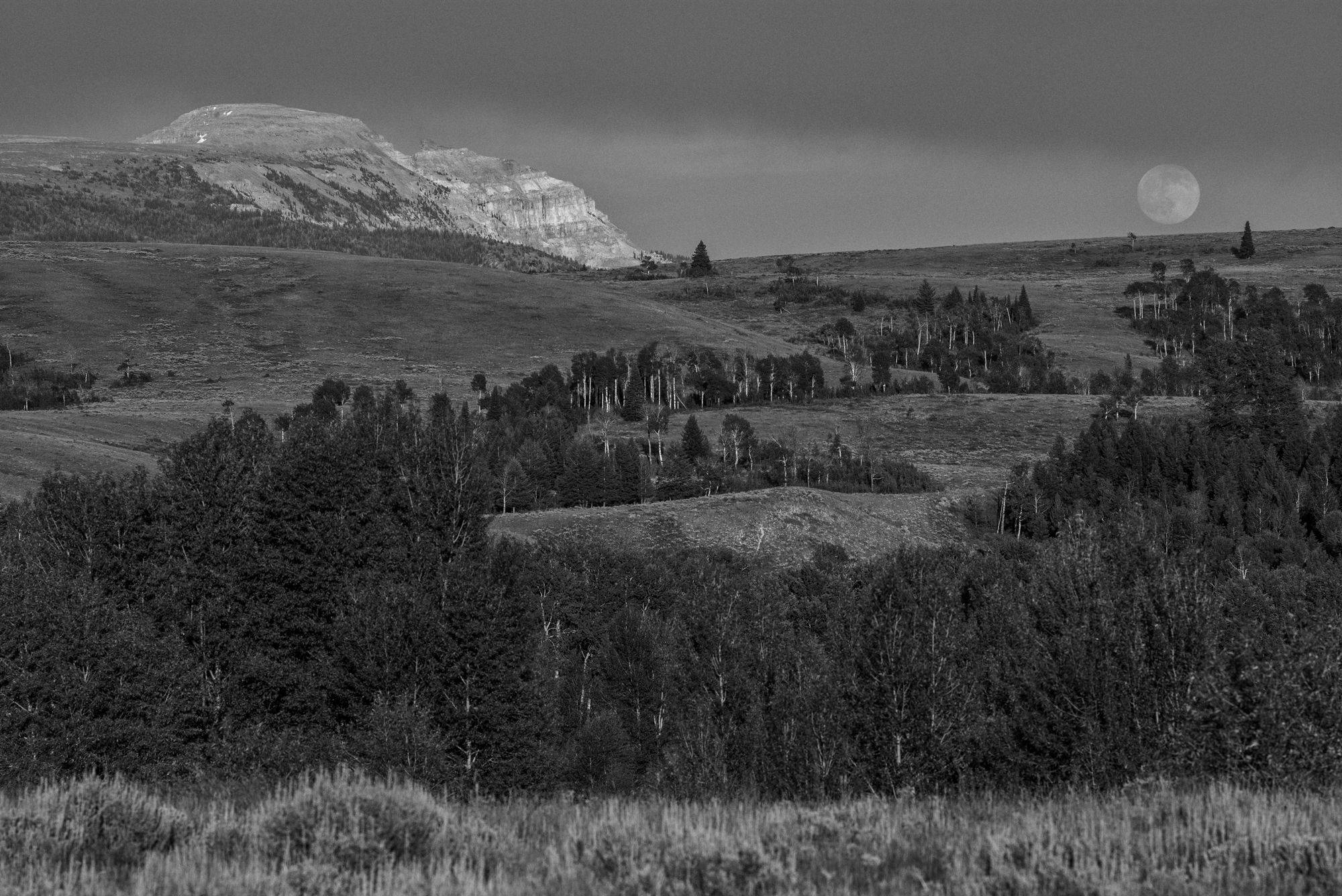
Gros Ventre Moon

We know we wouldn’t have been able to shoot the above image with the M9 Monochrom, because it was taken with the Elmarit-R 180 f/2.8, which we could for the first time use with our Monochrom, as the new one operates on the same platform as the M-240, which takes R lenses.
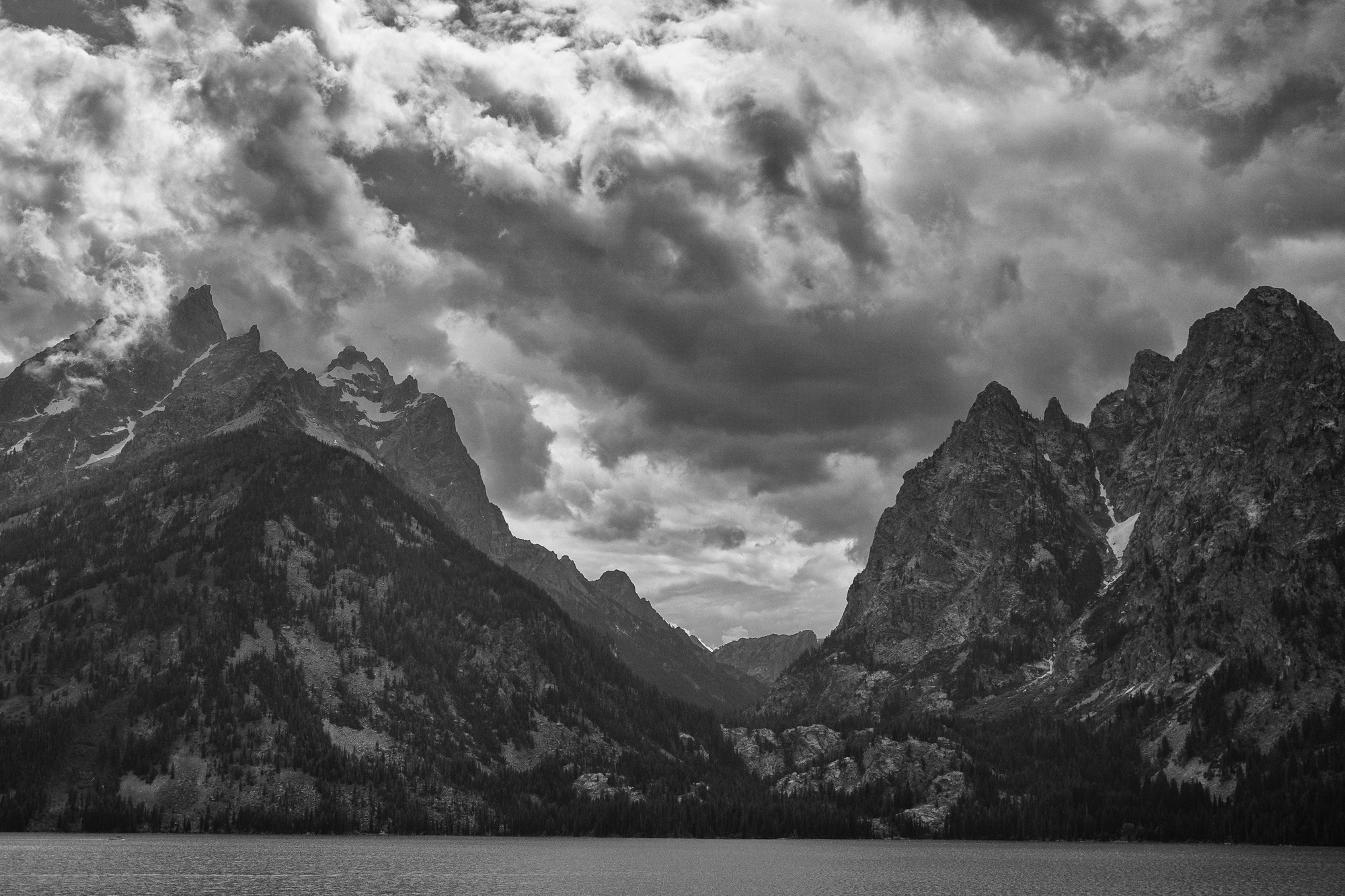
Jenny1

It is an expensive mechanism to enforce discipline, as surely it would be cheaper to shoot Tri-X with a film camera, or to convert images from color to black and white.  But the image above was taken on a day when it was so overcast, we wouldn’t have been motivated to drive up into Grand Teton National Park to capture it; the notion that while a dreary day in the valley, and a day you wouldn’t likely consider going swimming in a lake or hiking in a canyon, this would be a perfect day to go shoot black and white images, was a motivator.  Wanting to take a picture in black and white literally got me in the car to go find the right clouds and light.

Plowing

In fact, if you begin thinking of your Monochrom as your primary camera, and the one that shoots color the backup, it opens a world of possibilities.  Ordinary images appeal because of the glorious unreality that is black and white — something photographers have understood for a century, only reluctantly giving way to color as an artistic medium.
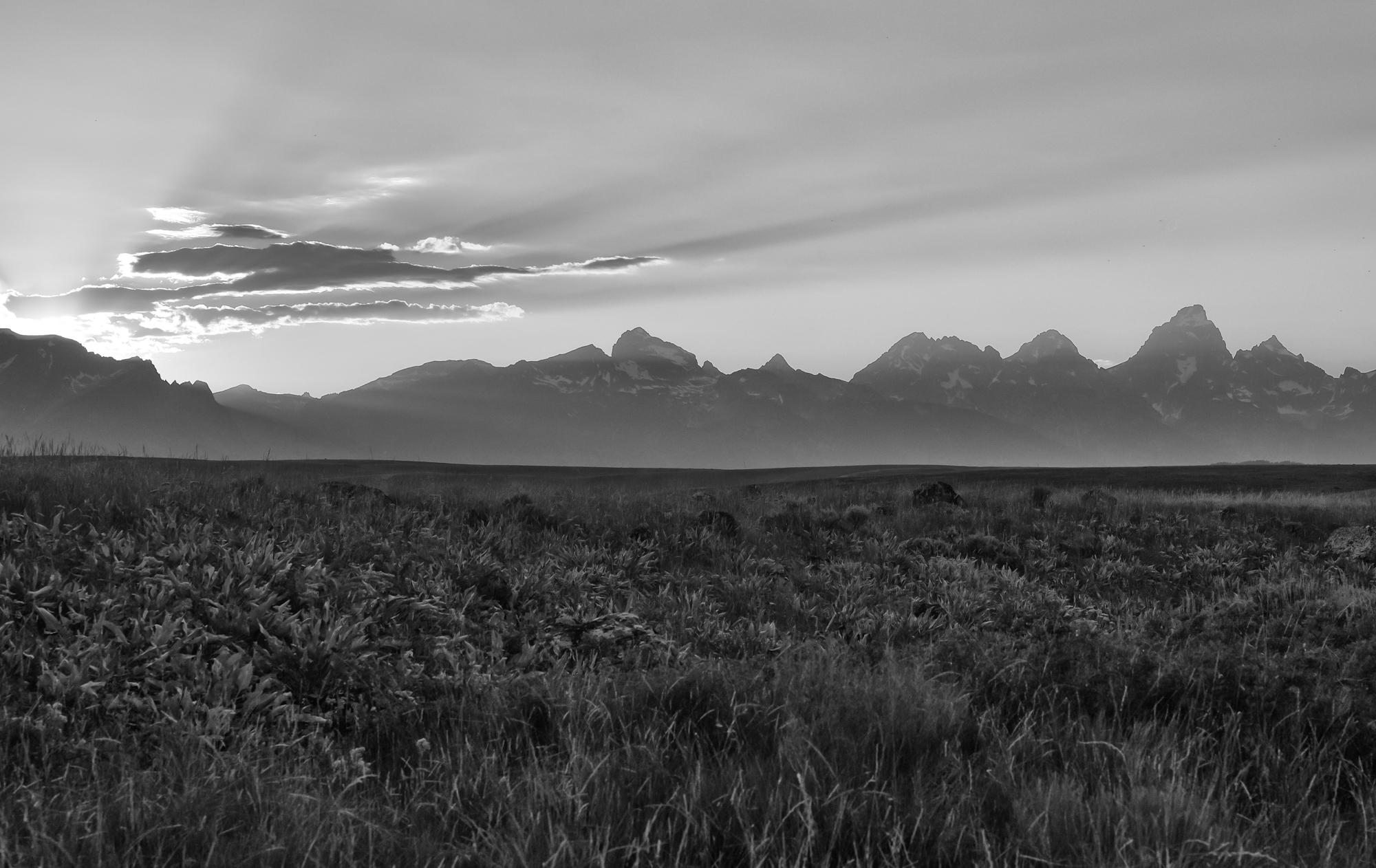
Teton Sunset

As we realized after shooting for one year with the M9 Monochrom, it is liberating to abandon thinking in terms of color and purely in terms of light.  The usual way one thinks of capturing a sunset is how to attain the colors in the sky.  But what if the colors don’t matter, and what does matter are the tones of grey, the light in the sky, the outline of the mountains, the richness of the sagebrush?
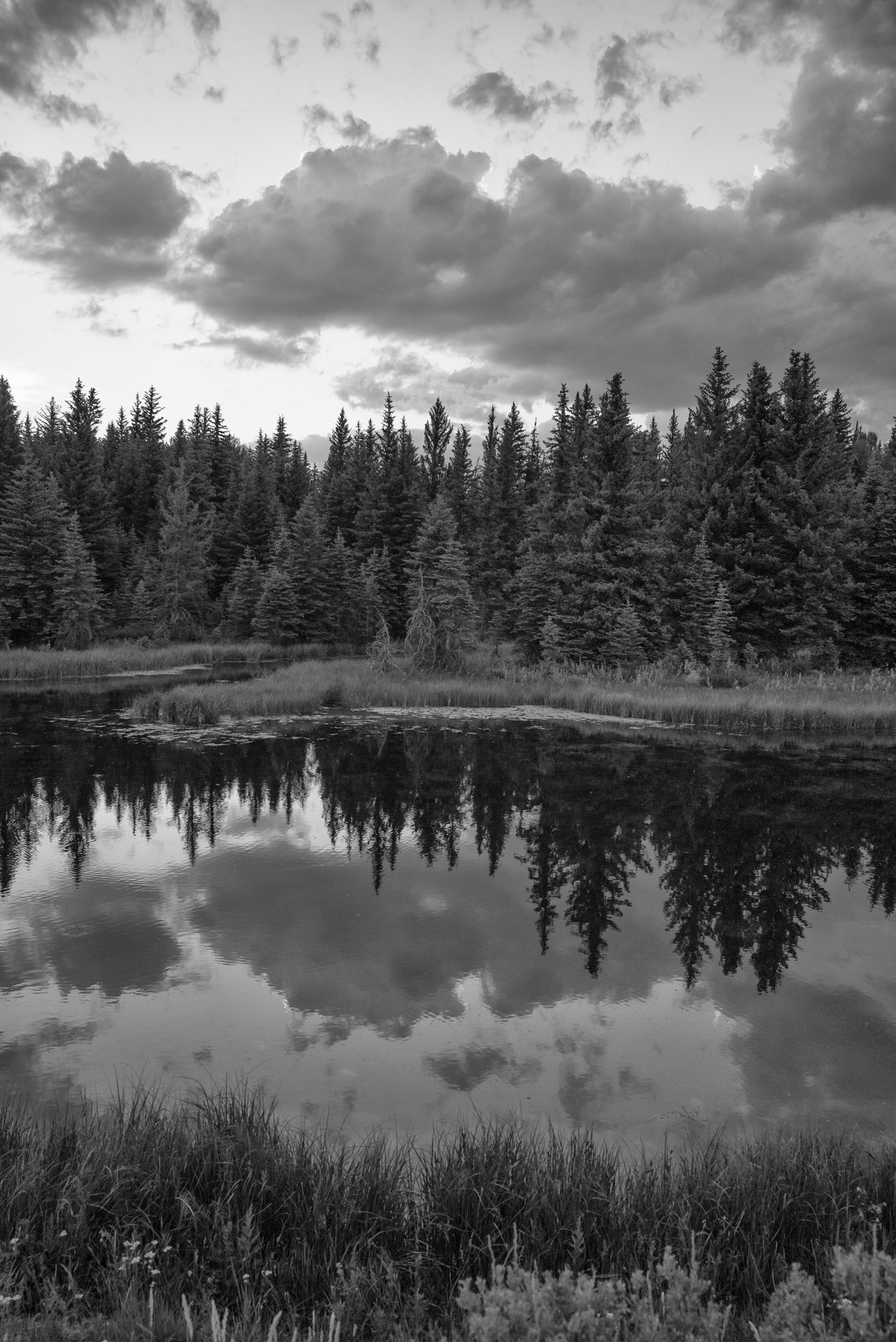
Schwabacher3

No one is going to want to see our vacation pictures as a depiction of the time we spent out West.  And yet somehow, by shooting more with the Monochrom than with the M, we suspect these vacation images will have a permanence in our own memory that the color images may not have.

Thoughts On “Lolita” And “Stray Cat Blues”

Posted in Uncategorized with tags , , , , , , , on July 6, 2015 by johnbuckley100

Jenny6

The image above matches precisely the postcard that Vladimir Nabokov sent Edmund Wilson in the summer of 1949.  Well, maybe the postcard photographer was fifty feet below where we stood, and the aspens — not a willow — stood on the right side.  But it is close.

We know this because we are midway through the excellent Nabokov In America by Robert Roper, which includes an image of the postcard while covering the writer and lepidopterist’s most productive years.  These were years in which Nabokov — Russian aristocrat and exile, genius in both Russian and English — tramped across the Mountain West, butterfly net in hand, while also writing Speak Memory, Pnin, and of course, Lolita.

We should note that in recent weeks we’ve also been listening to the amazing live recordings included in the super duper reissue of Sticky Fingers, and wouldn’t you know it, one of the best performances from both of the spring 1971 sets the Rolling Stones played at the University of Leeds, as well as that tour’s finale at the Roundhouse in London, is “Stray Cat Blues.”

Which prompts this thought: what are we to make, in 2015, of both Lolita and “Stray Cat Blues,” both incredibly appealing works of art, both centered on child rape?

We’ve read much if not all of the Nabokov oeuvre, but as great as both Pale Fire and Speak, Memory are, the standout work by the 20th Century giant is, of course, Lolita — a story about an adult who knowingly manipulates his way into being the sole caregiver of a 14-year old girl, so they can have sex three times a day while traveling the American West.  The novel is at once hilarious and appalling.  Our sense of its duality has always been there — it has always been both hilarious and appalling, and hilarious because it is appalling, appalling because it is hilarious.  But as a college student reading it, we didn’t struggle with it in quite the same was as we do now… now that we are older than Humbert Humbert, older than Nabokov when he wrote it.  Now  that we are in a position truly to think about what it means that this was Nabokov’s best seller, his breakthrough, coming at the front end of the Sexual Revolution, published before 1963, which Philip Larkin has decreed is the year that sex began.

For many, many years, we have considered “Stray Cat Blues” to be the standout performance on Get Yer Ya-Yas Out, the Stones’ live album nonpareil from their ’69 tour, and the song is, at worst, the third-best one on Beggars Banquet, that album we would take to a desert isle.  On the studio album, Jagger says he can see the young groupie is “just 15 years old,” which is bad enough, but by the ’69 tour he’d revised her age downward to 13, where it remained for the ’71 tour of the UK.  (The Stones dropped it for the ’72 tour, and as far as we know, it stayed dropped for the next three decades at least.  Though they have returned to it, from time to time.  One wonder what kind of life the girl, 13 when she would have slept with the Rock Star, has had in the nearly 50 years since…)

And here we are, in 2015, and pedophilia — child rape — isn’t an amusing topic, if ever it was.  Martin Amis famously rejected Nabokov’s focus on nymphets — N’s word for the pre-pubescent girls to which Humbert Humbert, whom we know is not a stand-in for the author — in something like six of 19 books, not on moral grounds, but aesthetics.  There were too many of them, these pubescent girls so much on Nabokov’s mind.  And yet, even if there were one, isn’t that too many?  Not for reasons of aesthetics: let us be clear, we are talking about morality.

Over the years, we’ve read about Lolita as a metaphor for Nabokov, the cultured European, discovering his love for the young, quivering America he sailed to on literally the last boat out of France before the arrival of the Nazis.  (In a way, similar to Roman Polanski, are we supposed to excuse Nabokov his child lust because he was a victim, first of Lenin, then of Hitler?)

But we can’t.  We adore Lolita, one of the great novels of the 20th Century, and a miles better American road novel than On The Road.  We can listen to Mick Taylor playing lead on “Stray Cat Blues” six days per week.  Martin Amis also once famously defended Philip Larkin against the charge of his sexism and cultural obtuseness by reminding readers of the epoch in which Larkin wrote his poetry, comparing the censoriousness against him as equivalent to condemning pre-Renaissance painters for not having yet discovered perspective.  But we don’t actually buy this defense here.  Lolita is hilarious, yes, but it is a horrific story, and we do judge it.  And the same goes for “Stray Cat Blues.”

And yet we read the one, listen to the other, all the while understanding how glad we are that as a culture we have, finally, discovered perspective.  Today, few are the artists who will find an audience writing or singing so casually of molestation.

Through The Hoops

Posted in Uncategorized with tags , , , , , on July 3, 2015 by johnbuckley100

Snacks Before Hoops

The light at The Mother Hips free concert in Driggs, ID was literally golden, with none of the haze from the heat that’s been affecting the West of late filtering out the yellow.  We came across a stand where hula hoops were hanging.  It was a gorgeous evening in America.

Through The Hoop

Hoops

Up Around The Bend

Posted in Uncategorized with tags , on July 2, 2015 by johnbuckley100

Gros Ventre Moon 3

Tess Parks and Anton Newcombe’s May-September Collaboration

Posted in Uncategorized with tags , on July 2, 2015 by johnbuckley100

Given how strong the last two major Brian Jonestown Massacre albums have been, and how successful was their 2014 summer tour of Europe, we weren’t at all surprised that Anton Newcombe would feature on our favorite album so far this summer.  That it’s not a BJM album, but a collaboration with a young singer and songwriter from Toronto named Tess Parks that has given the hard drive on our music machine a workout is something of a revelation.

Perhaps it shouldn’t have been, for Parks’ first album, Blood Hot, which came out in 2013, was superb, and seemed well steeped in BJM dynamics: dreamy guitar lines, songs constructed around repetition of verses, choruses, but few bridges.  (If you’d told me “Gates Of Broadway” was a Massacre recording, and as he did so successfully with Sarabeth Tucek, or Miranda Lee Richards, Newcombe simply was featuring a woman singing his songs, I’d have believed it.) Apparently, following the BJM 2014 tour, Anton invited Tess over to his place, and from the moment they met, a May-September collaboration was joined.  Since last fall, using YouTube as the distribution medium, we’ve been getting glimpses of their work together, and now that we have the whole album, it all makes perfect sense.  I Declare Nothing may be viewed as either a worthy one-off side project for both, or — and this is our hope — something to be repeated as often as Otis Redding and Carla Thomas making hits together.

This is the first album recorded in Newcombe’s Berlin studio, and it is sonically supple.  “Cocaine Cat,” the first official release, showcases a sound as rich as any BJM record, which is a high compliment.  Not every song is as strong as the opener, “Wehmet,” or as thrilling as “Melorist,” but this is a collection of songs so powerful that it renders laughable the complaints of critics in NME and Uncut who mewl piteously that “it just sounds like a BJM record.”  Um, yeah, that’s the highest compliment.

Parks sings all the songs, and we hear Anton’s voice on just a couple — his presence is felt on everything else.  Tess Parks’ voice generates comparisons to Hope Sandoval, and sometimes that’s justified.  Her singing is a little less enticing when she digs low for a gravelly bottom — when she’s trying to affect scratchiness, she sounds more like the teenage Alex Chilton growling his way through “Give Me A Ticket For An Airplane.”  But on “Mama,””Voyage De L’ame,” or a gorgeous, affecting song like “Friendlies,” which closes the album, the combination of Parks’ emotionally gripping voice, Anton Newcombe’s guitar strumming and the pace makes these as powerful as anything ever put down on a Mazzy Star record, never mind the Brian Jonestown Massacre.  Seriously.

This is a beautiful, magical collaboration, reinforcing our sense that Anton Newcombe’s genius hasn’t yet revealed his greatest work, and that Tess Parks will be beguiling us for years to come.

On How The Internet Sucks Our Photos Into The Machine

Posted in Uncategorized with tags , , , , , on June 23, 2015 by johnbuckley100

IceCreamMan (1 of 1)

In 2013, this image we took of a DC ice cream man was chosen in a juried competition at D.C.’s Leica Store, and happily we posted it online.  Someone who knew the ice cream man saw the image hanging on the Leica Store’s walls, told him about it, and a few weeks later, we met him on the Mall and handed him a print.  He’s a nice guy.

So you can imagine how we felt when someone alerted us to this story posted by The Onion last week.  There was our ice cream man photo, appropriated, albeit with credit to Tulip Frenzy.  But still.  And of course, there is no way we would have approved this use in a satirical post.

Then yesterday, while going through our Twitter feed, we saw from American Suburb X “A Brief Interview With Saul Leiter,” which of course we clicked on, since we love Saul Leiter’s work.  In fact, we love Saul Leiter’s work so much that in 2014 we posted on Twitter our homage to Saul Leiter, which we called “Homage To Saul Leiter: The Kiss”:

The Kiss

Imagine our surprise, and yes, mortification, when we saw that our image was illustrating the interview with Leiter.  American Suburb X took it down when we pointed this out, and told us that they’d gotten it off of Google Images.  And yep, the way Google sucks content into the machine, by my having posted the picture as an “Homage To Saul Leiter: The Kiss” somehow it now showed up in HIS image feed.  Ugh.

The Internet giveth and it taketh away.  Our son has reported Instagram photos he’s taken being appropriated by others.  This easy skimming of images for use by others is, we suppose, something we have to accept.  Our examples aren’t exactly like Richard Prince making millions off of a stolen Sam Abell photograph, but the whole thing sucks.

Welcome To The Summer Solstice

Posted in Uncategorized on June 21, 2015 by johnbuckley100

Actually, our second least favorite day of the year (the least favorite being when Daylight Savings ends), as it is all downhill from here, light-wise.  Leica Monochrom (type-246), 35mm Summicron v.4.  (Yes, the Bokeh king.)  ND filter.

summer solstice

Courtney Barnett At 930 Was Like Hearing Stiff Records’ Greatest Hits Played By Nirvana

Posted in Uncategorized with tags , , on June 14, 2015 by johnbuckley100

Courtney 2

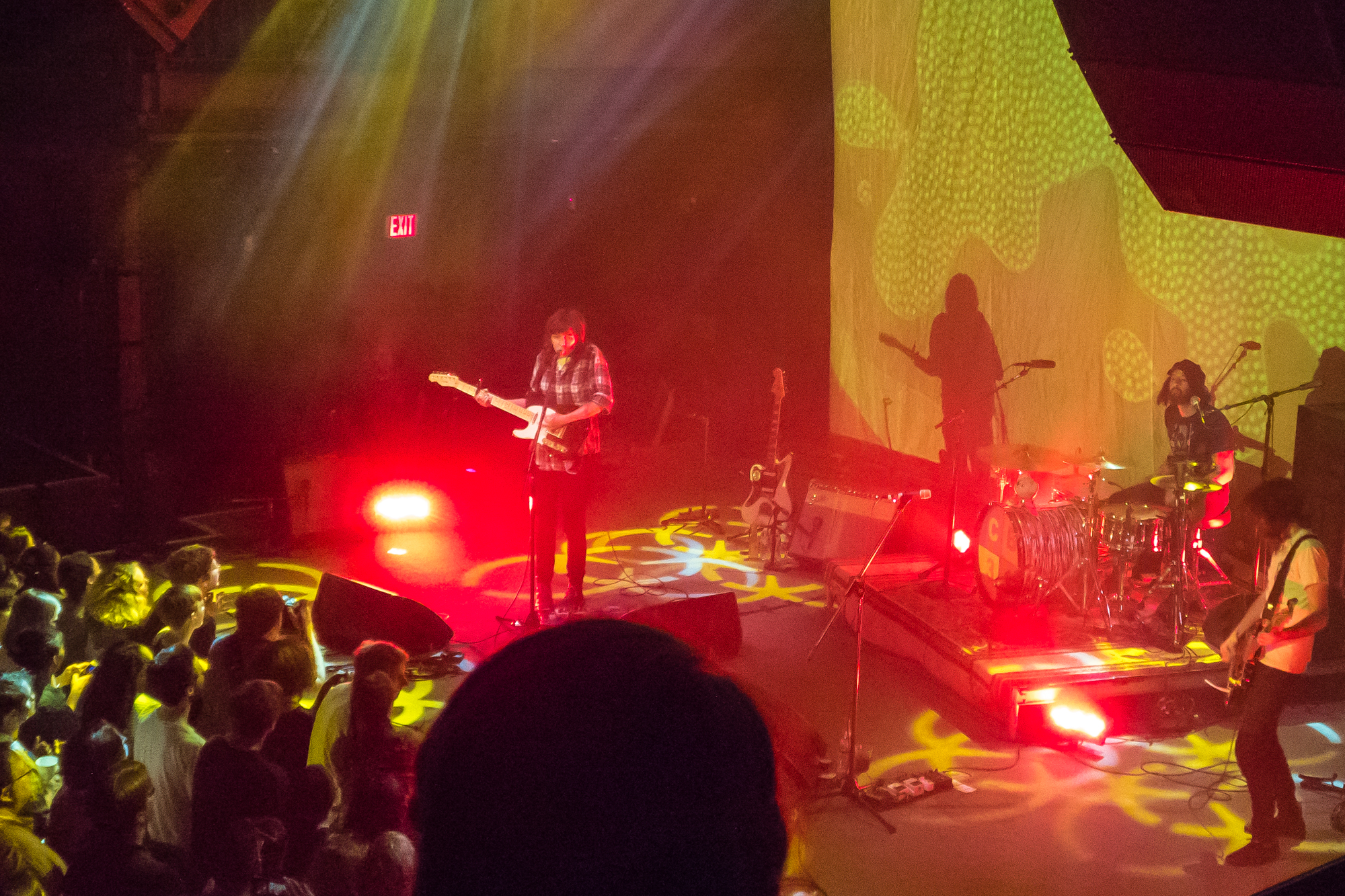
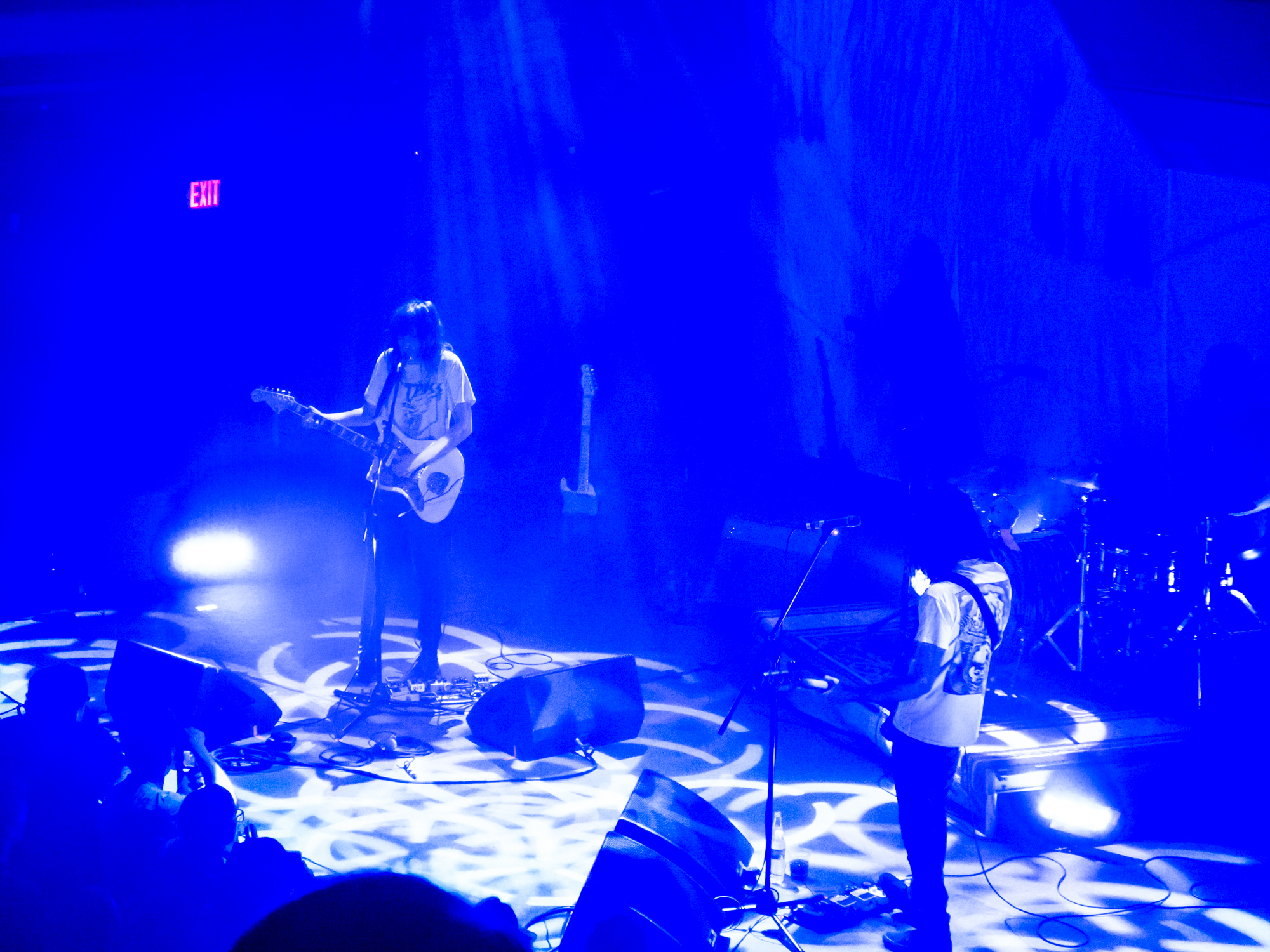
We overheard someone in the audience next to us say that the last time Courtney Barnett played DC, it was at DC9, a venue considerably smaller than the 1000-and-change-sized 930 Club.  Given the roars of approval — as loud as we have heard them in 20+ years going to shows in this venue — and the quality of the performance, it seems almost inevitable that she’s going to make the leap to venues a quantum larger.

We love the Australian singer and guitarist’s debut album Sometimes I Sit And Think, And Sometimes I Just Sit, as readers of Tulip Frenzy well know.  Sometimes we prefer her real introduction to the States, 2014’s The Double EP: A Sea Of Split Peas.  Mostly, though, the hesitancy we had before fully embracing the album was that we were unprepared for the transition, the way the sound had been torqued tighter, louder, with more pop urgency. It would be like riding in your favorite ’73 BMW 2002 and suddenly getting into its most recent 3 Series descendent: familiar, but scary in way, once you put your foot to the pedal and saw how it had been modernized for the Autobahn.

Last night, she played virtually the entire new album, plus a number of our favorite songs from the double EP, and we realized how they both connect, and why we think she’s the strongest talent to emerge since Ty Segall five years ago. For what we liked most about The Double EP: A Sea Of Split Peas was the way she updated the sound of a particular era of British pop music that coincided with the emergence of punk but preceded Power Pop — those early albums by Joe Jackson, Elvis Costello and the Attractions, Ian Dury and the Blockheads, Nick Lowe.  Last night, that particular proto-Power Pop song sensibility was apparent — though powered along with a thunder more like Nirvana than any other trio we can remember.

Courtney

Barnett is a great storyteller, but that may make her sound twee, and she’s anything but: she and her band kick harder than any Aussies we can think of since Radio Birdman.  From “Elevator Operator,” which opened the set, to “History Eraser,” which finished the encore, the Courtney Barnett 3 played like a band with twice the instruments.  There may come a time when they’ll need sidemen to fill the arenas she’ll headline.  Yeah, after a thoroughly entertaining show last night, the first of two sold-out shows at 930, we have no doubt that’s where she’s heading.

(Pride) In The Name Of Love

Posted in Uncategorized with tags , , , on June 14, 2015 by johnbuckley100

Pride 2015 Tfrenzy-10

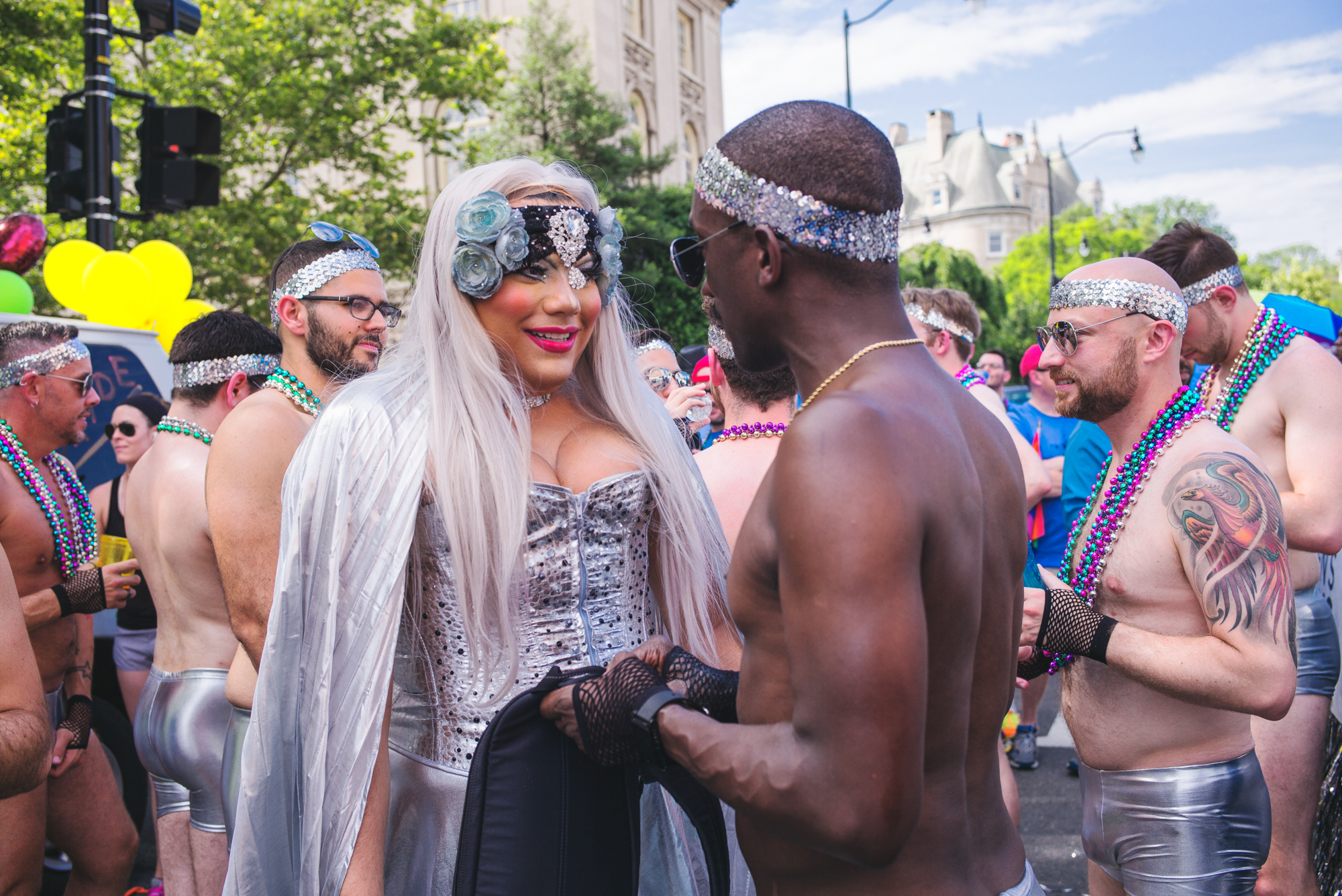
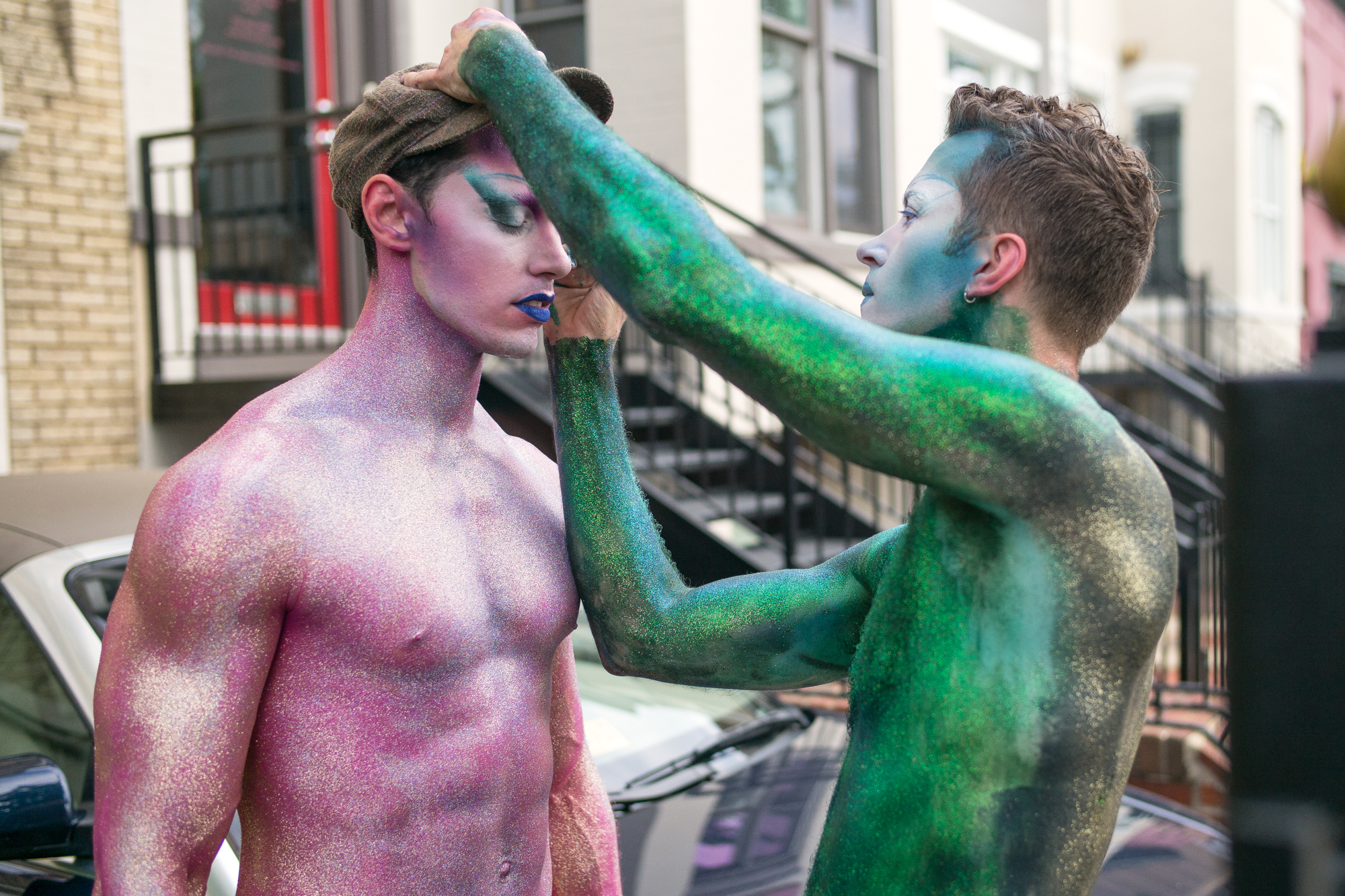
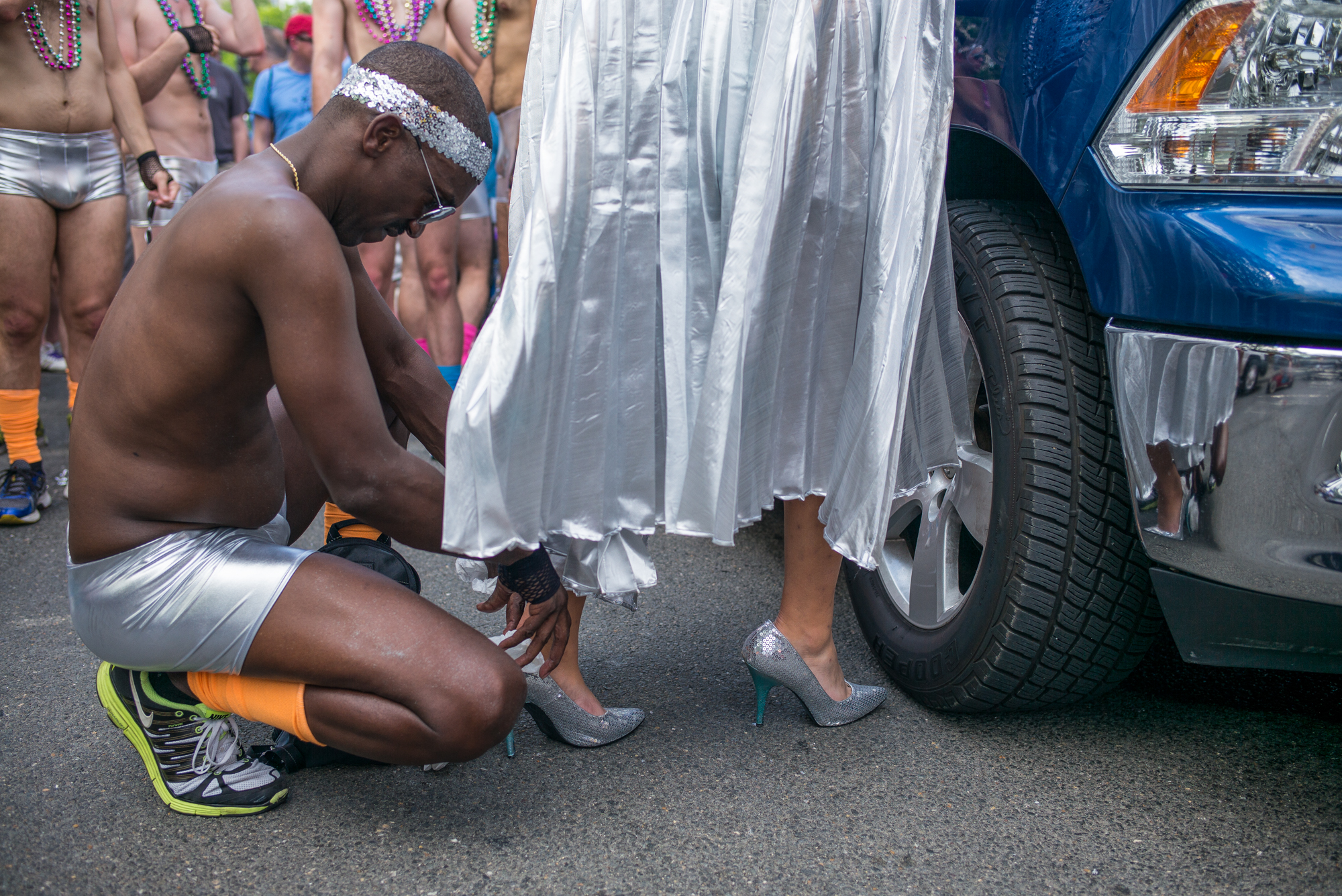
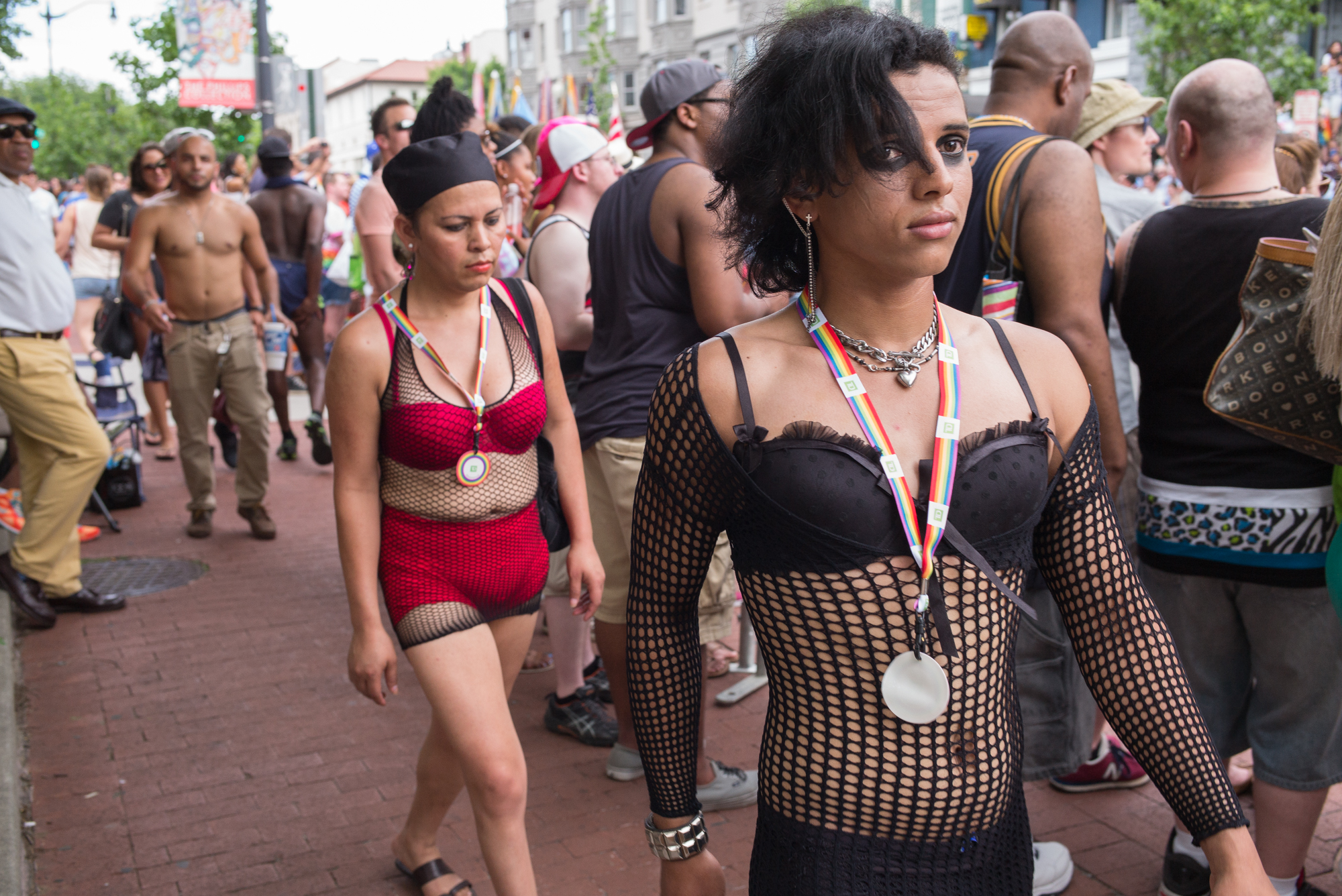
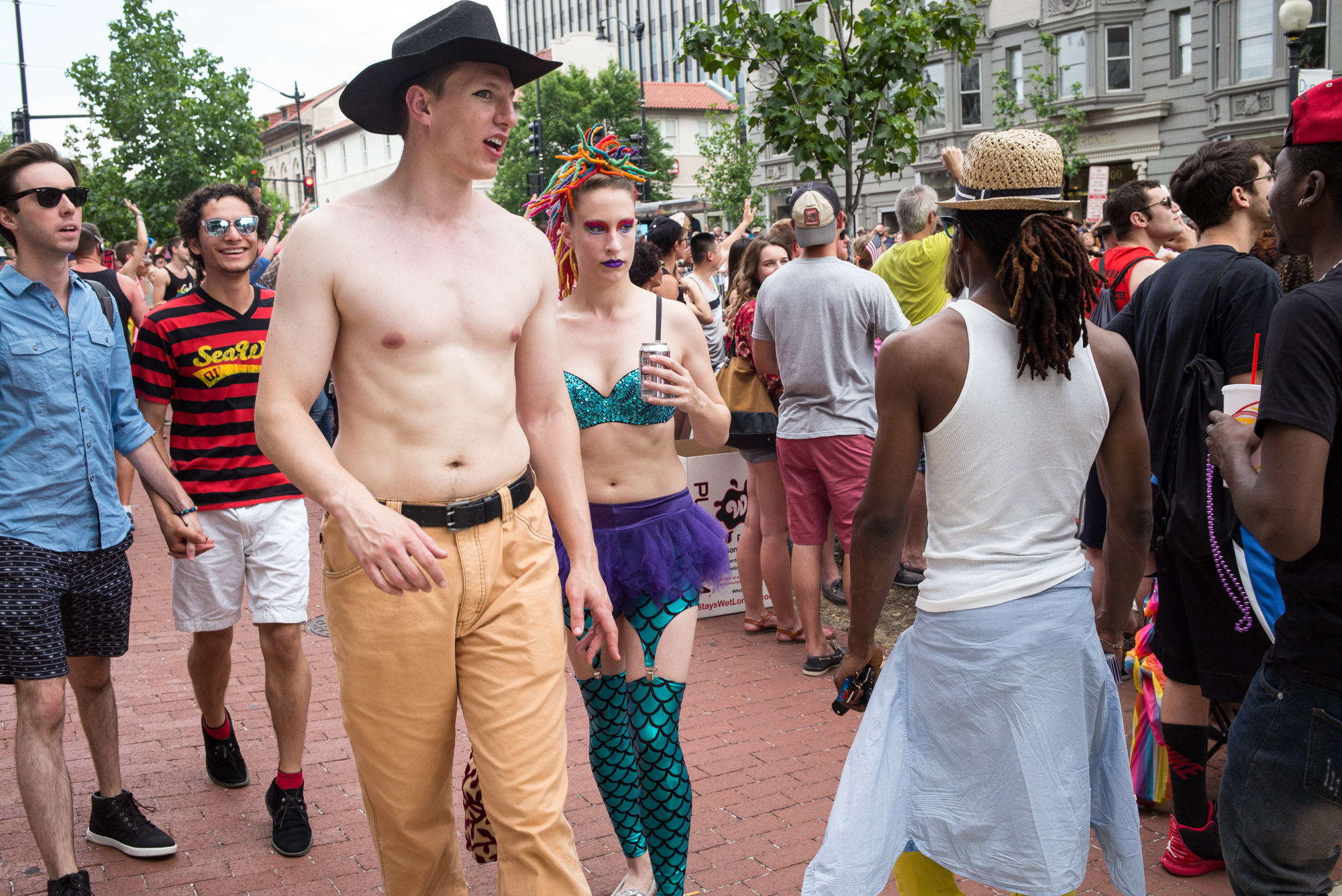
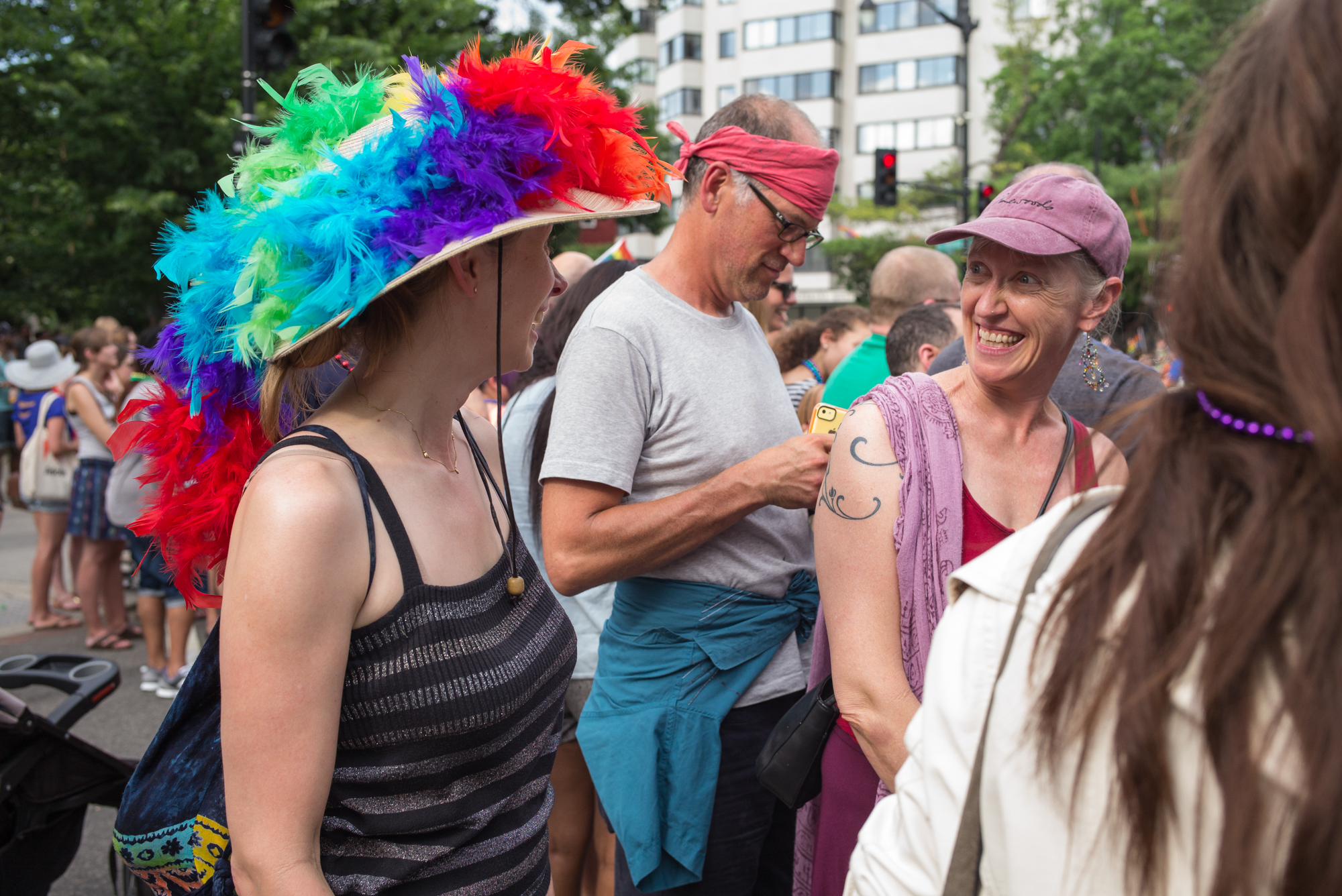
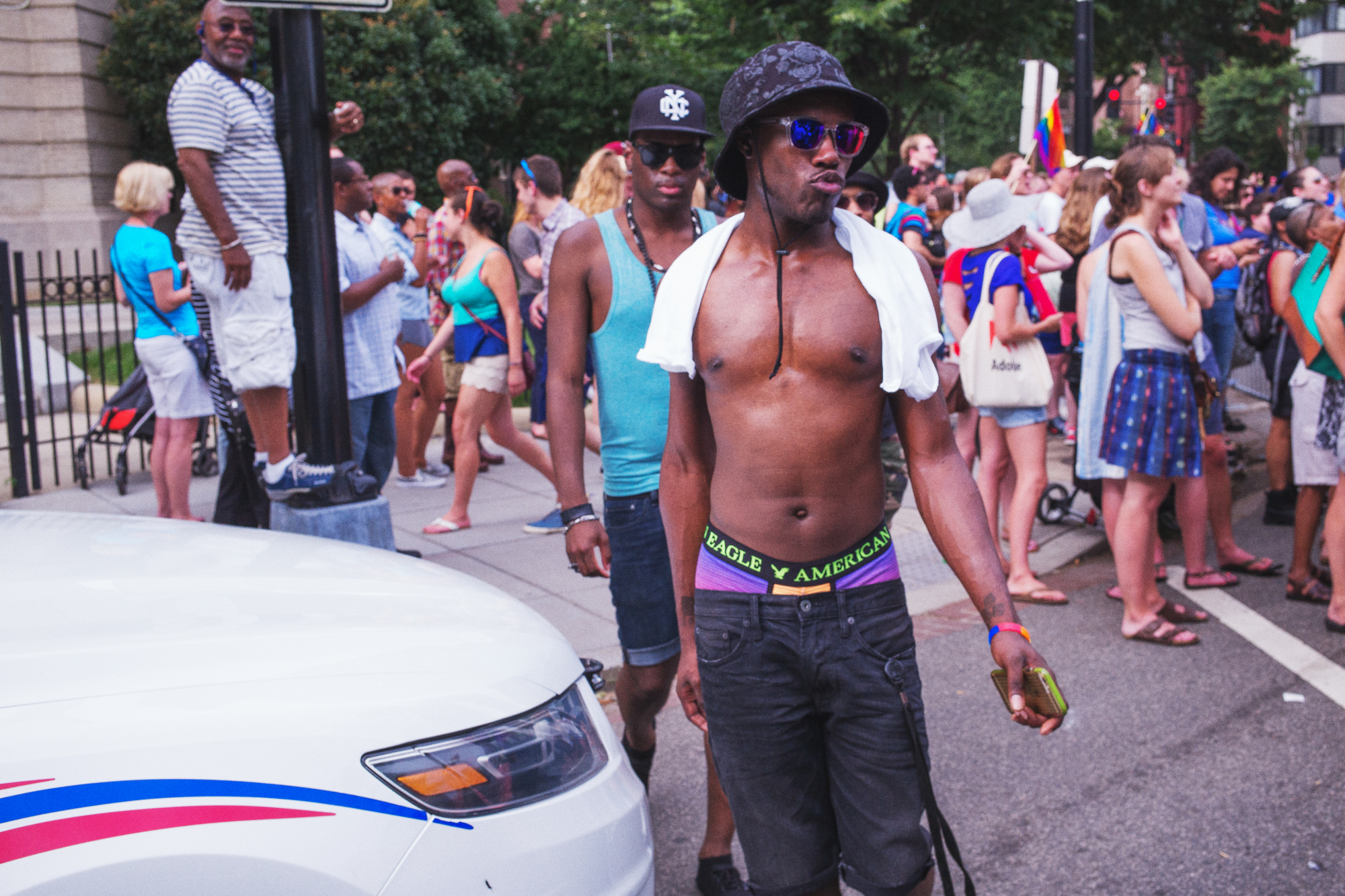
Washington, D.C.’s Capital Pride Parade is the single most joyous event that takes place annually in the Nation’s Capital.  Gay and straight, young and old, all come out to celebrate — and this year seemed, by far, the biggest such celebration ever.  Here’s a collection of images taken along the parade route.

Pride 2015 Tfrenzy-9

Pride 2015 Tfrenzy

Pride 2015 Tfrenzy-3

Pride 2015 Tfrenzy-4Pride 2015 Tfrenzy-5

Pride 2015 Tfrenzy-6

Pride 2015 Tfrenzy-7

Pride 2015 Tfrenzy-8

Pride 2015 Tfrenzy-11

What We Learned From Bruce Davidson’s Lecture At The Phillips Collection

Posted in Uncategorized with tags , , , , on June 12, 2015 by johnbuckley100

When you see a photograph taken by Henri Cartier-Bresson, the sound you hear is of the shutter closing at 1/125th of a second.  When you see any of the photographs Bruce Davidson has taken over his long, distinguished career, the soundtrack is musical — for the pictures from his 1959 Brooklyn Gangs project, we hear Dion singing “A Teenager In Love;” Miles Davis’ trumpet haunts the pictures taken for the East 100th Street series; The Clash’s Sandanista, or maybe Kurtis Blow’s “The Breaks,” accompany the images taken in 1980 deep in the New York subway system.  For Davidson is not merely a photographer whose lyrical, softly dramatic work lives in individual photographs.  He is a cinematic storyteller who emerges from deep within an atmosphere he’s inhabited with poignant, touching pictures that, yes, swirl with their own soundtrack.

Last night at the Phillips Collection, the 81-year old Davidson provided commentary on many of the pictures from his most celebrated series of images, stretching all the way back to the ’50s.  It was part of the Phillips Collection’s “American Moments” show, which for the first time displays works from the plucky little museum’s permanent collection of photography.  If the pictures in the show are any indication of what the Phillips Collection has in store for us as their focus on photography becomes more ambitious, Washingtonians are in for a delightful ride.  And if their choice of photographers to invite to speak is any indication, the Phillips Collection is intent on making a mark.

Bruce Davidson

Davidson is not a household name, even in households that care about photography; he’s an American master, a photographer’s photographer, less famous than contemporaries like Garry Winogrand and Joel Meyerowitz, but a giant in the world of 20th Century photography.  What was clear last night is that his humanity and commitment run deep: he could cite, by name, what has happened to members of that Brooklyn Gang 60 years after the pictures came out, knew what kind of life the children of sharecroppers he’d photographed in the 1960s ended up having once some of the barriers to their integration in American life had toppled.  He spoke with just a touch of pride about the impact his photographs had had, in knocking down racial barriers, in helping people in an impoverished community in Spanish Harlem be recognized for their dignity — and the intolerable housing conditions they lived in.

Meyerowitz used to talk about “tough pictures,” photographs that showed how real were the dangers the photographer used to put himself in to come back with an image.  And Davidson took his share.  But mostly his images reflect the degree of intimacy he had with his subjects, showing the people on East 100th Street what the work would look like, so they’d trust him.  He repeated the famous story of persuading a fellow with a scarred face who sat across from him on the subway and threatened to smash his camera, to let him take his picture.  He did it by engaging him, talking to him, showing him his work.  Getting street subjects to sit for a photograph is an act of seduction, he said.

He told us there are three things you can do to get a picture of someone.  You can sneak the photo, take it and run, or you can ask them.  This is a man who has made a career, for the most part, asking people and being told yes, because with his direct Midwestern sensibility and occasionally impish twinkle in his eye, he was jovially seductive.

Asked whether he could undertake multiple projects simultaneously, he said no, and likened his work to a “bullfighter getting in rhythm with the bull.”  This is not someone who shows up on a street, takes a snapshot and walks away.  He said he had patience, and surely he must have, and ingenuity in spades: he told the story of advancing a beach in Brooklyn where the gang said they would hang out the next night, and bringing a light bulb to screw into a socket he’d identified, knowing it would illuminate his subjects.

Immersing ourselves, as we have over the past few weeks, in the great Steidl three-volume collection, we found ourselves thinking of another photographer whose work would not automatically be compared to Davidson’s.  Sebastiao Salgado also tells stories in great project arcs, deeply immersing himself in the lives of his subjects, his individual photos amazing, his series even greater than the sum of the parts.  Growing up in Illinois, Davidson’s immersed himself in subcultures perhaps less exotic than Salgado’s, which isn’t surprising given the latter’s growing up in a remote Brazilian agricultural community right out of Garcia Marquez.  But there is the same sensibility, the same commitment, the humanity, and the turn, in his career’s last innings, to nature and more lyrical images.  He’s a hell of a photographer, and we are so glad to have heard him.