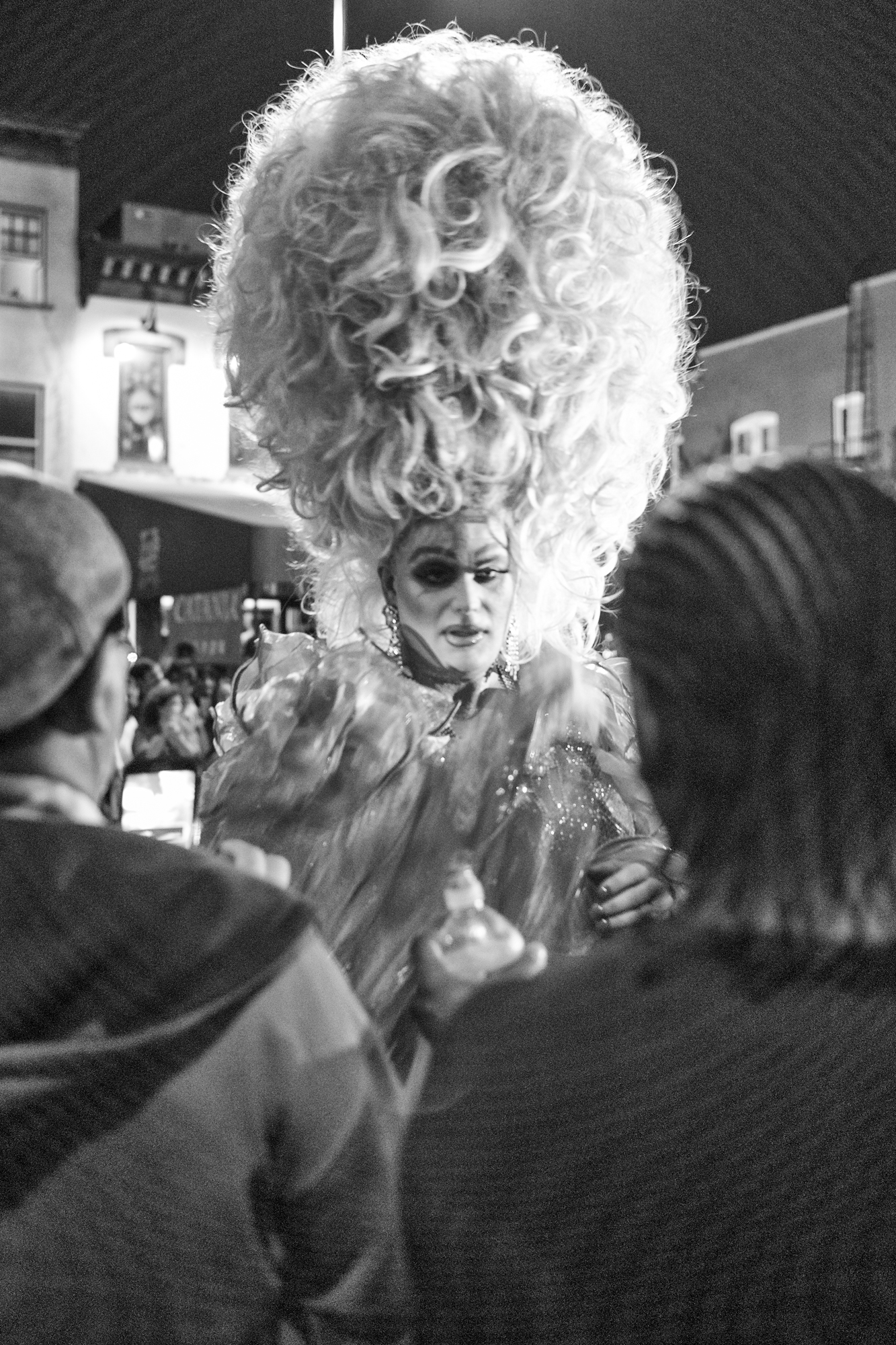
White Fence Takes Top Honors On The 2014 Tulip Frenzy Top Ten List (c)

Posted in Uncategorized with tags , , , , , , , , , , , on December 6, 2014 by johnbuckley100

Robert Christgau famously wrote that Dylan’s The Basement Tapes was the best album of 1975, and would have been the best album of 1967, too, if it had been released the year it was recorded.  It goes without saying that if The Basement Tapes Complete were not a 47-year old document, it would have topped the 2014 Tulip Frenzy Top Ten List (c).

But it would be unfair to trump the excellent albums released this year with one of rock’s classics, released as it was from the vapors of the past.  And this year there were many excellent records vying for top honors.  Thee Oh Sees missed our list because it was a transition year for John Dwyer, and as much as we enjoyed Drop, recording without the band that made Floating Coffin such a delight was a disappointment.  Asteroid #4 eponymous release was in contention, but just missed.  There were some other close calls, competition was tight, but in the end, we think this is a pretty good list for you to scratch out and leave for Santa to find.

#10: Maui Tears by Sleepy Sun

Back in February, we wrote this:

Maui Tears is constructed along the blueprint specs that Stephen McBean used in Black Mountain’s Wilderness Heart: there’s tuneful, exciting, straight-ahead rock’n’roll (“The Lane”) followed by acoustic balladry you might have found on early Led Zep, and then immersion into the headphone imperatives of metal-psyche. “Outside” is, for our money, a better version of MBV than anything found on m b v. “11:32″ is a mere 4:10 worthy of punk-metal goodness, and on “Thielbar” you can catch a whiff of Black Rebel Motorcycle exhaust and it smells like… victory.”

Eight months later it still holds.

#9: Ganglion Reef by Wand

In late September, we wrote this:

Ganglion Reef, the 35-minute long debut album by L.A.’s Wand is sonic DMT, a short, intense trip you can take on your lunch break and return to work with a slightly loopy smile on your face. The best psychedelica, like the best punk, always had a gooey core of pop music at its center, catchy melodies being just as important — maybe more important, given the heavy winds the music otherwise generates — than anything aimed right at radio programmers. And so it is with Wand, a band that can appeal to anyone who made a mixtape including both Tame Impala and Unknown Mortal Orchestra. Even after powering through sludgy riffs that seem like a bulldozer plowing a highway in the Mariana Trench, they shift to some sweet-sounding harmonies bristling with hooks.”

#8: Brill Bruisers by The New Pornographers

We never actually wrote about Brill Bruisers, which comes about as close as we ever do to the mainstream.  For even though they qualify as Alt something or other, The New Pornographers are a big band, big following, no lack of critical attention.  When we saw them in November, it confirmed that Brill Brusiers was as good as Challengers, which we loved, though not as good as Twin Cinemas, of course.  How they do it — how they create completely polyester pop when what we love is all natural fibers is a miracle to behold.  And that’s what The New Pornos are, circa 2014.

#7 With Light And With Love by Woods

Having given Bend Beyond a #1 ranking in 2012, it was hard to see how Woods could top what was, we said then, a perfect album.  But here’s how we viewed this glorious record when it came in the spring:

“What’s different here is evident from the start, wherein album opener “Shepherd” has a pedal steel and Nicky Hopkins piano sound, a postcard from whatever country locale Woods has arrived in, far out of town and in touch with their Flying Burrito Brothers. We suppose that Woods — a Brooklyn band that records Upstate — has a shorter distance to travel than Darker My Love did when they veered into chiming ’60s country rock with Alive As You Are ( another Perfect Album that took Tulip Frenzy Album of the Year honors. And in fact, Tim Presley plays on this ‘un.) The country vibe sure is lovely, but better yet comes the Dylanesque “Leaves Like Glass,” whose instrumentation sounds like the tape was left rolling during the Blonde On Blonde sessions. We would dare anyone to listen to “Twin Steps” and not immediately plan on proceeding, with the missionary zeal of a programmed zombie, to catch this band live. And while the 9:07 title track sums up this band’s virtuosity and complexity in spades, it’s “Moving To The Left” that harkens, ironically, to the right of the radio dial, where in a perfect world it would remain, being played over and over throughout the summer months.”

#6 Dean Wareham by Dean Wareham

A solo album released by one of our heroes produced the pleasure we anticipated, and live with Britta, playing songs from Galaxie 500 and Luna, not to mention Dean and Britta and New Order, made this year a great moment to take stock of one of pop culture’s treasures.  Add to this the many interviews Warham sat for and the writing he published, and he added to the sum  of life’s pleasures.

Here’s what we wrote in March:

Dean Wareham is produced by My Morning Jacket’s Jim James and it is an old-fashioned, two-sided LP. Yes, of course, it’s a digital download and a CD, but it is structured pretty much as two distinct sides. Something that has always been hard to reconcile is Wareham’s admiration both for the songwriting of his friend Lou Reed and his taste for Glen Campbell. Yes, you read that right. But on his solo album, the softer first side and the harder-hitting second half for the first time make these seemingly irreconcilable aspects of his musical personality make sense. We have spent years culling our favorite songs from Luna albums onto play lists, which assumes also that there are songs we leave behind. But this is an album you can play all the way through, enjoying everything.

It really takes off in the album’s final 25 minutes, beginning with the breathtaking “Holding Pattern,” but we can’t imagine dropping the first side’s songs out of any playlist. “Babes In The Woods” finishes with a structure those who loved “Friendly Advice” from Luna’s live shows will surely recognize, and both versions of “Happy & Free” will bring a smile to the faces of anyone who’s spent the evening driving with Galaxie 500 or Luna on the tape deck.”

#5 Held In Splendor by Quilt

We played this record so often when it came out, we literally couldn’t listen to it again until recently.  Listening to it confirms what we believed when it was released in the spring: Quilt is a patchwork of sonic delight.

Here’s what we wrote in March:

“Shane Butler and Anna Fox Rochinski were art-school students when they formed Quilt at the dawn of the Obama years, and we bet their teachers shook their heads in dismay when they veered into music. For the rest of us, art school’s loss is our earbuds’ gain as angels dance around guitar and keyboard weirdness that can call to mind both Magic Trick and the Magic Castles in the span of a single song. Where Widowspeak lacks fiber, Quilt has just enough bulk to maintain a consistent weight. Held In Splendor is wonderfully produced, weird in the way Prince Rupert’s Drops are weird, thrilling in the way Woods are thrilling. Yeah, this is a good ‘un, and we’ll just state the obvious: if these guys really were from the late ’60s Bay Area, Altamont would never have happened, and by 2014 the land would be harmonious and we’d all be happy vegans. ‘Course, they’re in the here and now, and so you have the chance to hear ‘em now.”

#4 Manipulator by Ty Segall

We were a little disappointed when Manipulator came out, and then we realized we were behaving like an asshole.  Having chided Segall three years ago for not getting serious about putting down an album that could capture the music that would make him the hugest star, when the guy recorded a commercial masterpiece, we wrote, essentially, why isn’t he continuing to make songs just for us?  Yeah, we were wrong.

But we were right in this:

“On the title track, on songs like “It’s Over” and “Feel,” the magic is there. Oh brother, is it there. We exult in it, and hope those listening for the first time — and we suspect millions will — are moved by this ‘un to press the music wide-eyed on all their friends and family, and then go explore the earlier, rawer albums, and the associated recs by Thee Oh Sees and White Fence that have been made better by the knowledge that Ty was out back, recording his new one in a cheap and scuzzy garage.”

#3 V Is For Vaselines by The Vaselines

The Vaselines make us happy.  What more needs to be said.

Oh yeah, here’s how we first responded to this amazing album:

“And now comes V For Vaselines, the tightest, likely the most tuneful album of punk rock since Rocket To Russia, an album that if listened to on the Delta Shuttle (true story) provokes such aisle seat joy that cross aisle neighbors stare before you realize you are snapping your fingers and possibly singing along. Eugene and Frances have never sung better, the propulsive drumming is more infectious than Ebola, and the whole album swings. We wake in the middle of the night with “Crazy Lady” being powered through the Marshall amps inside our mind, and when we say that this song — actually, the whole album — reminds us of I (Heart) The Mekons, we of course are offering the highest praise. “Earth Is Speeding” is a reminder of what could have happened if Roxy Music, in 1977, had hopped on the punk rock bandwagon. Lovers once upon a time, adult collaborators these days, Kelly and McKee have literally never sounded better than they do on “Number One Crush,” with its great lyrical premise of tongue-tied love (“Being with you/Kills my IQ).”

#2 Revelation by The Brian Jonestown Massacre

Anton Newcombe’s career revival continued in 2014, and continues to this minute, as the just-released +-E.P. is even better than the two albums BJM have released in the past two years.  A successful European tour and his Twitter feed are just further indications that one of rock’s true geniuses is, at this point in his life, taking on a Dylan-esque late phase creative flowering, a metaphor we used when we wrote about Revelation last summer:

Revelation, which officially comes out tomorrow but happily was available to download last night, is so good, we wonder if it might be the Love and Theft to Aufheben‘s Time Out Of Mind, a portent not just of a return to greatness after a less-than-great creative patch, but an indicator that Newcombe’s best work, like Dylan’s, might someday be understood to have been made when his youth was behind him — to be not what he produced when he was a young and brash punk, but what came after a hard-earned perspective. I mean, there were days when few people might have expected Anton would be around to make an album in 2014 — but to discover that he’s produced one of the best albums of his career? Yeah, it’s got the right name: Revelation.

The album begins wonderfully, with the Swedish rocker “Vad Hande Med Dem” giving way to the Kurt Vile-ish “What You Isn’t.” By the time we get to “Memory Camp,” it doesn’t matter which members of the large tribe that have variously performed as BJM are playing behind Anton, it doesn’t matter that we’re in Berlin, not California, no other band or set of musicians — not even ones like the Morning After Girls who worshipped the sticky ground on which Anton walked — could produce a Brian Jonestown Massacre album half as good as this. By the time we got to “Food For Clouds,” we were grinning ear to ear. At “Memorymix,” we were ready to take the day off and just hole up, having committed to memory the phone number to the Dominos delivery folks. By “Xibalba” we were dancing around the house.”

#1 For The Recently Found Innocent by White Fence

We loved this record from the moment we heard it, and have played it on an almost daily basis since August.  We are so pleased to welcome Tim Presley back — yes, back — to the cherished #1 rank on Tulip Frenzy’s Top 10 List.  We can’t describe it better today than we did then:

“We knew what Presley could do, not just because his band Darker My Love released Tulip Frenzy’s #1 album in 2010, Alive As You Are. And in 2012, Presley and Segall collaborated on Hair, which qualified as no less than that year’s 2nd best album. And then, after we complained for what seems like ever that we wished Presley would get out of the bedroom and take his talents to a proper studio and record with a proper band, not to mention straighten up and comb his hair etc., he closed out the year with a live masterpiece — White Fence’s Live In San Francisco, which made our Top Ten List(c). What a hootenanny that one is! Maybe the best punk rock record of the last five years! You could hear John Dwyer of Thee Oh Sees chortling at the knobs, as he recorded Presley in all his barrre-chord glory. And now we can hear the impact of his friend Ty Segall, who plays drums and produces what is already apparent as the best batch of White Fence cookies to come out of the oven. Ever.

Whether he’s an introvert, or just likes the freedom of recording at home, the intervention by friends Dwyer and Segall to get Tim Presley to share with the world a better sounding version of the magic that takes place the moment he picks up a guitar is surely welcomed. We are done comparing Presley to Kurtz, gone up the river. On For The Recently Found Innocent he has brought his jangly guitar, his reverence for early Who and Kinks dynamics, his fondness for psychedelic chords, wispy vocals, the patchouli ambience… brought it all to a studio where Mr. Segall himself plays drums and marshals the Dolby hiss fighters to render this in damn near high fi!”
Near Norman Rockwell Country

Posted in Uncategorized with tags , on November 28, 2014 by johnbuckley100

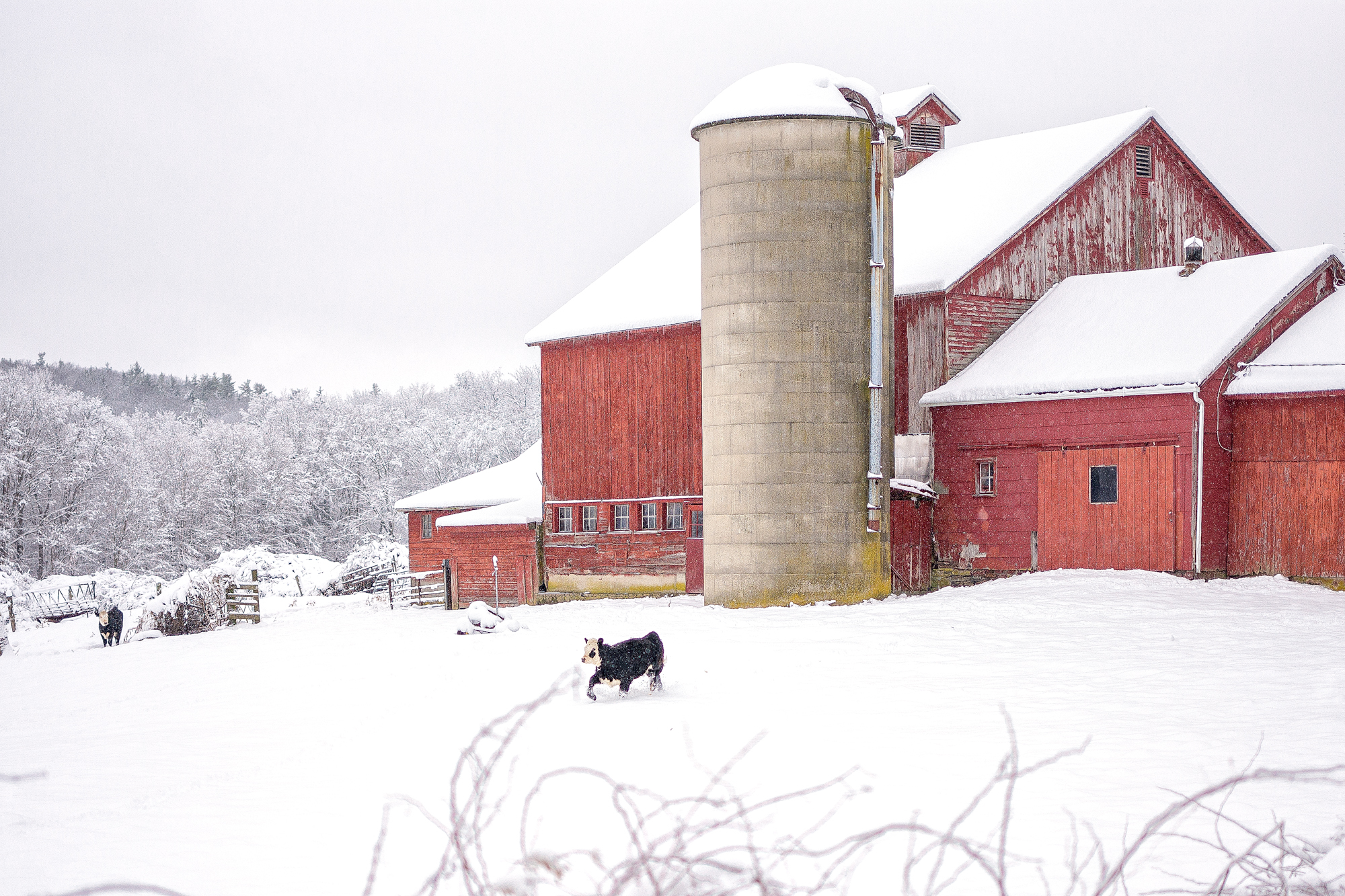
Cornwall, Connecticut, Thanksgiving morning.

Falls Village 3

The Velvet Underground As The Counter History Of Rock’n’Roll

Posted in Uncategorized with tags , , on November 28, 2014 by johnbuckley100

The 45th Anniversary edition of The Velvet Underground was released last week, and along with various mixes of the band’s great third album, there is a two-cd live set from shows taped, in remarkably clear four-track stereo, at San Francisco’s The Matrix over the 26th and 27th of November, 1969.

If those dates ring a bell, you clearly are a fan of rock history, for surely you realize the 27th was the first night of the Rolling Stones’ shows at Madison Square Garden, from which came both the concert scenes captured by the Maysles in Gimme Shelter and likely the greatest live album ever, Get Yer Ya-Yas Out!

Think of it: in New York, The Rolling Stones were playing sold-out shows at Madison Square Garden, on a tour that washed away the detritus of ’60’s psychedelia; The Greatest Rock’n’Roll Band In The World playing Chuck Berry songs alongside “Midnight Rambler” and “Stray Cat Blues.”  And in San Francisco, before maybe 200 people, the Velvets were playing a 37-minute version of “Sister Ray” and an early version of “Sweet Jane.”  And 45 years later, we realize that both bands, playing on the same evening, were laying down the epochal music that would influence every subsequent band that we love, that would, each in their own way, change our life, which of course was saved by rock’n’roll, if not “Rock And Roll.”

We already knew that The Velvet Underground & Nico was released the same day as Sgt. Pepper’s Lonely Hearts Club Band.  The notion that the Velvets were opening with “I’m Waiting For the Man” maybe three or four hours after the Stones, on the East Coast, were opening their set with “Jumpin’ Jack Flash,” reveals the Velvet Underground to be the perfect alternative act to the mainstream of ’60’s music, the perfect counterpoint to the conventional counterculture, their greatness tied up not simply in their music, but symbolically in in their obscurity, their swimming far from the established sea lanes of popular culture.

If you can, you really should buy the expensive “45th Anniversary Super Deluxe Edition,” of The Velvet Underground, even if it means a second job.  Easy for us to say, we know.  We do not feel the slightest compunction about recommending this extravagance, this extravaganza.  If you wish to know where any of our favorite bands come from, it’s here: both Talking Heads and The Modern Lovers captured in “What Goes On,” Galaxie 500 contained in the included version of “Ride Into The Sun,” The Brian Jonestown Massacre and the Jesus and Mary Chain contained within it all.  It’s all worth it, especially when you think of The Velvet Undeground as the counter history of rock’n’roll.

Yearning

Posted in Uncategorized with tags , on November 9, 2014 by johnbuckley100

Post Halloween Passing Fancy

After Working Through “The Basement Tapes Complete”

Posted in Uncategorized with tags , on November 9, 2014 by johnbuckley100

The Basement Tapes Complete is such an intimate portrait of Dylan’s creative life in 1967, it feels like you are spying.  From the early sessions when he and the Band settle in by playing Johnny Cash and Hank Williams covers, to the amazing CDs 3,4, and 5, when most of the original songs we’ve long known as “the Basement Tapes” come one after another, the power of Dylan’s muse gathers momentum.  Spending most of a week immersed in it, as we have just done, is to be transported into a private world gone public, and us — finally — the better for the privilege of witnessing those Big Pink sessions.

We thought the joy from finally having The Basement Tapes Complete would lie in the word “complete” — the songs we’ve never heard, or at least only in the flat mono bootlegs we’ve plunked down money for since 1971.  Instead, honestly, the joy lies in hearing the core 14 songs that have comprised our understanding of what Dylan and the Band created, finally available in expansive, amazing stereo.  Instead of hearing “Yeah! Heavy And A Bottle Of Bread” in the compressed monotone of the official 1975 release, we can hear it in a glorious low-fi, intimate space.  We find that many of the choices Robbie Robertson made in ’75 over which takes to choose were correct.  (The exception, maybe, is that he chose the first take of “Too Much Of Nothing” over the better second take, choosing to overdub the off-putting harmonies by Manuel and Danko rather than deal with the initial flub by Dylan.  But yeah, the 2nd take is much better, as has often been claimed by Basement Tapes aficionados.)

You have to work your way through all 138 songs to really get a sense for how much joy was at work in that basement/garage near Woodstock where Dylan and the Band decamped.  How many times does Dylan crack up midway through a song, only to pull it together to quit the stoner laughter and finish?

The sequencing does not appear to be precisely sequential, but good Lord, disks 3-5 indicate that at a certain point Dylan settled into a rhythm of unparalleled creativity, with all the songs that were on the ’75 release as well as such missing evidence of genius as “I’m Not There,” “I Shall Be Released,” “Quinn The Eskimo.”

And then there are gems that we will be listening to for years: “Silent Weekend,” “Wild Wolf,” “Dress It Up, Better Have It All.”  The good news is that, for most, buying The Basement Tapes Raw — the two-disk compilation — will be sufficient.  For Dylan completists, finally having his version of Johnny Cash’s “Big River” in stereo, not to mention originals like “Get Your Rocks Off” or “French Girl” is like having Christmas presents delivered early.

The collective and individual brilliance of the Band’s playing is only matched by Dylan’s voice – allowed to shine clearly without the “raunching and rheuming” that Tom Wolfe described in The Electric Kool-Aid Acid Test.  And importantly, without the accompaniment of harmonica.  This was Dylan working in intimate scale with one of the greatest collections of musicians on the planet, capturing originals he typed upstairs and put to music moments later in the basement, not to mention all the covers of folk songs he was teaching the R&B maestros from Ontario.

James Joyce once famously said that it took him 17 years to write Finnegans Wake and it should take the reader 17 years to read it.  It has taken 47 years for us to get these recordings in full, at a sonic level that lets us know precisely what was being accomplished as these musicians played with joy, with no sense anyone ever would be listening to them at home and in full.  This should keep us going another 47 years.

New Stephen Bartels Gallery Website Is Gorgeous

Posted in Uncategorized with tags , , on November 8, 2014 by johnbuckley100

B+W Low Rez 1

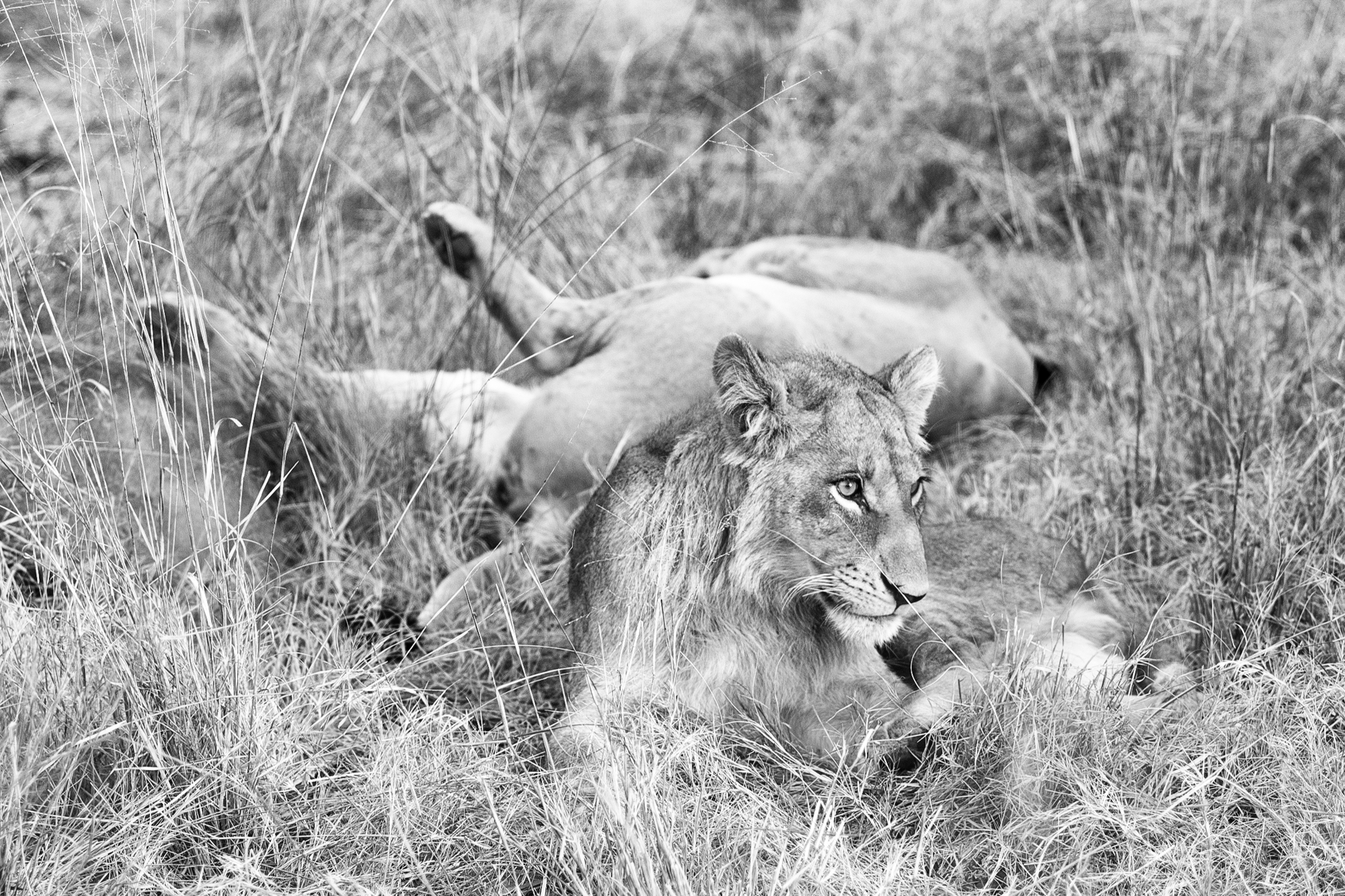
The Stephen Bartels Gallery online website just relaunched, and a dozen of our black and white images of animals in their natural habitat in Botswana are displayed in higher resolution — and at a more attainable price — than was previously available.

Congratulations to Stephen on having navigated an arduous process of moving to a new website platform for the many excellent photographers he represents.  And for those looking for holiday gifts of fine art, no need to shop anywhere else.

Today’s Question: What Are The Five Essential Fleshtones Albums?

Posted in Uncategorized with tags , , on November 2, 2014 by johnbuckley100

Fleshtones

Hard though it may be to believe, at last night’s bravura performance by the Fleshtones at D.C.’s Gypsy Sally’s, some friends came who had never seen the band before.  You shake your head in disbelief, we know.  Never seen the only CBGB era band that has toured continuously for close to 40 years… that still puts on the most entertaining performance in all of rock’n’roll… that has almost single-handedly carried the garage rock movement since Jimmy Carter was president.

Fleshtones-10

Yes, they’d never seen the ‘Tones, but loved them, and asked, “What are the five best Fleshtones records?”

Fleshtones-11

So we emailed them this:

“1. Take A Good Look (2008), is probably the closest the ‘Tones have come to a real hit record in the past two decades. A very good collection of modern Fleshtones songs, it was heralded by rock critters as a way for the uninitiated to catch up, which makes sense to me.  Listen to this and you will immediately want to hear more.

2. Roman Gods: their first official album, an attempt by IRS Records to make them radio friendly off the bat, and though it provides something of a false picture, it will give you a sense of why they were so powerfully different from their peers circa 1977-’82. The way you likely can find it is as a 1985 combo with their first IRS EP, which takes great early songs, but does not render them well on vinyl. Which I wrote, disappointed, in NY Rocker in 1980.

3. Beautiful Light,1994, produced by Peter Buck of REM. Just a great album. Maybe a highpoint in terms of reflecting the Fleshtones as a serious band, beyond the entertainment value.  Though Lord knows there is plenty of that.  But people sometimes forget the Fleshtones are a serious and deep band, and Beautiful Light, to me, makes that case.  Also, listen to this record and then go listen to REM’s Monster, which came out a year later.  Yeah, that’s why REM’s sound was so different and better: Buck grafted Keith Streng’s guitar sound onto his band!

4. The Fleshtones Vs. Reality —  This was the first record to truly capture the early Fleshtones sound on vinyl. “Whatever Makes You Happy” may be my favorite Fleshtones song of all time. Really great.

5. The Fleshtones Live At Double Door: 2004, actually captures a version of what you saw last night! Alas, you really need to see them to grok how much fun they are, but this does provide an audio record.”

Fleshtones-12

So we just spent the afternoon with the band and read them our list.  They found it respectable, though when we referenced the live album, they’d never heard of it! Though we bought it on iTunes, it’s a bootleg!  So don’t buy that.

Mulling it over, their consensus fifth choice would be More Than Skin Deep, a really great record that came out in 1998.

So thus would be our list of the records, though of course you should also read SWEAT, the excellent history of “America’s Garage Band,”and don’t forget to watch Pardon Us For Living But The Graveyard Is Full, the excellent documentary about the most fun, hardest working combo in showbiz.

Best Halloween Get Up Of The Week

Posted in Uncategorized with tags , , on October 31, 2014 by johnbuckley100

High Heel Race Supplement Big Hair

Anticipating Dylan’s “The Basement Tapes Complete”: An Essay

Posted in Music with tags , , , , , , on October 31, 2014 by johnbuckley100

The New York Times put on its front page this week the news that Orson Welles’ final film will at long last make it to the silver screen.  We marveled at the news, but also at the news judgment, the front-page treatment, and wondered what they’ll do about The Basement Tapes finally being released in their entirety November 4th, 47 years after they were recorded.

You may think we are overdoing things here, preparing for the six-CD release of the 138 songs as if it were a newly found segment of the Dead Sea Scrolls.  But the story of Dylan’s crashing his motorcycle in June ’66 and then dropping from sight for the next eighteen months, all the while recording, with a cohort of confederates in the basement of a Woodstock ranch house, a collection of original songs and American obscurities, is perhaps the enduring myth of rock’n’roll.

Already by 1973, Don DeLillo began what may be the most compelling novel about a rock’n’roll star, Great Jones Street, with this opener:

“Fame requires every kind of excess. I mean true fame, a devouring neon, not the somber renown of waning statesmen or chinless kings.  I mean long journeys across gray space.  I mean danger, the edge of every void, the circumstance of one man imparting an erotic terror to the dreams of the republic.”

The character narrating the story was named Bucky Wunderlick, a rock star hiding out on Great Jones Street (not nearly such a desired or high-priced address in the early ‘70s.)  Wunderlick had recently dropped from sight and secretly recorded a new album he was hiding from his record company, and it was called, simply, Mountain Tapes.  Sound familiar?

“Fame, this special kind, feeds itself on outrage, on what the counselors of lesser men would consider bad publicity – hysteria in limousines, knife fights in the audience, bizarre litigation, treachery, pandemonium and drugs.  Perhaps the only natural law attaching to true fame is that the famous man is compelled, eventually, to commit suicide.”

When Dylan came up over the rise — the story is told wonderfully by Clinton Heylin in the new Uncut —  and was blinded by the morning sunlight that caused him to crash the bike, he was actually blessed by good fortune.  If his fame was compelling him, as Wunderlick said, toward suicide, then Dylan’s compressed vertebrae was a lucky break.

He crashed on July 29th, 1966.  Less than a month later, the centrifugal forces of ‘60s fame would compel the Beatles to stop touring.  They would depart one ring of the circus that surrounded them, never to play a real concert again.  The Stones, too, were on the road that summer, touring an America that was changing by the hour, but they were rapidly coming to the end of Chapter One, the madness of their rise soon to sputter from the heavy punctuation of drug busts and romantic dissolution, before they returned, in ’68, with “Jumpin’ Jack Flash” kicking off their four-year Golden Age.

Dylan’s accident was the most dramatic, and as it turns out, most graceful way to get off the stage, to leave in the nick of time.  By nearly killing himself on that motorcycle (it wasn’t that bad a crash, but it was a close call), he had an excuse to disappear, and in so doing, likely saved himself from becoming an Art Martyr, the first of this generation of rockers to die.

The Basement Tapes is the output of that moment hidden away from fame.  And even when so many of the songs have appeared on bootlegs over the years, even with lickings of the cream of the collection, released by Columbia Records as a botched double-record, it is one of rock’s last mysteries.  There is no hidden trove of Beatles gems.  Truly.  And yes, we hold out hope we will someday get the live album from the Stones’ ’72 tour: the Holy Grail for those who were there.  But it’s The Basement Tapes, in their entirety, that promises to further complete our knowledge of rock’n’roll, and also, importantly, American Arts and Letters.

Dylan’s role as a quintessential American artist is one of the key elements in why, even had the Beatles and Stones secretly gone to work in some cottage in the Cotswolds, they couldn’t have produced something with the particular meaning of The Basement Tapes. What they were capable of would not have matched what Dylan was able to do in that basement with the Band.

The Beatles were fundamentally dependent on the Studio As Instrument, on a fifth member of the band, George Martin, who could leverage their capabilities and serve as midwife to their muse.  At the moment Dylan was recording The Basement Tapes, the Beatles were releasing their most influential studio album, Sgt. Peppers.  It was wholly new and original, a great work of art, and almost the polar opposite of what Dylan was doing up in Woodstock.

The Stones could play, Lord knows they proved that, but they were never in a position to tap into a native art form the way that Dylan was.  We know what the Stones would do when left to their own devices, and it was Exile On Main Street – supremely brilliant, to be sure, and yes, recorded in the factory above which at least Keith slept, so that it had the semblance of an ongoing, lazy session on the artists’ own terms.

But that studio was a basement in a rented estate in Villefrance-sur-Mer, in the elegant south of France, and in addition to Keith’s kilos of smack, they brought along a state-of-the-art recording truck and their producer, Jimmy Miller.  They just moved the studio to more comfortable surroundings.  And while Exile is an homage to the American blues and rock’n’roll they absorbed every bit as thoroughly as a cotton ball sucking up liquefied heroin, the Stones were always separate from the musical idioms they mastered by the cultural distance of being born on the far side of the Atlantic.  They could play the blues beautifully, but they couldn’t embody them, if only because they were white guys from London.

When by the early summer of 1967, Dylan remained upstate in Woodstock to record a masterpiece of Americana in the basement rented by his Canadian sidemen, the artificial, invented character of “Bob Dylan” was returning to authentic roots. The Bob Dylan whose persona conquered Greenwich Village and the folk movement and eventually pop culture — as completely as Bucky Wunderlick is said to have done – he was musically returning to the heart of the heart of the country and a song book he knew from memory.

When messing around on “Big River,” the Johnny Cash song, Dylan hollers out this verse so delightfully:

I met her accidentally in St. Paul (Minnesota).

And it tore me up every time I heard her drawel, Southern drawl.

Then I heard my dream was back Downstream cavortin’ in Davenport

And I followed you, Big River, when you called.

 Robert Zimmerman knew from geographic proximity what it was like to cavort in Davenport.  If the Stones had sung that – if Mick had sung that – it would have been fun, but it would have been an act.  When Dylan sang that, the artist who invented everything about himself including his name was as authentic as he had ever been.  Our theory is The Basement Tapes was Dylan returning to himself, after his art had created fame that might have killed him. It is the most authentic, true music he made in the 1960s.  And much of it has never been heard, until now.

Robbie Robertson, learning from Dylan, would come to channel in his songwriting that same timeless evocation of American folk, country, and blues storytelling.  The marriage of Dylan and the Band was a perfect match of musicians, singer, songwriter, and recording conditions: unhurried, unpressured, unwitnessed joy in musical storytelling taking place in a basement, hidden from the world.

Dylan stepped off the Dexedrine-fueled hamster wheel in a manner the Beatles couldn’t.  For an ambitious young man who had had producers assigned to him and musicians he barely knew show up for sessions his record company arranged in the high-pressured theater of a New York studio where the explicit desire was for hits… well, sitting around a basement on a summer’s afternoon, with no supervision, no deadline, playing music written with seemingly a remote expectation it would be released into that howling wind of fame from which he’d just escaped, with the musicians themselves in charge of “the studio”… it was an assertion of artistic control to play timeless music outside of time itself.

Dylan snuck away to do what he wanted to do, and with no pressure on him to do something great, he actually created some of the greatest work… the greatest writing, the greatest music… in American art.

The jacket copy to Invisible Republic, Greil Marcus’ fascinating, if over the top, book on The Basement Tapes, calls it “secret music, never intended for release.”  But we don’t quite believe that.

We have come to accept, and this is confirmed in Uncut’s magisterial recounting of the many things in play when Dylan made The Basement Tapes, that at least some of the songs were written and recorded with an eye toward publishing them – either with him recording them again more formally at a later date, or as song demos created to fulfill the implicit demands of Albert Grossman, his estranged manager, and the business interests dependent on new Dylan product.  The guy was as big as the Beatles, and when he went flying off that motorcycle, so went the economic fortune of record label, publishing house, and the apparatus propping up, and living off, Dylan’s fame.  So there must have been at least an unconscious desire to create music that was, in some way, usable.

You don’t write songs as gnarled and ambitious as “Too Much Of Nothing” intending to let them never be heard outside of the basement of a pink-colored house in the hills. But then you don’t write a song as funny as “Clothes Line Saga” thinking it would get the radio play of “Like A Rolling Stone.”

The next day everybody got up
Seein’ if the clothes were dry
The dogs were barking, a neighbor passed
Mama, of course, she said, “Hi!”
“Have you heard the news?” he said, with a grin
“The Vice-President’s gone mad!”
“Where?” “Downtown.” “When?” “Last night”
“Hmm, say, that’s too bad!”
“Well, there’s nothin’ we can do about it,” said the neighbor
“It’s just somethin’ we’re gonna have to forget”
“Yes, I guess so,” said Ma
Then she asked me if the clothes was still wet

 The summer of 1967 was, let us not forget, The Summer of Love.  But even though he was a folk hero to the bands in San Francisco, woodshedding up in Woodstock he was a world away.  Sgt. Peppers Lonely Hearts Club Band would be released that summer, and so would The Velvet Underground with Nico.  And there was Dylan with the Band, channeling the voices, as Marcus points out, of obscure folk musicians from the turn of the century.

A missing piece of the American story will be released on Tuesday, 138 songs – originals and covers, completed masterpieces as well as fragments. Thinking of history’s widest angled lens, of course these songs would not be released in their entirety until now; the story of The Basement Tapes, their long path to our being able to examine them in quasi high fidelity, depends upon the circuitous route they took to getting here.

This will be viewed as heresy by many, but we actually think The Basement Tapes, as we have grown to know them over the past 40+ years via bootlegs and the roughly ten percent that has been released officially, comprises one of three distinctly great segments of Dylan’s entire career.  The first segment of greatness was the trio of records released in 1965 and 1966 – Bringing It All Back Home, Highway 61 Revisited, and Blonde On Blonde.  The next segment is The Basement Tapes.  It would be 30 years before Dylan would again ascend these heights, when with Time Out Of Mind, Love And Theft, and Modern Times, he redeemed all that had been missing in the uneven albums since.

If I had to choose only one of the three to take to a desert island, it would be The Basement Tapes.  And there are at least 30 songs among them that, starting Tuesday, I will hear for the first time.

And you wonder why I am so excited.

The High Heel Race In The Nation’s Capital

Posted in Uncategorized with tags , , , , on October 29, 2014 by johnbuckley100

High Heel Race

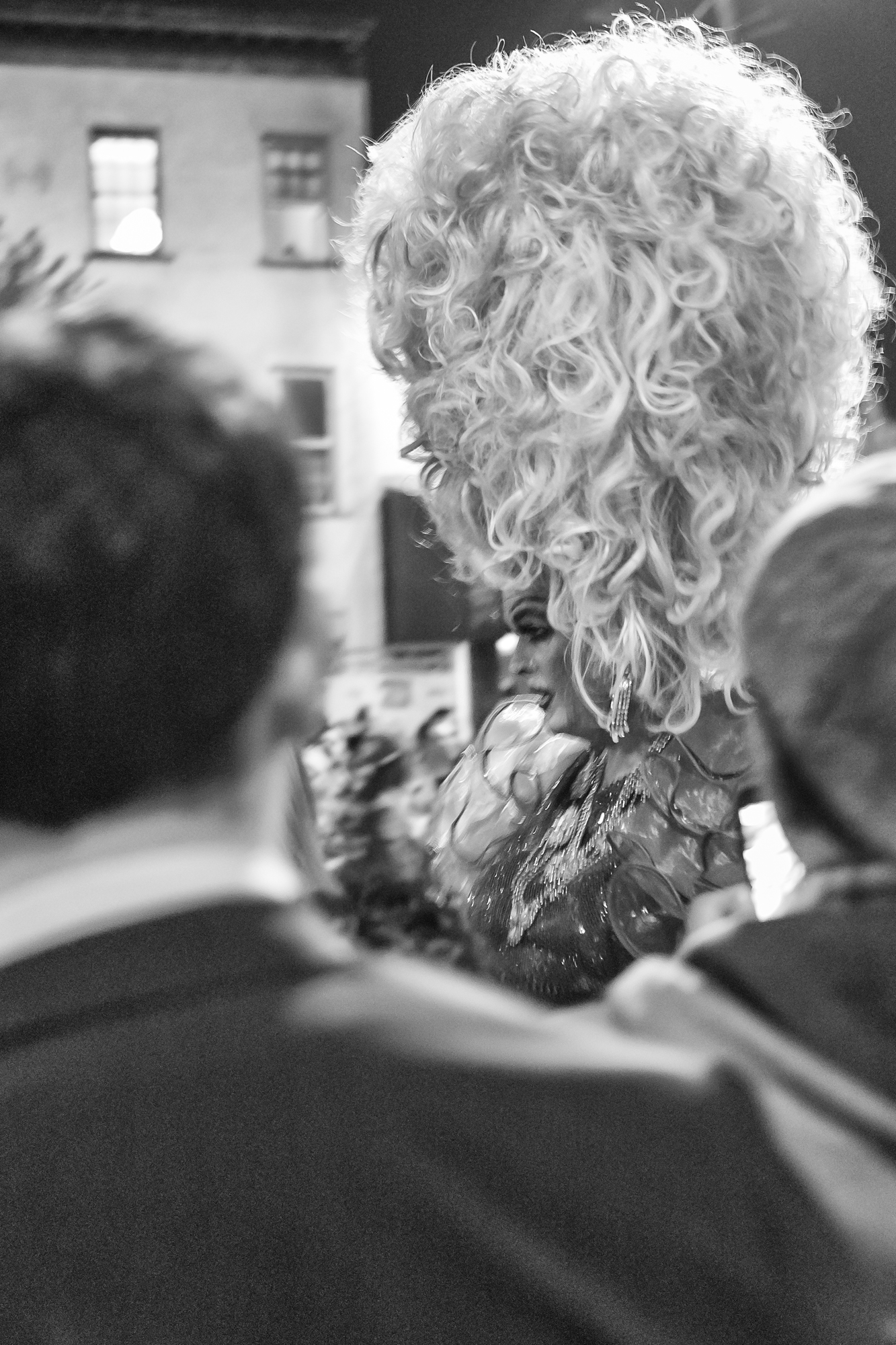
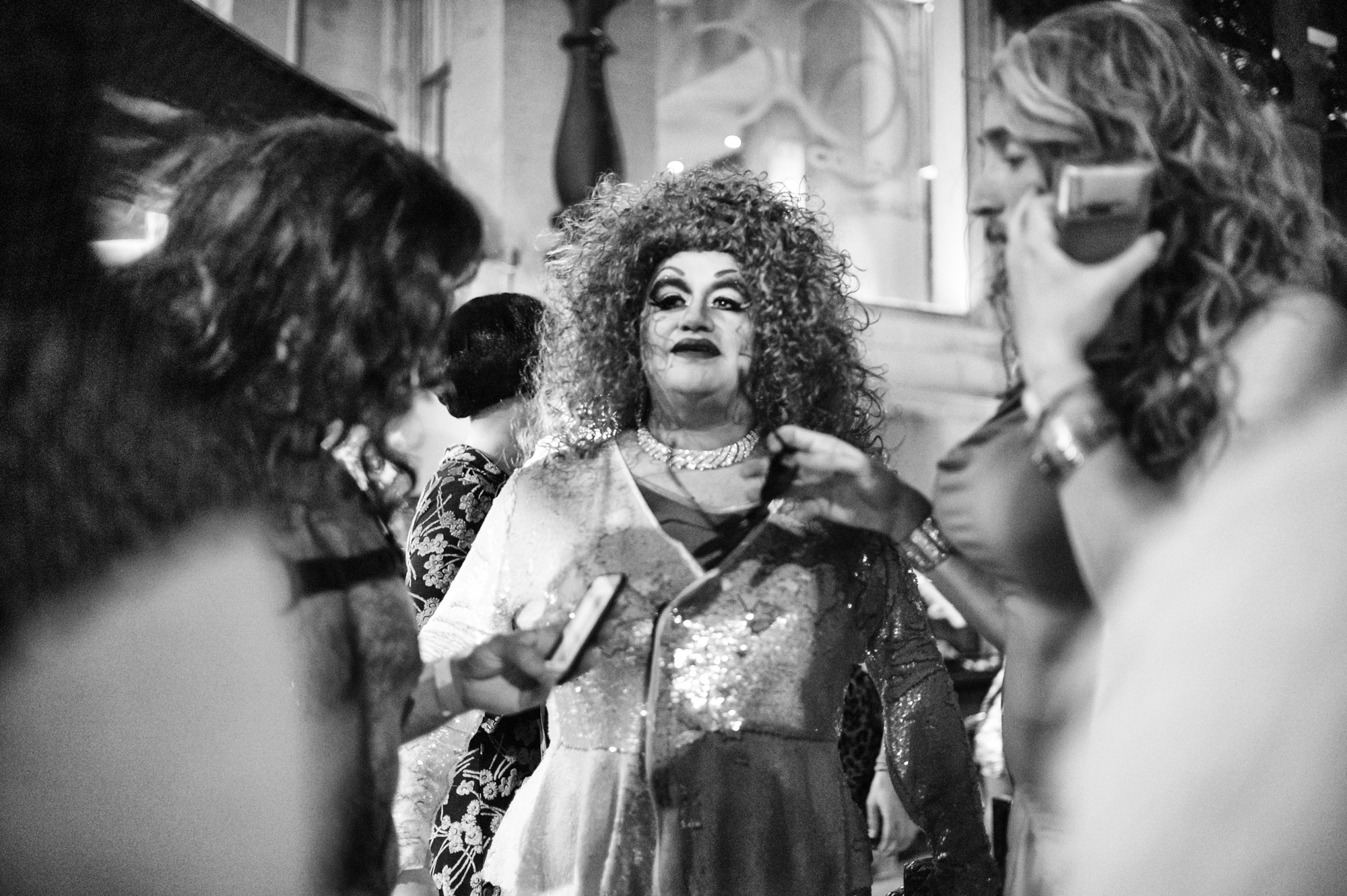
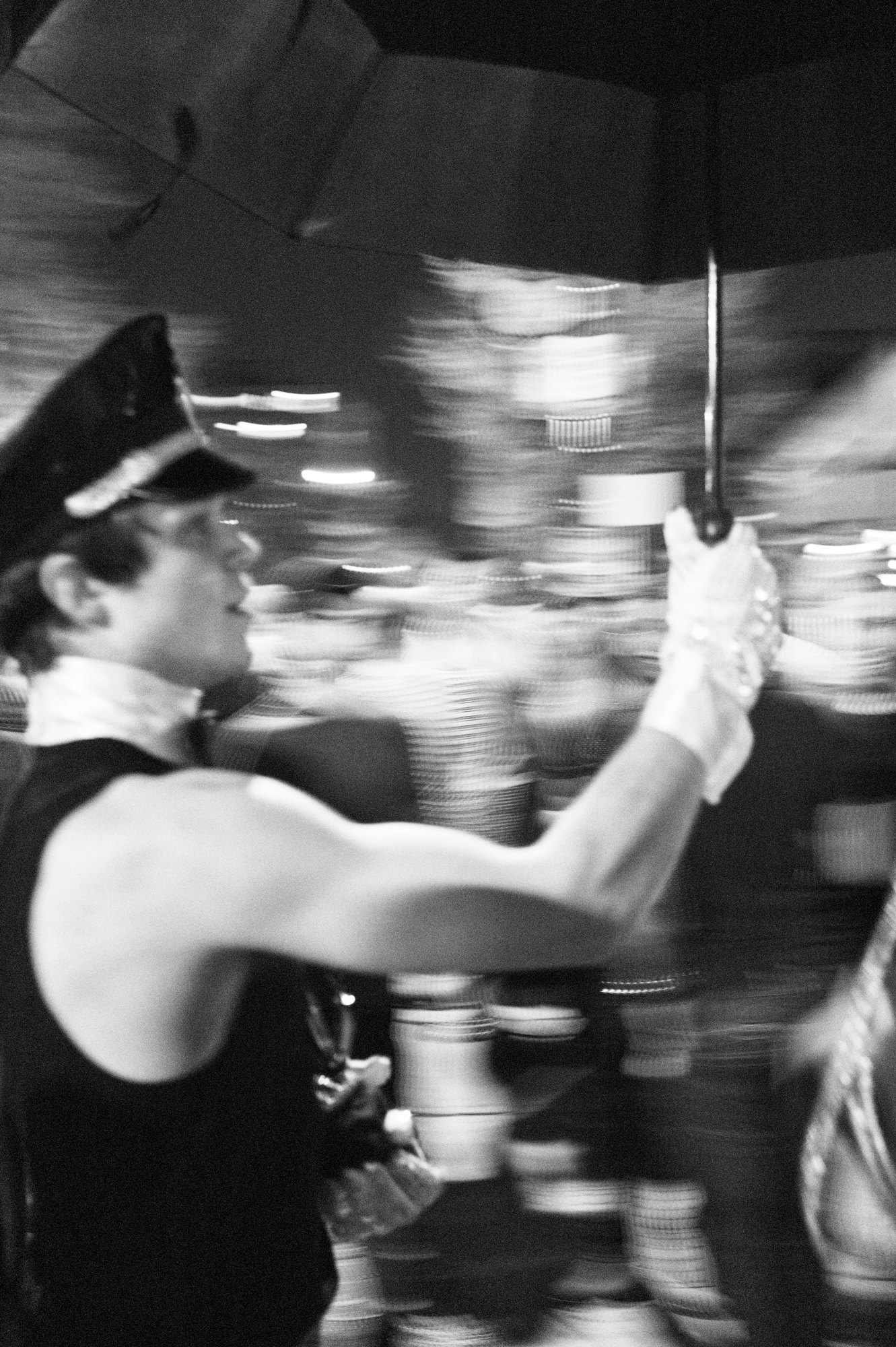
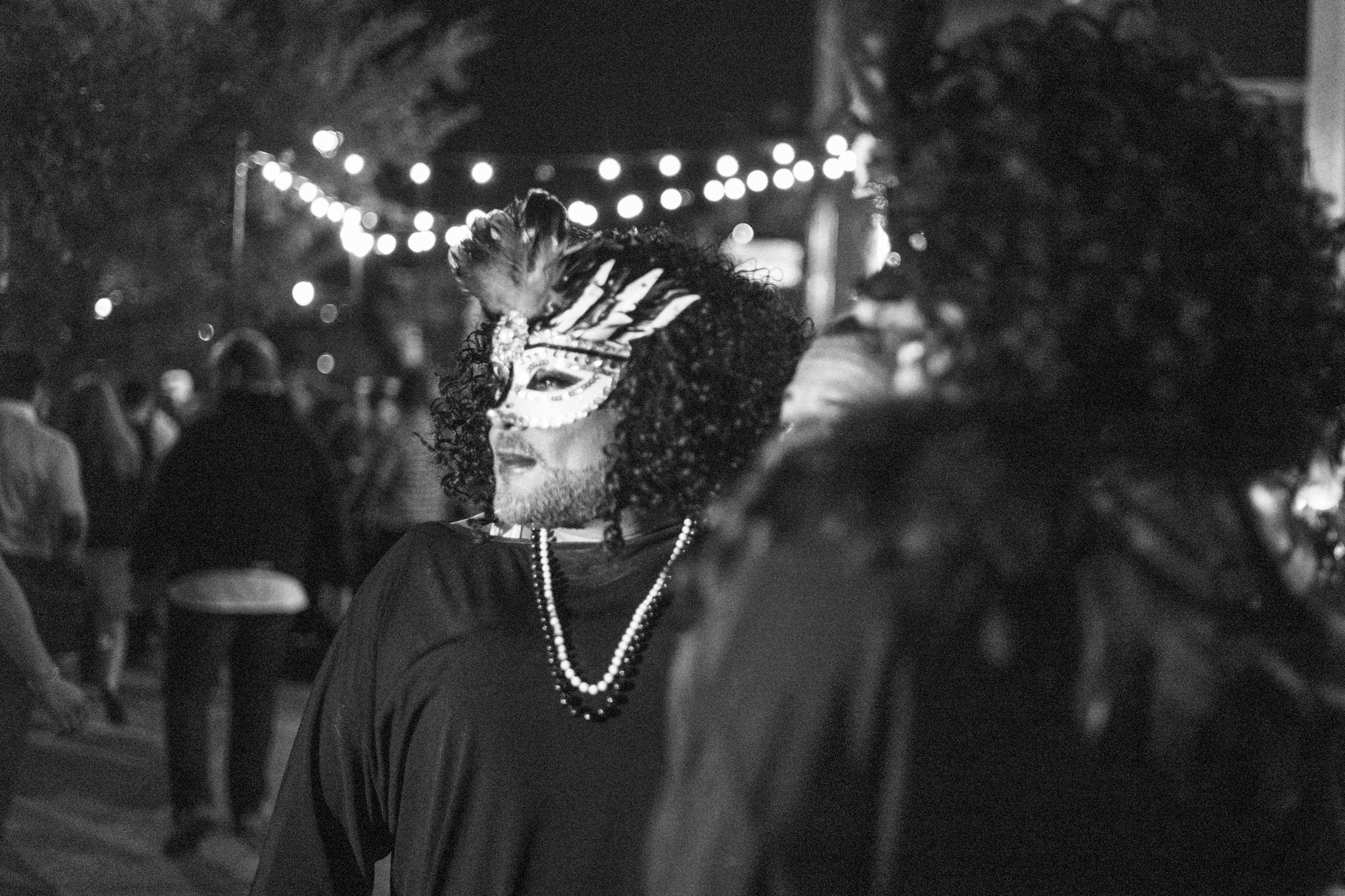
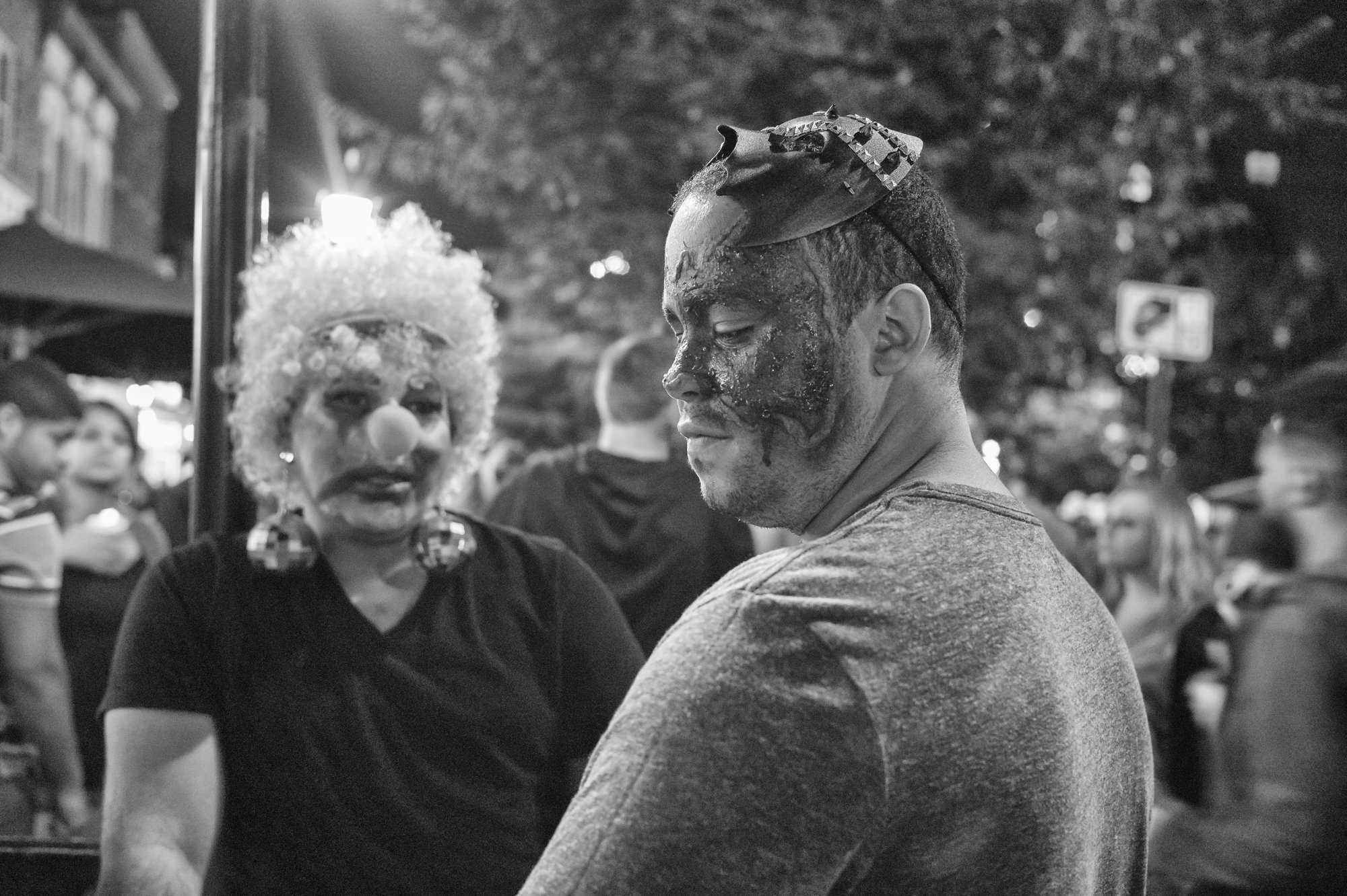
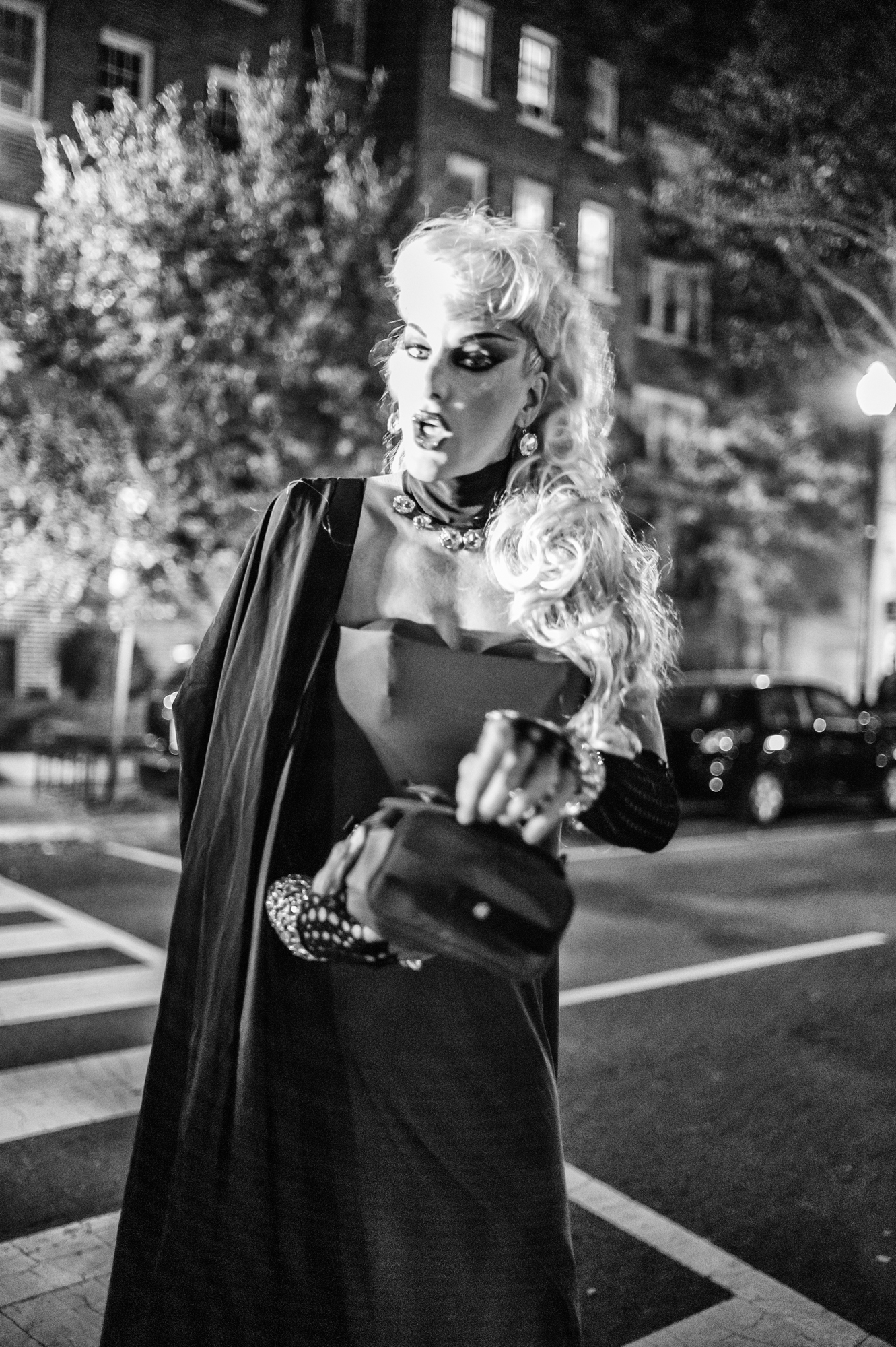
Since the first running of The High Heel Race in 1986, it has become for Washington something like what the Mardi Gras is for New Orleans — a joyous evening of revelry.  Drag queens as serious about this year’s get up as homeowners in Dallas’s Highland Park are about their Christmas lights, mingle — wobble may be more like it, as they’re not usually wearing heels — with frat boys who get into the spirit for a once-a-year, possibly once-a-lifetime, walk on the wild side.

High Heel Race-14

Between the intersection of 17th and New Hampshire, almost all the way down to the Australian Embassy on Massachusetts Avenue, queens reign supreme as diners at the bars and restaurants spill out onto the well-organized sidewalks.

High Heel Race Supplement

Washington is not believed to be a place where people let their hair down.  It famously was declared a city “with no Left Bank.” And yet the real Washington — D.C., as it is called by its denizens — is of course a city of tremendous creativity, in no small part driven by a large and friendly gay community.  The High Heel Race, though on a weeknight, was as notable for the families that attended as for the swell of straight couples who saw it as an extension of the Halloween partying season.  Again, DC’s Mardi Gras.

High Heel Race-4

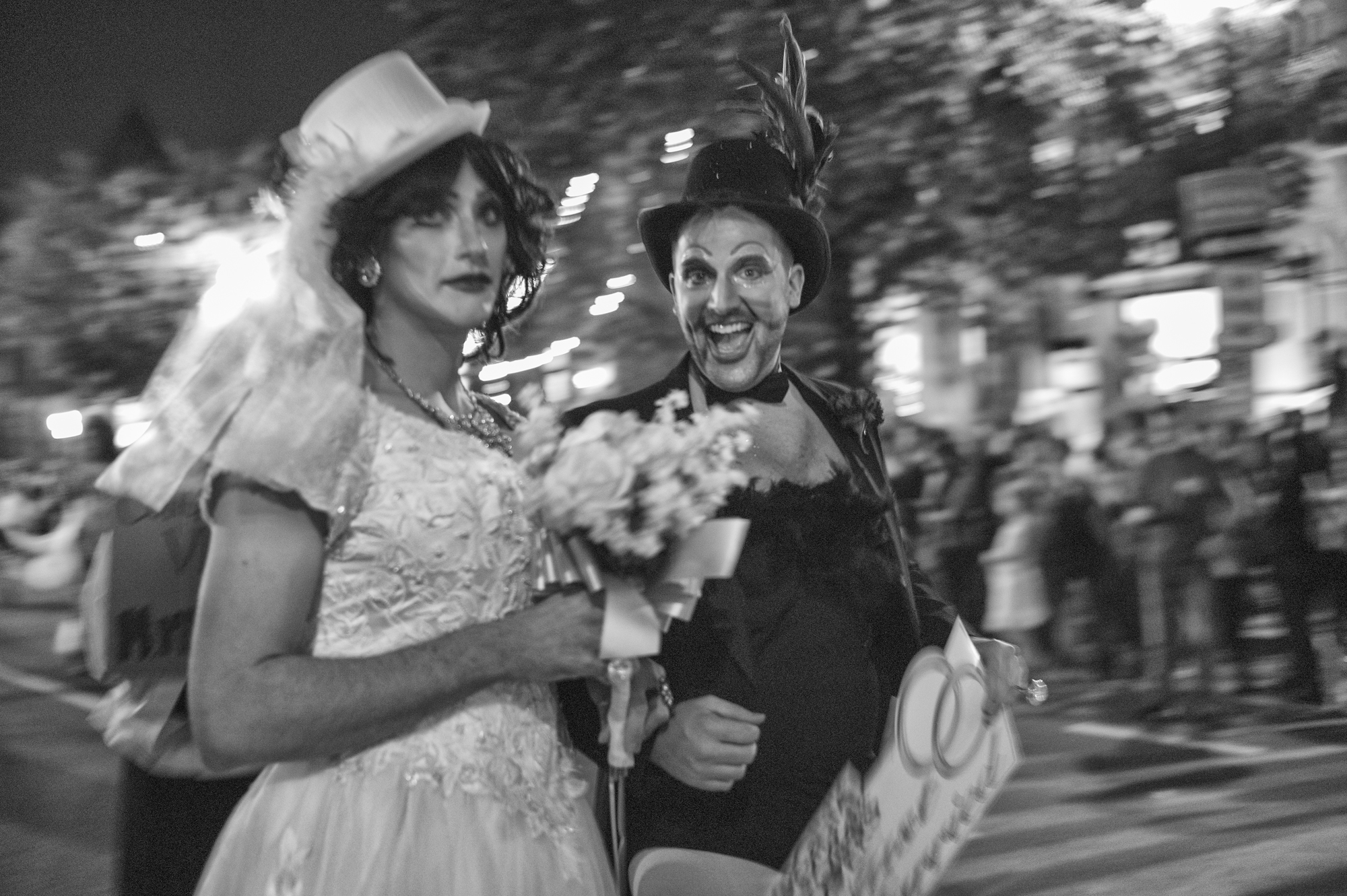
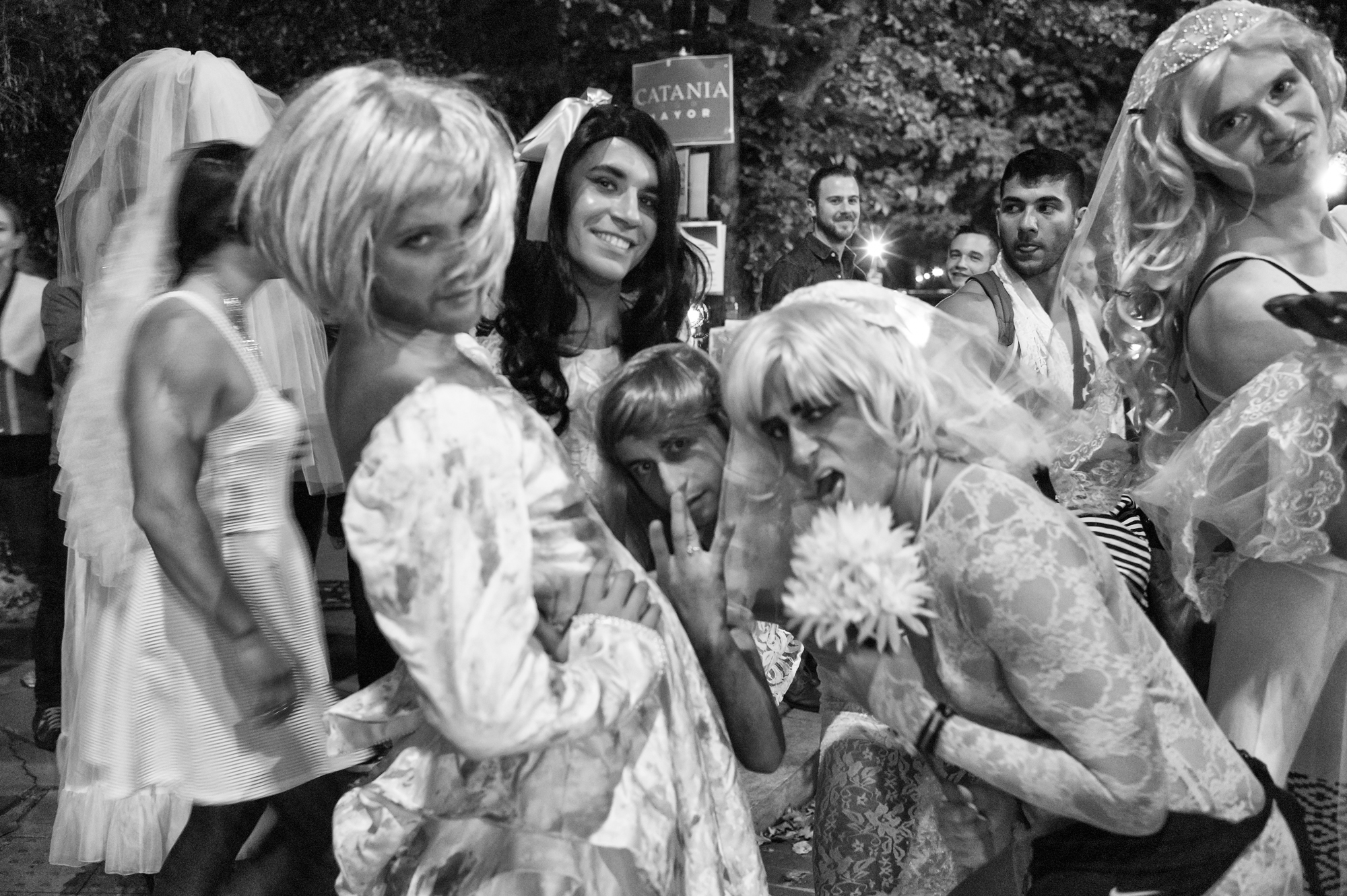
The marriage theme was ever-present, whether by those who might actually have walked down the aisle…

High Heel Race-16

Or those simply auditioning for a Crocodiles’ video.

High Heel Race-3

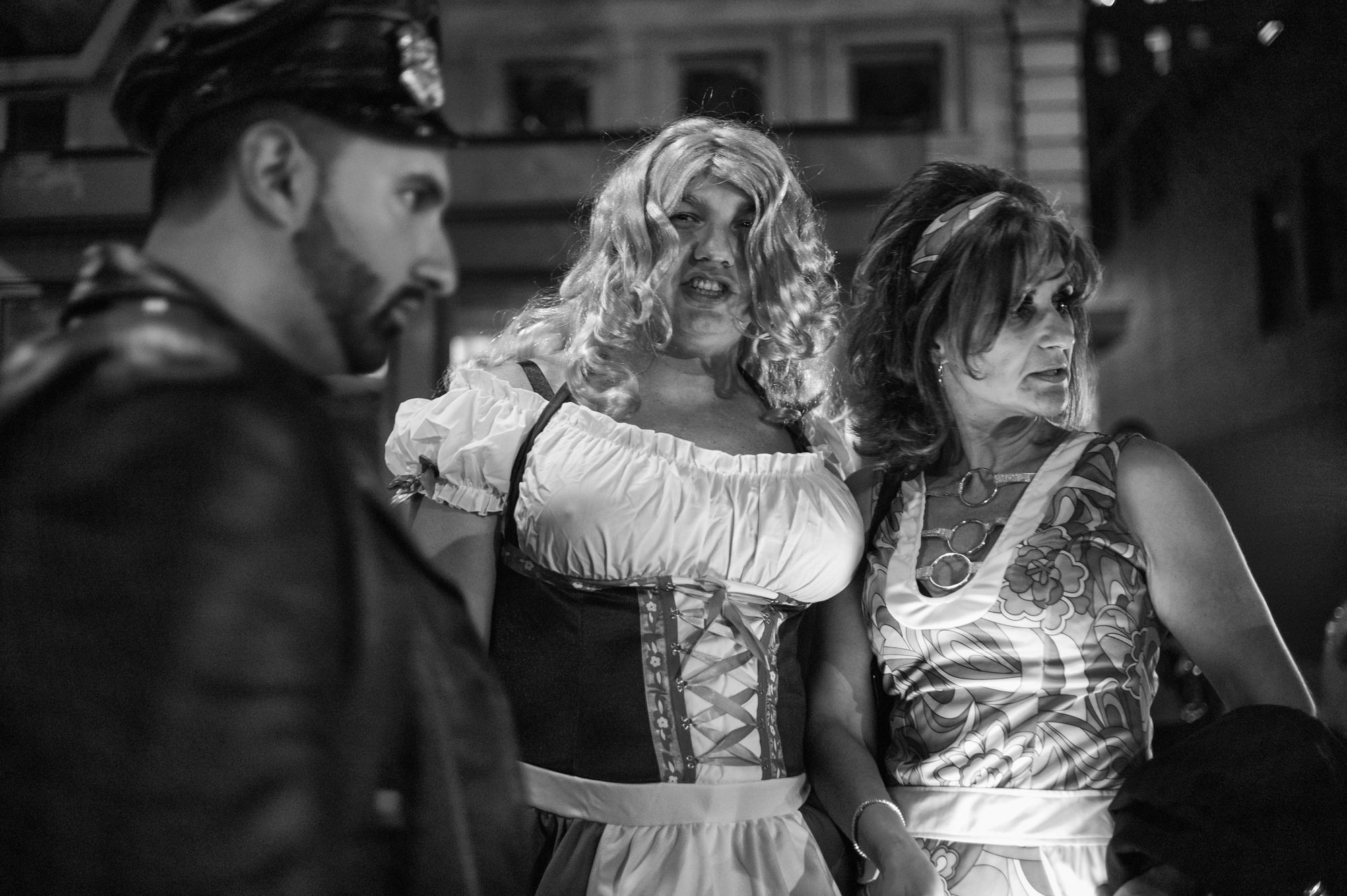
The cops got into the spirit of things, even when propositioned by Brunhilda and her girlfriend.

High Heel Race-5

And as the evening swirled…

High Heel Race-8

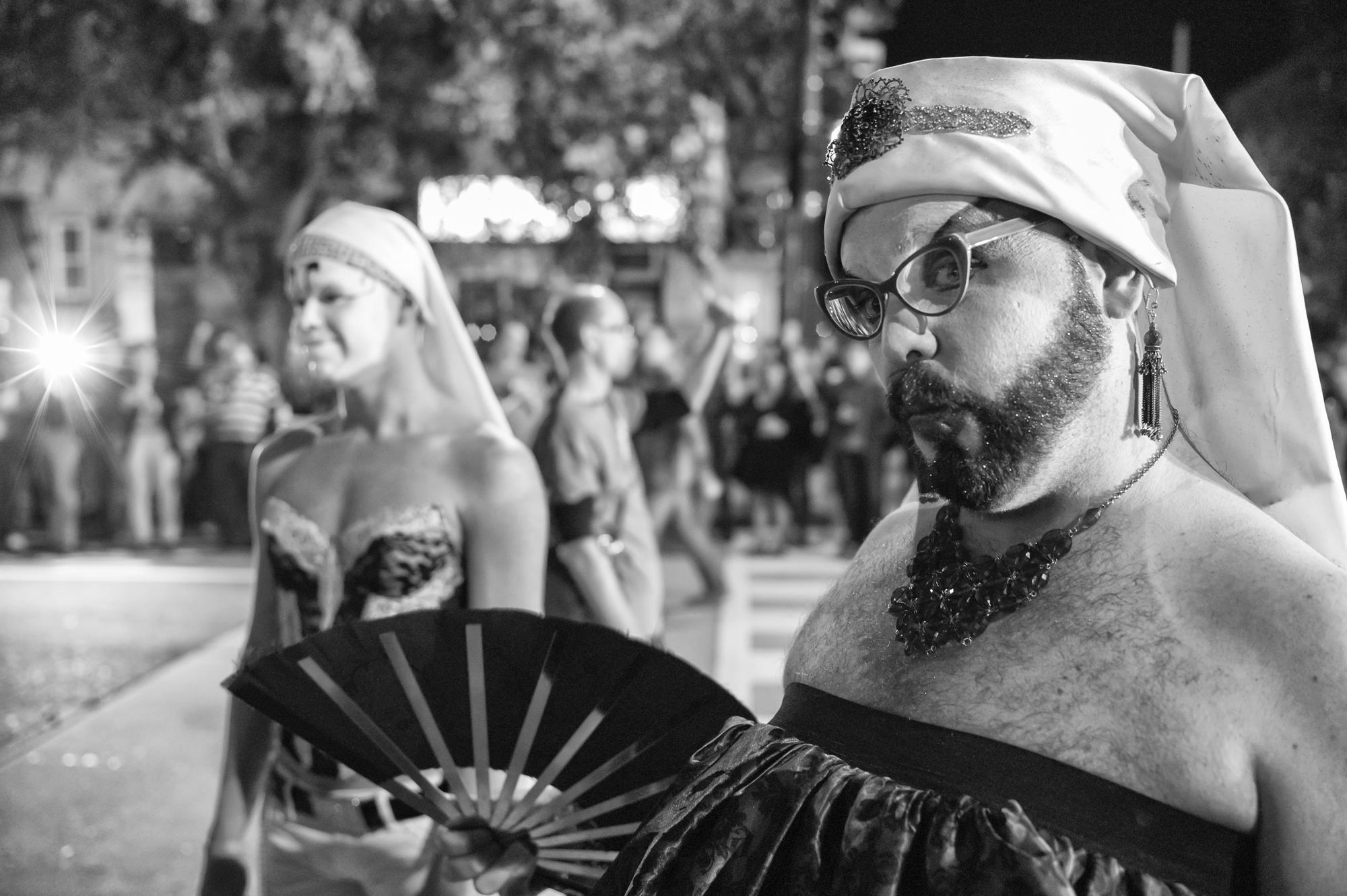
A Venice Carnivale of sorts materialized…

High Heel Race-12

And even those who weren’t quite ready for Halloween donned their gay apparel.  But the delight of those stars who welcomed the arrival of paparazzi made this annual running of the high-heeled women a sight to behold.

High Heel Race-15

All images Leica Monochrom, 35mm Summilux Asph FLE.