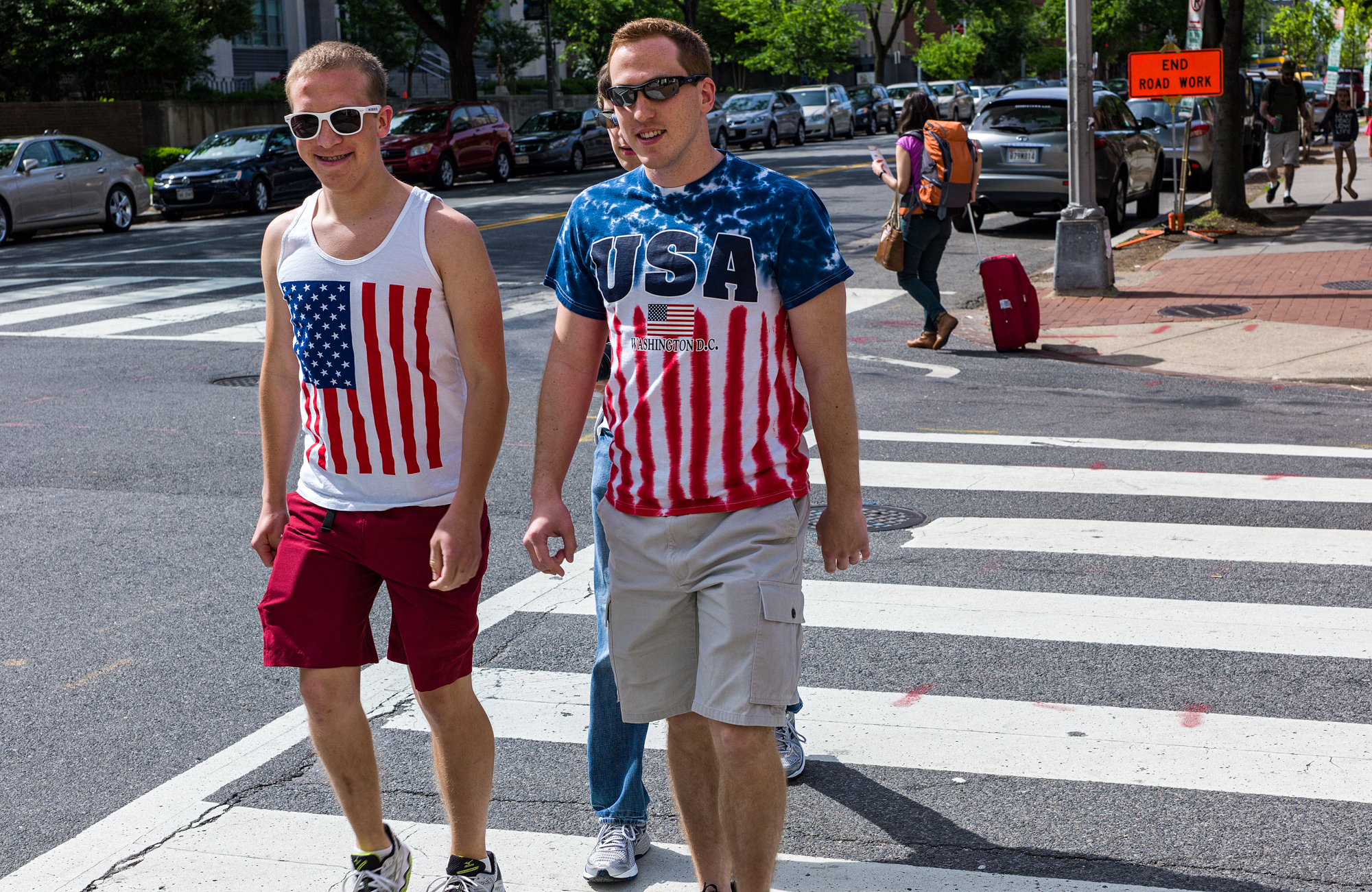
A reveler at last week’s Glover Park Day. Okay, maybe this guy was the reveler at last week’s Glover Park Day. (To be fair, the band was playing a Doobie Bros. song…) Leica M, 35mm Summilux FLE.

A reveler at last week’s Glover Park Day. Okay, maybe this guy was the reveler at last week’s Glover Park Day. (To be fair, the band was playing a Doobie Bros. song…) Leica M, 35mm Summilux FLE.
Tulip Frenzy limits itself to commentary on rockn’n’roll and, occasionally, photography, though these clearly aren’t our only interests. We refrain from bleating about politics, and only at critical junctures do references to sports slip into our posts, and none of this is accidental. Given that we write novels, and have reviewed books for the Wall Street Journal and other publications, one might think we’d write about the books we devour, but we don’t, and the reason is simple: it is not our intention to use Tulip Frenzy as a multi-topic venue; we like the limitations we long ago placed upon it. Today, though, we’re going to make an exception, because events have forced our hand. Anthony Marra’s A Constellation of Vital Phenomena is the strongest first novel — and one of the best novels, period — that we have read in many years, and we are compelled to urge our readers to buy it. In fact, you know how wild-eyed and foam-mouthed we get when trying to get you — to get everyone — to buy that new album by the Thee Oh Sees or Ty Segall? Well, yeah, that’s what we’re up to here.
A Constellation of Vital Phenomena takes on a horrific topic — the disintegration of a small town amidst the Russian brutality in both post-Soviet wars against Chechen independence — and delivers a deeply funny, deeply moving, perfectly wrought puzzle box of a story. The action nominally takes place over five days after Akhmed delivers his neighbor’s daughter to a hospital in a nearby city, after the Russian authorities have carted off her father, who’d already had all ten fingers amputated in a previous episode of being “disappeared.” Akhmed is an incompetent small town doctor, but he uses the delivery of his young charge to the haughty doctor Sonja — who practically alone has been running the hospital for the better part of two wars spanning a decade — to weasel his way into a position as her assistant. The story of these five days is set against a far longer time sequence in which Sonja left Chechnya to finish medical school in the U.K. only to return in search of her sister Natasha. By the end of the five days, all of the stories have been resolved in a manner that is mathematically, efficiently, breathtakingly perfect, and also stunningly beautiful, though naturally sad.
A few years ago, our friend Tony Marra, with whom we worked for a decade, asked us if we might spend a moment or two talking to his son who was just then finishing college and planning on applying to post-graduate writing programs. Tony was, as we recall, hoping we could offer practical advice to a young writer, and we assume he thought it might be useful because he knew we published novels, but had also supported our family, not by working in Starbucks or a book store, but in a sort of Wallace Stevens-like dual existence that meant donning a tie to work in, first, politics, and then in corporate jobs, while never giving up on our calling, which is to write fiction. We said yes, of course, but the cup of coffee never came about. And now Anthony, Tony’s son, hasn’t simply written the best first novel since, I don’t know, V, The Rachel Papers, or Americana, he’s also graduated from the University of Iowa Writers Workshop, won a Whiting Prize, and is a Wallace Stegner Fellow at Stanford. (Previous Stegner fellows? Oh, such little-known writers as Ken Kesey, Thomas McGuane, and Robert Stone.) It is not an exaggeration to proclaim young Marra the Bryce Harper of novelists, and unless he gets repetitive stress disorder, his future may even be brighter. (See, this is how we usually work sports into Tulip Frenzy posts — through pop cultural allusion.) The awards he has ahead of him may someday include the Nobel Prize for Literature. Yeah, one novel in, we can say that; the kid’s that good.
We do not often command our vast readership to put down what they are doing and immediately order up a novel. (To be fair, we didn’t even do this upon the recent publication of our new novel, The Geography Lesson.) We don’t expect to be writing book reviews, or about novels, in this space in the future. (We like Tulip Frenzy just as it is: an exceptionally juvenile outpost of punk rock fanaticism. Plus an outlet for the occasional snapshot.) But we are pleased to break our own rules to do so here, and will conclude with this thought: if you do not immediately go and buy A Constellation of Vital Phenomena by Anthony Marra, you may still be a dear reader of this site, but you are a very foolish one.
Leica M, 35mm Summilux.

With apologies to Peter Handke’s The Goalie’s Anxiety At The Penalty Kick. Can’t quite see the dunkee’s face, but worth clicking on the photo to see the detail. Leica M (typ-240), 35mm Summilux FLE. Glover Park Day, 2013.


Washington, D.C.’s Glover Park neighborhood is almost entirely white, but is very much a mixed-income area. The Russian Embassy is up the street, the Vice President’s residence is, at most, a quarter mile away, and row houses and apartment buildings are surrounded by the wealthy neighborhoods of Georgetown, just down the hill, and Wesley Heights and Cathedral Heights, which are just above it. On Wisconsin Avenue, there is a commercial strip two blocks long, in which a Whole Foods coexists with a strip club, which is next to a high-end sushi place, across the street from a Starbucks. The high-end pilates place is now a Sweetgreens, and the Pizza Hut is now a Chipotle. In short, it’s a vibrant neighborhood that has seen a great deal of turnover of businesses over the years. Two of the mainstays in the neighborhood have been Rocklands, a first-rate barbecue joint that has been here for 22 years, and Max’s Best Ice Cream, which has served cones and sundaes in the same location for 20 years. In a sad turn of events, the landlords who own both contiguous buildings have notified Max that he has until the end of June to vacate the premises, so that Rocklands can expand into his space.

Rocklands is busy from noon to 9:00, and few are the families in the surrounding area that haven’t eaten their pulled pork sandwiches or ribs. The owner, John Snedden, has expanded his business to open branches of Rocklands across the river in Virginia. It’s a well-run business, a good fixture in the community, and Snedden is a decent man. For more than two decades, Little League celebrations have been fed by Rocklands, and on any given day, the full panoply of neighborhood types — from bikers to guys in business suits to moms with strollers — are seen stopping by to eat, or pick up that night’s dinner.
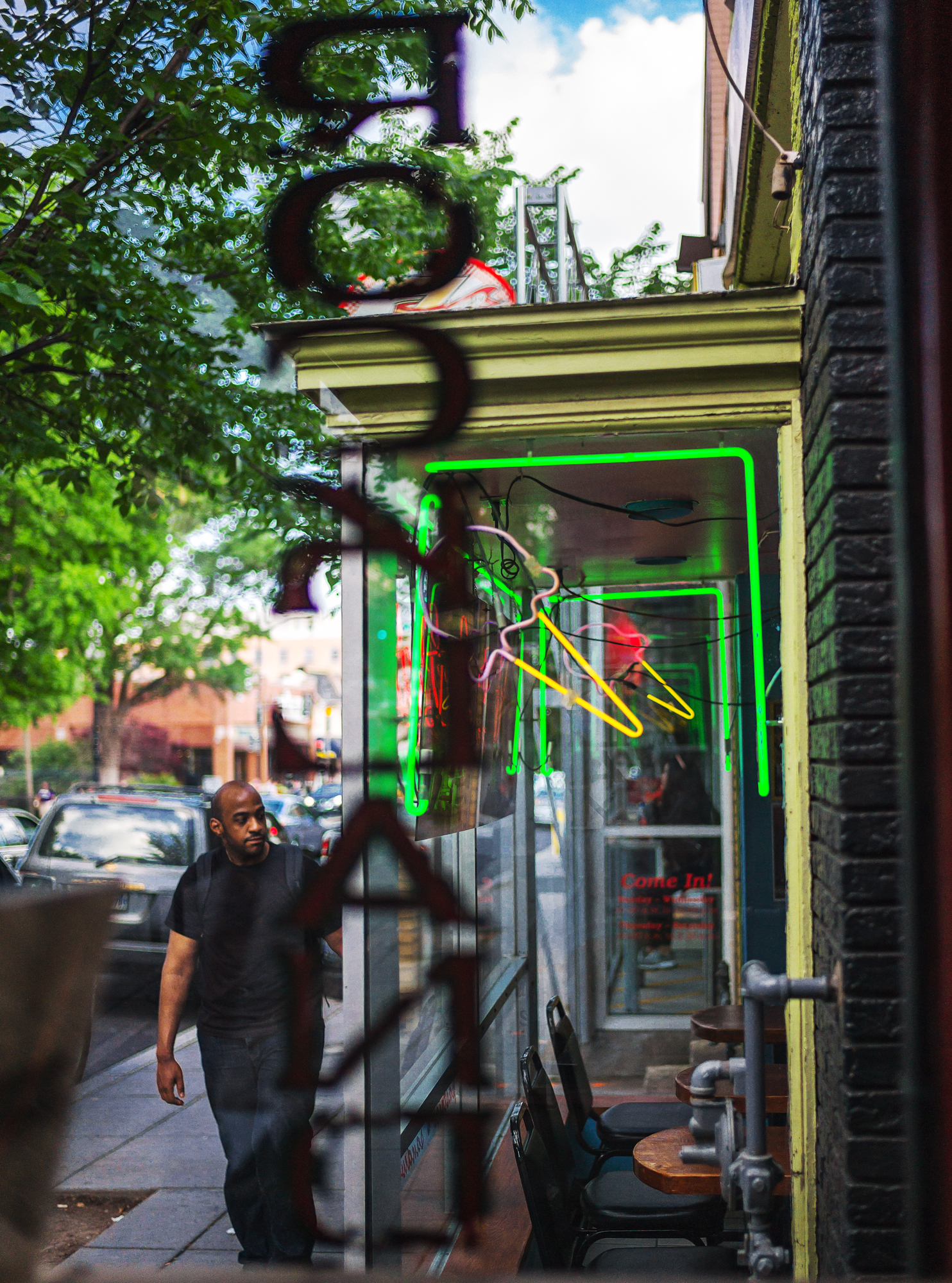
As you sit eating at Rocklands, you can look out the window at Max’s.

And as you sit at Max’s, you can see the neighborhood walk by his place and Rocklands.
Max Keshani has been serving his homemade ice cream to legions of kids — and various Vice Presidents — for two decades. Along with his late wife, who died of cancer two years ago, he’s built a business that has had every child in this part of D.C. grown up tugging at his or her parents’ sleeve as they’ve walked by, hoping to stop in for a cone.

He’s a proud man, and stubborn. Proud that he’s built a business that now employs his daughter and a young woman who grew up in the neighborhood getting cones and dishes of ice cream from his store. Stubborn, now that he’s learned officially, with less than two-months notice, that he’s going to have to vacate the premises so that his neighbor can expand his restaurant into what, since the early 1990s, has been Max’s space.
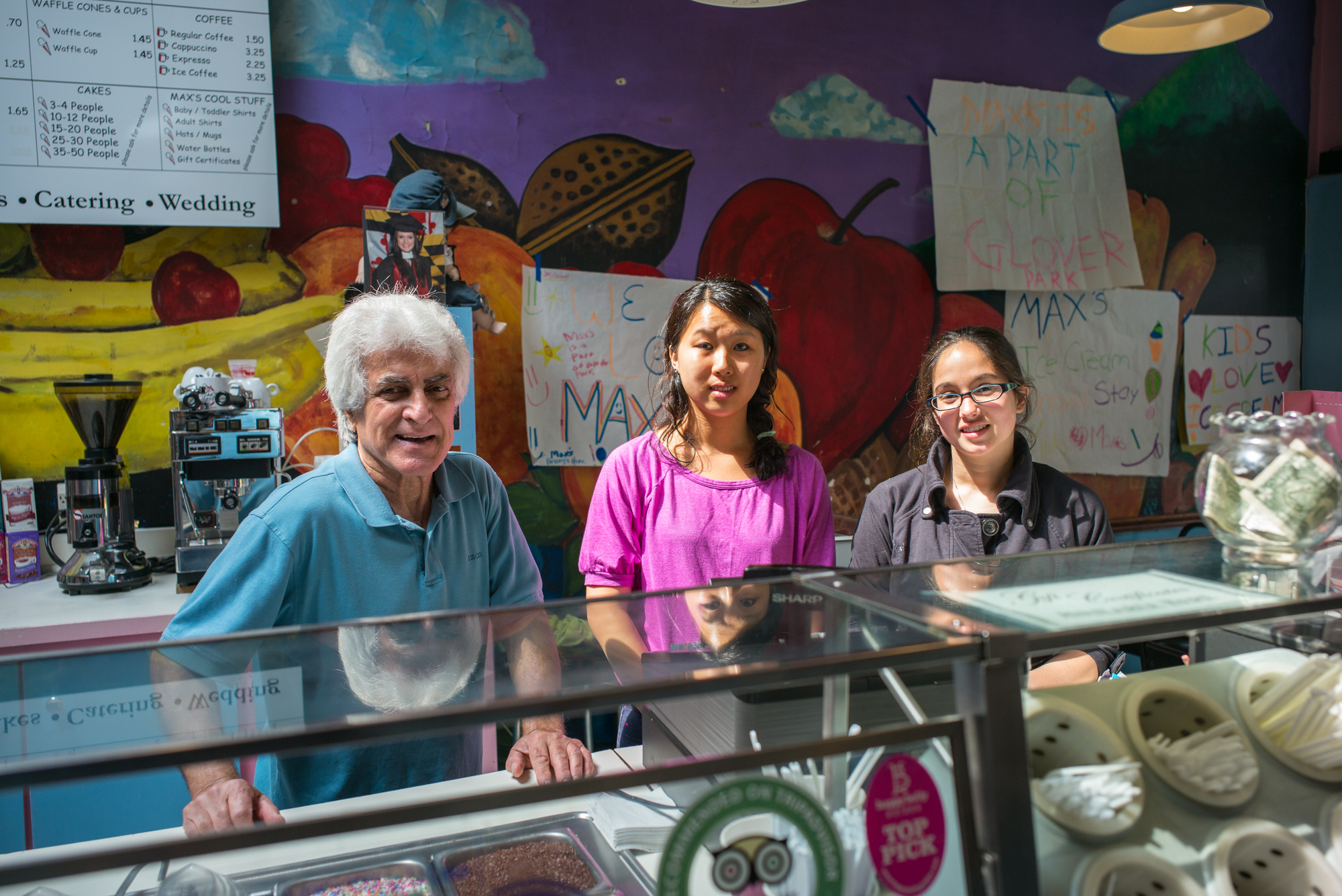
Max blames his neighbor for this state of affairs. But there doesn’t seem to be much reason to really blame Rocklands. According to multiple reports, Snedden long ago told the landlords that he would like to, if possible, expand into Max’s space. But it’s the landlords, not Snedden, that made the decision to not renew Max’s lease, and instead to let Rocklands expand. And yes, there have been offers to enable Max’s Best to continue to serve its customers from a different space down the street, between the Whole Foods and the strip joint, er, gentleman’s club. And Snedden, though committed contractually to leasing Max’s space as of July 1, has offered to let Max stay open there for the summer, should the landlords permit it. But so far, Max’s position is that he’s not moving, and if he can’t stay in his location past July 1, he’s going to close the business that is his livelihood and has been the center of so much joy for kids and adults alike.

Every day, Max has well-wishers come and offer their condolences as they buy what could be among their final cups of his best ice cream. They stand in front of the wall with the pictures of hundreds of kids who’ve come into the store over the years — the wall with the picture of a smiling Al Gore, who wandered by one evening with Tipper, before heading to the Vice President’s residence a short stroll away — and Max tells them the story of his betrayal. He’s pretty much personalized it to his neighbor, not the landlords, who objectively seem to be the party that betrayed him. (Snedden says he believed he was told Max was retiring. He isn’t pushing Max out, and according to the Glover Park Gazette, the Bassin sisters — the landlords — had a back-up tenant lined up, in case when offered the lease, Rocklands passed.)
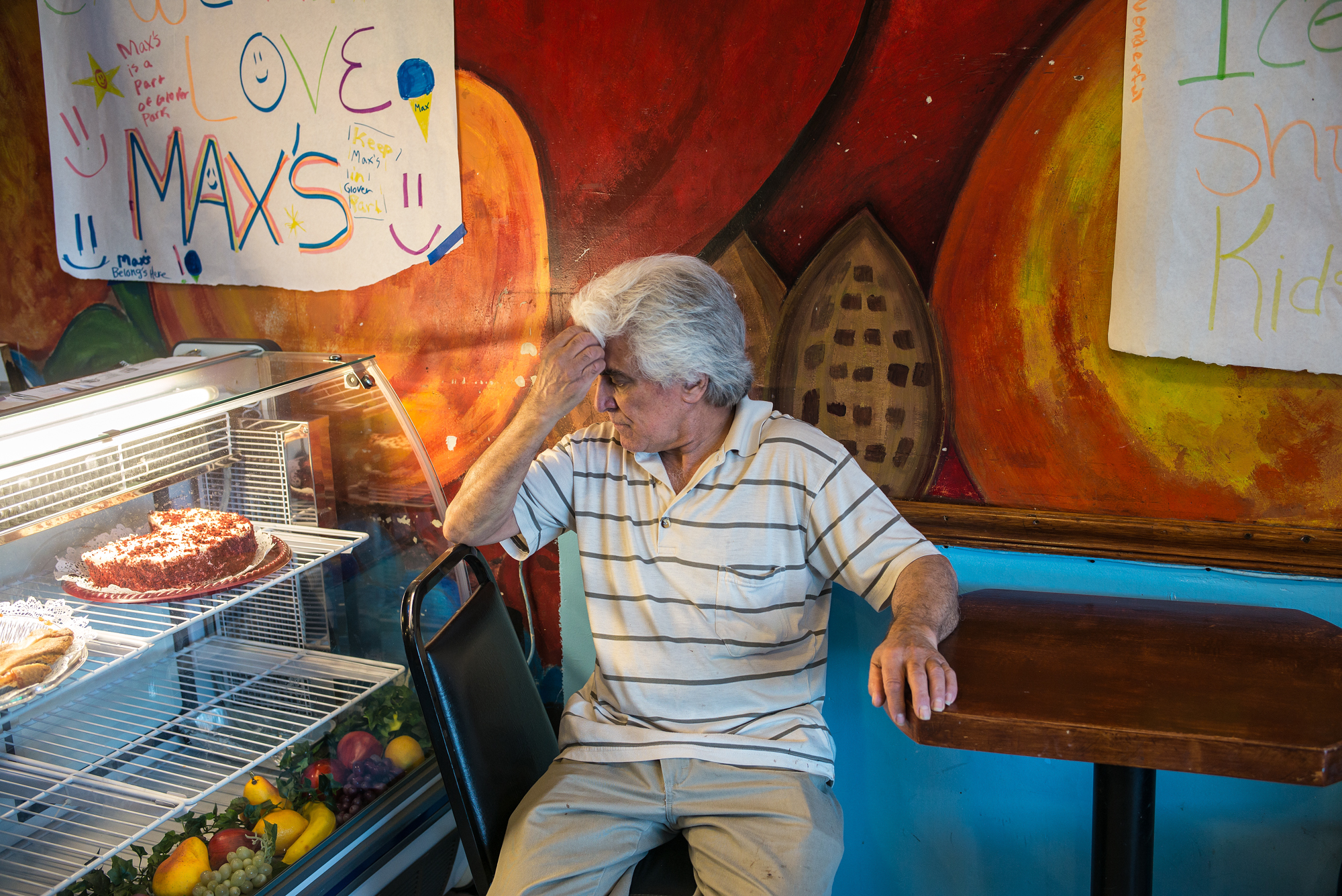
As June arrives, and with it the prospect of a mere month left in his store, Max is getting sad. All the people coming to commiserate with him are, by now, coaxing from him his recitation of the events that have befallen him, and discussing it, he says is “like rubbing salt in the wound.” His daughter stays stoic and serves ice cream with a smile. Max seems to be thinking about the end of an era and the business he built with his late wife.
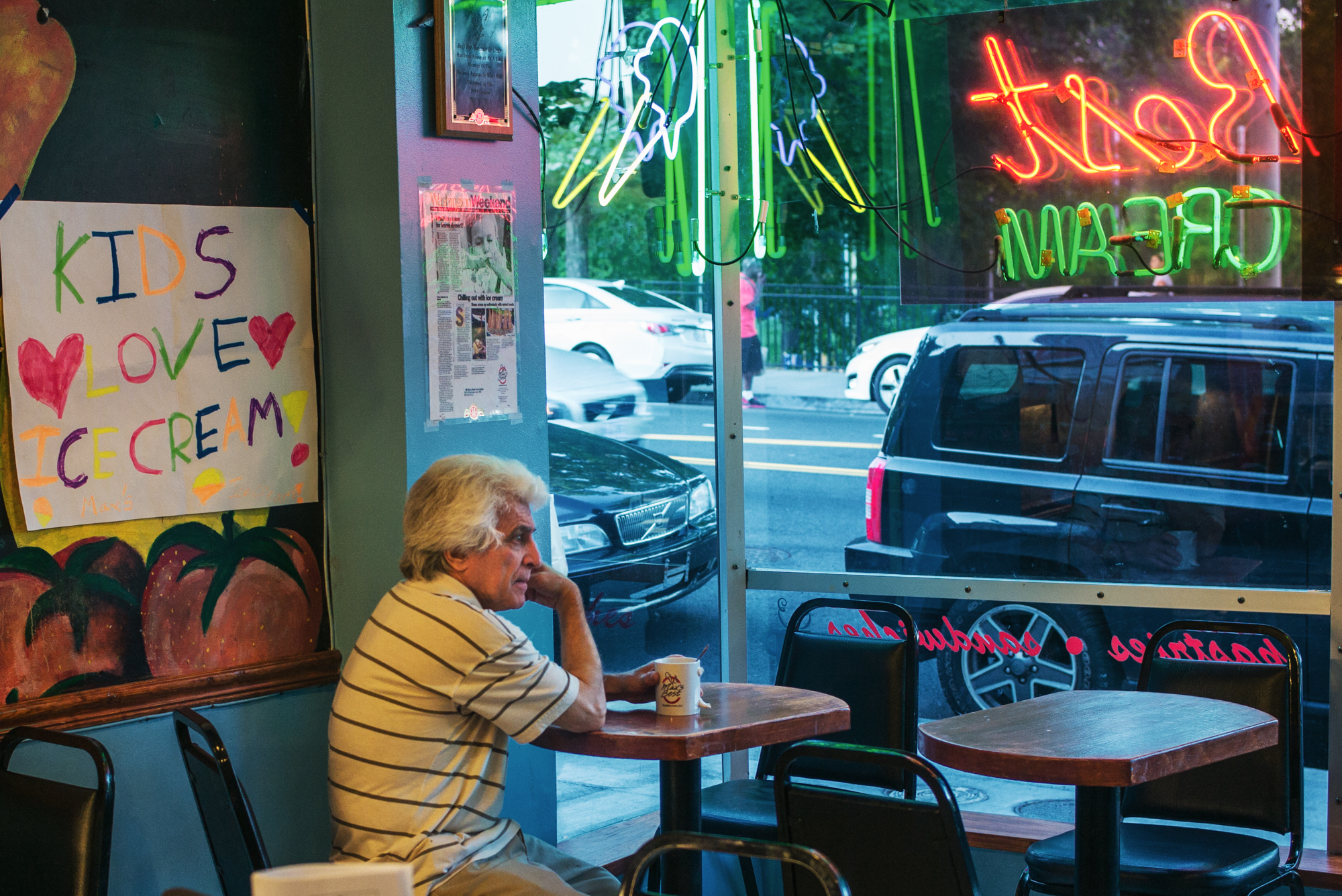
From an inquiring customer’s perspective, it’s not too late. There is, it has been reported, that offer to move his place across the street — a total of maybe 100 yards from his current store. His neighbor — the one he blames — has offered to defer taking possession of the space until the end of the busy summer season. There is a Save Max’s page on Facebook, a Twitter hashtag (#SaveMaxs). Neighborhood kids have put up signs urging that Max’s be saved. It seems possible, if only Max takes the offer to move. We think we speak for the whole neighborhood when we say that we really hope he does.
Real hot. Leica M (typ-240), 35mm Summilux FLE.

Looking for something to read this weekend? Check out my novel, The Geography Lesson. But don’t just take my word for how enjoyable it is, check out what readers have said about it in their reviews on sites selling it.
Here’s one, from the Amazon page: “Love, friendship, betrayal, forgiveness and adventure. Told with great humor against a backdrop created by an author with a flawless eye for Washington and points beyond. With painstakingly rendered detail, Buckley brings several different distinct worlds to life: The old-school, Mad Men world of adventure journalists; the last days of when the institutions of the nation’s capital were ruled largely by New England blue bloods; the modern-day, rarified milieu of America’s privileged classes; and the exotic human and physical landscapes of the American West. Here’s something that sneaks up on you: It’s a Washington novel that’s outside the mold of any ever written because it never claims to be one. It paints pictures of political lessons rather than preaches them. Most important, we care about the lovingly drawn characters because we’re allowed to join them in truly honest journeys of self-discovery. A pitch-perfect triumph!”
And another: “The Geography Lesson is a fun, fast trip through time to the world of late 1960’s Washington and the Western U.S and back again, with a side of Peruvian adventure. As a fan of Edward Abbey, I loved the excursion through the Canyonlands. As a fan of National Geographic, I loved the Society as the backdrop. Now if only I could get myself to Peru!”
And yet another: “The cover art points to the story line of this entertaining novel, which follows the adventures of National Geographic explorer journalists. The plot was gripping, making me want to read quickly, to find out what happens in the end to the appealing narrator. But I made myself slow down. It’s worth taking your time over this one. Buckley is a Washington insider, with an amazing eye for detail, and if you’re at all interested in Washington media of the last 40 years or so you’ll want to take your time and enjoy every page.”
You can buy it via Amazon, Nook, or Booktango!
Still need convincing? Well, check out this sample chapter. And have a nice weekend.
Let’s hope not the hard way… Leica M (Typ-240), 35mm Summilux FLE.


iPhone 5
Seeing a band deliver on stage, in its entirety, a 13-year old album is like examining a flower pressed under glass. The vitality present when it was a living, breathing thing is replaced by an archival weight, but in the case of The Dandy Warhols playing Thirteen Tales From Urban Bohemia, playing the album brought restorative powers, and all these years later, an informed perspective. It was exquisite, and they were great.
Yesterday also brought news that an intact Wooly Mammoth, complete with blood samples, had been carved from the tundra in Siberia. Coincidence? We don’t know. All we know is that one of our favorite bands who, since 2005, have not brought us new music on par with what came before, played a set that allowed us to clone the enthusiasm we once had for them. After a note-perfect, enthusiastic, glorious rendition of arguably their best album — and inarguably their high-water mark commercially — the Dandys came through with a restoration drama reaffirming their uniqueness.
A few years ago, we complained in this space that the Dandys were coasting, that they’d never get back to the fresh-squeezed citrus tonic they’d brought to rock’n’roll when they emerged from Portland in the mid-nineties as a band that could graft Rolling Stones chops atop garage-psych songs that were as louche as they were comically astringent. Tulip Frenzy reader Zia McCabe aggressively defended the band against all charges and urged us to listen to the late stuff anew. We did, and modified our position, but still believe that you have to go back to the era from which Thirteen Songs emerged to find the really good stuff, “We Used To Be Friends” and “Holding Me Up” notwithstanding.
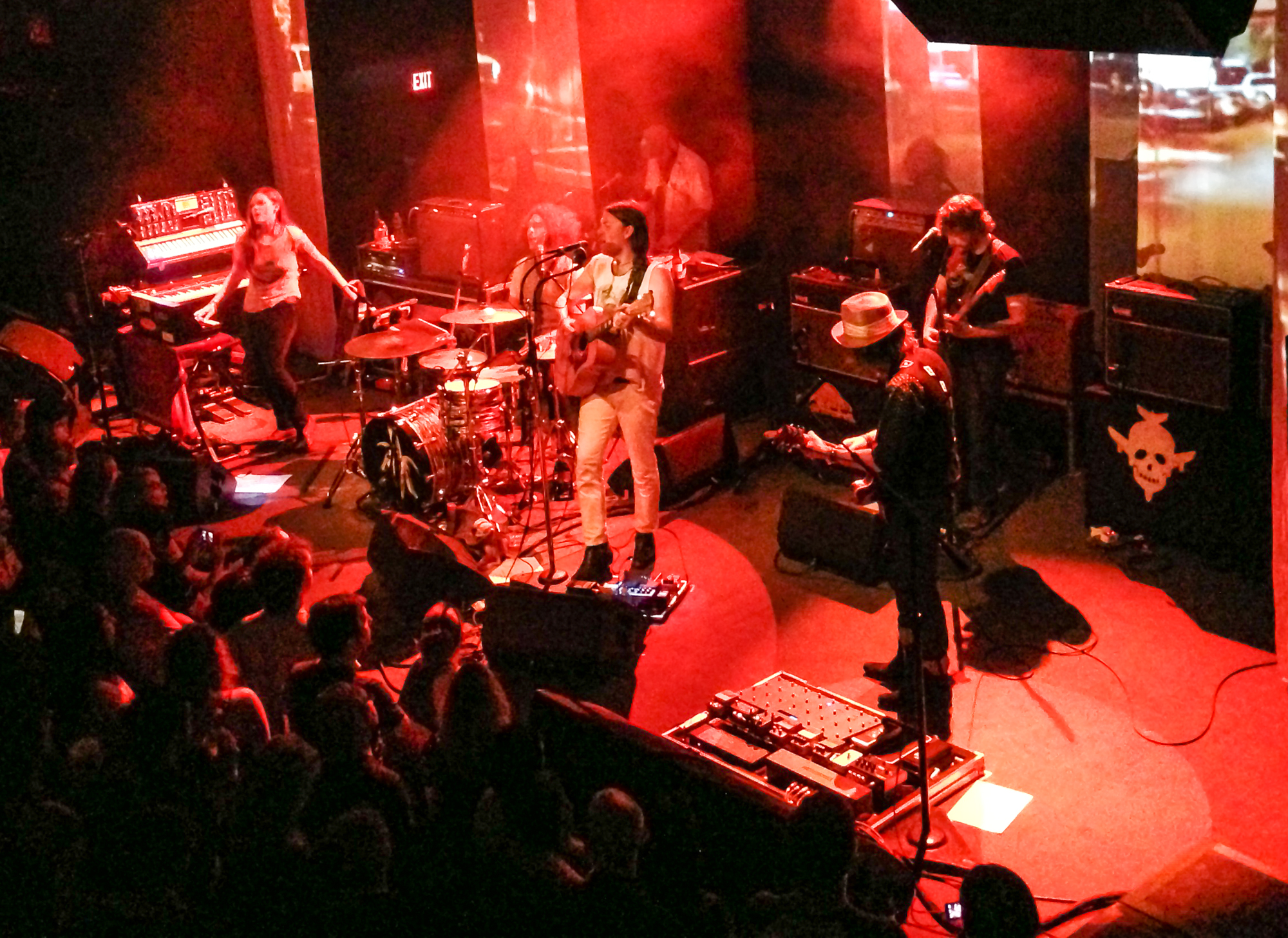
Last night, by the time they’d played “Mohammed,” we could understand better how the Dig!-era competition between the Dandys and the Brian Jonestown Massacre could have been so intense, for surely these two bands emerged from the womb as split-zygote representations of the same folk-rock band. While playing an album onstage and in its entirety reveals the different sequencing needs of two kinds of performance, the set gathered momentum so that by the time they got to “Bohemian Like You” there was a catharsis and belated recognition of how Thirteen Tales was built around what would become the Dandy’s monster hit. The record itself is a relic from that pre-iTunes era when albums could exist as a unit of measure, not an atomized collection of individually downloadable songs, and while in our opinion it never hung together as a single work so much as it is a great collection, last night the playing of the album as a whole was a success in itself and an assertion, which we accept, of its importance.
We missed the Pixies playing Dolittle, and those artists, from the Breeders to Lucinda Williams, tackling their records on stage. It’s more than a gimmick, or at least it was last night. It enables a band to focus on a moment in time when their creativity produced a body of work that can last. Our fondest hope, after last night’s performance, is that the day the tour is over, the Dandy Warhols go back to the studio and produce music on a level with these 13 songs from 13 years ago.

Leica M9, 50mm Noctilux
Going down to the Vietnam Memorial on Memorial Day stirs up emotions for many, though for others it takes on the feeling of a reunion, or a street fair.
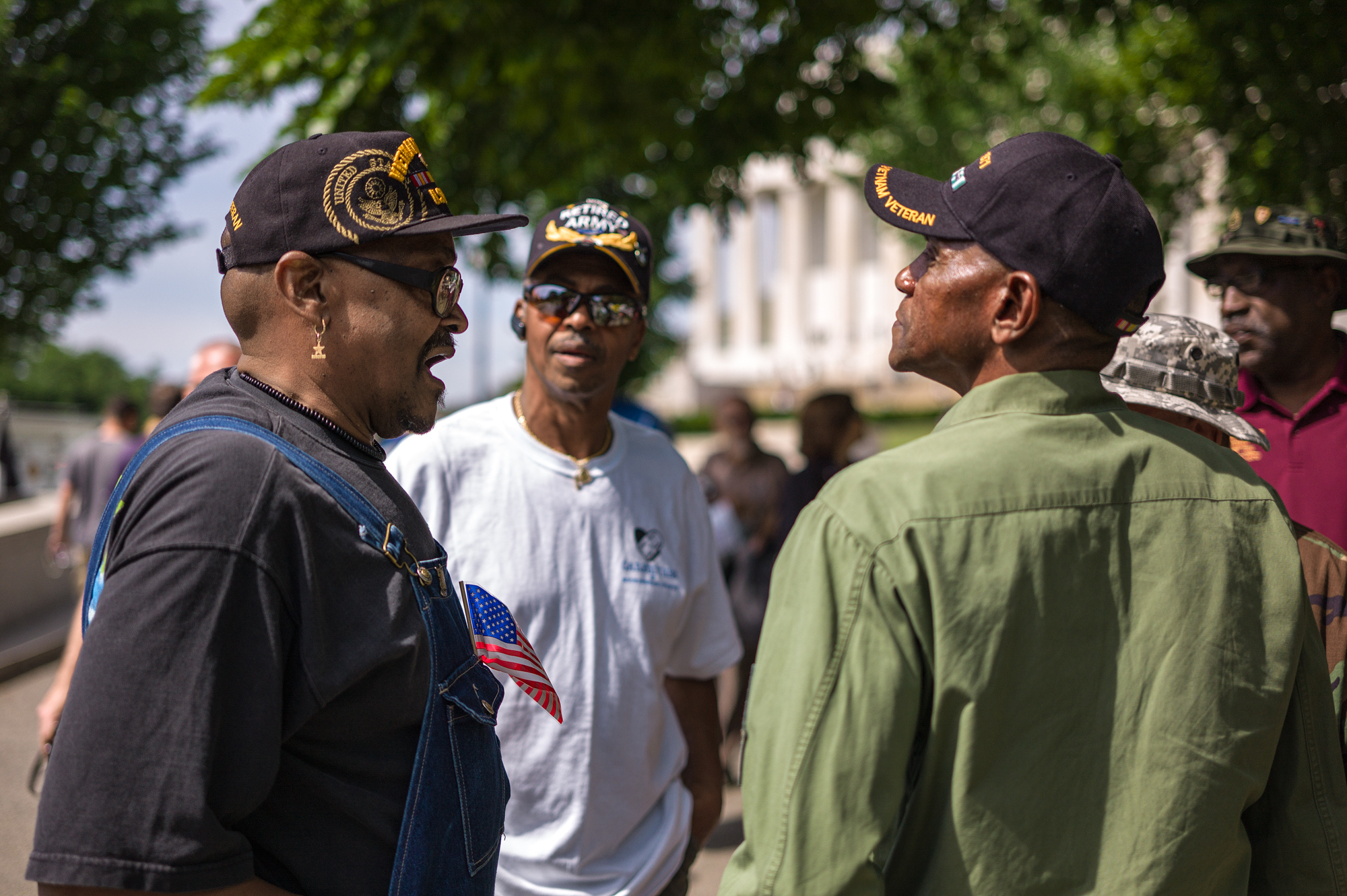
Leica M9, 50mm APO-Summicron-Asph
Old friends gather, while others view the assemblage as an opportunity to sell goods or services.

Leica M9, 50mm APO-Summicron-Asph
But the principal reason for being there is to commemorate the lives of those who sacrificed for their family and their country.
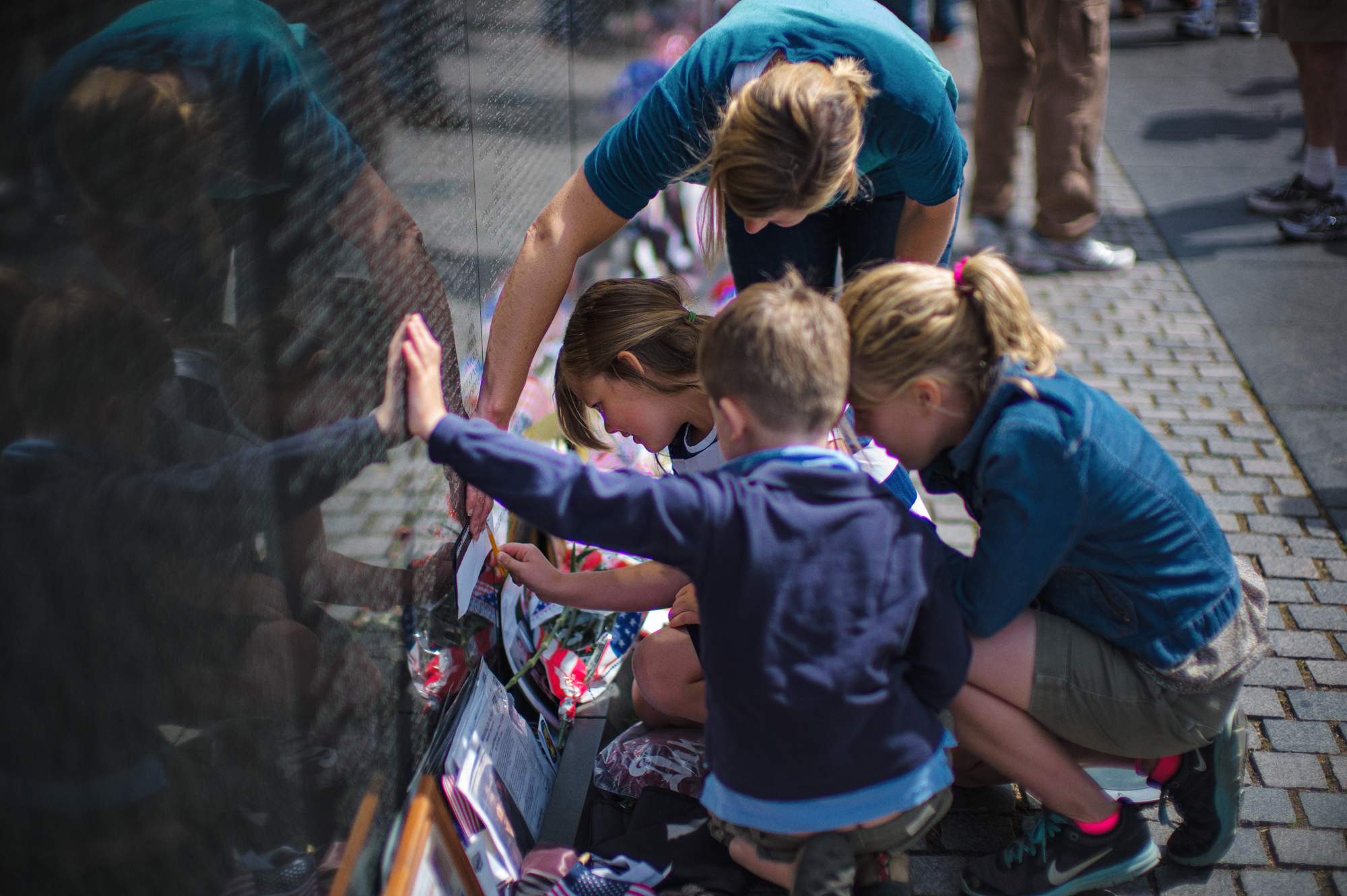
Leica M9, 50mm Noctilux
There are still unhealed wounds and bitterness, arguments unfinished after 40 years.
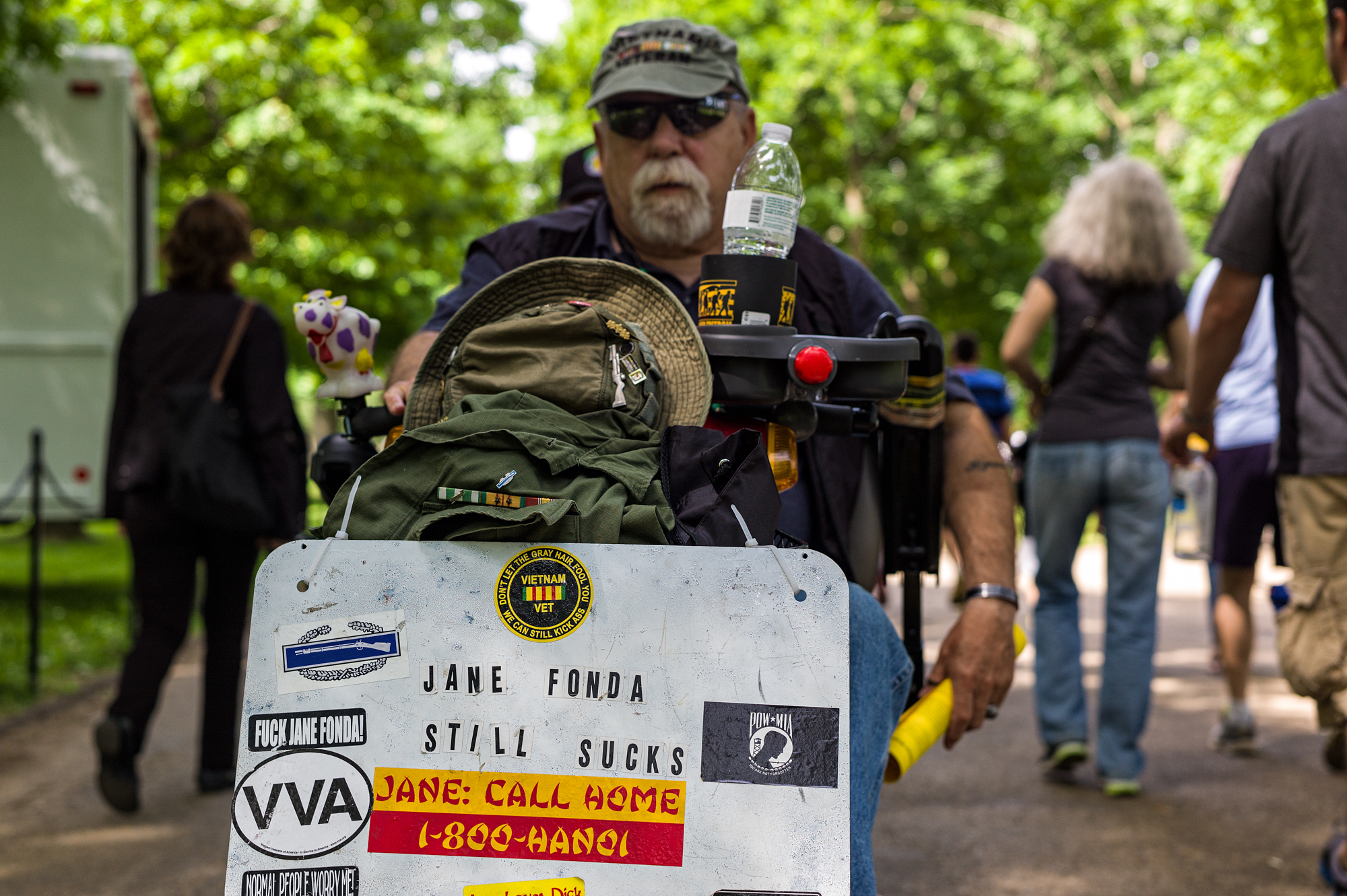
Leica M9, 50mm APO-Summicron-Asph
Happily, for many this is a holiday to celebrate the nation, and the beginning of summer.
Leica M9, 50mm APO-Summicron-Asph
 Tulip Frenzy