In the cover photo, she looks like a penitent entering the convent, not so much Mariette In Ecstasy as Ophelia showing up at the nunnery, startled by her fate. Musically, it sounds like Chan Marshall was given a church key not to open bottles but to move her musical operation to an abandoned cathedral where, without benefit of any altar boys, she was the lone congregant and celebrator of the mass. Sun is at once a minimalist masterpiece and a remarkably deep pop album, showing what a single woman can do with a drum machine, piano, some synths, and an almost infinite number of tracks on which she can project her voice. In fact, her voice is as multilayered as Jimi’s guitar was on First Rays Of The New Rising Sun, another album that pays its respect to morning and the renewal that comes when that yellow orb warms us, canceling the night. Far from her days deconstructing “Satisfaction,” and only distantly indicative of the Memphis soul she laid down on The Greatest, Marshall has produced her finest work, an album that suggests a marriage between David Bowie and Beth Orton. With the exception of Iggy Pop showing up in wonderful form on “Nothin But Time,” which sounds like “Heroes” at half speed, Marshall’s wizardry producing an album all by her lonesome sure would make Ty Segall and Tim Presley anxious to induct her to their treehouse club. For once, all the hype over Cat Power is on the money, and Chan Marshall has a triumph to celebrate.
Cat Power’s Triumph
Posted in Uncategorized with tags Cat Power, Iggy Pop, Sun on September 7, 2012 by johnbuckley100Flutterby
Posted in Uncategorized with tags 50mm Noctilux 0.95, Leica Monochrom, Leica Monochrom and Noctilux on September 6, 2012 by johnbuckley100Leica Monochrom, Noctilux, no filter, virtually zero work done in Lightroom other than to crop out a section with blown highlights.

Escape From D.C.
Posted in Uncategorized with tags 35mm Summilux FLE, Leica M Monochrom, Silver Efex 2 on September 1, 2012 by johnbuckley100Holiday weekend beckoning, Leica Monochrom, ISO 320, 35mm Summilux FLE, orange filter, Silver Efex Pro2, ND filter setting. At full resolution, on my screen, each leaf has definition and you can practically read the license plate numbers…

24 Hours With The Leica M Monochrom
Posted in Uncategorized with tags Leica M Monochrom, Ming Thein on August 29, 2012 by johnbuckley100Not quite three years ago, the Leica M9 was released, and we joyously greeted this full-frame digital Leica M, which enabled us to use Leica’s legendary M lenses at the focal length for which they were designed. We loved the M8, but it was a compromise — not a full-frame 35mm equivalent, even if a “digital M” — and using it came with both teething pains and some genuine flaws (most notably, pretty mediocre high ISO performance.) We await with trepidation the announcement next month at Photokina about what Leica has up its sleeve for what is expected to be called the M10. But in the meantime, on May 10th, Leica announced the M Monochrom, an 18 megapixel camera housed within the M9’s form factor, but which only takes black and white images. Yesterday, ours arrived, and our initial impressions are that this camera is absolutely stunning.
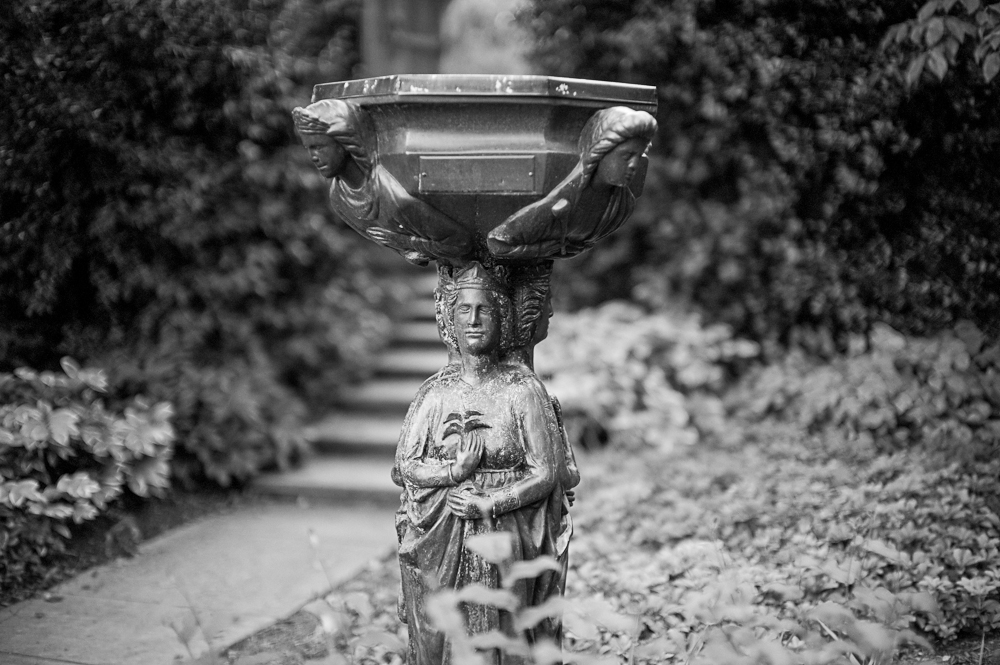
Leica M Monochrom, ISO 3200, Noctilux wide open, yellow filter (22)
Click on the picture above. As a composition, it’s nothing special, maybe, as we were rushed to take some photos before night fell. But that’s the point: night really had fallen when we took it, and the ISO 3200 performance, with what noise exists to our eyes looking more like film grain than anything horrific, is pretty amazing. Notably, this image took virtually no time in post-processing. The files that come out of the SD card seek only some contrast.
You see, the removal of the Bayer filter that converts what is recorded as black and white into the color images that all other digital cameras produce enables the Monochrom to record images with a degree of clean resolution that effectively renders this 18 megapixel camera into a 36 megapixel medium format camera. We really look forward to pushing that particular envelope; for now, let us simply say we are amazed at the low levels of noise at ISO 3200, and we haven’t even taken it up to its 10000 ISO limits.
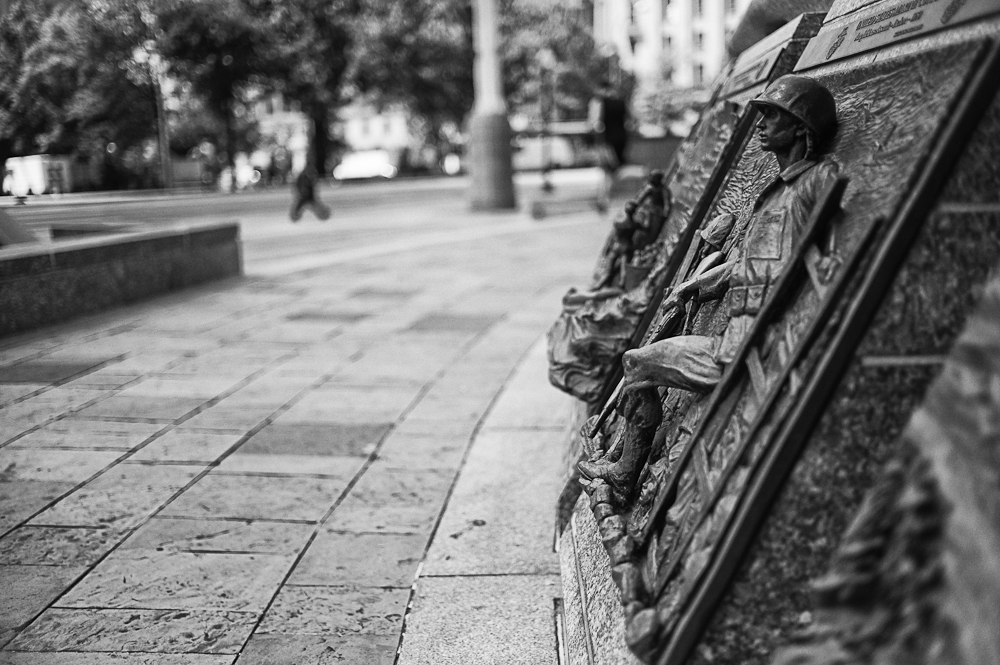
Leica M Monochrom, ISO 320, 35mm Summilux FLE, orange filter
We took it for a spin just before and after lunch today, in bright sunlight. Of course, the Monochrom is ruthless when it comes to overexposure, so you have either to compensate for exposure or be very careful about managing highlights. As a street camera, it has all the advantages of a Leica M: it is small, and thus discrete — even more discrete than usual, as there are literally no markings anyone can see, no red dot, no Leica insignia.
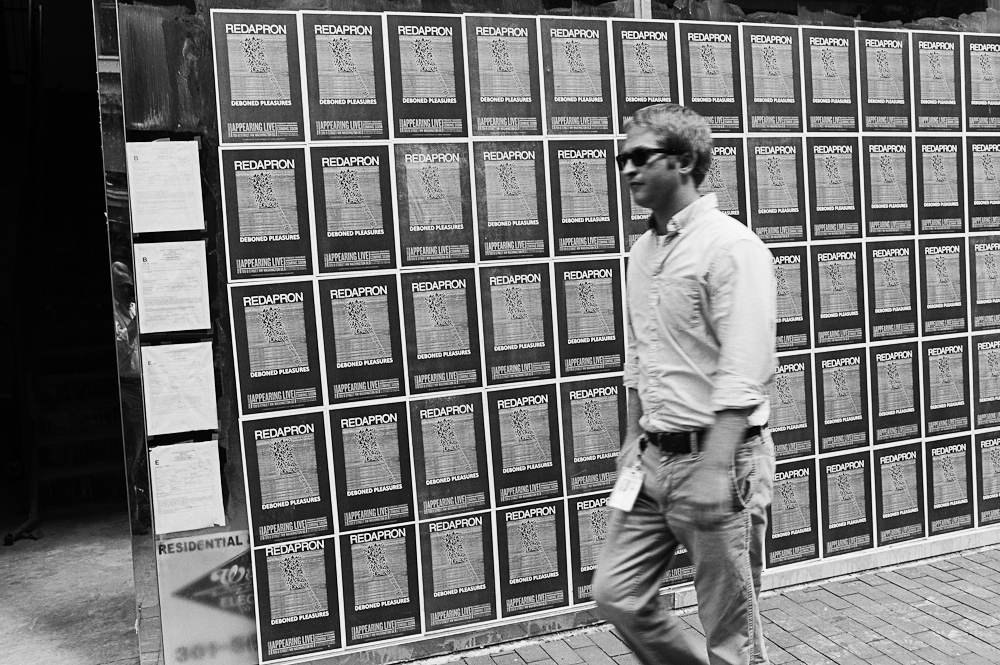
Leica M Monochrom, 35mm Summilux FLE, ISO 320, orange filter
In 2006, when we switched from a film M7 to the digital wonders of the M8, we ceased thinking in terms of what film is in the camera. Digital outputs could be in black and white or color, whichever worked. It is a strange, almost perverse wonder once again to think in terms of luminance, not chroma, as Ming Thein has pointed out. Knowing you are capturing forms and shapes, not color data, is like listening to music without paying attention to the lyrics. The lyrics (colors) are still there, but the data they hold is transformed into rhythms, not content. And so it is with the Monochrom, which liberates us to think purely in terms of composition and light.

Leica M Monochrom, ISO 320, 35mm Summilux, orange filter
We are really looking forward to taking it out again at night. Still, daylight scenes in DC are plenty interesting, to us at least.
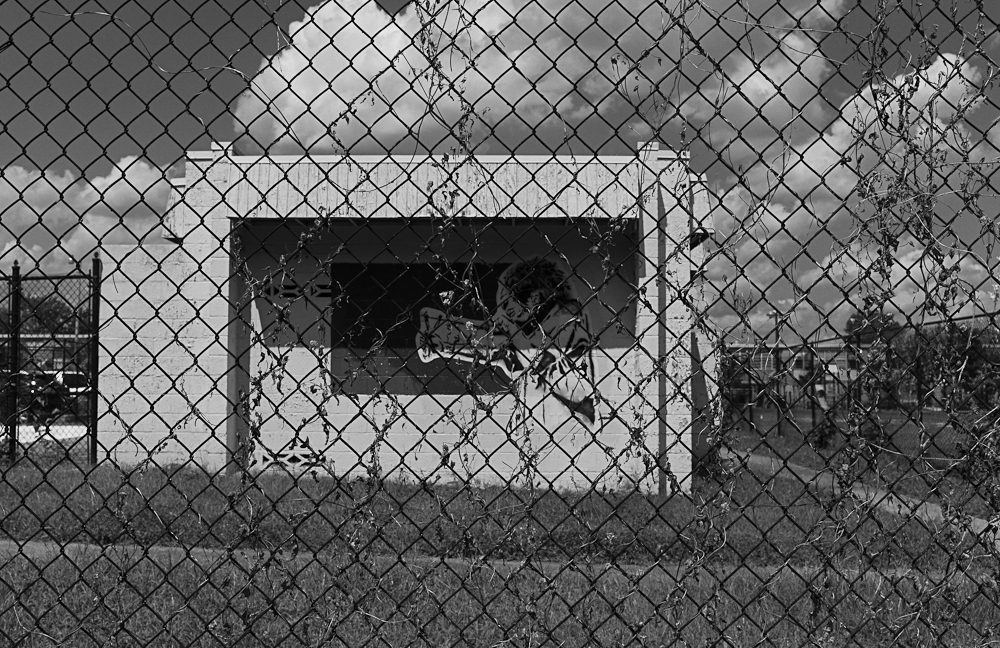
Leica M Monochrom, ISO 320, 35mm Summilux FLE, orange filter
The Leica M Monochrom exists in a niche within a niche, a black and white (only) rangefinder. When one thinks about the historical output from Leica Ms loaded with black and white film, this back to the future moment fills us with delight.
Prayer For New Orleans Today
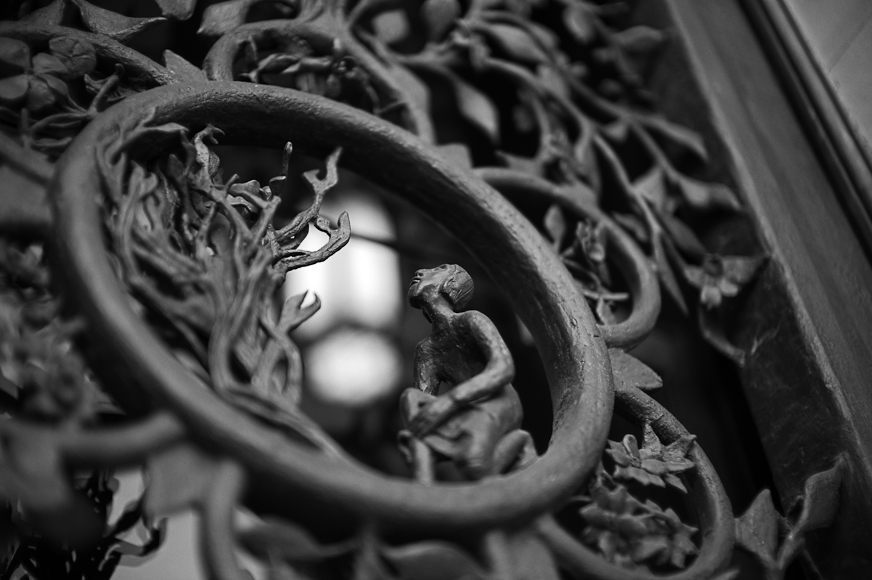
Posted in Uncategorized with tags Leica Monochrom, Noctilux 0.95 on August 29, 2012 by johnbuckley100Leica Monochrom, ISO 320, Noctilux f/0.95, wide open. Click on photo to judge full resolution, albeit down rezzed for Internet posting.
The Arrival Of The Leica Monochrom
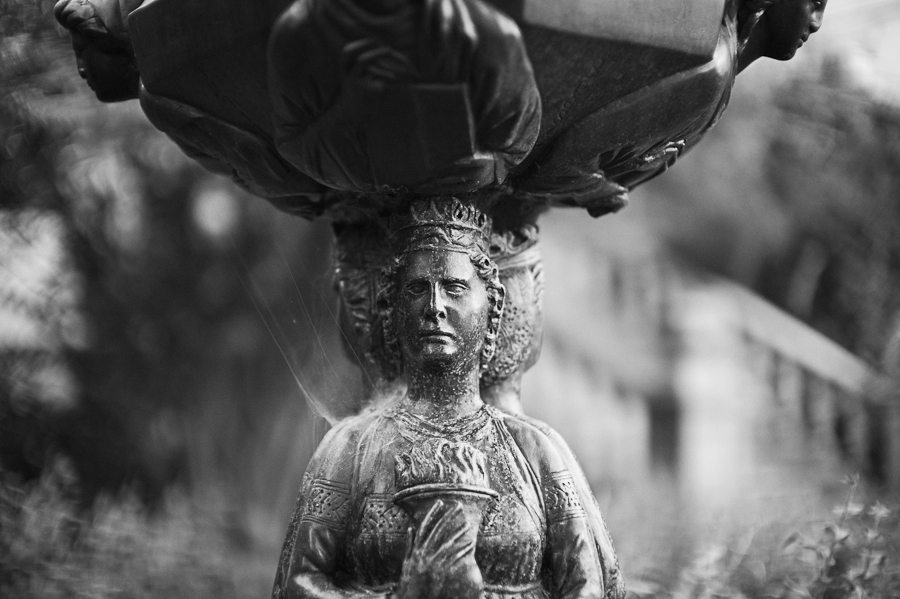
Posted in Uncategorized with tags Leica Monochrom, Noctilux 0.95 on August 29, 2012 by johnbuckley100Leica M Monochrom, ISO 3200, Noctilux wide open, the sun having set maybe 30 minutes earlier. Virtually no post processing in Lightroom. Utilized a Silver Efex Pro2 preset. National Cathedral Bishop’s Garden. Click on the image to get a sense of the resolution. Think this is going to be fun.
Apples In Stereo’s Robert Schneider Really Is A Little Genius
Posted in Music with tags Apples in Stereo, Arthur Schopenhauer, Olivia Tremor Control, Robert Schneider on August 28, 2012 by johnbuckley100We’ve always known he was, you know, smart. And then came word that, in addition to writing, singing, and playing guitar on all the Apples In Stereo albums, and helping Olivia Tremor Control and others to fully actualize their sonic ambitions, Robert Schneider had developed his own musical scale, like some punk rock Schopenhauer. And now this….
Other Than The Magic Castles, How Were The Brian Jonestown Massacre, Mrs. Lincoln?
Posted in Music with tags 930 Club, Anton Newcombe, Aufheben, Brian Jonestown Massacre on August 23, 2012 by johnbuckley100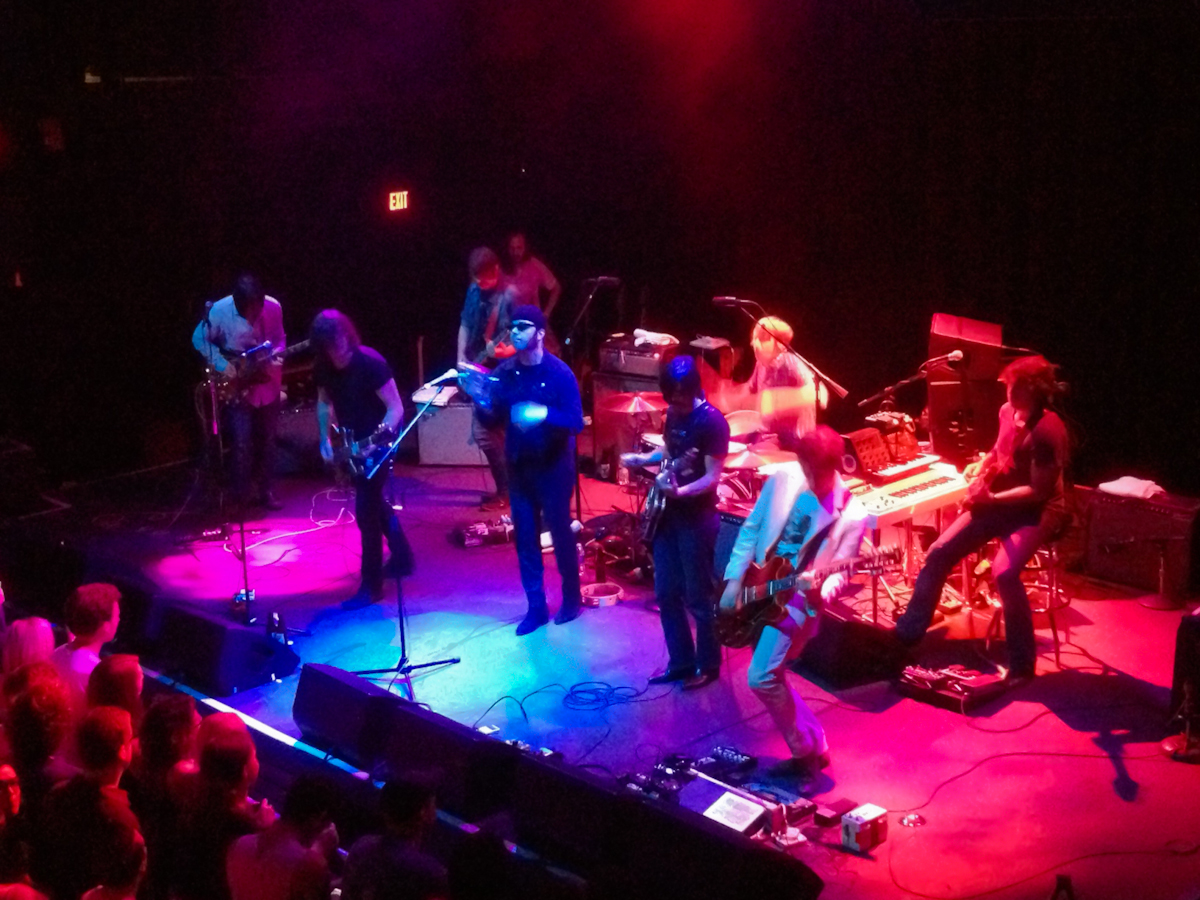
iPhone 4S
What a difference having a good album to push makes. We’ve seen — and enjoyed immensely — the last four Brian Jonestown Massacre tours, but with the release earlier in the year of Aufheben, the first BJM album in a decade that rivals the best of their ’90s output, it was as if Anton Newcombe was reborn as a downright chatty (for him), occasionally pogoing multi-instrumentalist (okay, harmonica as well as guitar.) We counted four songs from the new album, or was it five? They didn’t simply rely on classics from Take It From The Man; this was a set more evenly balanced between music from this decade and the previous ones. The BJM’s live sound is so unique: a rhythm guitar army, Branca-esque in force, widens spectral mid-tones while Anton picks riffs that serve as careful filigrees over the main strumming squall. (Having Matt Hollywood take on the singing duties from “Viholliseni Maalla” was a nice touch, and who knew he could sing in Finnish?)
Moreover, whoever would have thought we’d hear music like this in 2012? Whoever would have thought Anton would be this strong and vital at this moment in time? Not the last Dandy on Earth, that’s who. Berlin agrees with him. The band is revitalized by the new material. They were fine last night.
Are The Magic Castles The Best Young Band In America?
Posted in Music with tags 930 Club, Anton Newcombe, Brian Jonestown Massacre, First Communion After Party, The Magic Castles on August 23, 2012 by johnbuckley100We saw the Magic Castles open for the Brian Jonestown Massacre at the 930 Club last night. Too often, you have to endure opening acts to get to the main event, and few things are worse than having to sit through the thudding gyrations of bands you find just fundamentally lacking. This is not so much the case when the BJM are in town; Anton Newcombe is many things, and one of them is a good mentor, as evidenced by how many of the bands we love have cited, on their websites, that they toured with the Brian Jonestown Massacre. It’s like a punk rock Good Housekeeping Seal of Approval, playing with BJM, and it’s worth showing up an hour earlier than otherwise you might. We’ve liked The Young Sinclairs, and that Icelandic band, Singapore Sling, they had open for them in 2009, and didn’t we see the Flavor Crystals open for them once? But The Magic Castles were… magic.
Imagine John Densmore drumming while Dean Wareham and Sterling Morrison back up Neil Young. We’d read the reference to them in last week’s issue of The New Yorker, capsule-previewing their opening for the BJM with that shorthand citation: a comparison to the Velvet Underground. As some know, Tulip Frenzy has an office policy, rigidly enforced from the senior staff on down to the interns, to be curious about any band that is referenced in the same sentence as the VU, either as in, “They sound like the Velvet Underground,” or, “They sound nothing like the Velvet Underground.” We don’t much care which way it goes; any such reference is worthy of our checking it out. Only, when we saw them play last night, we didn’t think of the VU so much as First Communion Afterparty, the Doors, Luna, Kurt Vile, Fripp and Eno, or maybe it’s Cluster and Eno — all of them great character references.
So we didn’t know they were from Minneapolis, which makes some sense given the FCAP vibe. They’re not really like the late and lamented psyche-tyros — granted, the Magic Castles’ music, especially as recorded, has these psilocybin traces of the color spectrum limning its edges, though not the lysergic propulsion of that other sadly mothballed Minneapolis band. On vinyl, on the eponymous record they put out on Anton’s A Records, they’re more like an entrant into the Elephant 6 landscape: ’60’s vocals that emerge like beekeeping monks who have all just swallowed something interesting spontaneously breaking out into song, while the guitar notes wind around their black-clad habits like a quietly buzzing but sonically active hive. Live, though, they were tougher, more Summer of Luvish, a band we could imagine coming not from the Twin Cities but from our Notional Brooklyn, where the artisanal hippies have all gone to roost, tinkering in their workshops, a serious Portlandia where everything is made of fresh-baked fixins that have tasty undertones. Yeah, the Magic Castles make you think this way. Let’s hear more.
“The West Is On Fire!”
Posted in Uncategorized on August 16, 2012 by johnbuckley100Smoke settles upon Western valleys. Leica M9, 50mm Summilux. Earlier than sunset is supposed to be.

 Tulip Frenzy