Washington, D.C. Saturday morning. Midway through Snowzilla. Looking down toward the unplowed New Mexico Avenue. Leica Monochrom (top-246), 75mm APO.
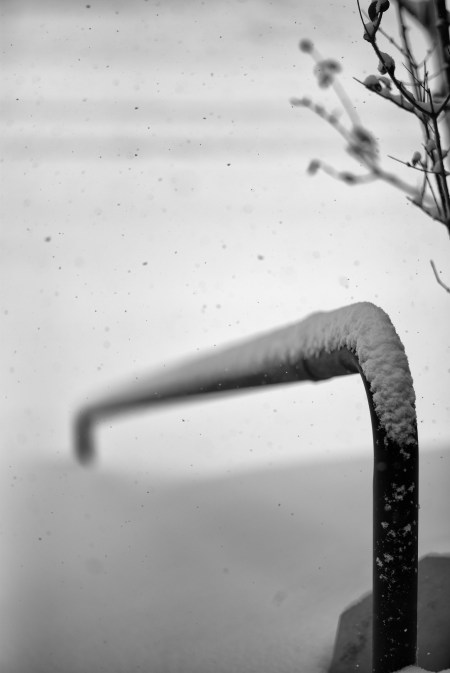
Washington, D.C. Saturday morning. Midway through Snowzilla. Looking down toward the unplowed New Mexico Avenue. Leica Monochrom (top-246), 75mm APO.
No one will ever again need to strain for an example of genius, for who else but a genius can so astonish us from The Other Side? Bowie rendered the preparation for Death into a thrilling art project — Lazarus the play, “Lazarus” the song and video released days before his death, virtually every word of the glorious Blackstar… It is all literally amazing, and distracts us from our grief even as it intensifies it.
When Joe Strummer died suddenly, Streetcore, his final album with the Mescaleros, was released posthumously as a sort of final word. It was fashioned out of accidental spare parts (snippets of his BBC radio shows, instrumentals, as well as full-on songs) into a beautiful elegy. But there is nothing accidental about Blackstar, including the double entendre title of the final song which references Bowie’s mysterious methods: “I Can’t Give Everything Away.”
Those final 18 months will be studied as performance art, but let’s also give credit not to an artist but to a man who bravely finished up, without complaint or loss of dignity, in control, in a way,’til the end.
We have read much over the past 24 hours, some remembrances by those who knew and worked him, and a fair bit of earnest nonsense written by those who are, frankly, too young to have perspective. If you are of a certain age, and “Ashes to Ashes” is where you picked up the thread, it’s hard to even know you need to reference, somewhere, Diamond Dogs.
We are old enough to remember: how Bowie, T. Rex, and Mott The Hoople seemed to arrive on these shores all on the same boat, a palate cleanser after the Stones’ ’72 tour, and how when we first heard the New York Dolls in 1973, far from being a shock or mystifying, it all made sense. Likewise, how right Diamond Dogs seemed to be, as we played that dystopian masterpiece while reading daily about Richard Nixon’s impending resignation. How Young Americans was both the perfect soundtrack to our senior year in high school, and pointed to something far, far different than what the other giants of that year, the Stones and Led Zeppelin, were purveying on It’s Only Rock’n’Roll and Physical Graffiti.
And then the ride began: the Golden Age, as Station To Station overlapped with the release of The Man Who Fell To Earth, followed by the Berlin Trilogy with Eno. Low, Heroes, and the sublime Lodger — our favorite record, and we’re tempted to proclaim, his greatest work — arrived concurrently with the upheaval of punk, and alone among the establishment icons of rock’n’roll, Bowie strode above the landscape with little criticism or resentment, the one star who still produced awe, with no need to pander (as the Stones did with Some Girls) to what was happening in the streets. While Station To Station seemed to brilliantly close the chapter on those early ’70s incarnations, those next three albums rewrote the book even as Bowie, for perhaps the first time, seemed willing to be his own true self.
In most of the “10 Essential Songs By Bowie” lists made yesterday by 40-year olds trying to generate click bait, one eye on Wikipedia, the other on the clock, virtually no one referenced Bowie’s work with Fripp and Eno as the essential core. It made us realize there are some gifts to age, to having been alive, and awake, through Bowie’s prime. We didn’t have to pretend that Bowie was great on stage (he really wasn’t, he was no Mick Jagger…) We could think back to a time when Bowie towered above the land… before that long, 30-year span of relative silence that ended, surprisingly, with the release in 2013 of “Where Are We Now,” which of course harkens to the Berlin of the late ’70s.
Star imagery is one of the constants in Bowie’s work, his punning self-referencing finally culminating in Blackstar — the star lit no more. It is the most incredible thing that he left us yesterday grappling with new work, oddly refreshed, deeply saddened, reflecting on his life and ours, with joy and not nostalgia. It’s too late to be grateful, sang the Thin White Duke. But we are.
What a consummate pro, staving off death until he could get his magnificent final work, Blackstar, out the door.
It is early, and we are just processing the sad news, but a few words are in order.
If David Bowie had died without having released, in 2013, The Next Day, and now an incredible final album, we would have been sad, because for a almost a decade — from The Rise and Fall of Ziggy Stardust and the Spiders From Mars up through Lodger — there was no more cherished artist in our lives. But after the commercial success of Let’s Dance, Bowie was for us a figure of the past, like the Rolling Stones, always beloved but no longer relevant.
And then, from out of nowhere, two years ago came The Next Day, which was among the most thrilling music of the year, and a reminder of his greatness. And beginning Thanksgiving weekend, we had begun listening, over and over, to “Blackstar” from the new album, and reveling in Bowie’s vibrancy, his relevance, that gorgeous voice.
We were just thinking this weekend, when we at last got to listen to the album as a whole, how brilliant Bowie’s marketing has been these last few years — not touring, not doing interviews, holding himself above the industry and stardom, and letting his music do the speaking for him. And now we know.
That he finished with Blackstar is like the Beatles going out with Abbey Road: an amazing grace upon which to conclude one of the transcendent careers in contemporary music.
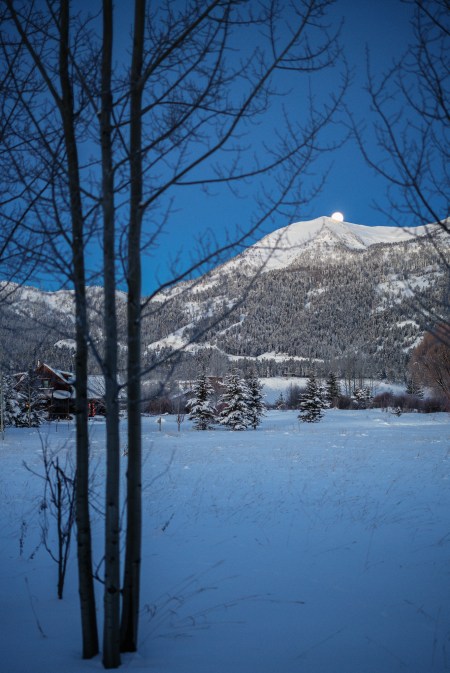
It was awfully pretty — and awfully cold — this morning before skiing.
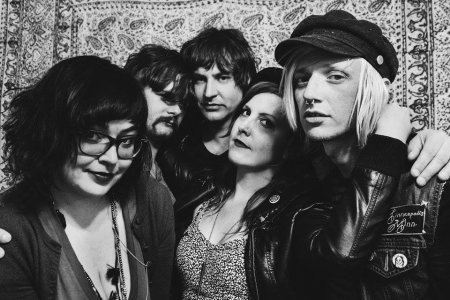
On Sunday, we revealed that Driftwood Pyre had beaten a tough field to claim the #1 spot on Tulip Frenzy’s 2015 Top 10 List. This likely made sense to anyone who has heard this brilliant band, and especially those who read our rave review when the album came out in early November.
Driftwood Pyre founder Liam Watkins was a prime mover behind the band’s Minneapolis forebears, First Communion Afterparty. He now joins Tim Presley (Darker My Love and White Fence) as the only person to have parlayed two different bands into snagging top honors in Tulip Frenzy’s annual ranking. Through EXAG ‘ Records, he graciously agreed to answer some questions.
1. Congratulations on taking Tulip Frenzy’s Album of The Year honors. Tell us about how the band came together and the process of recording the album. We know you and Aaron (James) began putting the band together in 2012, but would love to know more about how all the members of the band joined, and over what span of time the album was recorded.
Thank you so much for your continued support! We are ecstatic to be featured at the top of such a fine list of musicians. When I started Driftwood Pyre back in 2012 I set out to create a collective. The idea was to make a one-off album and feature many artists backing me up on the songs I was writing in the studio. Recording with Aaron was incredibly easy because he is truly a one-man band. He covered the early drum, bass and some backing guitar tracks.
After a few sessions Aaron and I had set the foundation and invited Joe Werner, my former bandmate in First Communion Afterparty, to lay guitar tracks down. It was at this point that the three of us had decided that we needed to solidify a line up and scrap the collective idea.
Jeanne Oss was a friend and former roommate of mine who had recently moved to Minneapolis and was really interested in playing with a live act. We had her come into the studio to lay down some organ and vocal tracks and knew immediately that we wanted to add her to the line up. All that was left was to find a drummer and after about three weeks of practicing with Aaron substituting on drums he had good news. Courtney (Olsen) was an old friend of Aaron’s from when they lived and played in bands in Los Angeles. She had just moved to Minnesota and was looking for a new project.
When Aaron told us we had found a female drummer I was so excited. I love working in creative environments with women and I knew she would be the perfect fit. We continued to write, record and scrap song after song over the next 2 years as we perfected our sound.
In October 2014 we were approached to sign with EXAG’ Records in Belgium and about two weeks later Jeanne Oss took a job opportunity in San Francisco which was very bittersweet at the time but we were fortunate enough to have recruited Marie DeBris, formerly of FCAP and Magic Castles, to play organ and percussion for us.
2. What’s the songwriting dynamic in the band. We clearly recognize songs that have your signature on them, but do you and Aaron share songwriting duties? Whole band get into the act?
Joe Werner and I are the songwriters in the band but everyone writes their own parts. Usually my songs are created from playing a random riff during practice and if it catches the attention of the band and everyone jams on it we will give it structure and lyrics. Joe has a more traditional approach to his writing and spends a lot of his time outside of practice writing song after song.
3. Now that the album is out, tell us about plans for 2016, and particularly whether you are going to tour outside of the Upper Midwest. (We certainly hope you get to the East Coast…)
We have tentative plans to tour Europe in 2016 and would like to play CMJ and SXSW in the next year. Touring is something that we all are ready for and it is very important for us to reach our audience outside of the Minneapolis psych scene.
4. We are only familiar with First Communion Afterparty as a prior reference point for Driftwood Pyre, but as stated in the review last month and in the Album of the Year write-up, it seems like Driftwood Pyre is — to paraphrase Paul Westerberg — maybe slightly more in the center of the dial than all the way over to the left. Is that conscious? Reflect a change? Or just a reflection of where the songwriters and musicians were when they sat down to produce the record?
We definitely set out to do something different. I didn’t want this to be FCAP version 2.0 and never wanted to come across as a one-trick pony. Our musical influences have evolved quite a bit over the past 10 years and ultimately we wanted to play music that people could dance to.
5. You may have noticed that two other bands from Minneapolis were in the Top 10 (Magic Castles, Flavor Crystals.) Where does Driftwood Pyre fit in? Other bands with whom you are simpatico that we should check out?
I’ve watched the Minneapolis psych scene grow since 2005. Many amazing acts have come and gone and a few heavy hitters like you have mentioned have held on but it’s not our intention to adhere to what a traditional “psych” band is supposed to sound like. I can definitely say that we are the black sheep of our local psych community but we are more interested in what is happening outside of Minneapolis.
Another Minneapolis favorite I think you guys should check out is Chatham Rise. They are an amazingly talented band and they make incredible records.
6. Even though your record is just out, we’re obviously eager for what comes next. Do you have plans for studio time in the months ahead?
We have 6 tracks for our next album already recorded and mixed. The sophomore album has been written in its entirety and we are working on material for a third release.
So… exciting news. And you heard it here first about the second Driftwood Pyre album nearly out. Tulip Frenzy’s #1 gift from Santa would be learning that the band is going to play DC when they head to New York for CMJ. Wherever you are, this is a band you must check out.
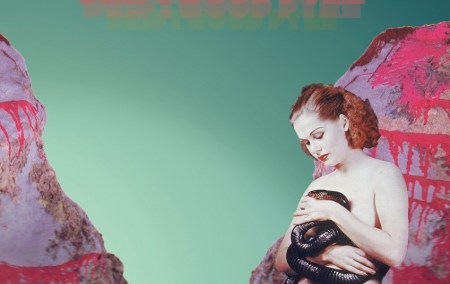
#1. Driftwood Pyre by Driftwood Pyre.
We were prone to liking Driftwood Pyre, the first album by the Minneapolis band we viewed as successors to First Communion Afterparty. After all, FCAP’s Earth Heat Sound was Tulip Frenzy’s 2013 Album Of The Year, and we have long held them up as the best psych band of the modern age. But even so, we honestly didn’t think that this first record by Liam Watkins and company would sail past all contenders for Album Of The Year honors on its maiden voyage. Combining the best elements from Watkins’ previous band — the emotionally vibrant slow strum of the guitar, the Mamas und Papas background vox, the psychedelic traces limning with chromatic aberration a vibrantly electric landscape — when the album came out we exulted like an archaeologist reclaiming a lost civilization. Eureka! A little more of a straight-ahead rock band, with elements of Oasis, the Cramps, and even the Rolling Stones undergirding a well-produced set of uniformly good songs, we can rejoice in the way Driftwood Pyre carry the embers of its antecedents even as it strikes out onto a new, commercially solid, nonetheless uncompromising sound.

#2. 1000 Days by Wand.
By our count, it was less than 365 days from the moment last year we saw Wand supporting Ty Segall at the 930 Club to the release of their third album in approximately a year. 1000 Days was instantly recognizable as a breakthrough, an incredibly ambitious work combining Eno-esque synths and prog song structures with the punk’n’thunder of this young band’s previous two recs. Seeing them a few weeks ago at the Black Cat only confirmed that Cory Hanson has to be added to the roster of West Coast phenoms — Ty, John Dwyer of Thee Oh Sees, and Tim Presley of White Fence — keeping rock’n’roll alive and kicking in a hostile world. The thing about 1000 Days is that it both seems like a mere extension to Golem and Ganglion Reef, Wand’s previous two albums, and is conceptually bolder, suggesting Hanson’s songwriting is growing magically, a sorcerer’s conjuring of talent that should bring them their deserved audience over the next 1000 days.
#3. In Triangle Time by Kelley Stoltz
It took us a little bit of time to adjust to what our longtime fave Kelley Stoltz was up to with In Triangle Time. We have so much admiration for how Stoltz has been able to create record after record of meticulously crafted pop songs while playing every imaginable instrument (look ma, no band!) that it took us a few days to realize In Triangle Time is a concept record, and that for someone who lived through that musical moment this album captures so well — the early ’80s interregnum between the first Echo and The Bunnymen singles and David Bowie’s Let’s Dance, between post-punk and the horrible mid-’80s drift that followed — it was okay that Kelley had put away the harpsichord and piano for electric keyboards, and switched the Ray Davies’ sensibility for songs that stretched the wire between such disparate poles as Captain Beefheart’s Ice Cream For Crow and Orchestral Maneuvers In The Dark. As always, Kelley’s singing and musicianship are epic, and while we look forward to his next phase, and pine for a return to his ’60s weirdo sensibilities, when playing this genius’s latest, how can you not just want to dress like the cast of Deutschland ’83 and whirl around the room?
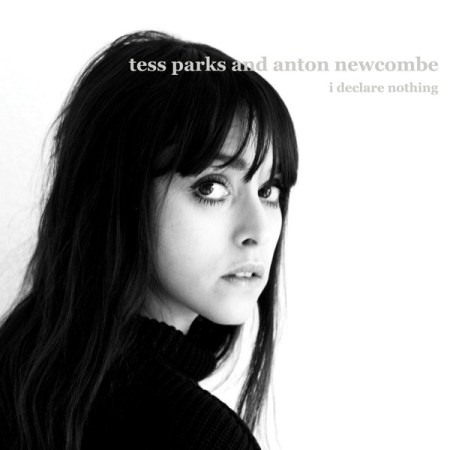
#4. I Declare Nothing by Tess Parks and Anton Newcombe
The May-September collaboration between the Toronto-based singer Tess Parks and Anton Newcombe, the Berlin-based longtime leader of the Brian Jonestown Massacre, was even greater than we could have hoped for. Parks’ 2013 debut album, Blood Hot, already revealed her to be one of the many young artists who look to BJM the way Newcombe and his generation looked to the Velvet Underground, but what was remarkable here was how Newcombe stepped into the subordinate role, not merely letting Parks have the top billing, but letting her sing every song. Maybe we shouldn’t have been surprised, for as early as “Anemone,” Anton has often stepped back and let women sing the best melodies. With Anton in the role of bandleader and guitarist, this was an album that sunk deep into our bones, a smoky, noir-ish sound that clashed with the bright sunshine of the summer out West where we listened to it every day. Most people got it, but we could only laugh at the British rock critters who sniffed, “Well, it’s good, but it sounds just like a Brian Jonestown Massacre record.” Yep, that’s why we loved it.
#5. All Yours by Widowspeak
When “Girls” was released late last spring, we woke up and took notice. We’d loved Widowspeak’s Jarvis Taveniere-produced debut in 2011, but found the follow-up, 2013’s Almanac, a trifle problematic, as Molly Hamilton’s ethereal voice, lathered on too thick, can be like a cake that’s all icing and air. Yet “Girls” was a nutritious harmonic pastry, still sweet but plenty nourishing, and a few months later when “All Yours” was released, we prayed that the full album would be as good as those two songs. Happily, Hamilton and Robert Earl Thomas’s move from Brooklyn to Upstate New York has filled their music with fresh Hudson Valley air, and any cloying sensibilities have been washed away. The sugar high is gone, we happily declared with All Yours came out in September, and it was a wonderful backdrop to autumn.
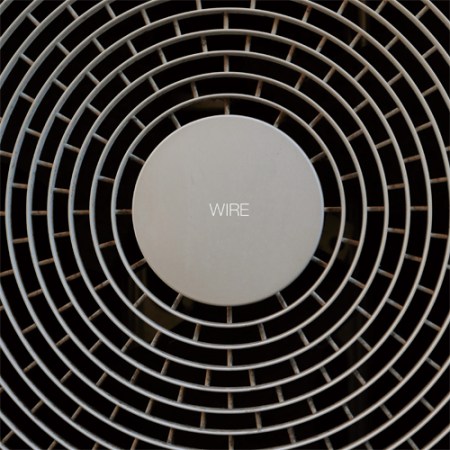
#6. Wire by Wire
I think we were supposed to take it as a statement that nearly 40 years after Wire announced themselves with Pink Flag — probably the single most influential punk debut of all time — they released a record simply entitled Wire. Wire is here, they declared, seemingly forever, releasing in 2015 music often as powerful and poignant as what was on Chairs Missing and their first-phase masterpiece, 154, which came out in 1978 and ’79, respectively. We exulted in what a gorgeous record Wire proved to be, but after the string of really strong records they’ve produced since the band reformed full time a decade ago — particularly 2011’s Red Barked Tree and 2013’s Change Becomes Us — we shoulda known better than to expect anything less. Ah, but then we were flat out stunned, I guess is the word, by the strength of their show at the Black Cat last spring. Colin Newman may not have the voice he once had, and on Wire he seemed to bow to reality by singing consistently melodic pop songs, not that cockney-rebellious thrashing punk of yore, but there is no question that the rhythm section of Robert “Gotobed” Grey and Bruce Gilbert is the Entwistle-Moon combo of the modern age, and with a minimalist young guitarist filling in, it’s no wonder that a young star like Courtney Barnett would exult on Twitter how amazing was the Wire show she saw in Berlin just a few weeks ago.

#7. Sometimes I Sit And Think… And Sometimes I Just Sit by Courtney Barnett
Courtney Barnett was the breakout star of the year, at least in the commercially blinkered circles in which we so proudly travel. Her sold out show at the 930 Club last May, fittingly on the same day as the DC Pride Parade, was in many ways D.C.’s concert of the year. The CB3 are a powerful hard-thumping trio, a cross between The Attractions and Nirvana, and given how high-torque Barnett’s songs were on her debut rec, it’s no surprise that it was only after seeing her play live that we fully came to appreciate Sometimes I Sit And Think… And Sometimes I Just Sit. The release of that album sure caused us to sit and think, to dwell for some time trying to get our mind around it, for after months of babbling to everyone we met about how great The Double EP: A Sea Of Split Peas was, we were a little put off by how amped up the power pop was on the album. Last year’s double EP was more relaxed, the faux-slacker message more aligned with the music, and we loved it no end. When the album came out this spring, fairly bursting from our speakers, and it was clear that this wasn’t some Aussie Millennial yucking it up with pals; when it was obvious even to someone thick as us that Barnett is an incredibly ambitious rock-star-in-the-making, we were, yeah, slightly turned off. But we came to terms with Courtney Barnett, oh yes we did, after seeing her live, and realizing that, with all the many analytical misses we’ve had over the years, assuming one fave artist after another was going to be yuge, yuge we say, here we had empirical evidence that Barnett was going for the brass ring, and unquestionably would grab it. And so we relaxed. The paradox of Tulip Frenzy generally only raving about music few fans will buy was overwhelmed by the joy we ultimately felt at understanding, without a doubt, Courtney Barnett is going to be, uh, huge. It’s going to be great.
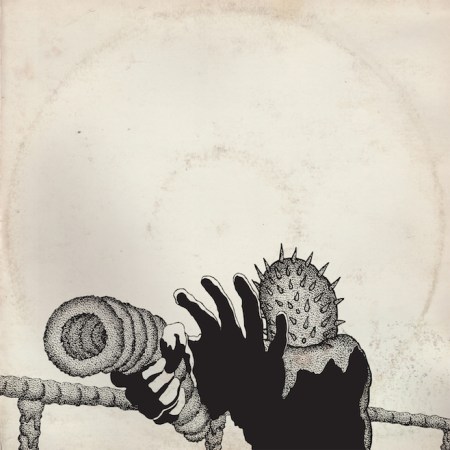
#8. Mutilator Defeated At Last by Thee Oh Sees
With Ty Segall off messing around with Fuzz and various other projects, and Tim Presley, with typical perversity, failing to follow up on the success of White Fence’s winner of last year’s Tulip Frenzy Album of the Year accolades (For The Recently Found Innocent), it fell to Thee Oh Sees’ John Dwyer to wave the West Coast freak flag, and on Mutilator Defeated At Last a new version of the band came through like a 21-gun salute bringing down a space ship. We were apprehensive about what the record would sound like, for since Dwyer had broken up in 2013 with his epic bandmates in the prior version of Thee Oh Sees, and last year’s Drop saw a sudden loss of cabin pressure, as they say when things get a little rough, we didn’t know what to expect. But this version of Thee Oh Sees beat out White Fence as the pick ‘o the muddy litter at May’s LEVITATION/Austin Psych Fest, and oh yeah, the record was boss. The double-drum set up of the youngsters Dwyer has recruited to the band thunders like elephants stampeding through your tent, and Dwyer’s manic songwriting is still the most exciting thing that’s happened to music since amplifiers.
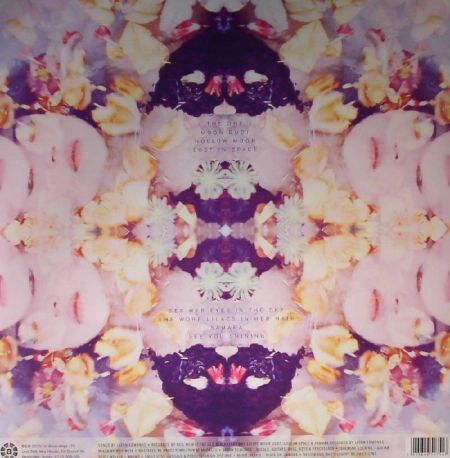
#9. Starflower by The Magic Castles
Minneapolis, as will be clear momentarily, was the Center of The Rock’n’Roll universe in 2015, as The Magic Castles joined their fellow Twin Cities citizens Driftwood Pyre on our Top Ten List. A few years ago, on the basis of seeing them open for the Brian Jonestown Massacre, we asked if the Magic Castles might be the best young band in America. While maybe that promise has eluded them, we found Starflower to be an amazing combination of Newcombe-esque songwriting/guitar layering and the most mysterious garage band sound since Lenny Kaye headed to Detroit with a cassette deck in hand.
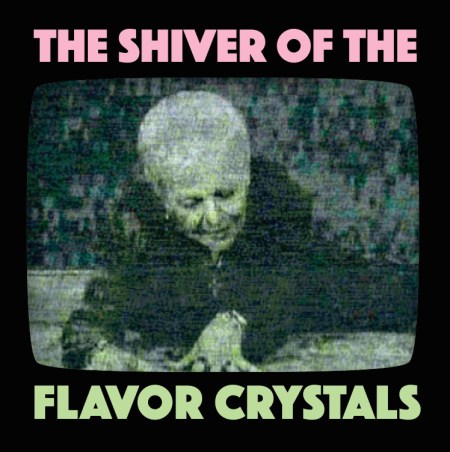
#10 The Shiver Of The Flavor Crystals by The Flavor Crystals
Lo and behold, a third Minneapolis band rounds out The 2015 Tulip Frenzy Top 10 List, adding symmetry to our ranking. See if you notice the pattern: we first heard Flavor Crystals open for the Brian Jonestown Massacre, and yeah, their first album On Plastic seemed to find that crevice between Television and Luna in our brain’s musi-rogenous zone. But their second and third albums didn’t quite pack the same punch. The Shiver Of The Flavor Crystals sent a 50-Amp shiver up our spine. This is an album for a long car ride, for sitting at home while the snow drifts pile, it’s dreamy and slow, but it’s also exciting and breathtakingly beautiful. After years in which it seemed like either San Francisco or Brooklyn were the places you’d want to be, Flavor Crystals — standing on the podium next to Driftwood Pyre and Magic Castles — signal Minnesota’s where it’s at.
Last week, Tulip Frenzy named The Auras, an amazing young band from Toronto, Psych Band Of The Year. We did this based on the strength of their three-song maxi-single, Tess Parks & The Auras, which includes one song sung by the cross-Atlantic chanteuse, “I Believe In Everything,” as well as just the boys singing “Island In The Sea”and “Charlton Heston.” When we saw two new videos get released in recent weeks, and evidence of new output equal to or even better than what’s on their previous two EPs from 2013 — The Auras EP, and EP 2 — we were so moved to reveal that The Auras had been occupying our earbuds pretty much non-stop since mid-summer. So we sent some questions to the band and guitarist Robb Schaede graciously sent back some answers.
1. When “Saturn Day” comes out in January, it will be, by my count, your fourth EP (including this year’s three-song single.) Is producing EPs, as opposed to creating a full-length album, a function of money, or record company support, or is a 3-6 song collection the way you’re choosing to introduce your music to the wider world?
We’ve always been big on self editing. We’ve never wanted to be a band where one out of every ten songs is great. Average is our enemy, no one likes average. Whether or not we hit the mark is up to each individual listener’s own opinion, but we always strive for doing the very best we can do with whatever we have to work with.
2. The songwriting across your various EPs is strong, and seems varied. Tell us about the songwriting dynamic in the band: everybody pitch in? One or two principal songwriters? How does that work?
Everyone in the band writes songs. Each person is the boss of their own song, more or less. At this point we can pretty much fire into a new tune and everyone will know exactly what to do, but that’s taken years of working together to get to. We have become more and more collaborative as the years go on, especially since we have acquired more and more of our own recording equipment, it makes it a lot easier for us to work on song writing while recording.
3. We can hear certain key influences in your songs — both Spaceman 3 and their The Darkside offshoot come to mind, and so do a number of the Nuggets-era garage bands — but tell us about the bands that had an influence on all of you, especially those bands that gave you a common reference point as six individuals seeking a sound.
Bands like Spacemen 3, Singapore Sling, Asteroid #4, The Pandoras, The Cramps etc really hold a centre reference point for us as a group. On the fringes you can hear that Peter is a huge shoegaze influence, and that Hank got his beginning singing in hardcore bands, Aaron also draws hardcore influence into his drumming from time to time. I sneak in influences from Frank Zappa, Cocorosie and weird stuff like that, I try to get flutes and weird loops into our recordings as much as I can. I also studied Jazz as a kid, which oddly enough does still influence my guitar work with the band. Dallas’s biggest guitar influence is Poison Ivy from The Cramps, David on keys loves the darker heavier psych and you can hear that in his droning.
4. You guys have stayed together for six years and are all roughly 24, if our math is right. Did you go to school together? Come from the same neighborhood? How did you six become The Aura?
I went to school with Dallas and Aaron, and they met David and Pete in Brampton, who went to school together as well. Me and Hank met at an open mic and he ended up joining after we had been playing shows for a couple years. It’s hard to describe what keeps 6 people together for 6 years; it comes down to the love of friendship and the love of music. It’s hard to walk away from the amazing feeling of playing overwhelming psychedelic sounds with your best friends.
5. Did recording a track with Tess Parks open doors for you outside of Toronto? (It certainly put you on the map for us.)
Working with Tess has given us a lot of international fans. We are working on more stuff with her right now, she’s made one of our music videos for an upcoming track from the (forthcoming – ed.) Saturn Day EP, the live shows have been dope too. It’s a blessing for sure, and also feels really natural. She fits in with our group, which is very tight knit so that’s a big deal for us, and she can handle our craziness, which is a relief considering how whacky we can get, it would probably scare a lot of people away. Not Tess though, she’s the real deal.
6. Tell us about other Toronto bands you think the world should know about.
We’d like to give a shout out to Crosss, B17, Sunshine and the Blue Moon, Sun Stone Revolvers, Mexican Slang, Tailbreakers, By Divine Right, Saffron Sect, Flowers of Hell, Bodies That Matter, Mimico, Planet Creature, BB guns and probably many others we are forgetting.
That’s it for now. We’ll keep people updated on The Auras as time goes on. Look for the Saturn Day EP in January, and a U.S. tour in 2016.
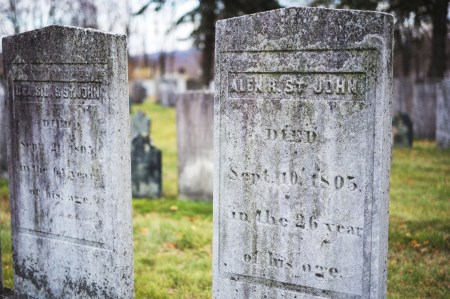
Check out the dates. The old man (on the left), passed at age 64 on September 21, 1805. But poor Allen, age 26, had already passed on September 10th. Methinks there was something nasty being passed around on that Connecticut hilltop, oh, round about the time Lewis and Clark were just getting to the Oregon border…
Near as our detectives can tell, they’ve only released 16 songs since 2013. Their three-song single (featuring Tess Parks on vox on “I Believe In Everything”) was their only purchasable output in 2015. But make no mistake, in Tulip Frenzy World HQ, The Auras were the Psych Band Of The Year.
Formed six years ago when they were all age 18, The Auras have great songwriting, a swirling, sparkling, shimmering guitar sound and the singing — downfall of many a well-conceived psych band — has grit when it’s called for, and lassos the moon when that’s the phase this particular lysergic outing is heading in.
We admit to not having heard of them before they pushed “I Believe In Everything” out there this summer, just in time to ride Parksmania in the weeks following release of her rec with Anton Newcombe. Thing was, while that song sure was alluring, it was “Islands In The Sea” and “Charlton Heston”that got spun at all the pool parties we threw.
Which brought us to their two EPs from 2013, imaginatively titled The Auras EP and EP 2. But trust us: they save the creativity for the sonic explorations that, from the sound of it, ought to keep any Ontario fans of Spaceman 3, Cosmonauts, and The Asteroid #4 tapping their toes ’til the wee hours. They never stray too far from the melody, have a native instinct for how to structure pop songs, and yet there is always something interesting going on at the edges. We are intrigued that in 2012, just as we were pining to hear First Communion Afterparty’s suppressed “Earth-Heat-Sound” The Aura’s had a song out on Bandcamp called “Earth, Sky, Love.” (Could two parallel cultures have arisen, with or without knowledge of each other, across Great Lakes and giant piles of snow?)
On “I Don’t Want To Know You,” which will be out on their Saturn Day EP in January, we hear seeds from The Stems’ “Jumping To Conclusions.” If that tune doesn’t come rushing into your frontal lobes, know this: it is lovely.
While Joe Contreras of By Divine Right produced their last three-song single, The Auras are putting the finishing touches on the new one, which they’ve produced all by themselves. A U.S. tour is promised (it’s warmer down here, guys). And from there, world conquest. Psych Band Of The Year.
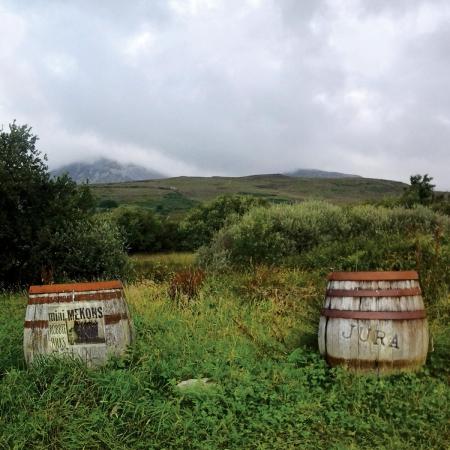 When a scaled-down version of the Mekons toured Scotland last year, they Shanghaied pal Robbie Fulks to fill in for the missing Tom Greenhalgh. No more perfect companion could have been stuffed into the hold, as Fulks shares the band’s cockeyed view of life and is himself a one-man distillation of what the Meeks have tried to do since about 1985 — fuse roots rock and country with a punk-rock ethos and a madcap sense of humor.
Along the way, the Mini Mekons, as they were calling themselves, took to the island of Jura, where sheep and casks of whiskey outnumbered humans, to record a (mostly) acoustic album, their 319th by my count. It is, as might be expected, a really wonderful collaboration.
Spiritual kin to 2007’s Natural, which if we recall correctly, also saw the Mekons gather the gang from their hideouts in Chicago and various dives to record a (mostly) acoustic album in the British countryside, Jura features the familiar voices of Jon Langford and Sally Timms, with Rico Bell and Fulks each taking turns before the mikes. With the exception of “Space In Your Face” from 2011’s Ancient And Modern, this is the best music the Meeks have released since 2002’s OOOH (out of our heads) – as fun a collection of sea chanties and folk charmers as is imaginable in the current sorry epoch.
The highlight for us on Jura is Robbie Fulks singing Tom Greenhalgh’s parts on the revived “Beaten And Broken,” a song first played by the Mekons during their mid-’80s Fear And Whiskey period, when they single-handedly created alt-country, a genre we take for granted today as having always existed.
Oh sure, maybe it started earlier with, say, The Basement Tapes. Or Hank Williams. Or the house band in the Gem Saloon in Deadwood. But just as the Mekons’ first album, The Quality of Mercy Is Strnen, had a jacket showing a monkey just miss being able to type a single line of Shakespeare, the band has always toyed with the concept of what would happen if 100 untrained Brits picked up electric guitars (to quote from the first piece we ever wrote about them, in 1981 in the Soho News.). When the band solidified in 1986 with the lineup more and somewhat less represented here, a buncha leftists from Leeds had paradoxically become the keepers of a peculiar flame — musical remnants of both American and British traditionalism. And on the island of Jura, with acoustic instruments, they still managed to bash around as joyously, weirdly, and beautifully as they did on their legendary live 1987 ROIR cassette Mekons…New York.
Three decades hence and then some, we now know the Mekons have become as formidable and long-lasting a force as their contemporaries The Fleshtones, and on Jura, they are purveyors of some of the most beautiful modern folks songs to be found on record this year.
 Tulip Frenzy
