Tinariwen’s “Tassili” And The Columbian Exchange

Posted in Uncategorized with tags , , , , , , on August 24, 2011 by johnbuckley100

Next week, Tinariwen, North Africa’s greatest blues band, will release its exquisite new album, Tassili, which we have been fortunate to listen to thanks to the NPR iPad app.  The timing couldn’t be better.  You may think this is a reference to the true story that, in its earliest incarnation, Tinariwen was actually supported by Muammar Gaddafi (they sang camp songs for rebel forces that, in this case, the Colonel financed.)  It’s not.  The reference instead is to the publication last week of Charles C. Mann’s pretty incredible follow up to his bestselling book 1491, with the new one, 1493, delving deep into the Columbian Exchange, wherein seeds and spores from Africa and the Americas floated in both directions once Columbus plowed his prow into the shores of the New World.

Tinariwen play trance-like ragas that would be recognizable to Son House and Robert Johnson, long loping blues lines on multiple guitars.  The choruses (at least on previous albums) tend to be sung by village elders leading ululating women and young ‘uns as they dance around the campfire.  Actually, on the new album, the choruses sound like they’re being sung by fighters waiting to rush into Tripoli and liberate a desert country from its oppressive dictator… The point is that Tinariwen sounds like a band perched on top of a dune in the Sahara, capturing whatever music the wind carries in — from the Mississippi Delta, from India, from sub-Saharan Africa — and the result is a cross cultural revelation, gorgeous songs that synthesize a global rhythm.  It is the musical equivalent of carrying tomatoes back from the New World to Italy, of bringing sugarcane to Jamaica.  With the Columbian Exchange — the biological cross currents suturing Gondwanaland back together, at least from an ecological standpoint — the world became one again.  And so it seems when you listen to Tinariwen, and wonder how a guitar band from North Africa can sound like Stevie Ray Vaughan pickin’ tunes around the picnic table in the Texas Hill Country.

On the brilliant Tassili, Nels Cline of Wilco joins to raise a background squall on the very first song — a scirocco created by an American rocker of Danish extraction playing with his Tuareg blues brothers.  Members of TV On The Radio sing in universal harmony.  New Orleans’ Dirty Dozen Brass Band amazingly mix their horns in with licks from their North African cousins.  Who, truly, could rail against globalism when this is the result?

Moon And Sleeping Indian

Posted in Uncategorized with tags , on August 24, 2011 by johnbuckley100

From the Gros Ventre River toward the Sleeping Indian, Jackson Hole, WY, summer 2011.  Leica M9, 90mm Summicron.

Do We Really Believe Jon Huntsman Is A Captain Beefheart Fan?

Posted in Music with tags , , on August 21, 2011 by johnbuckley100

On Thursday, former Utah governor and current long-shot GOP presidential candidate Jon Huntsman tweeted the following: “I wonder if a tweet where I admit how much I like Captain Beefheart will make the followers skyrocket even more!”

So do we believe Huntsman is a Beefheart fan?  Not really.  And it’s not simply because he throws the late Captain’s name out there as potential link bait.  We suspect instead that he has a very clever press secretary. While the son of a Utah billionaire and the late Don Van Vliet were geographically connected by the Mojave Desert, the distance between them seems just too great to have been crossed.

Some years back, when Republican Massachusetts governor William Weld served up Between The Buttons as his favorite Stones album, it had the immensely charming virtue not only of alluding to a quirky, semi-obscure record, but also of seeming authenticity.  Weld was a genuinely eclectic politician — a liberal Republican relative of Theodore Roosevelt, charmingly idiosyncratic in an upbeat preppy manner, a novelist who clearly wrote his own damn book.  You can see him listening to Keith Richards’ harmonies on “Connection,” on the last good Stones album before they hit their streak of genius, which began 18 months later with Beggars Banquet.

But the wan, former Obama appointee who is now trying to concoct a rationale as the sensible Republican in the race — eminently admirable for that, for sure, but nonetheless done with an air of contrivance — could be invoking Mr. Beefheart as a quirky touchstone.  So, to Mr. Huntsman, we pose the following quiz:

1.  What notable figure from rock’n’roll history went to high school with Don Van Vliet?

2.  In what canyon was Trout Mask Replica rehearsed?

3.  In which bands did Roy Estrada play before joining The Magic Band?

4.  What is the real name of Zoot Horn Rollo?

5.  What is your favorite Beefheart album, and why?  (If you name Clear Spot as your favorite, please indicate whether you believe Ice Cream For Crow was a sufficient final opus, or should he have just stopped releasing albums after Doc At The Radar Station?)

6.  Was Don Van Vliet a better singer or painter?

If Jon Huntsman — or even his press secretary — can answer those questions, Tulip Frenzy will endorse him for president.  Several can be answered by going to the Wikipedia.  But a few involve subjective decisions, and we think we will be able to discern whether the Beefheartian positioning is real, or a ploy to look more interesting than we suspect he is.

One Year With The Leica Noctilux 0.95

Posted in Uncategorized with tags , on July 21, 2011 by johnbuckley100

For many people, taking photographs with a Leica M camera has always meant low-light photography, being able to take advantage of Leica’s superb fast Summilux and Summicron lenses to photograph indoors or at dusk without having to use a flash.  But there is one lens above all that Leica photographers, for the most part, love and admire, and it’s the 50mm Noctilux, which with its large aperture of f/1, was legendary for its gorgeous bokeh (selective focus, with the out-of-focus area pleasingly blurred.)  I say it was admired for the most part, because there were a few downsides to the f/1 Noctilux, namely that it was a one-aperture camera (it was sort of average, compared to the 50mm Summilux, when stopped down to a smaller aperture), and very difficult to focus, especially in the low-light settings in which its performance was optimal.  Hence its reputation as a “soft” lens — not only did it have a wonderfully creamy bokeh, but it was often difficult to get the damn thing to focus, so many images with the classic Nocti look were… out of focus.  I should know; for several years I had one, and never could quite get the hang of using it effectively.  So one day I traded it as part of a complex deal to acquire the 21mm Summilux.

But then at Photokina 2008, Leica came out with a new and improved Noctilux, moving it a notch faster (f/0.95), but with the advantage of also rendering it both easier to focus and with dramatically higher performance stopped down.  (At f/8, it is difficult to differentiate it from either of the less expensive Summicron or Summilux Leica 50mm lenses.)  Yes, it is pretty ridiculously expensive.  But one year ago, I basically traded in every lens I could not bear to part with in order to procure one, and in the year that has just ended, I have grown to believe that the f/0.95 Noctilux is the apogee of photographic glass, the ideal lens.  I have grown to believe that it is, in fact, worth taking out a second mortgage to procure.

The first thing one does when putting a new Nocti on a Leica M9 is to go play, to rediscover the joy of photography.

The ability to choose just that area of an image you want in focus, while knowing that the out-of-focus area will prove to be far more interesting, liberates one to invert his normal priorities.

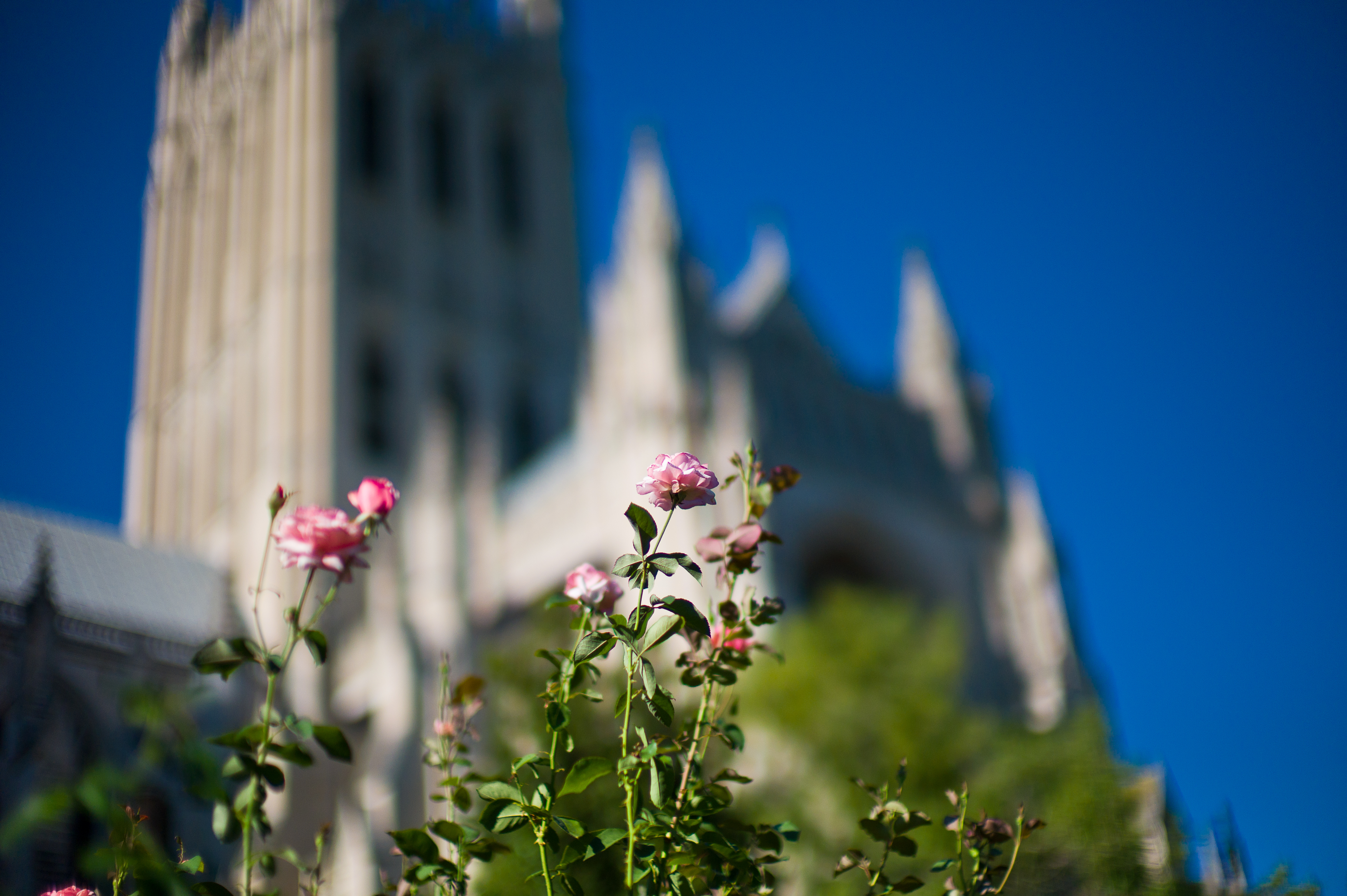
The lens is also so fast that sometimes, when shooting a particular image, a near miracle occurs.  Yes, the beauty of rangefinder photography is the ability to keep one’s eye on what is moving into the image, but with the Noctilux, the sense of kismet is profound.  In the picture below, I would have been happy just to capture the flower.  But something else happened.

As the autumn progressed, I grew to love how carrying the Nocti on my M9 enabled me to slow down the world and see things differently.

Walking around my neighborhood offered new possibilities, new ways to look at things I might otherwise take for granted.

It wasn’t enough to see a pumpkin patch, now I had to play with the possibilities.

But it became very clear quickly that, with the ability to focus faster and more precisely than with the previous Nocti, this truly could be, if not a reportage lens, at least one not to be afraid to take into fluid situations.

And something new began to be clear.  Yes, I still enjoyed taking the lens into boring places like malls just to see what the possibilities were.

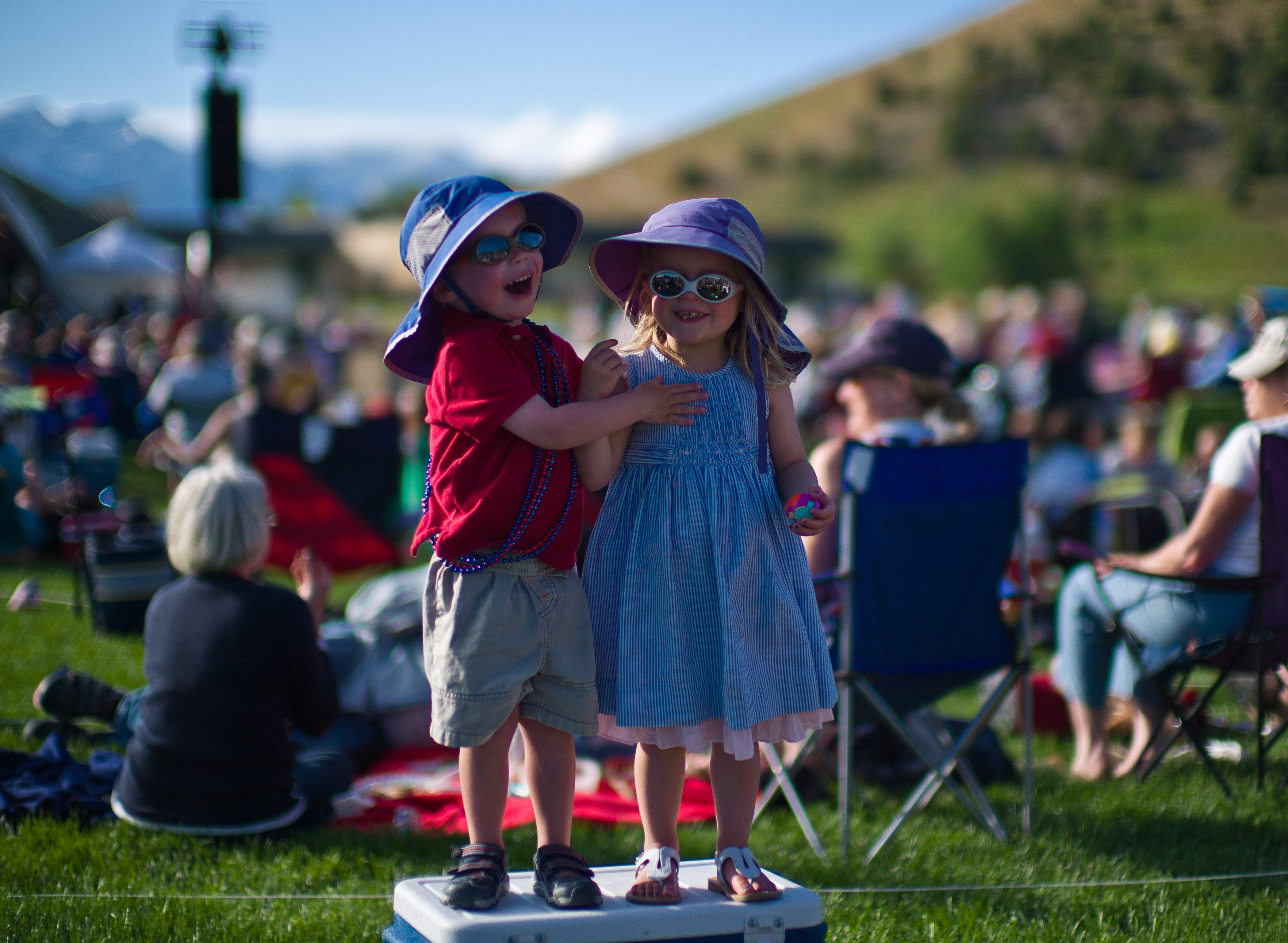
But as the first photo in this post — showing girls in my neighborhood at an evening Christmas event — makes clear, the Noctilux really is for taking pictures not of inanimate objects, which look cool blurred, but people, who deserve to have their portraits stand out from the background.

It is a wonderful lens for capturing children in all their delightful mischief.

While it might not be perfect for street photography — it is big, and somewhat unwieldy, and while it focuses faster and more assuredly than its predecessor, it still needs some skill in capturing someone moving — it could absolutely shine in an event photographer’s kit.

With the old Nocti, I never would have thought to bring it to a rodeo. With the new Noctilux, I wanted to go to the rodeo just to see what the lens could do.

It draws light like no other lens I have ever seen, and can capture the essence of its subject — separate and apart from her surroundings — in a way that, to me, is almost breathtaking.

There is no other camera and lens combination [insert edit: that I am aware of] that could have captured the following image (well, other than a Nocti with any other Leica M camera built since the Second World War).

I used to laugh (sort of) when hearing the Charlton Heston line about his pistol invoked, that someone would have to pry it out of his cold, dead hand.  After a year of working with a Leica Noctilux, however, I know just what he meant.

Not A Typical Stretch Of Road

Posted in Uncategorized with tags , on July 17, 2011 by johnbuckley100

Leica M9, 50mm Summilux, summer evening in July.

Where FCAP Should Properly Be Buried

Posted in Uncategorized with tags , on July 12, 2011 by johnbuckley100

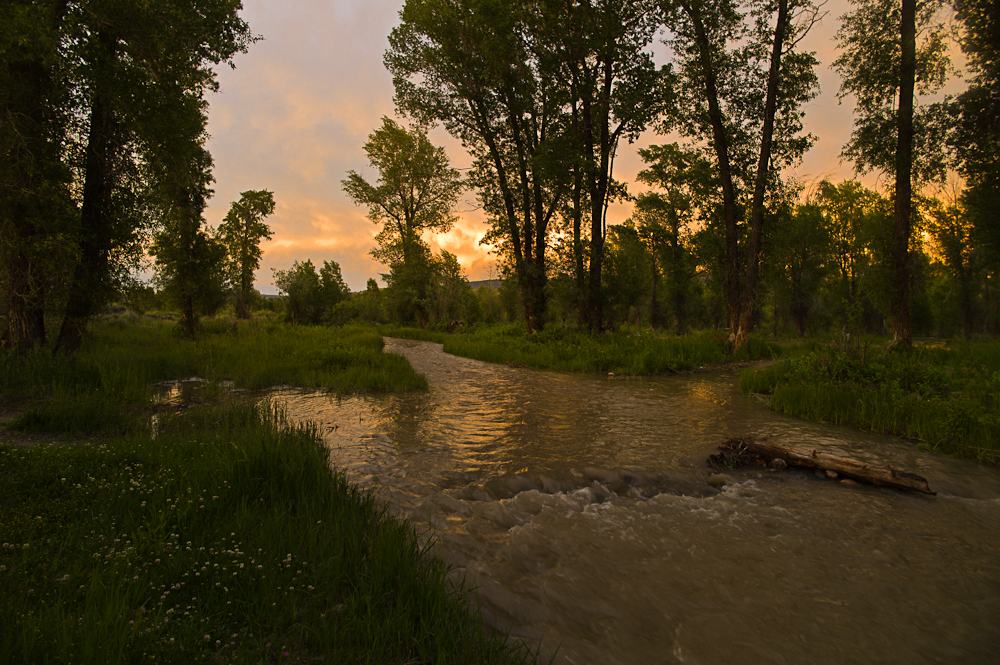
Leica M9, 21mm Summilux, about 9:00 at night, grove of trees near the Gros Ventre River.

First Communion Afterparty RIP?

Posted in Uncategorized with tags on July 12, 2011 by johnbuckley100

Our periodic Googling of First Communion Afterparty — always hoping upon hope that we find news that the best American band of the past five years has overcome whatever obstacles were preventing them from getting that second studio album out the door — has been met with the dispiriting notice on their Facebook page that the band is on hiatus.  There’s the even more ominous bracketing of years the band existed: “2005-2010.”  If this is the case, it is a great pity.  FCAP’s Sorry For All The Mondays & To Those Who Can’t Sing was, in hindsight, the best album released in 2008 — a soaring psychedelic mashup with gritty guitars and this great Marty Balin/Grace Slick thing going on, powered down by a woman with a Mama Cass physique and a Janice Joplin voice.  Subsequent videos promised more, more, more.  But the evidence would seem to indicate there will be no more.  And we are all the less for it.

Hey Baby, It’s The Fourth Of July

Posted in Uncategorized with tags , on July 5, 2011 by johnbuckley100

A man in the spirit of things.  Leica M9, Noctilux f/0.95 wide open, ND filter.

Sebastaio Salgado In The News

Posted in Uncategorized with tags on June 12, 2011 by johnbuckley100
Today’s New York Times has an interview  with humanity’s greatest living photographer, as well as an engaging slide show from Salgado’s Genesis project.  But there is another interview with Salgado today that is also worth reading from Time Out Hong Kong, where a gallery is showing a major exhibit of his work.

White Hydrangea Frenzy

Posted in Uncategorized with tags , on June 11, 2011 by johnbuckley100

Leica M9, Noctilux 0.95