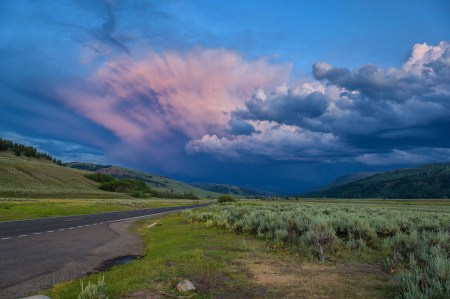
Television, A Friend From Many Stages, Return To D.C.’s 930 Club

Posted in Music with tags , , , , , , , on September 7, 2016 by johnbuckley100

television

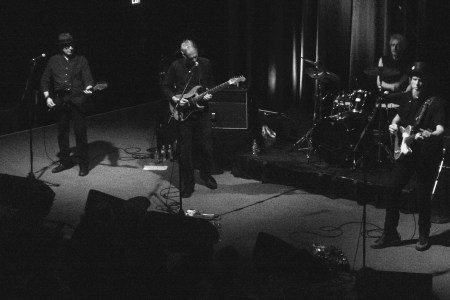
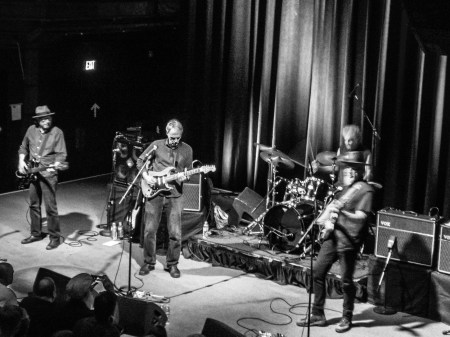
Speaking of bands who’ve been around for 40 years, Television played at D.C.’s 930 Club, and to say they were in fine form understates the impact of the Platonic ideal.

With only one song from 1992’s Television — “1880 or So” — and none at all from Adventure, this set was Marquee Moon all the way.  Only it was like Marquee Moon from the inside out: no “See No Evil,” and we heard “Prove It” and “Torn Curtain” before “Venus.”  A special highlight was hearing the gorgeous “Guiding Light,” and the closer of the set, “Marquee Moon,” was as good as we have ever heard it — and our hearing it live traces back to New Year’s Eve 1976.

Richard Lloyd has left the band, but Jimmy Rip — who has played with Verlaine since his 1980s solo tours — filled in and then some.  Yes, it was a little odd to hear a stand-in play Lloyd’s lines, but Rip is such an excellent guitarist in his own right, it was like hearing a gifted Branagh fill in for Olivier as Hamlet.

Richard Lloyd once famously said that with while some bands look to see whether they have the crowd moving, Television always judged its performance by whether the audience was motionless.  And yes, when Verlaine and Rip traded guitar lines, the crowd reaction was transfixion.  Verlaine was as loose as we have ever seen him, fronting Television or his own band (often comprised of a similar set of musicians.)  The volume was low, the torque was loose, and it was magnificent.

automotive-week-9

The last time we saw Television play was at Georgetown, when they were pushing their 1992 eponymous  reunion album.  The playing then was a bit like this: quieter and more self-contained than those shows we saw as they were exiting stage left in 1978.  But then and now, there was plenty that was raucous contained at an adult volume.

We once had Tom Verlaine explain to us, while sitting in our apartment in New York for an interview for the Soho Weekly News, that Television’s two-Fender guitar sound was aimed at extracting the jaggedness of wild songs.  But last night, he and Rip convened a harmonic convergence — on the unreleased, and very long, “Persia,” the fusion music had the audience guessing where the Farfisa , violins, and synths were hiding, though it was only the two guitars.  And on that post-Bolero finish to “Marquee Moon,” the return to the melody was like a post-coital urge for more, unheralded by the drums.

Fred Smith, the Harvey Keitel of rock’n’roll, was his wonderfully understated self, and Billy Ficca proved anew why he’s the greatest jazz drummer to ever center a punk-era band.  But it was Verlaine, of course, who people came to see, and both his singing and his magically elusive guitar were a reminder that one of the greatest bands in history can still evoke the era in which we first saw them, all those years ago.

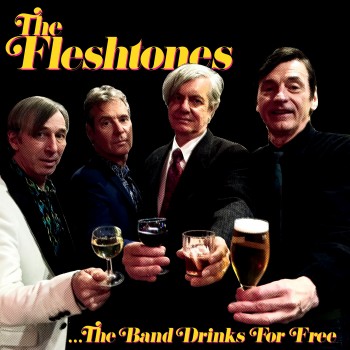
The Fleshtones’ “The Band Drinks For Free”: The Tulip Frenzy Review + Bonus Exclusive Interview With Peter Zaremba

Posted in Music with tags , , , on September 2, 2016 by johnbuckley100

thefleshtones_thebanddrinksforfree_cover-350x350

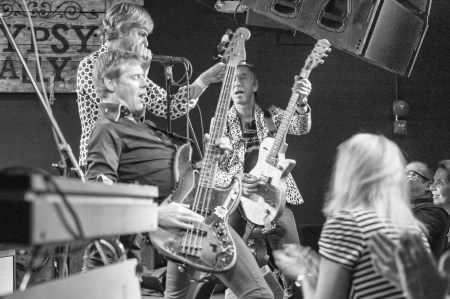
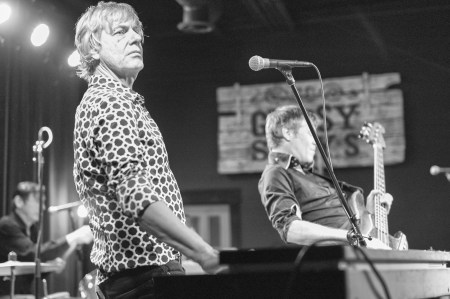
You’re walking down a darkened street when you hear the first sounds of a party in a loft above.  You are not in a glamorous neighborhood, there’s a bit of danger in the air, but the sound of a live band playing is intriguing. Wait, you say, is that Ten Year’s After’s “Love Like A Man”?  The band sounds pretty good so you follow the music up the stairs.  Inside the loft, the party’s in full swing, the guitarist and bass player are standing on top of the kitchen counter and while the singer alternatively plays Farfisa and his harmonica, the drummer is pounding away from his perch on the dining room table.  Someone hands you a drink and you take it, but the guy clutches your arm when you try walking away.  He points to the musicians, by now leading a conga line around the disheveled loft.  “The band drinks for free,” he says with a smile and wink.  You get it, and reach in your pocket to pay up.

Fleshtones

The Fleshtones celebrated their 40th Anniversary in May, and The Band Drinks For Free is their 21st album.  While this mythical, celebrated, hard-luck institution — memorialized by a great book (Sweat: The Story Of the Fleshtones, America’s Garage Band), a terrific movie (Pardon Us For Living But The Graveyard Is Full), and still out there on the road many weeks of each year — may be immortalized in cool cats’ memories principally as the most entertaining live band in history, the fact is that they have, over the decades, produced a string of incredible studio albums. We are pleased to report, based on intimate study of the group, that this new ‘un, out today from venerable YepRoc Records, ranks among their very finest.  By that we mean it ranks with The Fleshtones Vs. Reality, and clearly is on a par with other platters of miraculous songwriting and boss performances such as Beautiful Light and even Roman Gods.  It is unquestionably better than that last moment when the fickle spotlight swung the Fleshtones’ way, when Take A Good Look (2008) came out and provided a well-deserved opportunity for rock critters across the land to do what should have been done long before: pronounce the Fleshtones living gods.  It is hard to believe, but trust us when we say: the Fleshtones in 2016 are every bit as vital as they were in ’76, ’86, and ’96.

(There is only band with the longevity and storyline remotely similar to the Fleshtones, and it’s the Mekons, AFAWK the last continuously performing, semi-intact band from that magical late ’70s era.  But the Mekons have had shifting membership and while we pray they continue forever, it’s not the same thing — the Mekons seem to need a concept to record a new album (hey, let’s go to a Scottish island, or perform around a single mike in a Brooklyn club), while the Fleshtones, their line-up intact for more than a quarter century, just go on, and on, and thank Heavens they do.  Fleshtones songs, on some of their 21 albums, might seem rushed, or they might not fully gel, but they are never generic.  And unlike another band that goes on and on — the Rolling Stones — while we can’t wait for Mick and Keith to hang it up and go sit on the beach and count their Bitcoins, we pray the Fleshtones never hang up their plectrums.)

Fleshtones-6

The Band Drinks For Free sports fours songs by lead singer Peter Zaremba, four by guitarist Keith Streng, two songs by bass player Ken Fox, and two covers, including Alvin Lee’s great “Love Like A Man.”  Let’s focus on that cover for a moment, because it tells the uninitiated (wait, how can there be uninitiated when it comes to the ‘Tones? they’ve been around since the Carter Administration…what the Hell’s the matter with you?) much you need to know. How the Fleshtones approach “Love Like A Man” tells you a lot about their cock-eyed approach.  The original, from Cricklewood Green, Ten Years After’s great post-Woodstock album, is ponderous, lacks swing, though it is undeniably tuneful and great.  The Fleshtones treat it as a garage rock gem, a party song cut down from nearly eight minutes to 3:30.  It sets the tone for what’s to come.

On TBDFF, Peter Zaremba contributes some of the most fun songs of the band’s storied career, with “Rick Wakeman’s Cape” sounding like a cross between the Stones’ “2120 Michigan Avenue” and ? and the Mysterians.  On his songs plus the two written by Keith and Ken that he gets to sing, his voice is in fine fettle.  Keith Streng, who has stepped up almost as a coequal vocalist in recent years, has a remarkable voice — he’s like an athlete still able to roll along because he protected his body in the early years — and on the incredible “Respect Our Love,” he has the anthem he’s waited 21 albums to sing.

The tone of the record is elegiac, not quite nostalgic, as the Fleshtones reflect on a long career while still showing they have a full tank o’ gas.  This album swings, showcasing one of the great rhythm sections in rock’n’roll history with Bill Milhizer and Ken Fox propelling the songs on which Keith’s guitar and Peter’s Farfisa lay down their signature lines.  The backup singing of Vibek Saugestad rounds out the familiar boy’s choir with emollient tones, and Lisa Kekaula of the Bel Rays brings home “Love Like A Man” with the intensity of Merry Clayton on “Gimme Shelter.”

Tulip Frenzy has been along for the ride with the Fleshtones since we first saw them at Maxwells that hot summer night in ’79, and we’ve traveled cross country to write about them, hung in the green room while they opened for the Police, hosted them for barbecues, and dragged dozens of instant converts to see ’em.  We know whereof we speak when we say, 21 albums in, the Fleshtones have, in The Band Drinks For Free, their best album in nearly 30 years.  These guys are still going strong.  They still exemplify real rock’n’roll.  They are still worthy of their breakout record, their Madison Square Garden gig, their star on Hollywood Boulevard.  Now’s your chance to help — download the album today.

Fleshtones-12

But wait, who’s that there sitting on the couch?  Why, it’s Peter Zaremba!  Before we go, let’s ask him a few questions about The Band Drinks For Free.

Hey Peter, congratulations on the 40th Anniversary of the Fleshtones and the release this week of “The Band Drinks For Free,” your 21st album.  The gang at Tulip Frenzy rank it up there with “The Fleshtones Vs. Reality”, “Beautiful Light,” and “Roman Gods,” and it’s the band’s best platter since “Take A Good Look.”  Tell us about the magic that took place with Florent Barbier in the studio.

Peter Zaremba: First of all, thank you, I’m really flattered. Some of the folks at Tulip Frenzy are notoriously hard to please. We’ve got a great rapport with Florent -he’s a long time fan. We got to know him well while touring France with the band the Roadrunners in the ’90s. He was their drummer. It’s pretty comfortable recording at his place in Williamsburg, at least for Keith and me. We can walk to Flo’s. We’ve gotten pretty relaxed recording and don’t have a producer breathing down our necks and making us nervous. And we were much more prepared for recording – which was stretched out over a year and a half. In the end we had too much material. We even left the title track ‘The Band Drinks For Free’ off the album. How’s that for a radical move?

On TBDFF, you and Keith each penned four songs, Ken penned two, and you’ve got two covers.  Is that the basic pattern of Fleshtones songwriting over the past several records?

PZ – hmmm, I hadn’t done the math. Looks about right though. Like I said, we came in with a lot of material, so this kind of balances out our contributions. And we can always do another record with what’s left. Song writing is seeming to flow easier now after 40 years, unlike how we had to labor over our early tunes. I believe it was you who tagged ‘Shadow Line’ as a ‘pastiche’ in a review. Of course you were right. Anyway, we’ve finally stopped torturing ourselves over the songs and are enjoying writing and recording more. About time!

One pretty significant change on Fleshtones records since the ‘90s is Keith singing more.  What a voice!  Is this a function of Keith writing more songs, or him having discovered, around the time you guys started covering “Communications Breakdown,” his inner Robert Plant?

PZ – Inner Robert Plant and more! Actually Keith singing more is the result of a little thinking. He sang about half of our first album ‘The Fleshtones Blast Off’ because these were the first songs he wrote and just heard them that way. Then we decided I should sing all the songs. I was the lead singer after all. But them we realized I had difficulty singing some of the material, so we decided to start letting whoever can sing a tune the best just sing it. This is a process we’re still working on -making use of all of our vocal abilities, but Keith did let me sing his ‘How To Make A Day’ on the new album, something I was very honored to do.

We were deliriously happy to hear you cover “Love Like A Man,” our second favorite song from “Cricklewood Green.”  What’s the connection between your covering a Ten Years After song and your writing a song referencing Rick Wakeman?

PZ – I’m deliriously happy to hear us cover it too, and really love our version español ‘Ama Como Un Hombre’ which is actually the version we play live (the 45 will be released for coming Black Friday). It was Keith’s idea to do ‘Love Like A Man’ as if a garage rock band was covering it, although I think I obsessed on taking the song to it’s garage rock limits. There’s no real connection to “Rick Wakeman’s Cape” (which came to me in a dream) except it’s wound up on the same album, but there are no coincidences, right?

And by the way, did you really steal Rick Wakeman’s cape from Madam Tussauds?

PZ – haha, just mashing up all the ridiculous Rick Wakman imagery in my head (of which there is plenty), you know, him posing with the wax dummies of Henry’s wives for the cover of his album. Weren’t those in Madame Tussauds? I was there a long time ago with my sister. All I remember is they had Telly Savalas and those ghastly murder victims in the chamber of horrors. Maybe the Beatles, but they never went in for capes. Now I do.

There are some great cameo appearances on TBDFF.  Tell us about the band’s bringing in Lisa Kekaula and Vibek Saugestad to help out with vox/piano.

PZ – Well we’re lucky that Vibeke is married to Ken Fox, so she can’t say no. She also does a lot of backing vocals and helped with working out the notes of some crucial riffs. She has a musical background, unlike the Fleshtones. It was Keith’s idea to get someone like Lisa Kekaula of The Bel Rays to sing the final verses of ‘Love Like A Man’ which were originally intended for him. So we figured why not just ask her? We’ve played a lot with the Bel Rays and form a small mutual admiration society. She said yes and absolutely nailed the part -kicking the track up into the next dimension just like it needed.

There’s a distinctive elegiac tone to the album — not quite nostalgia but fond looking back on your youth and the band’s earlier days.  Is the mood of the band, entering your fifth decade, looking back on the Fleshtones’ remarkable legacy as well as the future?

PZ – I’m glad ‘not quite’ nostalgic. The mood is there. We’ve been around for 40 years and as humans have experienced a lot. It’s only right that this should be imparted to our music. At this point I like the idea of projecting an image of a band who should know better.

“The Sinner” is, as far as I can tell, the first blues song you’ve recorded.  Is this your “Yer Blues?”

PZ – It’s the closest thing we’ve ever done to the ‘white English kids playing the blues’ stuff like the Stones and Yardbirds that we loved so much growing up, although we did record our ‘Worried Boy Blues’ for, I think “Beautiful Light’ or was it ‘Laboratory Of Sound’ album. I thought we were finally up to it, although the guys thought I was nuts. I just figured we had to avoid all the bad moves that mar all the bad blues that so many other white bands did, especially in the late 60’s and 70’s. How did we do?

You’re touring China??  Do tell!

PZ -We sure are touring China – a totally un-foreseen development. We needed to expand the Fleshtones fan base a bit. We tend to go back to the same (wonderful) places year after year. Japan seems oddly impossible for us, Brazil fell through because of the collapse of their currency. Danny Amis of Los Straightjackets did get us back to Mexico for the first time in over 20 years last June but we needed more. So I asked Eric Beaconstrip, a Frenchman in the British band King Salami & The Cumberland 3 for some suggestions. His band really gets around, mostly through a world-wide network of rock and roll supporters. He suggested contacts in many countries around the world including the band ‘Round Eye’ in China. Now, playing China was never in the career strategy of the Fleshtones but Catchy of Round Eye was really happy to hear from us. He put together the tour ASAP. Once again, this is a case of rock and roll fans being today’s life-spring of music, instead of the promoters (although there are a handful of promoters who are keeping music alive around the world. I’m very sad that we lost one of them recently – our friend Nicky Trifinynadidis who was responsible for bringing the Fleshtones and so many other bands to Greece). So, the Fleshtones are on our way to China, can’t wait to bring them ‘Super-Rock’ -they don’t know what they’ve been missing!

_

So, people of the world, you don’t know what you’re missing if you haven’t heard The Band Drinks For Free.  Get off the stick and get this album by one of the surviving wonders of the world, the miraculous, magnificent Fleshtones.


In The Foreground, The World’s Greatest BLT Sandwich

Posted in Uncategorized with tags , , on August 28, 2016 by johnbuckley100

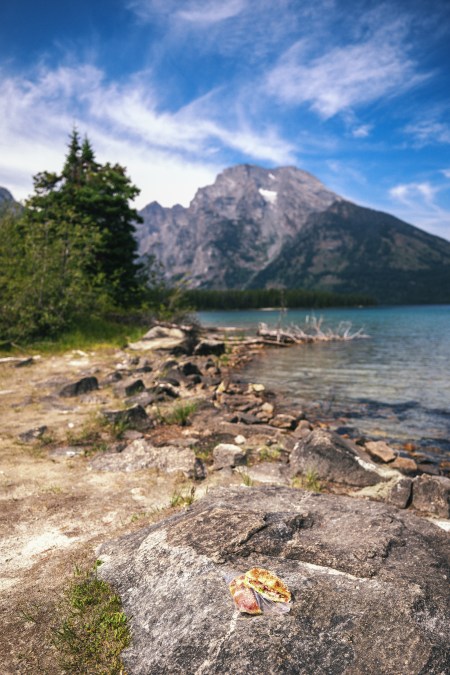
A few miles down the Leigh Lake trail, Grand Teton National Park, and a sandwich made on a Wild Flour Bakery’s bagel.  It doesn’t get better than this.

Leigh Lake 3

Morgan Delt’s “Phase Zero” Is The Best Psych Album Of 2016

Posted in Music with tags , , , , , , , on August 28, 2016 by johnbuckley100

a3191513484_10

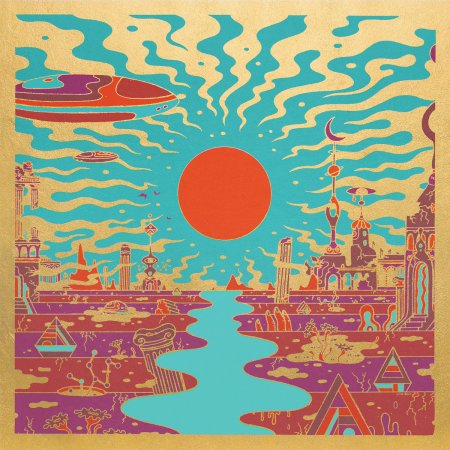
When Bill Doss passed away in 2012, we despaired of ever again hearing an album that blew our mind quite the way Music From The Unrealized Film Script: Dusk at Cubist Castle by The Olivia Tremor Control did when we first heard it 20 years ago.  But then earlier this summer, the mysterious Morgan Delt released “I Don’t Wanna See What’s Happening Outside,” which leads off his second album, Phase Zero, and if it’s possible to get the same rush the second time through, yep, this song did it.

Here’s everything we know about “Morgan Delt”: that’s not his real name, his eponymous first album was every bit as weird as a typical Olivia Tremor Control outing, he works as a graphic designer in California, Sub Pop were wise enough to lock him in a studio all by himself, and he’s playing September 20th at DC9 in the Nation’s Capital. Oh, and Phase Zero is a gorgeous, weird, melodic, inventive, soothing, trippy self-produced album in which he plays all the instruments.

“I Don’t Wanna See What’s Happening Outside” really does begin like a lost OTC track, and then fades into the boss “The System Of 1000 Lies,” like the best psychedelic album of your amped-up dreams.  The album is mostly those strangely treated six-string guitars, some keyboards for texture, and yeah, underneath it all, we suppose, are bass and drums, but think of this essentially as a longhaired guy singing gorgeously over slow and meandering highly electrified guitar lines, while floaters cross your vision and all solid walls have finely limned colors bleating and tricking your olfactory nerve ends.

We invoke, of course, the Elephant 6 bands, of which OTC was simply our (second) favorite (after the Apples In Stereo), but there is another, important reference point here, and it’s the trio of cross-indexed records made in the mid-70s by Cluster, Eno, and Harmonia (which consisted of the two guys in Cluster plus a guitarist genius pal.)  Their mostly instrumental early German electronica platters have been pulsing across our earbuds for many, many years, but never so intensively as in the last year when a deluge of Cluster and Harmonia recs became available to the non-Teutonic world, and yes, seems like Mr. Delt has been snuffling up these tracks for a long time too.

By the time the most excellent Phase Zero hits “Some Sunsick Day,” we are deeply into Eno’s “On Some Faraway Beach,” and we’re ready to come back to reality, weary, changed, a little emotionally wrought, no longer hearing through our nose and seeing through our ears, but satisfied that we’ve seen God, and his name is Morgan Delt.


It’s So Hot In DC, This Is The Only Answer

Posted in Uncategorized with tags , on August 13, 2016 by johnbuckley100

IceCreamMan (1 of 1)

On Thee Oh Sees’ “A Weird Exits,” It’s Time To Take John Dwyer Seriously

Posted in Uncategorized with tags , , on August 13, 2016 by johnbuckley100

cf-080cover_1024x1024

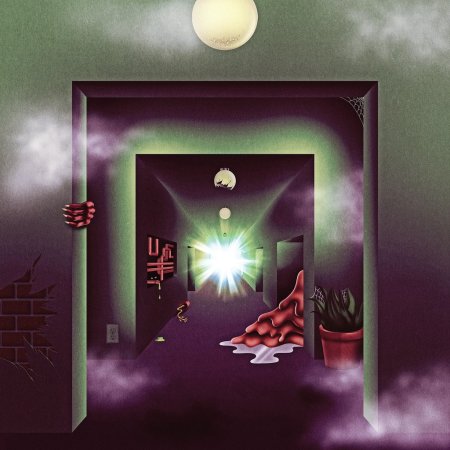
By my count, Thee Oh Sees have released eight albums since 2010, not including greatest hits and rarities.  Even with John Dwyer backed by different incarnations of the band, what Thee Oh Sees’ albums have all had in common is a balance between joyous, thrashing punk rock that transports you to a crowded club heaving with spilled beer and dance sweat and these quieter songs, sometimes instrumentals, that make you go, “Well, that’s pretty.”  On A Weird Exits, the twin strains are in perfect equipoise, the jams offset by much more carefully plotted compositions.  And it makes us realize that it is time to take John Dwyer seriously.

Sure, albums like Floating Coffin and Putrifiers II have loomed large on Tulip Frenzy’s Top 10 Lists over the past half-decade, and you really haven’t lived ’til you’ve seen Thee Oh Sees play live, but with A Weird Exits, it’s time to tell the world: living amongst us, right now, is a deity capable of miracles.  “Plastic Plant” may be a perfect exemplar of Dwyer’s rock’n’roll genius, the double-drum set up calmly rolling along as he sings in a quiet falsetto, before his guitar just crushes it, the ebb and flow between the delicate passages and nuclear war the greatest formula since Black Francis was doing something like this with the Pixies all those years ago.  It’s easy to understand a song like this, or “Dead Man’s Gun,” or the frantic”Gelatinous Cube” were all created for the stage, with Dwyer carving out space to sing sweetly between tsunamis of sound.  So far so good, no need to plea the point that Thee Oh Sees are probably the most exciting live band playing these days.  This is settled fact, stare decicis, things every skateboarder in San Francisco is taught in 4th grade.

But there’s an entirely different side to Thee Oh Sees, and it goes way beyond what Dwyer does with his offbeat guitar tunings, his strange scales, his chirps and rave ups.  On “Jammed Entrance,” the way the double drums begin while the double-tracked guitar noodles along before the instrumental gets going, it’s jazz, man; this is something Miles Davis would have sampled, and not the other way around.

Which leads us to the two songs that end the album, bluesy, gorgeous compositions, a reminder of that other side of Dwyer. “Crawl Out From The Fall Out” has a minor-key undertow and — as some of his coolest songs have in the past — utilizes a Kronos Quartetesque strings arrangement, and it makes you sit up and listen, even though it’s a quiet song, not a trademark garage-psych groove.  Beautiful, beautiful music.  And then rather than follow it up with a rocker, the closer, “The Axis,” sounds like Stevie Winwood jamming with Procol Harem.  Well.  In just a 30-minute snippet of time, such a short interlude in your life, John Dwyer has taken us from the most exciting garage rock of the epoch to deep, moving contemplation.  The guy has it all, including originality.  A Weird Exits, its title rendered ambiguous by the extra “s”, is not only the best Oh Sees album since Floating Coffin, it should be that album that makes audiences of all stripes sit up and notice.

It’s time to take John Dwyer seriously.


Above The Cape Of Good Hope

Posted in Uncategorized with tags , , on August 6, 2016 by johnbuckley100

Friends enjoying their moment in the Southern-most tip of Africa, the Cape of Good Hope,  on this day in 2014.

Above The Cape

Cheena’s “Spend The Night With…” Will Keep You Up ‘Til Dawn

Posted in Uncategorized with tags , , , on August 6, 2016 by johnbuckley100

cheena-album-cover

Some time ago, the advance word on the Strokes was that they were a classic New York band, ready to take on the mantle of forebears like the Dolls, Television, and the Velvet Underground.  That as it turns out, the Strokes kinda sucked made us permanently wary of all hyped entrants in the “New York band” insta-mythmaking.  As Mike Bloomberg mighta said, I lived in New York during the CBs days, and I know a con when I hear one.

It’s true that the Brooklyn bands emerging over the past 10 years, collectively and in many cases individually, rival the output of New York in the late ’70s, with a breadth and heterogeneity that reflects a city this large, diverse, and great.  And just as in the CBGB days, when it was Blondie that had the first real hit while bands like the Fleshtones, dBs, and Individuals went overlooked, the fact that The National became Brooklyn’s arena rockers while the Amen Dunes, Woods, and Parquet Courts simply released the epoch’s best records seems about par for the course.

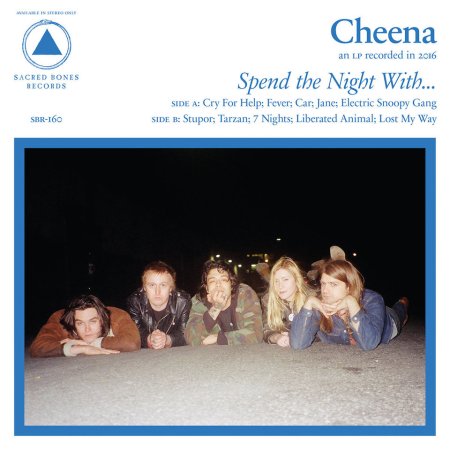
So when we first heard about Cheena, and the comparisons invoked were to the New York Dolls and Richard Hell and the Voidoids, our bullshit detector went up.  And then we listened to “Car,” the first single off Spend The Night With…, and we immediately muttered “sonofabitch” under our quickening breath, for sure enough, this is a band as dingy as the mens room at TR3, as real as waiting in subzero temps to get into the Mudd Club, as tasty as the egg cream at Dave’s on Canal.

Comprised of vets from various New York bands, Cheena sound like what woulda happened if the Flamin’ Groovies had played “Slow Death” at the Mercer Arts Center, opening for the Dolls in 1972 just before the roof collapsed. With a sound comprised of muddy vocals and a persistent, “Silver Train” slide guitar, Spend The Night With… is never not fun.  There is nothing profound about Cheena, and they don’t try to be anything more than that band that plugs in while beer gets guzzled and you cross that threshold where you know you’ll have to call in sick to your job. This is late-night Downtown music for the City That Never Sleeps.  Download this album and you won’t want to either.

An Appreciation Of The Leica SL By A Confirmed Leica M Photographer

Posted in Uncategorized with tags , , , , , , on July 11, 2016 by johnbuckley100

SL Example-3Leica SL with 50mm Noctilux f/0.95

I am a Leica M photographer, a rangefinder devotee, certain in the paradoxical belief that the very limitations inherent in using an M are the reason why so many images taken with one often look magical. The lack of autofocus and long lenses, for example, lock M users out of certain photographic categories — sports photography, some wildlife photography, various types of landscape photography. Yet in the hands of a practiced M user — and the history of photography is, of course, heavily weighted toward M users — there are things an M photographer can achieve (in both its film and, for the past 10 years, digital incarnations) that users of SLRs, DSLRs, and even modern mirrorless miracles cannot.

But these beliefs didn’t stop me, in April, from eagerly buying a Leica SL, a mirrorless camera with autofocus that arrived with an impressive 24-90mm zoom lens.  You see, even as my approach to photography, which reflects the fact that for much of the year I live in a big city, is principally applied to street photography in color, and since the introduction, in 2012, of the Leica Monochrom, in black and white as well, I spend time each summer in the Greater Yellowstone region of the American West, and landscape photography in and around Jackson Hole is what first motivated me to buy a Leica M7 back in 2002.

Back then, I had been looking for a camera that could return me to the simplicity of Pentax cameras I’d used as a teenager, or the Olympus OM-1 I’d used in my early 20s, and the only system that promised delivery of both the essentials of photography and great optics seemed to be an M.  (It is true that for a few years, until the M8 digital camera was delivered in November 2006, I also used a Leica Digilux 2, which I find very much the precursor to the Leica SL.  But we are getting ahead of the story.)

In 2014, I was fortunate enough to go with my family on a safari in Botswana.  Even with the Leica M-240 now enabling, through a kludge of an adaptor and external EVF, the ability to use long lenses, the images that meant the most to me upon my return were those taken with a Monochrom and a 90mm Summicron lens.  Sitting in the back of an open-air Land Rover while lions and leopards were wandering nearby, I was extremely limited, compared to my son using a Canon D6 and a good zoom lens. But the pictures I came back with seemed to prove my thesis that the very limitations of a Leica force one to take pictures that ultimately look different from the “typical” pictures one expects from a given situation.  That the “shortcomings” of the M paradoxically, perhaps, can lead to a different form of art.

TF Lion Portrait

Leica Monochrom (version 1) with 90mm Apo-Summicron-ASPH

Nonetheless, I returned from that trip vowing I would, if fortunate enough to ever return on safari, purchase a Leica S, probably used, given how expensive they are.  I hankered to be able to do things that one could not do with an M: use long lenses natively, use zoom lenses, be certain that, in a professional situation, I could bring home the goods.  I remember thinking, last summer, about my son’s upcoming graduation from high school and wondering if, given certain situations, I might miss photos because I was changing lenses, or fiddling with manual focus.

And then last October Leica announced the SL, and the reviews were glowing, and it seemed to meet multiple desires.  It would take all of my manual-focus M lenses, including the Noctilux.  The autofocus zoom lens available at the time of release, while heavy and large, sounded amazing, as did the EVF, which received raves.  In April I bought one, and I have been using it, alongside my MP-240 and Monochrom-246, ever since.  I’ve learned a lot in the past few months — about the SL, about my appreciation of Ms, about the M’s limitations, weaknesses, and genius, and about photography itself.  I have been using the SL on an extended stay in Jackson Hole, and what follows is a summation of learnings from the past few months, told through pictures and writing, that I hope expands on the strict limitations of a product review.

The picture that leads off this post was chosen because, since 2012, I have loved taking my Monochroms to various public gardens in DC, often with the Noctilux and, since the release of Monochrom-246 last May, with an external viewfinder that helps render the notoriously hard-to-focus Nocti more consistently effective.  Within days of owning the SL, I came to a quick conclusion: using it with the Noctilux for the kind of dreamy, classic still photography I love is dramatically easier and in many ways superior to using an M in these situations.  Put differently, the Monochrom has only one advantage over the SL in most normal-light situations: size. (I believe it has an advantage over the SL, and probably every other camera, in its gorgeous high ISO performance.)
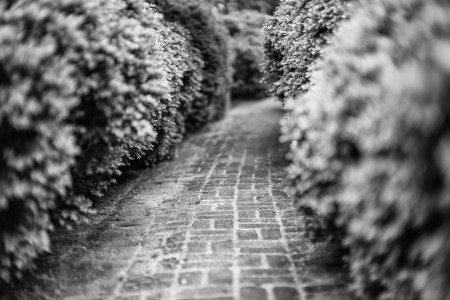
SL Example-2

Leica SL and Noctilux f/0.95

Because of the EVF, the robust, malleable files, the magnification in manual focus that, since the firmware upgrade in May, is now so easy to access, the Leica SL is simply a superior camera to take along with you if you wish to use a Noctilux and size and weight are not an issue.

Tulip Frenzy 2016-3

Leica SL and Noctilux f/0.95

There is a reason my blog is called Tulip Frenzy and my photo site is called TulipFrenzyPhotography: I have this weird love of tulips and for 15 years have been shooting them with various Ms and, mostly, the Noctilux.  This year, though, I learned that it was so much easier to take the SL along — in the rain, since it’s weather sealed, or on sunny days — because the EVF, in these situations, is a marvel.

But when I went out into the streets of D.C. to photograph its best annual event, The Funk Parade, I had zero desire to take along the big, heavy SL. I took my small, subtle, amazing Monochrom, and the pictures captured were, I believe, the better for it.
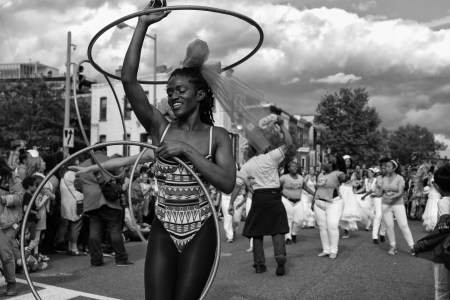
Funk Parade 2016Leica Monochrom-246 and 35mm Summilux.

And when I went out on the street to take pictures of The Capital Pride Parade, the camera I took with me was my MP-240.  Why? Because it is small, discreet, less threatening to people, and renders colors wonderfully.

Pride 2016-11Leica MP-240 and 35mm Summilux

But having come out West for a few weeks, with all three cameras in tow, I really wanted to get a sense of the SL’s magic in those situations where its capabilities could be tested, without regard to its size and weight.  I had long since concluded that it is ergonomically brilliant, well designed, and delivers fantastic files/images.  Of course, on our first full day here, my wife and I went for an evening walk along the Snake River, and because it was a casual stroll, not a photographic expedition, I took along my M.
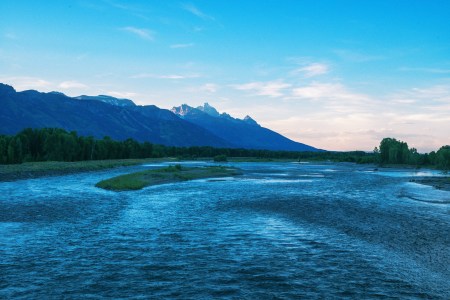
Evening WalkLeica MP-240 and 50mm APO-Summicron-ASPH

Now, the SL could easily have taken that picture, and possibly it would have been even better.  But the M is small and easy to carry on a walk, and capable of taking such good pictures, in many situations, one does not yearn for the SL’s capabilities: fast autofocus, ability to use zooms, etc.  It’s why the M has been my camera of choice for a decade and a half.

Having said that, being in a small town with lots and lots of tourists carrying cameras, I found it less of an issue to take the SL, with the Noctilux affixed, into Jackson for the evening “Shoot Out” staged for visitors.  The image below might easily have been taken by an M, but manual focusing of Leica lenses on the SL is so intuitive and quick, that if you can use it, why wouldn’t you?
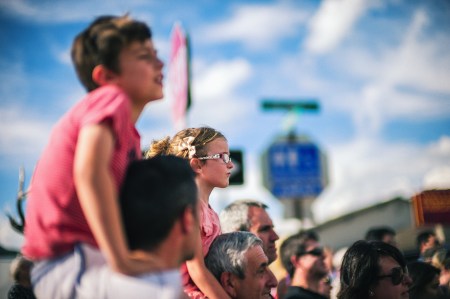
SL ReviewLeica SL and Noctilux f/0.95

In fact, when it came time for Jackson’s 4th of July parade — an event I have photographed for 15 years with Ms — I took along my SL and was stunned at how easy it was to shoot like all the other photographers with their Canons and Nikons, their autofocus and zoom lenses; that the priesthood of M photography, pure and noble as it may be, sure can be a chore, in some situations, when those with zooms and autofocus are so effortlessly having fun.Parade WinnerLeica SL and Vario-Elmarit-SL 24-90mm 

I likely never would have gotten that picture with an M — I probably would have struggled to decide even which lens to use, and then having made the decision, would have been limited by the decision. I long ago traded in both the WATE and MATE — the M wide-angle and medium-angle “zooms” — because I wasn’t using them, given the superiority of Leica primes.  But here I was, zooming to the right focal length, focusing instantaneously, and emerging with fun pictures.

SL Review-3Leica SL and Vario-Elmarit-SL 24-90

The picture above could easily have been taken with an M, but again, in a situation where you are comfortably able to carry the bigger SL with its large, excellent zoom, it proves to be an pretty incredible camera and, most importantly, provides a great photographic experience.
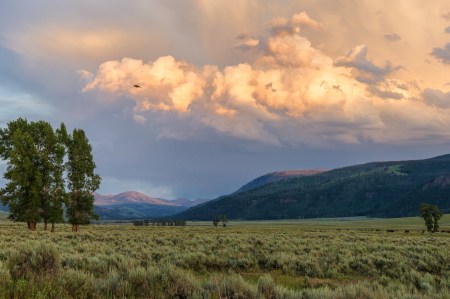
Lamar Sunset 1

Leica SL and Vario-Elmarit-SL 24-90

My wife and I, along with friends, traveled up to Yellowstone, and for the first time, the Ms pretty much sat in the bag.  The quality of the SL images are so good, the Vario-Elmarit-SL 24-90, f/2.8-4 lens is so satisfying, it was all I needed, or wanted to use. The files produced — like the Monochrom’s – come out looking flat, but they can be so well manipulated, even tortured, in Lightroom, that if I had any doubts, by day two of our trip it was clear: in these situations, the virtues of the SL outshine the virtues of the M.  One finds the ease of use, and the flexibility, in a situation where size and weight are not an issue to tip the scales in favor of using the SL.
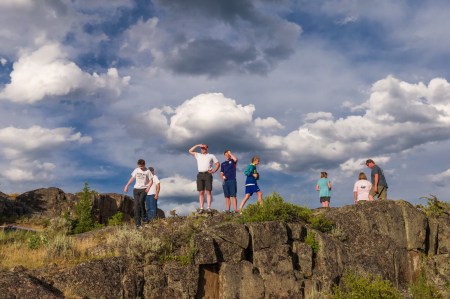
SL Review-8Looking for the Bear: Leica SL and Vario-Elmarit-SL 24-90

While it was easy to use my 70-200 R lens with adaptors, and did so in situations where the length was called for, I used the incredible Vario-Elmarit-SL 24-90 pretty much the whole time we were in Yellowstone. Being able to frame the image according to focal length needed is a blessing, as is having a zoom as sharp as most Leica primes. And for a sense of what this camera and lens can do in certain situations, you might like to take a brief detour here.
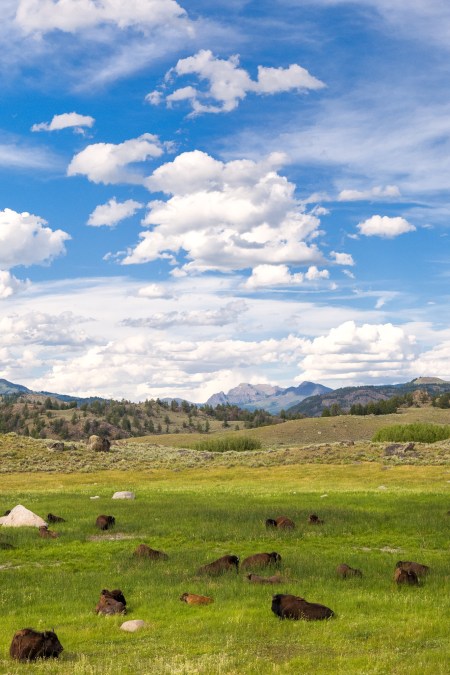
SL Review-7

Leica SL with Vario-Elmarit-SL 24-90

We went up out of Yellowstone onto the Beartooth Highway, an amazing, high-altitude road between Cooke City and Red Lodge, Montana.  A year ago, I had taken what I thought were great images there with my Monochrom-246.  But by now I’d learned how good are the black and white conversions one can get out of the SL, and there really was no need to use either M on this part of the trip.
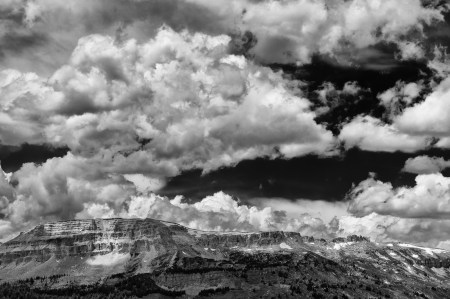
SL Review-5Leica SL and Vario-Elmarit-SL 24-90

The level of detail captured by the combination of camera and lens is, even when handheld, as fine to my eye as many Medium Format images.
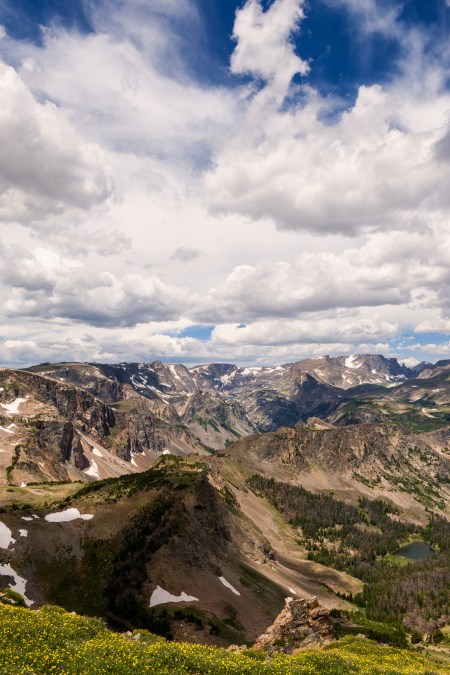
Schwabachers Sunset Instagram Beartooth

Leica SL and Vario-Elmarit-SL 24-90

In tough, variable light, given the ability you have to get the most out of the files, the SL is, I believe, a really amazing landscape camera.
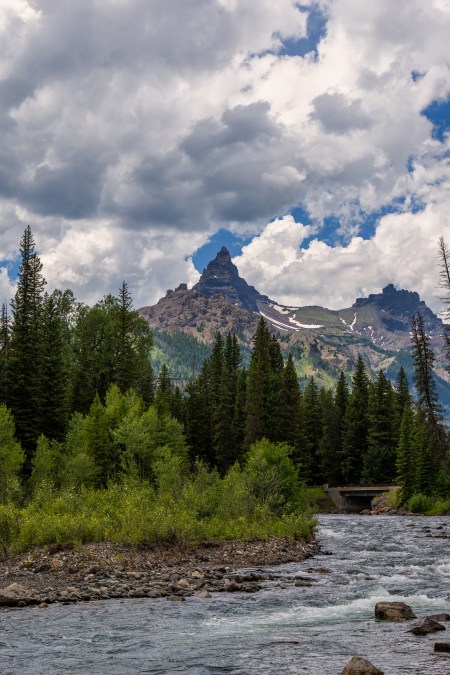
SL Review-6Leica SL and Vario-Elmarit-SL 24-90

But lest you think I am ready to chuck the Ms and become a full-time SL user, here’s one downside to the SL, and it is a big one.  I was reminded, via a thread in the Leica User Forum, that Leica’s promotional copy, when the camera was introduced, stated this:

The Leica SL is the world’s first camera conceived for professional photography to feature an electronic viewfinder. With a latency time below the threshold of perception and a resolution of 4.4 million pixels, this EyeRes viewfinder developed especially for the Leica SL offers an entirely new visual experience. As its image can be electronically brightened, the EyeRes viewfinder is superior to optical viewfinders in low or unfavorable light.

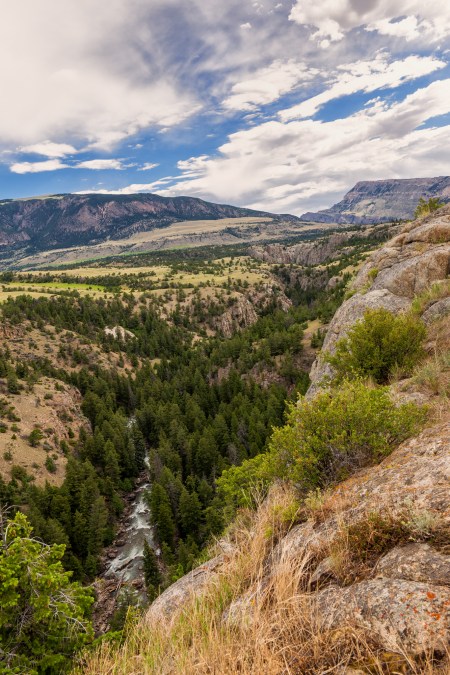
While, in general, the EVF is remarkably good, and they’re not wrong about using it in low light, I found that in a number of situations while shooting in the bright light/high contrast of the American West in summer, I actually could not see what was being rendered in the shadows.  Here’s an example, from the Chief Joseph Scenic Byway that runs between Cooke City and Cody, WY.
SL Review-9Leica SL and Vario-Elmarit-SL 24-90

When I leaned as far over as I could to take that image of the gorge through Mother Earth, I literally could not see the water.  The EVF was thrown by the bright-ish sky to an extent that the area below was completely dark.  Not just a little bit dark, but really dark.
All Guest WelcomeLeica SL and Vario-Elmarit-SL 24-90

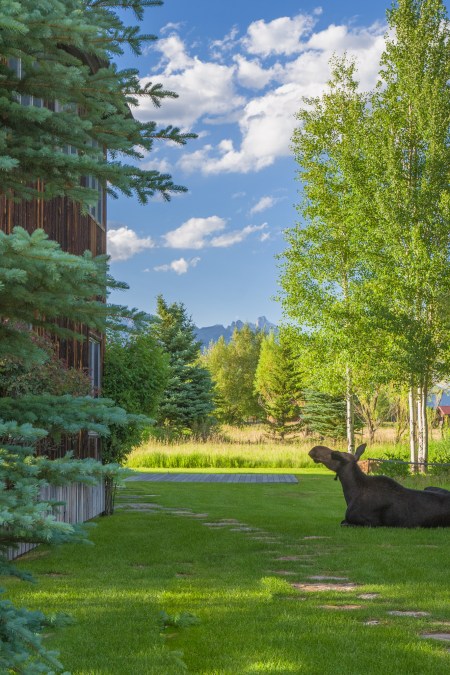
When we returned to Jackson Hole and were surprised to find a mama moose and her twins parked outside our house, I snapped away and got many good pictures.  Having such a capable zoom lens was a blessing.  But in the picture above, I had to take on faith that I could get shadow detail out of the bottom half of the picture, because as I looked through the EVF, the image was dark.

This is a significant flaw in an otherwise incredible system.  Yes, I know, as an M user who has not spent time with EVFs, this flaw is common to all systems.  Yet, in their promotional copy, Leica clearly says one can adjust the brightness of the EVF.  You can’t.  There are various workarounds, and you can just trust the shadow detail is there.  But this is a downside one never has with an M and its optical viewfinder.

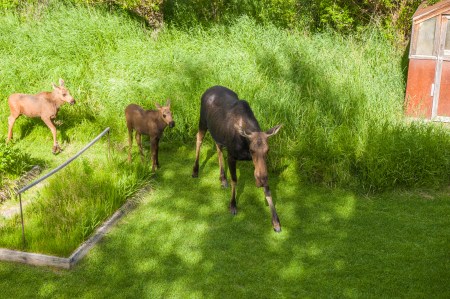
Yes, with the SL I could finally sneak inside the house, run upstairs, and in a few seconds take the below picture, without having to grab an 90mm and with fumbling hands swap it out from whatever standard lens I might be traveling with, even as the moose stepped out of the picture.
SL Review-11

Leica SL and Vario-Elmarit-SL 24-90

That’s a big deal: its effortless, easy ability to deliver the goods. This camera has many strengths, and is an incredible system that is complementary to the M.  If one can afford it, having both an M and an SL is a great and flexible combination.   For an M user, the focusing of the Noctilux and other fast M lenses on the SL is remarkable.  And with autofocus zooms and, eventually, long lenses, we now can get engaged in action photography.  The SL is intelligently designed with the ability to program the buttons you want to have call up the features you need at just the right moment, from switching ISO to Exposure Compensation.  It is a pretty remarkable tool, especially appreciated by someone who has spent so long in the defiantly different world of M photography.

The Vario-Elmarit-SL has won me over: it renders colors as well as the 75 Summicron, and is almost as sharp as the best M primes — in any event, it does the job that a longtime Leica user can expect of the company’s glass.

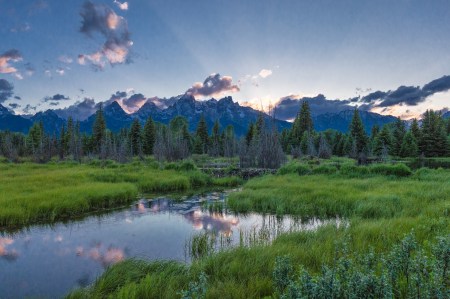
The Leica SL will never replace my M.  I can’t wait for the successor to the M-240, even if I now know I will use it just a little less often than I use my SL.  I can’t imagine taking the SL into city streets for the kind of discreet photography one can access through an M.  I can’t imagine, for example, traveling with an SL to Paris.  But at the same time, when it comes to going out for an evening here in Wyoming, trying to take advantage of the photographic bounties, yeah, as the picture below will tell you, I am very happy that Leica has produced in the SL a first-rate mirrorless system.
Schwabachers Sunset Instagram

Leica SL and Vario-Elmarit-SL 24-90

On Twitter: @johnbuckley100

On Instagram: tulip_frenzy
On Yellowstone’s Lamar Valley, And How Photography Is Like Fishing

Posted in Uncategorized with tags , , , , on July 10, 2016 by johnbuckley100

Lamar Sunset 1

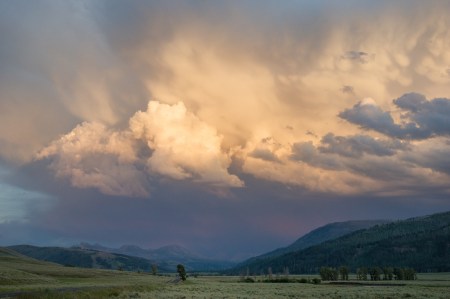
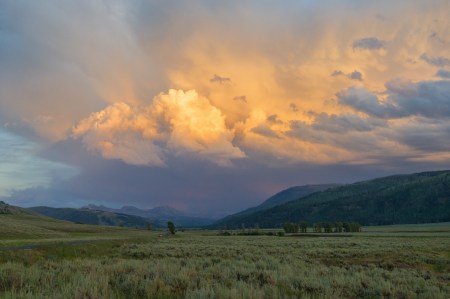
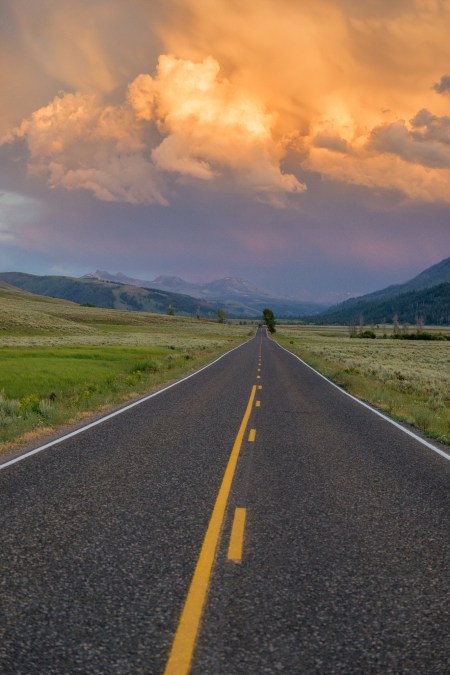
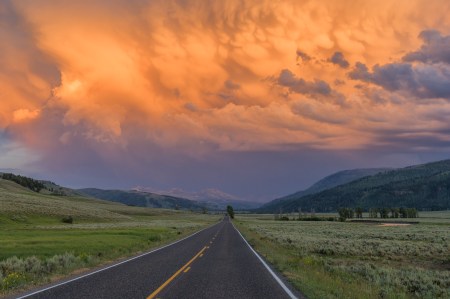
Like fishermen, photographers tend to go back to the same places, looking for light, weather, and other conditions to combine for an image as great as the last one we caught there.  In our hometown of D.C., photographers congregate near 7th and H Street in late afternoon, because that’s where the crowds and good light combine; there is a spot like that, a fishing hole, if you will, in every city.  For us, when visiting Yellowstone National Park, we like to go to the Lamar Valley, one of the most beautiful places on Earth, and also a location where you are likely to see (as we did on Friday), grizzlies, pronghorn, bison, osprey, and if you are lucky (others were, we weren’t) wolves.

But we begin this little photo essay with a confession that, having waited patiently, binoculars in hand, communal spotting scopes from our fellow wolfers nearby, we were frustrated that the wolf pack, 18-strong, including 10 pups, was either in the den for the evening or out hunting.  And with an annoying grey cloud low on the horizon covering up the declining sun, there didn’t even seem to be the prospect for a sunset shot.  So, like a fisherman who has determined that the fish aren’t biting, and hungry after a long day, we prepared to move on.  Except, as the photo above will indicate, just as we were preparing to leave, the light began getting interesting.Lamar Sunset 3

To the west, the sun began sliding down toward Idaho, leaving the Lamar Valley with very subtle light, and a large and beautiful cloud reflecting it.  We had no idea what was about to happen.

Lamar Sunset 2

As cars passed on the road to Cooke City, the cloud began taking on yellow tones.

Lamar Sunset 4

We said, just one more photo and we’ll go.  But then a half mile later, we were excitedly pulling over again because the light kept getting better.  Again, the equivalent of a fisherman who gives up and is about to put his rod away only to find the fish suddenly biting.

Lamar Sunset 7

We were pretty stunned, shot a lot of images, and kept thinking, Of all the places on the planet, this is the best place to be, right now.  And then as the sun was extinguished to the west, the frenzy of light and clouds reached its amazing conclusion.  We drove to Cooke City for pizza, and all four of us were giddy and stunned by the show we’d just witnessed.  And like fishermen, we recounted our catch.

Lamar Sunset 8All images Leica SL with Vario-Elmarit-SL-24-90mm f/2.8-4.0 ASPH