On Wire’s “The Black Session – Paris, 10 May, 2011”

Posted in Music with tags , , , , on April 5, 2013 by johnbuckley100

In yesterday’s rave about Change Becomes Us,Wire’s excellent brand new album of songs that actually had a prior life on the 1981 Documentary and Eyewitness album, we referenced the release, earlier this year, of a live album but didn’t say much about it.  The Black Session — Paris, 10 May, 2011 would, in another year, be cause for celebration in and of itself.  That it comes out the same season as Wire’s excellent studio album, it may well be overlooked by anyone who isn’t a Wire completist.  (And now that we’ve registered for the forums on the Pinkflag.com website, allow us to observe that there are a lot of people out there, we now know, who make our Wire obsession seem moderate.)

Recorded with Wire as a four-piece, with Matt Simms having by early 2011 joined the band on guitar, it is genuinely fine live album.  Colin Newman sings in fine form, with the courage to navigate “Map Ref. 41degrees N, 93degrees W,” which is not easy to do live, as a man in his mid-50s! With a decent balance of songs from late and early Wire, this is an album well worth picking up.  Moments after you download Change Becomes Us.

The Face Of Sayil

Posted in Uncategorized with tags , , , on April 3, 2013 by johnbuckley100

Sayil, Yucatan, perhaps our favorite of all the Mayan ruins.  Leica M, 21mm Summilux, Velvia preset from Color Efex Pro 4.

Sayil (1 of 1)-2

Wire’s Remarkable “Change Becomes Us”

Posted in Music with tags , , on April 3, 2013 by johnbuckley100

On the occasion, in 1981, of Wire’s release of Document and Eyewitness, a mess of an album that was seemingly all that was left of the band after their premature demise, one young pup of a rock critic wrote in NY Rocker that “there has never been a band so interesting precisely at the moment when their reach exceeds their grasp.” Yes, gentle readers, that young pup was our head Tulip Frenzier, we meant it at the time, and we still mean it.

On the occasion, in 2013, of Wire releasing Change Becomes Us, which was recently recorded but is comprised of songs meant to be on Wire’s fourth album, to have been released in 1980, we are almost thunderstruck with gratitude.  To understand just how joyful it is to have Wire, 33 years on, give us the album that was originally meant to be the follow up to 154, you have to go back in time, and fathom just what Wire meant to us then, and means to us more broadly.

Between 1977’s Pink Flag and 1979’s 154, with a stop along the way for the gorgeous Chairs Missing, Wire went from a wholly original, atomized breakdown of rock’n’roll into its constituent, crude but thrilling pieces to producing something that qualified as art rock.  In rock evolutionary terms, Wire had traveled in just two years from three-chord rock to astonishing virtuosity, something akin to the Beatles releasing Abby Road in 1965, or the Stones giving us Exile In Main Street before releasing “Satisfaction.” Pink Flag may actually have been the most influential of all the British punk albums, the equivalent to the first Velvet Underground album in terms of its inspiration to art school wastrels to go form their bands, and even as late as the mid-’90s, bands like Elastica were ripping off songs like “Three Girl Rhumba” with brazen glee.  When 154 came out two years later, with its title reference to Studio 54 confounding us as to whether it was meant as homage or irony, Wire was simply the most innovative band in the London-NY circuit, and their departure, along with the death of Joy Division’s Ian Curtis, signaled the coming Dark Age of 1980s rock.  Two back-to-back songs on 154, “A Mutual Friend” and “Blessed State” encapsulate the moment: the first one incorporating Roxy/Eno influences into a song that started as a dirge, the latter a perfect pop number with gorgeous guitar work.  By the time we got Document and Eyewitness, and were given the unhappy assignment of trying to make sense of it, Wire was a band that seemed to have evolved beyond human possibility, exploding like a supernova.

Except they didn’t.  They came back in the late ’80s, and still were great.  Yes, those albums are a bit hard to listen to because with the advent of CDs, Wire, along with most late-’80s acts, produced records that were far too trebly and brittle of sound.  But the songs held up, and the band kept going, even as they lost their genius-level guitarist Bruce Gilbert along the way.  We loved Red Barked Treewhich hit these shores in 2011, and earlier this year, another of their remarkable live albums came out, showing that the three old men of the band (Gilbert having been replaced by a young guitarist, Matt Simms, who seems to have had the perfect role model), can still give us enormous pleasure.

Change Becomes Us does not have the revolutionary clang of 154, in part because it was made by a band 3/4’s consisting of men in their 50s, in part because the world has caught up.  But it has all the magic that Wire has always had: Colin Newman’s unique ability to be a pretty pop singer and a cockney rebel on alternating songs, Robert Gotobed (nee Grey) and Graham Lewis, more than thirty years hence, still proving they were the most compact, deceptively sophisticated minimalist rhythm section since Ringo and Macca.  Change Becomes Us gives us something quite marvelous: a band in its full state of maturity offering us the freshness of youth, punk’s rebellion and art rock’s sophistication chiseled from its fossilized state into something with the marvelousness of the walking dinosaurs in those early scenes in Jurassic Park.  Wire has long since been able to grasp whatever it reaches for, but is no less interesting for it.

When Dad Becomes Mom

Posted in Uncategorized with tags , , on April 2, 2013 by johnbuckley100

Merida, Yucatan.  Leica M, 50mm Summilux.

Merida Phone Booth

Our City Won’t Look Like This, Not In A Thousand Years

Posted in Uncategorized with tags , , on April 2, 2013 by johnbuckley100

Or will it?  Uxmal, Yucatan.  Leica Monochrom, 21mm Summilux.  (This one you really need to click on to see…)

Uxmal Portrait

Observations On A Month Spent With The Leica M-240

Posted in Uncategorized with tags , , , , on March 30, 2013 by johnbuckley100

untitled (1 of 1)

Leica M-240, all images taken with the the 50mm Summilux, 35 mm Summilux, or 21mm Summilux.  Please click on the pictures to examine them in greater detail, though remember, they have been seriously down-rezzed for Internet posting.

The first thing to know about graduating from a Leica M9 to the new Leica M is what a huge step up it is in taking pictures at night.  The M9 was usable in the dark of night, the M-240 is blissful.  During a recent trip to Mexico, we found it as much fun to use after the sun went down as it was during the day.  This is a big development.

untitled (1 of 1)-2

In tricky, mixed lighting conditions, you have the same problems as with the M9, but the files are sufficiently malleable that you can recover shadow detail (to the extent you wish to), and the files — even without benefit of a color profile in Lightroom — can be made useful.  This is true even when you don’t quite get the shot.

untitled (1 of 1)-3

It is still very much a Leica M — discrete, a perfect street camera.  We also discovered that, when we screwed up and somehow, as in the above picture, recorded the image as a Jpeg file, not a RAW file, there was still much to work with.

untitled (1 of 1)-4

The joy of being able to shoot at ISOs above 1250 makes this a game-changer for Leica users.  Yes, we have these fast lenses, but there are times when you really do need to shoot at high ISOs, and at last we have a camera that is as good, in color and at 3200 ISO, as the Monochrom is in black and white.

untitled (1 of 1)-5

This is a camera that, to our eye, still delivers that Leica magic.  We’ve followed some of the commentary that is negative on Leica’s switch from a CCD to a CMOS sensor, but honestly, we think this is a camera that still renders images very similar to the M9 in the look and drama of what is in focus, and of course, the Leica lenses deliver a unique bokeh.

untitled (1 of 1)-6

As a reportage camera, it is still as fast to utilize as an Leica since the M3.  Yes, we missed this shot, a bit, but it was because we were looking elsewhere when El Jefe came marching into the view.  The camera very quickly activates as you raise it to your eye.  If you are using the EVF, of course you would miss this.  But the Leica manual focusing process, through the viewfinder, is with practice as fast as you need it.

untitled (1 of 1)-7

As a street camera, it is unparalleled, simply a better version of the M9, in our opinion.  We could spend an entire day shooting without worrying about battery drainage — each day would end with the camera not even dangerously close to having used a full battery.  A good thing, since we traveled to Mexico without a spare, which Leica is just now getting into dealers’ hands.

untitled (1 of 1)-8

We did use the EVF with the 21mm Summilux, and found the focusing to be easy and effective.  Yes, it would have worked to have used the external viewfinder.  But we liked using the EVF in these circumstances.

untitled (1 of 1)-9

Purists might not like the look of a file like the above, but we were very pleased to be able to do basic adjustments in Lightroom and then process this in Color Efex Pro 4 to get a traditional film look.  To us, this looks like something we would have shot with our M7, using Fuji films.

untitled (1 of 1)-10

And even though, again, we weren’t able to nail the above shot, missing Mr. White Hat, processing the images with a film preset makes it a perfectly acceptable image, to our eye.

untitled (1 of 1)-11

We will post more pictures in the days ahead, but here is the bottom line.  After a month, and after a week of travel, we find the Leica M-240 to be every bit the equal of, and we honestly believe, superior to the Leica M9 in terms of image quality.  It is much more reliable — we never had to eject a battery after the camera jammed or balked at taking a picture.  We got a day’s use out of a battery.  It was amazing to shoot with at night.

After one month with our M, we honestly believe this is a complete winner.  We look forward to using it in many different conditions in the years ahead.

Update: For observations on Five-Months Use of The M As A Multipurpose Tool go here.

And you can follow Tulip Frenzy on Twitter @johnbuckley100.


One, Or Both…

Posted in Uncategorized with tags , on March 22, 2013 by johnbuckley100

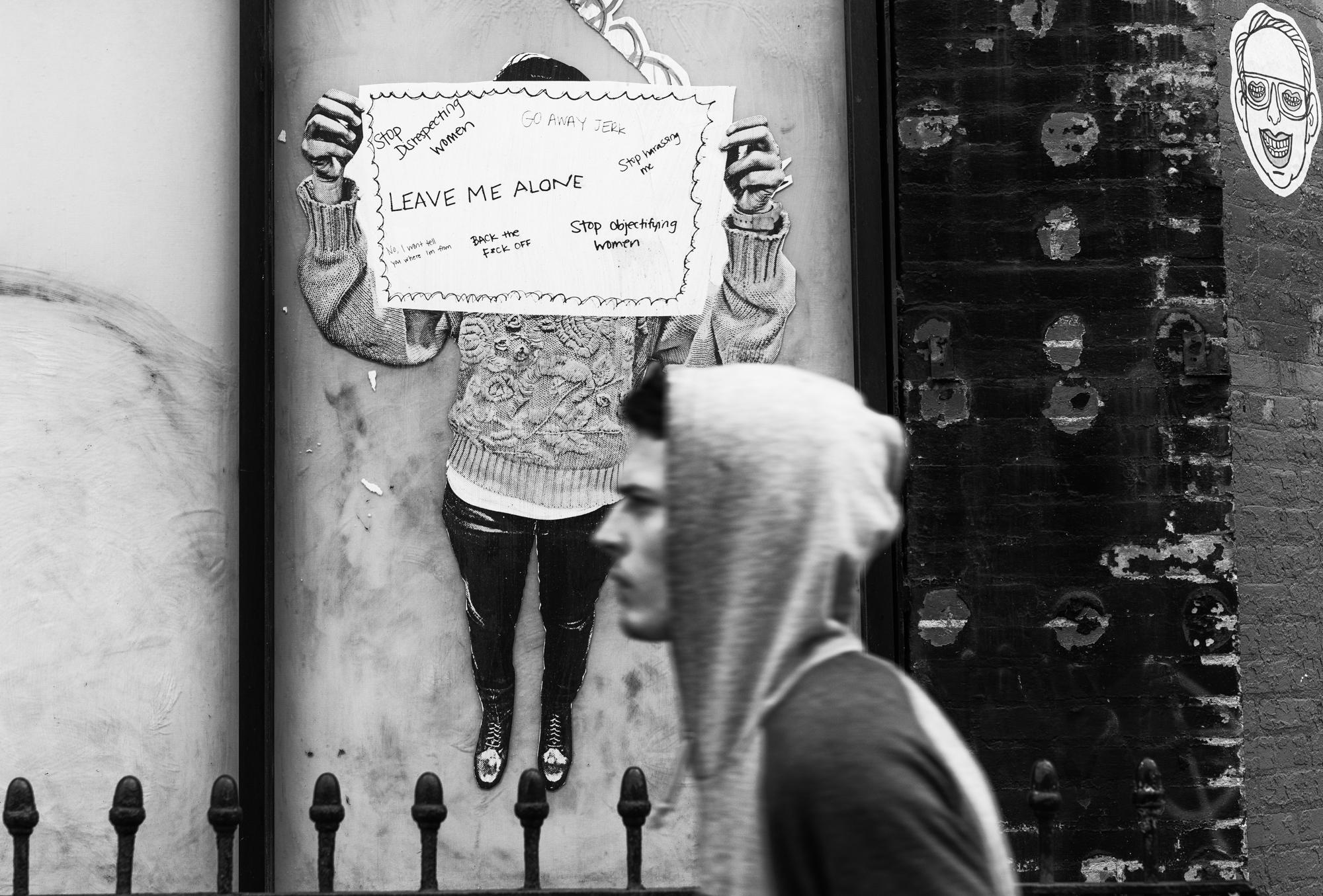
Happy email.  “One or both” of our finalists made it through the jury choosing the pictures for the Leica Store’s “DC As I See It” exhibit, beginning Saturday night, March 30th…  Hmm, was it “Leave Me Alone?” or “Ice Cream Man”?  Or both?  We patiently await word…

Leave Me Alone


Ice Cream Man

With “Muchacho,” Phosphorescent Shines Beyond Its Half-Life

Posted in Uncategorized with tags , , , , , on March 22, 2013 by johnbuckley100

Matt Houk, who plys his trade under the band name Phosphorescent, has long been a golden-throated marvel, but on the magnificent new Muchacho, he answers three questions that long have puzzled us.

Ever wonder how good Dylan’s late-phase greats would sound if sung by someone whose voice hadn’t been dragged four times across cooling magma?  We used to joke, Mrs. Tulip Frenzy and I, about how Dylan should call Jakob to do the honors.  But the moment we we heard the magnificent “Song For Zula,” we knew Matt Houk was the only one who would do Dylan justice.  You could imagine “Song for Zula” on anything from about Time Out Of Mind on; it’s that good.

And then there’s this question that long has lingered: when will someone record an album that you could segue to directly from the second side of Exile On Main Street, you know, something that combines pedal steel and Memphis horns, something warm and bright as “Loving Cup,” with also that hazy, lazy mystery? If you’ve ever asked that question, yep, Muchacho is for you.  On “The Quotidian Beasts” and other songs we can hear echoes of that notional state where it’s 1971 all over again, and Mick and Keith are in the basement with Nicky Hopkins upstairs in the living room, and Jim Price and Bobby Keys are down the hall in that haunted Southern France mansion, as Gram Parsons lies conked out on the couch.

Speaking of Gram Parsons, our third question has for years been would anyone capture his essence the way the young Ryan Adams did on Whiskeytown’s Strangers Almanac?  If that question’s ever crossed your mind, go get Muchacho.  Like at once, hombre.

In a way, Muchacho is two records.  There are the songs, like “Song for Zula,” that really are Houk recording by himself, with strings or other instruments added on later.  And then there are songs with that full band treatment used to such great effect on Here’s To Taking It Easy, and To Willy, his album of Willy Nelson covers.  And a killer band it is, Whiskeytown being a not unfair approximation.

Phosphorescent burns tantalizingly bright in the night, and so it is with Houk, whose glow we pray last’s beyond the half-life of the artist.

Comfy Ride

Posted in Uncategorized with tags , , on March 20, 2013 by johnbuckley100

Leica M, Noctilux with ND filter.  Click on image for better resolution.

Comfy Ride

Richard Hell’s “I Dreamed I Was A Very Clean Tramp”

Posted in Uncategorized with tags , , , , , on March 19, 2013 by johnbuckley100

Like many of rock’n’roll’s greatest vocalists, Richard Hell doesn’t have a very good voice.  As one of the greatest punk rock musicians, he couldn’t play his instrument very well.  For a guy who left Television before it made arguably the best album of the 1970s; left the Heartbreakers before L.A.M.F.; and whose output — not including the almost unlistenable Dim Stars record (bad sound quality) — is only the two records he put out with his band, The Voidoids, he sure does cut an outsized figure.  Even if all we had to go on was his song “Time,” from the Destiny Street album, or maybe his version of Dylan’s “Going Going Gone,” or (the lyrically reprehensible, since it would seem to promote incest) “The Plan” from Blank Generation, Richard Myers (Hell) would hulk in the corner of our rock Pantheon, casting a very large shadow.  And with the release of I Dreamed I Was A Very Clean Tramp, he’s now produced one of the most honest, funniest, best written and compelling autobiographies of any rock star ever — a book that holds its own with Keith Richards’ Life and Dean Wareham’s Black Postcards.

We enjoyed his novel Go Now, which came out in ’97, so we were prepared for a well-told story.  And what a story!  Whatever you think of him — talentless jester who was all style over substance, or seminal figure who helped launch the CBGB wave — credit him with balls.  Running away from boarding school with his pal Tom Miller, whom the world now knows as Tom Verlaine; moving to NY as a teenager without a high school diploma, and somehow surviving junk and basically three decades without a new record; Richard Myers reinvented himself as Richard Hell and helped create not just punk’s style — the torn shirts and safety pins that would be shamelessly ripped off by his admirer, Malcolm McLaren, when he was inventing the Sex Pistols — but some fair measure of it ethos: true heart and burning energy trumping anything so bourgeois as actual musical chops.

From what’s available through bootlegs and other artifacts, Television circa 1974 was a tug of war between Verlaine’s genius on a Fender guitar and Hell’s propulsive antics.  Neither really could sing, and both were pretty pretentious.  But Verlaine was a guitar god, and Hell was something else.  You read his account of leaving Television, and joining up with Johnny Thunders in the Heartbreakers (not to be confused, as it was, with Tom Petty’s band), only to leave to form the Voidoids with two of the greatest rock guitarists of all time, Bob Quine and Ivan Julian, and you keep waiting for the story to become a triumph. Keep waiting to hear how he got it together and achieved his dreams, fulfilled his promise.  And of course it didn’t happen.  By the time we got to New York in the late ’70s, Hell had already failed to sustain the momentum created with the amazing first Voidoid’s album, Blank Generation.  We only got to see him twice — once fronting the Raybeats at the NY Rocker 1979 holiday party (and that was a scream; Hell singing while the space-cowboy uniformed, No Wave surf instrumentalists backed him up), and then at the Peppermint Lounge around the time Destiny Street provided the Hell/Quine combo its swan song  — and by ’84 it was all over.  He blames other factors in addition to junk, but heroin addiction trumps all other factors in stories like this.  Heroin addiction may start as a manifestation, not a cause, of one’s problems, but by now we all know how quickly it piggybacks into rendering things the other way around.

The book is a great read.  His take down of his former high school chum Verlaine is vengeance served cold — with the meanest twist of the knife being not his remembrance of things past, but the book’s end, when he runs into his old friend, by now middle-aged, buying books from a dollar bin on the streets of Lower Manhattan.  While his Zelig-as-Casanova rounds of all the eligible women in ’70s New York gets old, he’s honest to admit relationships with two of rock’n’roll’s most horrific people, Nancy Spungeon and Anya Phillips, neither of whom met good ends.  In fact, the soundtrack for the book is less anything Hell recorded so much as it’s Jim Carroll’s “People Who Died,” as so many of the players succumbed to both drugs and natural causes… Lester Bangs and Peter Laughner and Lizzy Mercier Descloux and Johnny Thunders and Dee Dee Ramone and Bob Quine and on and on.

But not Hell.  Hell’s a survivor.  And a great storyteller.  And a man who understands that his greatest asset, circa 2013, is what he witnessed nearly 40 years ago, when Lower Manhattan, not Brooklyn, was the center of the universe, and things were grungy and sexy and fun.  You could think of Richard Hell as a man who with a modicum of talent played with a line up of the best guitarists of his generation, and created a small body of work that both will live for the ages and provide a clue about that brief moment when a handful of New York bands changed the world.  Or you could think of him as a very clean tramp, who has written a book we will enjoy as much as any of his collaborations with Bob Quine.